
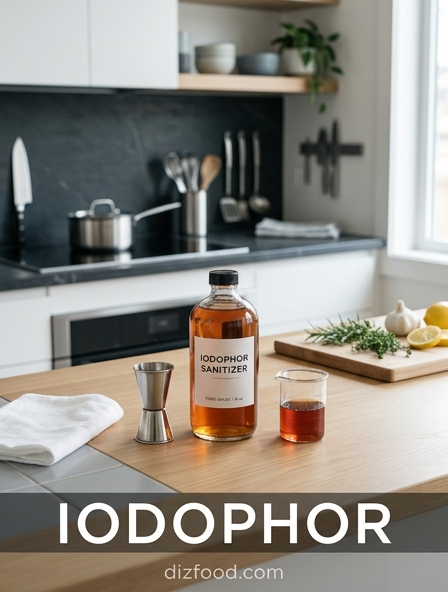
Iodophor Sanitization Essentials
Iodophor is a specialized iodine-based sanitizer widely utilized in both commercial kitchens and homebrewing environments due to its high efficacy as a broad-spectrum antimicrobial agent. It consists of a complex of iodine and a solubilizing agent, typically a non-ionic surfactant, which allows for the controlled release of free iodine into water. This chemical composition makes it particularly lethal against a vast array of microorganisms, including gram-positive and gram-negative bacteria, fungi, yeasts, and many viruses. Unlike heavy detergents, iodophor is specifically designed for sanitizing already-cleaned surfaces rather than scrubbing away organic soils.
In a kitchen or brewery setting, the primary appeal of iodophor lies in its low toxicity and relative safety when handled at proper dilutions. Because it is highly concentrated in its commercial form, it is economical for large-scale use. Its unique properties allow it to penetrate the cell walls of pathogens, disrupting protein synthesis and causing rapid cellular death. Understanding the foundational chemistry of iodophor is the first step toward maintaining a sterile environment for food preparation or fermentation, ensuring that unwanted microbes do not spoil the final product or pose health risks to consumers.
Proper Dilution and Mixing Ratios
To achieve maximum effectiveness without causing off-flavors or surface staining, iodophor must be diluted to specific concentrations, typically measured in parts per million (ppm). For most kitchen and brewing applications, a concentration of 12.5 ppm to 25 ppm is the industry standard for no-rinse applications. Achieving this requires precise measurement; generally, one half-ounce of iodophor concentrate is added to five gallons of cool water. If preparing smaller batches, approximately one teaspoon per gallon and a half is sufficient to reach the desired potency.
- 12.5 ppm: Standard no-rinse dilution for brewing equipment.
- 25 ppm: Higher strength for heavy-duty kitchen surface disinfection.
- Cool Water Usage: Never mix with water exceeding 120°F (49°C), as iodine will gas off and lose its sanitizing power.
- Mixing Order: Always add the concentrate to the water, not the water to the concentrate, to ensure a homogeneous solution and avoid splashing.
Using water that is too hot not only renders the sanitizer ineffective but can also lead to the release of iodine vapors, which are unpleasant to inhale. Furthermore, using a concentration higher than 25 ppm requires a subsequent rinse with potable water to prevent iodine residues from affecting the taste of food or beverages.
No-Rinse Advantages for Homebrewing
The "no-rinse" capability of iodophor at specific dilutions is perhaps its most significant advantage for homebrewers. When diluted to 12.5 ppm, the solution effectively kills surface bacteria and then begins to dissipate or evaporate. Because the amount of iodine remaining on the equipment is negligible, it does not impact the flavor, aroma, or head retention of the beer. This eliminates the need for a final rinse with tap water, which is a critical step because municipal tap water often contains small amounts of bacteria or wild yeast that could re-contaminate the sterilized equipment.
By skipping the rinse step, brewers save a considerable amount of time and reduce water waste during the brew day. The residual iodine that remains in small droplets on the surface of a fermenter or bottle will eventually gassing off or be diluted by the wort to levels well below the taste threshold. This provides a reliable "safety net" during the transfer of cooled wort, which is highly susceptible to infection. Additionally, since iodophor does not foam excessively like other sanitizers, it is much easier to drain from carboys and kegs, ensuring that the vessel is ready for immediate use without the annoyance of lingering suds.
Optimal Contact Time for Safety
Iodophor is known for its rapid action, but it still requires a specific amount of contact time to ensure that all pathogens are neutralized. For most non-porous surfaces such as stainless steel, glass, and hard plastics, a contact time of two minutes is recommended to achieve a complete kill of common spoilage organisms. While some sources suggest that 30 seconds is sufficient for certain bacteria, maintaining a two-minute window provides a buffer for variations in water quality and surface texture. It is vital that the surface remains wet with the solution for the entire duration of the contact period.
Prolonged soaking beyond the recommended time is generally unnecessary and can actually be detrimental to certain materials. For example, leaving plastic tubing or buckets to soak in iodophor for hours can lead to permanent amber staining and may eventually cause the material to absorb a medicinal iodine aroma. To optimize safety and efficiency, users should immerse items, wait the allotted two minutes, and then allow them to air dry or drain thoroughly. This ensures the chemical has had enough time to disrupt the biological processes of any lingering microbes while maintaining the integrity of the kitchen or brewing hardware.
Spray Sanitizing for Efficiency
One of the most efficient ways to utilize iodophor in a kitchen or brewery is through the use of a dedicated spray bottle. This method allows for targeted sanitization of large surfaces, small components, and hard-to-reach areas without needing to fill a massive vat or sink. A spray bottle filled with a 12.5 ppm to 25 ppm solution is perfect for quick tasks, such as sanitizing the rim of a yeast packet, the exterior of a thermometer, or the surface of a kitchen scale before weighing ingredients. This minimizes the volume of chemical used and significantly reduces preparation time.
When using a spray bottle, the same contact time rules apply; the surface must be thoroughly misted and remain wet for at least 60 to 120 seconds. Spraying is particularly useful for sanitizing the exterior of airlocks, bungs, and transfer tubing right before they are inserted into a fermenter. It is also an excellent tool for spot-cleaning counters during food prep to prevent cross-contamination. Because iodophor is stable for several days if kept in a sealed spray bottle away from direct sunlight, a single mixed batch can serve as a convenient, ready-to-use disinfectant for multiple sessions throughout the week, provided the solution maintains its characteristic amber color.
Treating Brewing Equipment and Glassware
Properly treating brewing equipment requires an understanding of how iodophor interacts with different materials. Glassware, such as carboys and beer bottles, is the ideal candidate for iodine-based sanitization because it is non-porous and completely resistant to staining. When treating bottles, a bottle tree or a specialized rinser can be used to inject the solution into each unit, ensuring the entire interior is coated. Stainless steel equipment, including kettles and kegs, also reacts well to iodophor, though it should never be left to soak for extended periods to avoid any risk of surface pitting over many years of use.
- Plastic Fermenters: Effective, but prone to staining if the solution is too concentrated or left too long.
- Transfer Tubing: Ensure the solution flows through the entire length of the tube to eliminate air pockets.
- Gaskets and O-rings: Remove and soak separately to ensure the sanitizer reaches the hidden grooves.
- Valves: Cycle the valves while submerged to sanitize the internal ball and housing.
It is important to remember that iodophor is not a cleaner. All equipment must be visually clean and free of "beer stone," krausen, or organic debris before the sanitizer is applied. If a surface is dirty, the iodine will react with the organic matter instead of killing the bacteria, rendering the sanitization process ineffective.
Kitchen Counter and Surface Disinfection
In a kitchen environment, iodophor serves as a powerful ally against foodborne illnesses like Salmonella and E. coli. It is highly effective for disinfecting non-porous countertops, such as those made of stainless steel, laminate, or sealed granite. When preparing to sanitize a kitchen surface, first wash the area with soap and water to remove grease and food particles. Once the surface is clean, apply the iodophor solution via a cloth or spray bottle. Its fast-acting nature makes it ideal for the quick pace of professional and home kitchens alike.
However, users must be cautious with porous or light-colored surfaces. Materials like unsealed wood, marble, or certain white plastics can absorb the iodine, leading to unsightly yellow or orange stains. If you are unsure about a surface, it is best to test a small, inconspicuous area first or stick to using it on metal and glass. For food preparation surfaces, ensuring the 12.5 ppm to 25 ppm ratio is critical; at these levels, the solution is food-safe and does not require a final rinse, allowing the kitchen to remain a high-throughput environment without the risk of chemical residue affecting the taste of the meal.
Monitoring Solution Potency and Color
A unique and helpful feature of iodophor is its built-in visual indicator: its color. The active iodine in the solution provides a distinct amber or light brown tint. As the iodine is "consumed" by reacting with microorganisms or organic matter, or as it naturally outgasses into the air, the solution will gradually turn pale and eventually become clear. Once the solution has lost its amber color, it is no longer an effective sanitizer and must be discarded and replaced. This visual cue provides a quick way to verify that your sanitizing bath is still active during a long brew day.
| Solution Color | Estimated Potency | Action Required |
|---|---|---|
| Rich Amber | 12.5 - 25 ppm | Ready for use |
| Pale Straw | < 10 ppm | Replace soon |
| Clear/Transparent | 0 ppm | Discard immediately |
While the color is a great general guide, professional settings may use iodine test strips for more precise monitoring. These strips are dipped into the solution and compared against a color chart to determine the exact ppm. This ensures that the solution is neither too weak to kill pathogens nor too strong to cause staining or off-flavors.
Safe Handling and Storage Tips
In its concentrated form, iodophor is a potent chemical that must be handled with care. The concentrate can cause skin irritation and will permanently stain clothing, countertops, and skin upon contact. It is advisable to wear gloves and eye protection when measuring and pouring the concentrate. If a spill occurs, it should be cleaned up immediately with plenty of water. Because iodine is sensitive to light and heat, the concentrate should be stored in its original container, tightly sealed, in a cool, dark place. Exposure to direct sunlight will cause the iodine to degrade rapidly, shortening the shelf life of the product.
When storing diluted solutions, keep in mind that they have a much shorter lifespan than the concentrate. A diluted batch in an open bucket may only remain effective for 24 hours, whereas a solution kept in a sealed, dark spray bottle may last for up to a week. Always check the color before use. Furthermore, keep iodophor out of reach of children and pets. Even though it is safe at diluted levels for food contact, the concentrate is toxic if ingested. Following these storage and handling protocols ensures that the product remains a safe and reliable tool in your sanitation arsenal.
Iodophor versus Acid Anionic Sanitizers
Choosing between iodophor and acid anionic sanitizers (like Star San) is a common dilemma for brewers and kitchen managers. Both are highly effective no-rinse sanitizers, but they have different physical properties. Iodophor is a low-foaming agent, which is preferred by those who find excessive bubbles annoying or difficult to manage in closed systems like kegs. Acid anionic sanitizers, conversely, are famous for their high foam, which can reach into every nook and cranny but can also be difficult to clear from a vessel. Iodophor is generally more effective across a wider range of water hardness, whereas acid sanitizers require a low pH to remain active.
- Foaming: Iodophor is low-foam; Acid anionic is high-foam.
- Staining: Iodophor can stain plastics; Acid anionic does not.
- Potency Indicator: Iodophor uses color; Acid anionic requires pH testing.
- Odor: Iodophor has a slight medicinal smell; Acid anionic is largely odorless.
Ultimately, the choice often comes down to personal preference and the specific equipment being used. Those using mostly glass may prefer iodophor for its clear visual indication of potency and lack of foam, while those using plastic fermenters might prefer acid anionic sanitizers to avoid the risk of orange discoloration over time.


Comments