
Kalita Wave vs. Bee House: Finding Your Perfect Pour-Over Match
Choosing between the Kalita Wave and the Bee House often feels like a friendly tug-of-war between technical precision and morning convenience. While both are esteemed flat-bottom drippers designed to produce a more uniform extraction than their conical counterparts, they cater to very different brewing personalities. The Kalita Wave is a darling of the specialty coffee world, utilizing signature rippled filters and a three-hole drainage system to maintain temperature and prevent channeling, resulting in a remarkably consistent and clean cup. On the other hand, the Bee House dripper is the ultimate "user-friendly" brewer; its classic ceramic design features a built-in window to check your coffee level and uses standard wedge-shaped filters you can find at any grocery store. Whether you crave the professional-grade ritual of the Wave or the nostalgic, forgiving nature of the Bee House, understanding their structural differences is the first step toward elevating your daily caffeine fix.
| Feature | Kalita Wave | Bee House |
|---|---|---|
| Drainage Design | 3 small holes in a flat bottom | 2 holes in a flat, recessed base |
| Filter Type | Proprietary Wave (rippled) filters | Standard #2 or #4 wedge filters |
| Material Options | Stainless Steel, Glass, or Ceramic | Traditional Ceramic (various colors) |
| Brewing Style | Technical; requires precise pouring | Forgiving; great for casual brewing |
| Flavor Profile | Bright, balanced, and consistent | Sweet, heavy body, and approachable |
| Best For | Consistency seekers & enthusiasts | Daily home use & convenience |
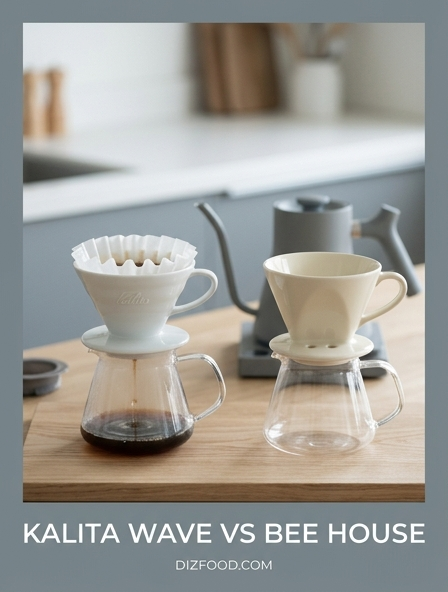
Kalita Wave vs Bee House Comparison
The manual coffee brewing world is often divided between various geometries and flow dynamics, with the Kalita Wave and the Bee House ceramic dripper standing as two of the most respected titans in the industry. While both are pour-over devices, they cater to different philosophies of extraction and user experiences. The Kalita Wave is a modern Japanese staple known for its flat-bottom design and horizontal ridges, which are engineered to provide a highly uniform extraction. In contrast, the Bee House is a classic wedge-shaped dripper that bridge the gap between the traditional Melitta style and more modern aesthetic sensibilities, often favored for its nostalgic feel and approachable brewing curve.
Choosing between these two drippers often comes down to the specific flavor profile a brewer desires and the level of technical precision they wish to apply to their morning routine. The Kalita Wave is frequently found in specialty coffee shops where consistency across multiple baristas is paramount. The Bee House, with its integrated handle and viewing windows at the base, is designed with the home kitchen in mind, prioritizing convenience and ease of use without sacrificing the quality of the final cup. Below are some primary attributes that define these two brewers:
- Design Philosophy: Kalita focuses on "Wave" geometry for temperature stability, while Bee House focuses on ergonomic wedge flow.
- Skill Ceiling: The Kalita Wave rewards precise pouring, whereas the Bee House is famously forgiving for those using standard kettles.
- Aesthetic Appeal: The Kalita offers a high-tech, industrial look in steel or glass; the Bee House offers a warm, colorful ceramic charm.
- Filter Dependency: Kalita requires proprietary pleated filters, while Bee House utilizes standard, widely available trapezoidal filters.
Flat Bottom vs Wedge Shape Design
The most significant technical difference between these two drippers lies in their internal geometry. The Kalita Wave features a completely flat bottom with three small extraction holes. This geometry forces the water to interact with the coffee grounds in a cylindrical "puck" shape, similar to an espresso basket but at a much lower pressure. This flat-bottom design minimizes the risk of "channeling," where water finds a path of least resistance and bypasses most of the coffee, ensuring that every grain is saturated equally throughout the brewing process.
The Bee House dripper utilizes a wedge-shaped design, which is essentially a flattened cone. This shape creates a deeper coffee bed in the center, which naturally slows down the water flow and allows for a longer contact time between the water and the grounds. Unlike a true V60 cone which tapers to a point, the Bee House wedge ends in a flat line with two holes. This creates a different turbulence pattern compared to the Kalita. The wedge shape is particularly effective at highlighting the body and sweetness of medium to dark roasts, as the immersion-like qualities of the bottom of the wedge provide a rich extraction.
| Feature | Kalita Wave | Bee House |
|---|---|---|
| Shape | Flat Bottom Cylindrical | Wedge / Trapezoidal |
| Extraction Style | Uniform Percolation | Hybrid Immersion/Percolation |
| Bed Depth | Shallow and Wide | Deep and Centered |
| Flow Control | Managed by 3 small holes | Managed by 2 medium holes |
Understanding Filter Differences and Availability
Filters are not just paper liners; they are the primary regulatory valves for flow rate and oil retention in pour-over brewing. The Kalita Wave utilizes unique "Wave" filters characterized by 20 distinct ruffles or pleats. These pleats serve a dual purpose: they keep the paper from sticking to the sides of the dripper, creating an insulating air gap that maintains temperature, and they facilitate a faster peripheral flow of water. However, these filters are proprietary and can be more expensive and difficult to find in local grocery stores, usually requiring a trip to a specialty cafe or an online order.
The Bee House dripper is lauded for its "open ecosystem" regarding filters. It is designed to work perfectly with standard #2 or #4 wedge-shaped filters, which have been the industry standard for decades. These are the same filters used in many automated drip machines and are available at almost every supermarket globally. This makes the Bee House a much more practical choice for the casual brewer who does not want to worry about running out of a specialized supply. While the paper quality can vary between brands, the accessibility remains a high selling point for the Bee House.
- Kalita Filter Pros: Excellent temperature insulation, unique airflow, minimizes paper-to-wall contact.
- Kalita Filter Cons: Expensive, easily deformed in shipping, limited availability.
- Bee House Filter Pros: Extremely affordable, available everywhere, variety of brands (Filtropa, Melitta, etc.).
- Bee House Filter Cons: Can stick to the walls, potentially causing uneven heat loss if the ceramic isn't preheated well.
Extraction Consistency and Flow Rate Control
Extraction consistency is the holy grail of manual brewing, and the Kalita Wave was specifically engineered to solve the problem of "high-and-dry" grounds. By utilizing three small holes arranged in a triangle at the flat base, the Kalita ensures that water does not simply rush through the center. Instead, a small pool of water forms at the bottom, creating a slight "buffer" that evens out the extraction. This makes the Kalita Wave incredibly consistent; if you use the same grind size and water temperature, the brew time will rarely fluctuate by more than a few seconds.
The Bee House dripper employs two holes located at the base of the wedge. This design allows for a slightly faster flow than a single-hole Melitta but provides more resistance than the Kalita Wave's three-hole setup. Because the holes are slightly larger, the flow rate is more dependent on the grind size and the user's pouring technique. While it is still very consistent compared to a conical dripper like the V60, the Bee House requires a bit more attention to the "slurry" height. If you pour too fast, the wedge shape can lead to a bit of agitation that might over-extract the fines at the bottom. However, for most home users, the restricted flow of the two holes acts as a safety net, preventing the water from draining too quickly even if the pour is somewhat clumsy.
- Kalita Mechanism: Uses a flat bed to ensure vertical water paths and uniform saturation.
- Bee House Mechanism: Uses a restricted dual-hole exit to maintain a consistent water level in the dripper.
- Resistance: Kalita relies on the paper pleats for airflow; Bee House relies on the exit hole diameter.
- Error Margin: Both are forgiving, but Kalita is more resistant to "channeling" errors.
Flavor Profiles Sweetness vs Clarity
The geometric differences between these two brewers translate directly into the sensory experience of the coffee. The Kalita Wave is celebrated for producing a cup with high clarity and a balanced sweetness. Because the extraction is so uniform, you tend to get a very "clean" representation of the coffee's origin notes. It excels with light-roast African coffees, highlighting floral and citrus notes without the sharp acidity that can sometimes occur in conical brewers. The sweetness is often described as "structured," meaning it feels well-integrated with the body of the coffee.
The Bee House, conversely, tends to produce a cup with more body and a "rounder" flavor profile. The wedge shape encourages a bit more immersion at the bottom of the filter, which pulls out more of the heavier sugars and oils. This results in a mouthfeel that is slightly more syrupy and comforting. While it may not offer the razor-sharp flavor separation of the Kalita Wave, it is excellent at masking minor brewing flaws and highlighting the chocolatey, nutty, and caramelly notes in medium-roast Central and South American coffees. It provides a "classic" cup of coffee that feels familiar and substantial.
- Kalita Wave Flavor: High clarity, bright acidity, clean finish, and delicate tea-like qualities.
- Bee House Flavor: Rich body, enhanced sweetness, muted acidity, and a lingering finish.
- Best for Kalita: Single-origin light roasts, washed process coffees, and complex flavor profiles.
- Best for Bee House: Medium to dark roasts, daily blends, and those who prefer cream and sugar.
Material Durability and Heat Retention
In the kitchen, the longevity and thermal properties of your gear are paramount. The Kalita Wave is most commonly found in stainless steel, though it is also available in glass and ceramic. The stainless steel version is virtually indestructible, making it the favorite for travelers or clumsy brewers. However, steel has low thermal mass; it heats up quickly but also loses heat to the environment rapidly. This requires the brewer to use a slightly higher water temperature or a very consistent pour to maintain the slurry temperature.
The Bee House is almost exclusively made of thick, high-quality Japanese ceramic. Ceramic is an excellent insulator once it is properly heated. However, if you do not thoroughly rinse the Bee House with hot water before brewing, the cold ceramic will "steal" the heat from your brewing water, leading to under-extraction and a sour cup. Once preheated, the Bee House maintains a very stable temperature throughout the 3-minute brew cycle. From a durability standpoint, the Bee House is fragile; a drop on a granite countertop will likely result in a shatter, whereas a steel Kalita might only suffer a minor dent.
| Material Detail | Kalita (Steel) | Bee House (Ceramic) |
|---|---|---|
| Durability | Extremely High (Droppable) | Moderate (Breakable) |
| Thermal Mass | Low | High |
| Preheat Time | Fast (5 seconds) | Slow (30 seconds) |
| Color Options | Silver/Metallic | Wide range of pastels and bolds |
Beginner Friendly Brewing Mechanisms
For those just entering the world of pour-over coffee, the Bee House is frequently cited as the best "gateway" dripper. Its design incorporates a handle that stays cool to the touch and two "inspection windows" at the base. These windows allow the brewer to look through the side of the dripper to see how much coffee has filled the mug or carafe below, preventing overflows. Furthermore, the wedge shape and restricted holes mean you don't necessarily need a specialized gooseneck kettle to get a good result. A standard kitchen kettle used with a slow hand is often sufficient because the dripper manages the flow rate for you.
The Kalita Wave is also beginner-friendly but has a steeper learning curve regarding equipment. While the flat bottom is forgiving of uneven pouring, the "Wave" filters are delicate. If you pour water directly onto the edges of the paper, the pleats can collapse, ruining the airflow and stalling the brew. Additionally, to truly take advantage of the Kalita's precision, a gooseneck kettle is highly recommended to ensure the water is distributed evenly across the flat bed. It is a "professional" tool that has been simplified for home use, whereas the Bee House is a "home" tool that has been refined to professional standards.
- Bee House Ease: Built-in windows, works with any kettle, uses grocery store filters.
- Kalita Ease: Naturally prevents channeling, but requires specific filters and better pouring technique.
- Consistency: Kalita is more consistent for technical brewers; Bee House is more consistent for casual brewers.
Pouring Technique and Water Distribution
The way water is introduced to the coffee bed differs significantly between these two vessels. With the Kalita Wave, the goal is to maintain a flat coffee bed throughout the entire process. Brewers typically use a "pulse pouring" method-adding small amounts of water in circular motions, waiting for it to drain slightly, and then adding more. Because the bottom is flat, you want to avoid a massive central pour which could push grounds to the sides. The horizontal ridges of the dripper help keep the grounds from sticking to the walls, ensuring that nearly all coffee remains in the "active" brewing zone at the bottom.
The Bee House encourages a more traditional "concentric circle" pour. Because it is a wedge, the coffee is deepest in the center, so more water should naturally be directed there. The Bee House is very tolerant of a "center pour" technique, where the brewer keeps the stream of water mostly in the middle after the initial bloom. This creates a gentle agitation that helps extract the dense bed of coffee at the bottom of the wedge. Unlike the Kalita, which requires a delicate touch to keep the waves intact, the Bee House is sturdy and can handle more aggressive pouring without negatively impacting the final flavor profile.
- Kalita Pour: Gentle, wide circles to cover the entire flat surface area.
- Bee House Pour: Focused circles, concentrating on the deep center of the wedge.
- Agitation: Higher in the Kalita due to shallow bed; lower in the Bee House due to depth.
- Kettle Choice: Gooseneck is essential for Kalita; optional for Bee House.
Maintenance and Cleaning Requirements
In a busy kitchen, the ease of cleanup can be the deciding factor for daily use. The Bee House is remarkably easy to maintain. Its smooth ceramic surface is non-porous and resists staining. After brewing, you simply lift the paper filter out and rinse the dripper under hot water. It is also dishwasher safe, though most enthusiasts prefer hand washing to avoid the risk of chipping against other dishes. The integrated handle makes it easy to hold while scrubbing, and the wide base ensures it sits securely on a drying rack.
The Kalita Wave, particularly the stainless steel version, is also very easy to clean but has a few more nooks and crannies. The three small holes at the bottom can sometimes trap coffee fines or oils if not rinsed immediately after use. If you use the glass version, you must be careful with temperature shocks (going from boiling water to cold tap water). The steel version can eventually develop a "patina" or tea-like staining on the interior, but this is easily removed with a bit of espresso machine cleaner or vinegar. The most "difficult" part of Kalita maintenance isn't the dripper itself, but the filters, which must be stored carefully in their plastic stack to prevent the pleats from flattening out.
- Bee House Cleaning: Simple rinse, smooth surfaces, dishwasher safe, resists odors.
- Kalita Cleaning: Needs attention to the three bottom holes, steel may need occasional deep descaling.
- Storage: Bee House is bulky due to the handle; Kalita Wave is often stackable and takes up less shelf space.
Choosing the Best Pour Over Dripper
The choice between the Kalita Wave and the Bee House ultimately depends on your lifestyle and your coffee preferences. If you are a coffee hobbyist who enjoys experimenting with light-roast specialty beans, the Kalita Wave is the superior choice. Its ability to produce consistent, clean, and vibrant cups of coffee is unmatched in the flat-bottom category. It is a tool for precision, rewarding those who invest in a good kettle and take the time to master their pouring technique. The stainless steel model also makes it a perfect companion for camping or travel.
On the other hand, the Bee House is the quintessential "everyman" dripper. It is beautiful, functional, and requires zero specialized equipment to produce a fantastic cup of coffee. It is the perfect choice for someone who wants to move away from an automated drip machine but doesn't want the "fuss" of specialty filters or gooseneck kettles. Its flavor profile is comforting and rich, making it the ideal vessel for your favorite morning blend. In the battle of the kitchen counter, the Bee House wins on charm and accessibility, while the Kalita Wave wins on technical performance and modern design.
- Choose Kalita Wave if: You want flavor clarity, you travel often, or you enjoy the technical ritual of brewing.
- Choose Bee House if: You want a heavy-bodied cup, you prefer grocery store convenience, or you love vintage kitchen aesthetics.
- The Verdict: Both are affordable enough that many enthusiasts eventually keep one of each to suit different moods and bean varieties.



Comments