
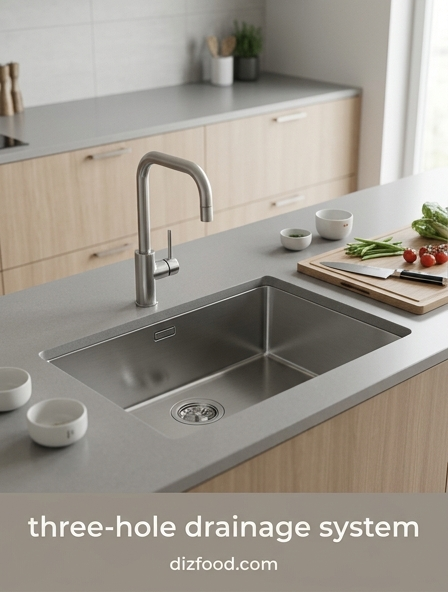
Optimal Flow Rate Dynamics
In the specialized architecture of a three-hole drainage system, the management of liquid exit speed is paramount for achieving a balanced extraction. Unlike single-hole apertures that may suffer from excessive draw-down speeds or sudden stalling, the tri-hole configuration distributes hydraulic energy across multiple exit points. This design ensures that the resistance provided by the medium is countered by a controlled gravitational pull, preventing the water from bypassing the essential solutes. The specific diameter of each hole is calibrated to create a backup of liquid, known as a "buffer zone," which allows for a more forgiving interaction between the solvent and the solids.
- Prevents the formation of vacuum seals against the vessel floor.
- Facilitates a predictable draw-down time regardless of minor pouring inconsistencies.
- Balances the ratio between vertical movement and lateral diffusion.
- Reduces the risk of over-extraction caused by localized high-velocity streams.
By modulating the flow through three distinct channels, the system maintains a steady volumetric throughput. This stability is critical in commercial and home environments where repeatability is the primary metric of quality. The interaction between the hole spacing and the surface tension of the liquid creates a self-regulating mechanism that adapts to the viscosity of the fluid being processed.
Uniform Extraction Mechanics
The core philosophy of the three-hole drainage layout is the elimination of "dead zones" within the filtration bed. In traditional conical systems, the concentration of flow toward a single central point often leads to over-extraction at the core and under-extraction at the periphery. The triangular arrangement of the three-hole system encourages a wider dispersion of fluid, forcing the water to travel through a broader cross-section of the material. This ensures that every particle is subjected to the same solvent contact time, leading to a more homogenous flavor profile and higher yield efficiency.
To understand the mechanical advantages, consider the following distribution factors:
| Feature | Impact on Extraction | Benefit |
|---|---|---|
| Tri-point Exit | Spreads hydraulic force | Prevents center-channeling |
| Radial Spacing | Engages outer diameter | Increases soluble recovery |
| Parallel Flow | Linearizes water path | Consistent particle contact |
The result of these mechanics is a cup characterized by clarity and balance. Because the liquid is not forced into a singular vortex, the structural integrity of the bed remains intact throughout the duration of the process, ensuring that the final output is reflective of the entire mass rather than a narrow section of the source material.
Preventing Filter Clogging
One of the most persistent challenges in kitchen drainage and filtration is the migration of fine particles that obstruct flow. The three-hole system provides a robust solution to this through redundancy and pressure dispersion. When a single-hole system encounters "fines" (microscopic particles), those particles gravitate toward the singular exit, creating a dense, impermeable layer. In a three-hole configuration, the distribution of exit points reduces the concentration of particles at any single aperture, effectively lowering the probability of a total flow stoppage.
- Distributed Suction: Lower vacuum pressure at each hole reduces the force pulling fines into the paper pores.
- Alternative Pathways: If one hole becomes partially obstructed, the remaining two maintain the volumetric flow.
- Surface Tension Management: The spacing prevents the filter from adhering flatly to the base, maintaining an air gap for drainage.
This anti-clogging nature is particularly useful when dealing with multi-modal grind sizes or ingredients with high lipid content. By maintaining an open pathway for the liquid, the system prevents the "muddy" bed effect that often ruins the tactile quality of the extract. Consequently, the user experiences a more reliable and frustration-free workflow, even when the input variables are less than ideal.
Hydrostatic Pressure Distribution
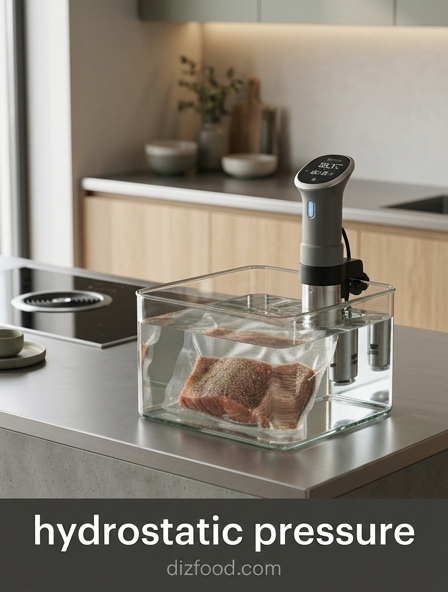
The three-hole drainage system leverages the principles of hydrostatic pressure to maintain a consistent flow velocity. As the vessel fills with liquid, the weight of the water column exerts downward pressure. In a flat-bottomed, three-hole system, this pressure is distributed evenly across the horizontal plane. This uniformity prevents the liquid from seeking the path of least resistance, which in singular-exit systems often results in a "borehole" effect where water rushes through the center while leaving the sides dry.
The relationship between water depth and pressure in this system can be summarized as follows:
- High Water Level: Increased head pressure ensures fast initial saturation and gas displacement.
- Medium Water Level: Stable pressure facilitates the main extraction phase without turbulent disruption.
- Low Water Level: Reduced pressure allows for a gentle finish, preventing the extraction of bitter, heavy-molecular compounds.
By spreading the exit points, the system ensures that the pressure gradient is horizontal rather than strictly vertical. This design encourages the liquid to move laterally through the bed before exiting, maximizing the time the solvent spends in contact with the flavoring agents. This controlled pressure environment is essential for precision brewing where nuances in density can significantly alter the final result.
Flat Bottom Geometry Advantages
The geometric synergy between a flat bottom and a three-hole drainage system creates a unique environment for fluid dynamics. Unlike conical shapes that compress the medium into a point, the flat bottom allows for a shallow, wide bed. This geometry reduces the distance the liquid must travel vertically, which in turn reduces the likelihood of "channeling"-a phenomenon where water carves a high-speed path through the bed, bypassing the bulk of the material. The three holes are strategically placed to take advantage of this wide surface area.
Key advantages of this geometry include:
- Increased Surface Area: Allows for more efficient gas release during the initial wetting phase.
- Uniform Bed Depth: Every portion of the medium is the same height, ensuring identical resistance levels.
- Structural Stability: The flat base provides a secure platform that prevents the tilting or shifting of the filtration medium.
Furthermore, the flat bottom geometry encourages a "piston-like" movement of water through the bed. As new water is added, it pushes the existing saturated liquid downward evenly. This displacement method is highly efficient for extracting solubles without introducing the turbulence that can lead to astringency. The interaction of the three holes ensures that this piston effect is maintained until the very end of the cycle.
Thermal Stability Maintenance
Maintaining a constant temperature is vital for the chemical reactions involved in kitchen extractions. The three-hole drainage system, typically paired with specific vessel materials like ceramic, glass, or heavy-gauge stainless steel, excels at thermal retention. Because the water moves through the system at a regulated, moderate pace, it does not lose heat as rapidly as it might in a high-velocity single-hole system. The "pooling" effect created by the three small apertures acts as a thermal mass, buffering against the cooling effects of the ambient air.
Consider the thermal dynamics involved:
| Phase | Thermal Action | Resulting Outcome |
|---|---|---|
| Pre-heating | Vessel absorbs latent heat | Prevents initial temperature drop |
| Saturation | Holes restrict heat venting | Maintains high extraction temp |
| Draw-down | Consistent flow rate | Avoids late-stage cooling |
This stability ensures that the solubility of the targeted compounds remains constant throughout the process. Fluctuations in temperature can lead to a disjointed flavor profile, where some compounds are extracted at 95°C and others at 80°C. By stabilizing the environment, the three-hole system provides a narrow temperature window that favors the most desirable flavor precursors while leaving undesirable, heat-sensitive compounds behind.
Water Saturation Consistency
Achieving total saturation of the medium is the first step toward a successful extraction. The three-hole system facilitates this by promoting a vertical water path that resists the tendency of liquid to cling to the walls of the vessel. In many drainage systems, water flows preferentially along the smooth surfaces of the container (the "wall effect"). The three holes, positioned away from the immediate perimeter, draw the liquid inward and downward through the center of the mass. This ensures that no portion of the dry ingredient remains sequestered from the solvent.
- Eliminates dry pockets in the bottom corners of the vessel.
- Promotes even capillary action across the filter medium.
- Supports a more effective "bloom" phase by allowing gases to escape uniformly.
When water is introduced, the three exit points create a mild suction that pulls the liquid through the entire diameter of the bed. This is particularly important when working with finely ground materials that may otherwise resist wetting due to their high surface tension. The consistency provided by this system means that the user does not need to resort to aggressive stirring or agitation, which can often lead to over-extraction or the introduction of unwanted sediments into the final product.
Fluid Velocity Regulation
The speed at which fluid travels through a filtration system-its velocity-directly impacts the texture and body of the final liquid. The three-hole system acts as a natural regulator, preventing the velocity from exceeding the threshold where it would begin to wash away the delicate oils and micro-solids that contribute to mouthfeel. By dividing the total flow into three streams, the kinetic energy of the liquid is dissipated. This results in a "gentle" extraction that preserves the integrity of the ingredients.
- Laminar Flow: The system encourages smooth, non-turbulent movement.
- Resistance Matching: The hole size is designed to match the resistance of standard filtration papers.
- Kinetic Buffering: The pooling of liquid above the holes slows down the impact of freshly poured water.
Regulating velocity is also crucial for preventing the "washing" of the filter. If water moves too quickly, it can strip the paper of its own fibers or allow fine sediments to pass through the pores. The three-hole architecture ensures that the velocity remains within the optimal range for "clarity-focused" results. This creates a refined product that is free of the gritty texture often associated with high-velocity drainage systems that lack sufficient restriction.
Sediment Filtration Efficiency
A primary goal of any kitchen drainage system is the separation of solids from liquids with high precision. The three-hole design enhances the efficiency of the filter medium by optimizing the contact interface between the paper and the vessel. Because the holes are small and spaced apart, the filter paper is supported by the flat base of the vessel in most areas, preventing it from stretching or tearing under the weight of the wet mass. This support allows the paper to function as a highly efficient membrane.
| Factor | System Benefit |
|---|---|
| Pore Integrity | Lack of stretching keeps pores uniform |
| Flow Distribution | Prevents localized sediment buildup |
| Contact Points | Minimizes bypass of unfiltered liquid |
In systems with a large single opening, the filter is often forced to bridge a wide gap, leading to deformation and potential bypass. The three-hole system's support structure ensures that the liquid must pass through the filter before exiting the apertures. This results in a sparkling, sediment-free liquid that highlights the nuances of the ingredients. The increased filtration efficiency also means that a wider variety of filter types can be used, from thick oxygen-bleached papers to thin bamboo-based meshes, all while maintaining high performance standards.
Precision Contact Time Control
The total duration that the liquid remains in contact with the solid medium-the contact time-is the most influential variable in the chemistry of the kitchen. The three-hole drainage system offers unparalleled control over this variable by providing a mechanical "speed limit." Even if the user pours water rapidly, the three small exit points restrict the drainage, ensuring that a minimum contact time is always achieved. This provides a safety net against the thin, sour results associated with "flash" extractions.
- Repeatable Timing: Facilitates consistent results across different batches.
- Grind Size Synergy: Works in tandem with particle size to fine-tune extraction.
- Volume Management: Handles varying amounts of liquid without drastic changes in brew time.
This precision allows the user to treat the drainage system as a fixed constant in their calculations. By knowing that the vessel will drain at a specific rate, one can adjust the grind size or water temperature to target specific flavor notes with surgical accuracy. This level of control is what makes the three-hole system a favorite among professionals who require absolute consistency in high-volume environments. Ultimately, the system transforms the chaotic nature of fluid dynamics into a predictable, manageable process that yields superior results every time.



Comments