
Mastering Copper Thermal Conductivity
Copper stands as the gold standard for thermal conductivity in the kitchen, offering a level of responsiveness that other materials cannot replicate. Its molecular structure allows heat to transfer through the vessel walls almost instantaneously, ensuring that the water reaches a boil with unparalleled speed. For the chef, this means that the latency between adjusting a burner and seeing a change in the water's agitation is virtually zero. This agility is essential for delicate tasks where a few seconds of overheating can ruin a reduction or overcook sensitive proteins.
- Immediate reaction to burner adjustments prevents accidental over-boiling.
- Uniform heat distribution eliminates cold zones within the liquid.
- High energy efficiency reduces the time required to reach 212 degrees Fahrenheit.
- Thin-walled construction allows for rapid cooling when the heat source is removed.
To master copper, one must anticipate its speed. Unlike cast iron or heavy steel, copper does not require a long preheating phase. Chefs should monitor the surface tension closely, as the transition from a quiver to a rolling boil happens significantly faster than with composite materials.
Precision Boiling in Stainless Steel
Stainless steel is prized for its durability and non-reactive nature, but its inherent thermal properties require a strategic approach to achieve precision. Because pure stainless steel is a poor conductor of heat, high-quality cookware utilizes a multi-clad construction, sandwiching aluminum or copper cores between layers of steel. This design balances the robustness of the exterior with the conductive efficiency of the internal metals. Achieving a precise boil in steel requires understanding the momentum of the material's thermal mass.
- Begin with medium-high heat to allow the internal core to distribute energy evenly.
- Utilize a tight-fitting lid to trap steam and accelerate the internal pressure.
- Lower the heat slightly before the boiling point is reached to avoid "overshooting" the temperature.
- Observe the bubble size; stainless steel provides a steady, predictable increase in agitation.
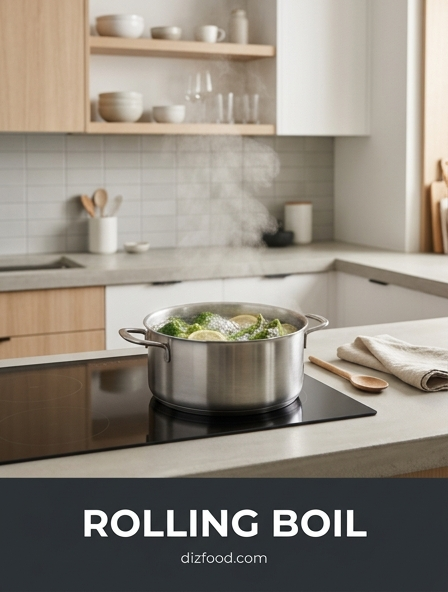
Precision boiling in this medium is less about speed and more about stability. Once a stainless steel vessel reaches the desired temperature, its layers work in harmony to maintain that thermal state, making it ideal for long-duration boiling tasks such as pasta or blanching vegetables.
Heat Responsiveness and Control Factors
The concept of heat responsiveness refers to how quickly a piece of cookware reacts to a change in the energy input. This factor is the primary determinant of "control" in boiling. When a chef turns a dial, they are requesting a specific change in molecular activity; the cookware is the medium that translates that request. Materials with high diffusivity, like copper and aluminum, offer high responsiveness, while materials with high heat capacity, like cast iron and thick steel, offer lower responsiveness but higher stability.
| Material Type | Responsiveness Level | Best Control Use |
|---|---|---|
| Solid Copper | Highest | Sugar work and delicate sauces |
| Aluminum Clad | Medium-High | General boiling and sautéing |
| Multi-Ply Steel | Medium | Consistent simmering and soups |
| Cast Iron | Lowest | Slow boiling and deep frying |
Understanding these factors allows a cook to choose the right tool for the job. A high-responsiveness pot is necessary for avoiding boil-overs, whereas a low-responsiveness pot is better suited for maintaining a steady temperature when cold ingredients are added to the liquid.
Maintaining Steady Simmers with Copper
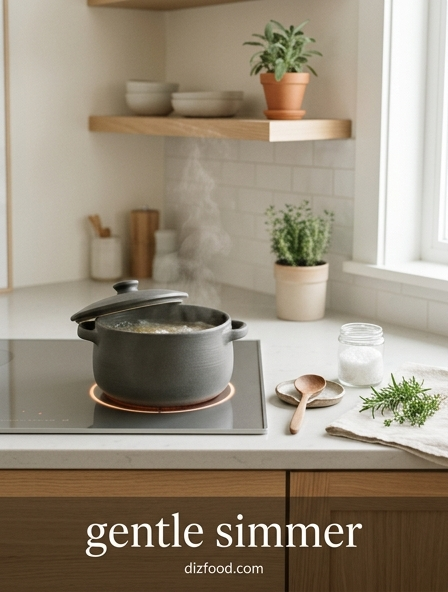
A steady simmer is often more difficult to achieve than a rolling boil, as it requires the perfect equilibrium between heat input and evaporative cooling. Copper is the ideal medium for this delicate balance because it does not harbor significant "residual heat." When you lower the flame to a whisper, the copper vessel drops its temperature almost immediately, allowing the liquid to settle into a gentle convection without the risk of lingering hot spots that cause localized boiling.
- Use a flame tamer or simmer ring for extra-low settings on gas ranges.
- Ensure the copper is lined with tin or stainless steel for food safety.
- Monitor the "shiver" of the water; a perfect simmer shows movement but no breaking bubbles.
- Avoid using heavy lids if the goal is to reduce the liquid while simmering.
The sensitivity of copper makes it the preferred choice for French sauces and stocks. By managing the gas output with precision, the cook can keep the liquid at exactly 185 to 205 degrees Fahrenheit for hours, ensuring a clear, debris-free extraction of flavors.
Steel Heat Retention Strategies
Heat retention is the inverse of responsiveness, and it is where stainless steel cookware truly excels. When cooking in a professional kitchen, the ability of a pot to hold onto its thermal energy despite the introduction of cold ingredients is paramount. This "thermal inertia" ensures that the boiling process resumes almost instantly after a pound of cold pasta or a basket of frozen peas is submerged. This prevents the "soaking" effect that occurs when water temperatures drop too low for too long.
- Preheat the vessel with a small amount of water before filling to the desired level.
- Match the burner size to the base of the pot to maximize thermal storage in the cladding.
- Account for the "carry-over" heat; stainless steel will continue to boil for a short period after the heat is off.
- Use the pot's mass to your advantage by staggering ingredient additions.
By leveraging the density of high-grade steel, you can create a more forgiving environment. This strategy is particularly useful in high-volume cooking where speed and consistency are required across multiple batches.
Comparing Boiling Times by Material
Efficiency in the kitchen is often measured by the time it takes to reach a specific thermal state. Boiling water is a foundational task, yet the time required varies drastically based on the vessel's material composition and the heating element's technology. Copper generally leads the pack due to its low thermal resistance, followed closely by aluminum. Stainless steel, while slower, can be optimized if the cladding is sufficiently thick and extends up the sides of the pot rather than just the base.
| Material | 1L Water to Boil (Gas) | 1L Water to Boil (Induction) |
|---|---|---|
| Copper (Tin-lined) | 4.5 Minutes | N/A (Non-magnetic) |
| Aluminum (Hard-Anodized) | 5.2 Minutes | N/A (Unless bonded) |
| 3-Ply Stainless Steel | 6.5 Minutes | 4.8 Minutes |
| Cast Iron (Enameled) | 8.0 Minutes | 6.2 Minutes |
These times are indicative of the material's ability to conduct energy. While copper is the fastest on gas, induction-compatible stainless steel often wins the race on modern electric tops because the heat is generated directly within the metal, bypassing the convective losses associated with open flames.
Managing Hot Spots in Steel Cookware
One of the primary challenges with stainless steel boiling is the development of hot spots-areas where the temperature significantly exceeds the average. This usually occurs directly above the flame or induction coil. In boiling, hot spots can cause uneven agitation, leading to "scorching" of proteins or starches that settle at the bottom. To manage this, manufacturers utilize bonded bases where a thick disc of aluminum or copper is impact-bonded to the bottom of the steel pot.
- Stir liquids frequently to move colder water from the top to the bottom.
- Ensure the pot is centered perfectly over the heat source.
- Check for "disks" vs. "full cladding"; full cladding helps distribute heat up the walls.
- Deglaze the bottom of the pot if any residue begins to stick during the boil.
Effective management of hot spots ensures that the boil is "rolling" from the center outward, rather than erupting from a single point. This leads to more uniform cooking of submerged foods and prevents the degradation of the cookware's interior finish over time.
Optimizing Gas versus Induction Heat
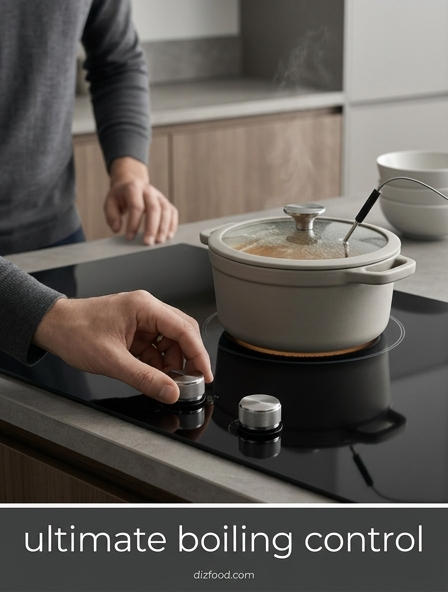
The heat source is just as critical as the pot itself when aiming for ultimate boiling control. Gas heat provides a visual cue and an enveloping flame that warms the sides of the pot, which is ideal for copper and curved vessels like woks. Induction, however, offers a level of precision that is digitally controlled, transferring energy through magnetic friction. This method is incredibly efficient for stainless steel and eliminates the ambient heat loss that characterizes gas cooking.
- For gas, adjust the flame so it does not lap over the sides, which wastes energy.
- For induction, use flat-bottomed, ferrous-based steel for maximum coupling.
- Utilize the "Power Boost" feature on induction for rapid initial heating.
- Trust the gas dial for fine-tuning simmers by observing the flame height.
Ultimately, the choice depends on the material. Copper enthusiasts generally prefer gas for its ability to lick the sides of the highly conductive metal, while those seeking the fastest possible boil with steel often turn to induction's focused magnetic energy.
Advanced Convection Pattern Control
Boiling is not just about temperature; it is about the movement of fluid. As water heats, it becomes less dense and rises, creating convection currents. By controlling these patterns, a chef can influence how ingredients are agitated. A tall, narrow pot creates a vertical convection loop, which is perfect for keeping pasta separated. A wide, shallow pan creates many small, chaotic convection cells, which is better for rapid evaporation and reduction of sauces.
- Tall pots: Best for high-volume boiling and preventing ingredient clumping.
- Wide pans: Best for rapid reductions and concentrating flavors.
- Vessel wall thickness: Thicker walls dampen convection for a smoother simmer.
- Surface area: Larger surface areas increase the cooling rate at the top.
By selecting the vessel shape based on the desired convection pattern, you can automate much of the "stirring" process. In a tall pot, the rising bubbles naturally lift and tumble the food, ensuring that every surface is exposed to the boiling liquid consistently without manual intervention.
Transitioning Temperatures with Precision
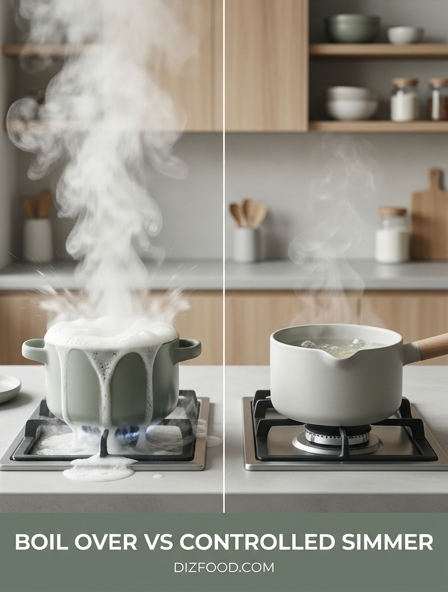
The ability to move from a hard, rolling boil to a dead-still simmer in seconds is a hallmark of professional boiling control. This transition is governed by the total thermal energy stored in the system. To master this, one must account for the pot's material and the volume of liquid. Copper makes this transition effortlessly, while heavy steel or cast iron requires a "staged" approach where the heat is cut significantly before the target temperature is reached to prevent over-boiling.
| Action | Copper Technique | Steel Technique |
|---|---|---|
| Boil to Simmer | Turn dial to low immediately. | Turn dial to low 1 minute early. |
| Adding Cold Liquid | Maintain current heat setting. | Increase heat briefly to compensate. |
| Ending the Boil | Remove from heat source. | Move to a cool burner. |
Precision transitions prevent the common mistake of "stewing" food in a pot that remains too hot for too long. By understanding the thermal footprint of your cookware, you can time your preparations to the second, ensuring that the cooking process stops exactly when you intend it to, preserving texture and color.


Comments