
When you're aiming for that perfect simmer or a lightning-fast boil, the battle between copper and stainless steel is more than just aesthetics-it's about precision engineering for your kitchen. Copper is the undisputed champion of thermal responsiveness, heating up and cooling down almost instantly, which gives you unparalleled control over delicate sauces and rapid temperature shifts. On the other hand, stainless steel offers rugged durability and excellent heat retention, making it a reliable, low-maintenance workhorse for everyday high-heat tasks. Understanding how these metals interact with heat is the key to mastering "ultimate boiling control," whether you're a professional chef or a home enthusiast looking to level up your culinary game.
| Feature | Copper Cookware | Stainless Steel |
|---|---|---|
| Thermal Conductivity | Extreme (~400 W/m·K); uniform heat. | Low (~15 W/m·K); prone to hotspots. |
| Heat Response | Instantaneous; stops boiling immediately. | Slow; retains heat long after power-off. |
| Maintenance | High; requires polishing and hand-washing. | Low; dishwasher safe and rust-resistant. |
| Reactivity | Reactive (requires tin or steel lining). | Non-reactive; safe for acidic foods. |
| Induction Ready | No (unless it has a specialized base). | Usually yes (if magnetic grade). |
| Best For | Sugar work, delicate sauces, reductions. | Searing, braising, and daily boiling. |
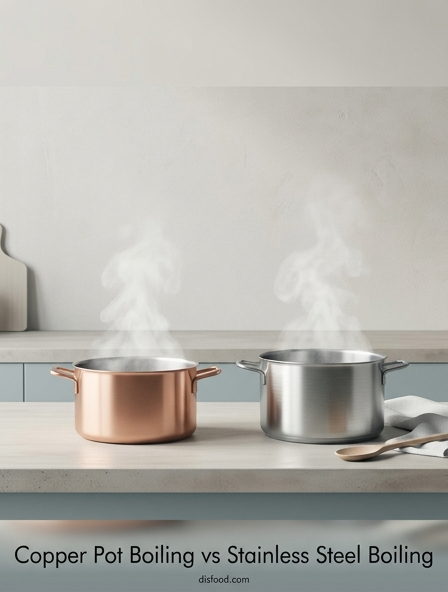
Thermal Conductivity Differences Between Copper and Stainless Steel
Thermal conductivity is the most significant differentiator between copper and stainless steel in a culinary context. Copper is widely regarded as one of the best conductors of heat among all metals used in the kitchen, trailing only behind silver. This high conductivity is a result of the metal's atomic structure, which allows for the rapid movement of electrons. In practical terms, this means that heat applied to the base of a copper pot travels through the material almost instantaneously, reaching the food or liquid inside with minimal delay.
In contrast, stainless steel is a relatively poor conductor of heat. It is an alloy composed primarily of iron, chromium, and nickel, which creates a more resistant path for thermal energy. While this makes stainless steel excellent at maintaining its structural integrity under high heat, it results in a significant lag between the adjustment of a burner and the temperature change of the cooking surface. To visualize these differences, consider the following approximate thermal conductivity values measured in Watts per meter-Kelvin (W/m·K):
| Material | Thermal Conductivity (W/m·K) |
|---|---|
| Pure Copper | 390 - 400 |
| Aluminum | 205 - 235 |
| Cast Iron | 50 - 80 |
| Stainless Steel | 14 - 16 |
Because of this massive disparity, stainless steel cookware is almost never used in its pure form for boiling or frying. Instead, manufacturers must "clad" the steel with layers of aluminum or copper to bridge the gap in thermal performance. Without these conductive cores, a stainless steel pot would be inefficient and prone to uneven heating.
Which Metal Boils Water Faster Copper or Stainless Steel
When comparing the time it takes to bring a specific volume of water to a rolling boil, copper is the undisputed champion. This advantage stems from its superior thermal diffusivity, which is a measure of how quickly a material can change its temperature. Because copper absorbs and transfers energy so efficiently, the heat from the stove reaches the water with very little energy lost to the metal itself. This results in a faster "time-to-boil" compared to even high-end multi-clad stainless steel pots.
Stainless steel pots require more time to reach boiling temperatures because the metal acts as a bottleneck. Even in "tri-ply" cookware, where a layer of aluminum is sandwiched between stainless steel, the outer steel layers still present a barrier that slows the initial transfer of heat from the flame or induction element. The following factors influence the boiling speed in these vessels:
- Wall Thickness: Thicker copper (2.5mm or more) provides a massive thermal reservoir that accelerates boiling across the entire surface area.
- Heat Transfer Surface: Copper heats up the sides of the pot as effectively as the bottom, creating more contact points with the water.
- Energy Loss: Stainless steel tends to reflect more heat back toward the burner, whereas copper absorbs it more readily.
While the difference might only be a matter of minutes for a small pot of tea, it becomes significantly more noticeable when boiling large stocks or pasta water. For home cooks who value speed and efficiency, copper remains the most effective tool for rapid liquid heating.
Health and Safety Considerations of Copper versus Stainless Cookware
Safety in the kitchen is paramount, and the choice between copper and stainless steel involves different chemical considerations. Copper is a reactive metal, meaning it can interact with acidic foods like tomatoes, vinegar, or citrus. If copper leaches into food in high quantities, it can cause copper toxicity, which leads to digestive distress. To mitigate this risk, almost all modern copper cookware is lined with a non-reactive metal, typically tin or stainless steel. Tin is traditional and naturally non-stick, but it has a low melting point and can wear down over time, requiring "re-tinning."
Stainless steel, on the other hand, is prized for being largely inert. It does not react with acidic or alkaline foods, making it the safest choice for versatile, everyday cooking. However, it is important to note that stainless steel contains nickel and chromium. Low-quality stainless steel may leach trace amounts of these metals into food, particularly during long simmering processes. For the vast majority of the population, this is harmless, but individuals with severe nickel allergies must be cautious and opt for nickel-free stainless steel (often labeled as 18/0).
In summary, while copper requires a protective lining to be safe for all types of boiling and cooking, stainless steel offers a "set it and forget it" safety profile. As long as the lining of a copper pot remains intact, both materials are perfectly safe for preparing meals, but stainless steel remains the industry standard for hygiene and chemical stability.
Durability and Lifespan of Copper and Stainless Steel Pots
The lifespan of a pot is often determined by its resistance to physical stress and chemical corrosion. Stainless steel is the clear winner regarding sheer durability. It is a hard, scratch-resistant material that does not rust, tarnish, or react with the environment. You can drop a stainless steel pot, use metal utensils, and scrub it with abrasive pads without fear of ruining the vessel. It is virtually indestructible and can easily last for several decades with minimal effort.
Copper is a softer metal and is more susceptible to physical damage. It can dent if dropped and is easily scratched by metal tools. Furthermore, copper requires a lining to be functional, and the lifespan of that lining is finite. If a copper pot is lined with tin, it will eventually need to be sent to a professional for re-tinning, a process that can be costly and time-consuming. However, the copper shell itself is a "forever" material; many professional kitchens use copper pots that are over a hundred years old. Key durability comparisons include:
- Corrosion Resistance: Stainless steel is immune to oxidation, whereas copper develops a green patina (verdigris) if not polished.
- Heat Resistance: Stainless steel can withstand very high temperatures without warping; copper is also sturdy but its lining (if tin) can melt at 450°F.
- Maintenance Impact: Frequent polishing of copper can slightly wear the metal over centuries, whereas stainless steel maintains its finish regardless of cleaning frequency.
While stainless steel is more "low-maintenance," copper is often viewed as a long-term investment that can be restored to brand-new condition repeatedly, whereas a damaged clad-bottom stainless pot usually must be discarded.
Heat Distribution and Hot Spots in Modern Boiling Vessels
One of the most frustrating aspects of boiling or simmering is the "hot spot"-an area where heat is concentrated, causing food to scorch while the rest of the pot remains cool. Copper is the gold standard for preventing this phenomenon. Because of its high thermal conductivity, heat spreads laterally across the bottom and up the sides of the pot with incredible uniformity. This ensures that the water or liquid reaches a boil simultaneously across the entire volume, rather than just at the center where the flame hits.
Stainless steel is notorious for hot spots due to its poor conductivity. In a cheap, single-ply stainless steel pot, the heat remains concentrated directly above the heat source. This is why high-quality stainless steel pots utilize "impact-bonded" or "fully clad" construction. These designs incorporate a core of aluminum or copper to help distribute the heat more evenly. Despite these technological improvements, copper still outperforms even the best 5-ply stainless steel in terms of temperature uniformity.
When boiling delicate liquids like milk or thick soups, the heat distribution of copper prevents the bottom from burning. In a stainless steel vessel, you must stir constantly to move the liquid away from the hot spots. The superior physics of copper essentially does this work for you, providing a gentle, encompassing heat that is ideal for sensitive culinary tasks that require even boiling temperatures throughout the vessel.
Maintenance and Care Guide for Copper vs Stainless Steel
Maintaining the luster and performance of your cookware requires different approaches depending on the metal. Stainless steel is favored for its "workhorse" nature. It is generally dishwasher safe and can be cleaned with aggressive detergents. For stubborn burnt-on food, a soak in warm soapy water or a scrub with a specialized powder like Bar Keepers Friend is usually sufficient to restore its shine. It requires no special polishing and is resistant to the salts and acids found in tap water.
Copper requires a significant commitment to maintenance. To keep it looking like a kitchen centerpiece, it must be polished regularly with a copper cream or a mixture of lemon and salt to remove oxidation. Without this, the metal will darken and eventually develop a dull patina. Additionally, copper pots should never be put in a dishwasher, as the harsh chemicals can pit the metal and strip the lining. Proper care involves several specific steps:
- Hand Wash Only: Always use a soft sponge and mild soap to protect the exterior and the delicate interior lining.
- Dry Immediately: Water spots can lead to tarnishing; use a soft microfiber cloth to dry the pot right after washing.
- Check the Lining: Periodically inspect the interior (if tin-lined) for wear. If the copper starts showing through, it is time for professional re-tinning.
Ultimately, if you prefer a utilitarian approach where the pot is simply a tool to be cleaned quickly, stainless steel is the better fit. Copper is for the enthusiast who views their cookware as an artisanal instrument that deserves regular attention.
Energy Efficiency Comparison for Boiling in Different Metals
In an era of rising energy costs, the efficiency of cookware has become a relevant topic. Energy efficiency in boiling is determined by how much of the energy produced by the stove actually goes into the water versus how much is lost to the surrounding air or reflected back. Copper is exceptionally energy-efficient because its rapid heat transfer minimizes the "warm-up" time. By reaching the boiling point faster, you reduce the total duration the burner must be active, which can lead to energy savings over time.
Stainless steel is less efficient because it requires more energy to overcome its internal thermal resistance. A significant portion of the heat from a gas flame can escape around the sides of a stainless steel pot before the metal has had time to absorb and transfer that heat to the liquid inside. However, stainless steel has one major advantage in modern kitchens: induction compatibility. Many copper pots are not magnetic and therefore cannot be used on energy-efficient induction cooktops without a specialized interface disk (which further reduces efficiency).
Stainless steel pots often have a magnetic base specifically designed for induction, which is the most energy-efficient cooking method available today. Therefore, the "greenest" choice depends on your stove type. On gas or electric radiant stoves, copper's conductivity wins for energy conservation. On induction stoves, specialized magnetic stainless steel or copper-core stainless steel is the superior choice for reducing your carbon footprint during the boiling process.
Why Professional Chefs Prefer Copper for Precise Temperature Control
The term "responsive" is frequently used by professional chefs to describe why they favor copper. In a high-pressure kitchen environment, the ability to control temperature with precision is the difference between a perfect emulsion and a broken sauce. Copper responds instantly to the turning of a dial. If a chef sees a pot of boiling sugar or a delicate cream sauce beginning to overheat, they can lower the flame, and the copper pot will shed heat almost immediately. This prevents carry-over cooking, which can ruin sensitive recipes.
Stainless steel is "sluggish" by comparison. It holds onto heat much longer than copper, meaning that even after the burner is turned off, the liquid inside will continue to boil or simmer for several seconds. This thermal inertia makes it difficult to execute tasks that require rapid temperature shifts. Chefs also appreciate copper for its ability to maintain a very low, consistent simmer without "burping" or creating aggressive bubbles that can break down delicate ingredients like poached fish or eggs.
Furthermore, the weight and balance of copper pots provide a tactile sense of control. While stainless steel is reliable and easy to clean, it lacks the surgical precision of copper. For tasks like making a caramel, reducing a consommé, or whisking a hollandaise, the instantaneous feedback provided by copper is an invaluable asset that justifies its presence in nearly every Michelin-starred kitchen in the world.
Cost Analysis of Investing in Copper versus Stainless Steel
The price gap between copper and stainless steel is substantial, reflecting both material costs and manufacturing complexity. Stainless steel is mass-produced and widely available at various price points. A high-quality, fully-clad stainless steel pot may cost between $100 and $200, but budget-friendly options are available for as little as $30. These pots are durable and do not require additional investment throughout their lifespan, making them the most cost-effective choice for the average consumer.
Copper cookware is a luxury investment. A single high-end copper boiling pot can easily exceed $400 or $500. This high cost is due to the price of raw copper, the thickness required for performance (2.0mm to 2.5mm), and the labor-intensive process of hand-lining the pots. Beyond the initial purchase price, copper also carries "maintenance costs," such as the price of polishing compounds and the eventual need for re-tinning. The following table highlights the financial differences over a 20-year period:
| Cost Factor | Stainless Steel | Copper (Tin-Lined) |
|---|---|---|
| Initial Purchase | Low to Medium | Very High |
| Maintenance Cost | $0 | $100 - $300 (Re-tinning/Polish) |
| Replacement Need | Unlikely | Never (Heirloom) |
| Resale Value | Low | High (Collectable) |
While the upfront cost of copper is high, it retains its value remarkably well. A well-maintained copper pot is often considered an heirloom piece that can be passed down through generations, whereas stainless steel is viewed more as a functional commodity.
Choosing the Best Pot Material for Your Boiling Needs
Deciding between copper and stainless steel ultimately comes down to your cooking style, budget, and willingness to perform maintenance. If you are a home cook who prepares simple meals, boils pasta, and wants a pot that can be thrown in the dishwasher without a second thought, stainless steel is the logical choice. It is durable, non-reactive, and provides more than enough performance for standard kitchen tasks. Modern multi-clad stainless steel has closed the performance gap significantly, making it a versatile "all-rounder" for 90% of household needs.
However, if you view cooking as an art form or a technical challenge, copper offers an experience that stainless steel cannot replicate. The sheer speed of boiling, the absolute lack of hot spots, and the incredible responsiveness to temperature changes make copper a joy to use for those who appreciate the nuances of heat. It is best suited for individuals who don't mind the "ritual" of hand-washing and polishing and who see their cookware as a lifetime investment.
Consider your stovetop as well; if you have shifted to induction, your options for copper are limited and expensive, making stainless steel the more practical path. If you cook on gas and want the ultimate in thermal performance, copper remains the king of the kitchen. Weigh the speed and precision of copper against the convenience and ruggedness of stainless steel to find the perfect vessel for your culinary journey.

Comments