
The Science of Collagen Breakdown
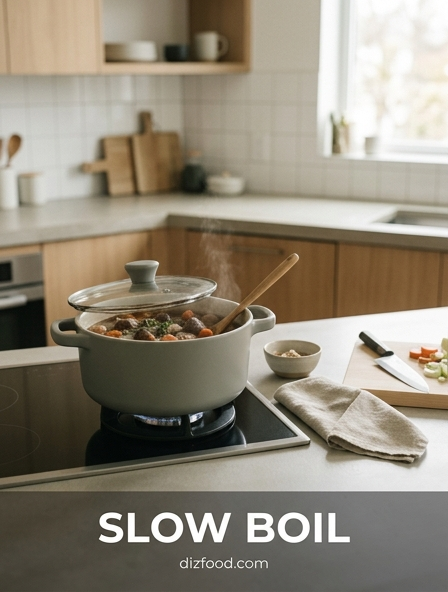
Collagen is the primary structural protein found in the connective tissues of animals, acting as the "glue" that holds muscle fibers together. In tough cuts of meat, such as brisket or chuck, collagen levels are exceptionally high. The science of slow boiling revolves around the thermal denaturation of this triple-helix protein. When subjected to temperatures between 160°F and 180°F for an extended duration, the strong hydrogen bonds within the collagen molecules begin to weaken and eventually fail.
- Structural Integrity: Collagen provides the mechanical strength needed for active muscles.
- Thermal Transition: Unlike muscle proteins that toughen with heat, collagen requires heat to soften.
- Time Dependency: The breakdown is not instantaneous; it requires a sustained, low-energy environment to decouple the protein chains without incinerating the exterior.
By maintaining a slow boil, the kinetic energy provided is sufficient to vibrate the molecular bonds apart without reaching the violent temperatures that lead to moisture expulsion. This transition is the cornerstone of braising and stewing, turning a theoretically inedible piece of sinew into a culinary masterpiece through patient molecular deconstruction.
Converting Connective Tissue into Gelatin
The transformation of tough connective tissue into succulent gelatin is the ultimate goal of the slow boiling process. As collagen undergoes hydrolysis-a chemical reaction where water breaks down the bonds of a particular substance-it loses its rigid structure and dissolves into a protein known as gelatin. This substance is unique because it can hold many times its weight in water, creating a rich, silky mouthfeel that is synonymous with high-quality stews.
- Hydration: Water molecules penetrate the collagen fibrils as they begin to unwind.
- Denaturation: The triple helix structure of the collagen collapses into individual random coils.
- Solubilization: These coils become water-soluble, turning the cooking liquid into a viscous stock.
This conversion is highly efficient in a slow boil environment because the consistent presence of moisture prevents the meat from drying out during the long hours required for the reaction. The resulting gelatin coats the muscle fibers, compensating for the natural loss of internal juices and providing a lubricated texture that masks the inherent dryness of well-done protein fibers.
Why Gentle Simmering Retains Moisture
Moisture retention in meat is governed by the state of its muscle proteins and the intensity of the heat applied. When meat is boiled vigorously at 212°F, the rapid agitation and high temperature cause muscle fibers to contract violently, squeezing out intracellular fluids like a wrung-out sponge. In contrast, gentle simmering keeps the temperature just below the boiling point, reducing the physical stress on the meat's cellular structure.
| Cooking Method | Temperature Range | Moisture Impact |
|---|---|---|
| Rapid Boil | 212°F (100°C) | High juice expulsion and fiber tightening. |
| Gentle Simmer | 185°F - 200°F | Controlled fiber contraction; allows reabsorption. |
| Slow Poach | 160°F - 180°F | Maximum tenderness with minimal protein damage. |
By keeping the liquid at a slow, lazy bubble, the cook ensures that the thermal energy is high enough to facilitate collagen breakdown but low enough to prevent the muscle fibers from becoming hopelessly desiccated. This delicate balance allows the meat to remain "juicy" even though it has been cooked to a high internal temperature.
The Impact of Heat on Muscle Fibers
Muscle fibers, primarily composed of actin and myosin, react significantly differently to heat than connective tissues. As the temperature of the meat rises, these proteins denature and coagulate. Myosin begins to denature around 120°F, causing the fibers to shorten and the meat to become firmer. Actin denaturates later, at approximately 150°F, which triggers a more dramatic contraction and the significant release of moisture.
- Myosin Denaturation: Initiates the change from raw texture to cooked firmness.
- Actin Denaturation: Responsible for the "shrink" and the loss of red juices.
- Cross-Linking: Excessive heat causes proteins to bond tightly, creating a "rubbery" texture.
In a slow boiling context, the objective is to navigate these changes carefully. While the actin will inevitably denature during the time required to break down collagen, the slow application of heat prevents the sudden, aggressive clumping of proteins. This ensures that while the fibers are technically "overcooked" by steak standards, they remain structurally delicate enough to be easily separated by the teeth or a fork.
Maintaining Tenderness Through Low Temperatures
Tenderness in slow-cooked meats is achieved by managing the competition between protein hardening and connective tissue softening. High temperatures accelerate both processes, but they favor the hardening of muscle fibers, leading to a "tough" result. Lower temperatures, specifically those held consistently just above the point of collagen solubility, allow the softening process to catch up and eventually overtake the hardening process.
- Enzymatic Action: At the early stages of heating, endogenous enzymes can briefly contribute to tenderization before they are deactivated.
- Gradual Contraction: Slower heating allows muscle fibers to settle into their new shape without the sudden tension of high-heat searing.
- Gelatin Integration: Low and slow heat ensures the gelatin stays within the meat's structure rather than leaching entirely into the broth.
The result of this patience is a piece of meat that feels tender not because the fibers are "rare," but because the structural "scaffolding" holding those fibers has been replaced by soft, pliable gelatin. This chemical substitution is the secret to why a pot roast can feel more tender than a medium-rare steak despite being cooked to a much higher internal temperature.
How Slow Boiling Prevents Meat Shrinkage
Meat shrinkage is a physical manifestation of protein fibers tightening and expelling water. When meat is shocked with high heat, the outer layers shrink rapidly, creating a pressure gradient that pushes moisture toward the center and then out into the pan. Slow boiling mitigates this by maintaining a steady, moderate thermal environment that encourages the meat to reach equilibrium with its surroundings.
| Factor | Fast Boil Effect | Slow Boil Effect |
|---|---|---|
| Fiber Tension | High / Immediate | Low / Gradual |
| Water Loss | Extensive (up to 30%) | Moderate (minimized by gelatin) |
| Surface Area | Significant Reduction | Minimal Change |
Furthermore, because the meat is submerged in liquid, the external pressure of the water and the lack of evaporation from the meat's surface help maintain its volume. The slow conversion of collagen also helps fill the gaps between muscle bundles that would otherwise collapse, effectively "inflating" the tissue with gelatin and moisture, which preserves the visual and physical size of the cut during the long cooking duration.
Flavor Development in Long Simmering Processes
While searing relies on the Maillard reaction for flavor, slow boiling relies on a combination of fat rendering, aromatic infusion, and the concentration of soluble proteins. During a long simmer, the fats within the meat-particularly the intramuscular marbling-slowly melt and distribute throughout the muscle fibers. This process, known as rendering, carries fat-soluble flavor compounds into every crevice of the meat.
- Compound Extraction: Amino acids and nucleotides are released into the liquid, creating umami.
- Aromatic Synergism: Flavors from vegetables and herbs in the liquid penetrate the meat via osmosis.
- Reduction: As the cooking liquid slowly evaporates, the flavors become concentrated and re-coat the meat.
The result is a complex, layered flavor profile that cannot be achieved through quick cooking. The meat becomes a vessel for the surrounding liquid, while the liquid becomes an essence of the meat. This reciprocal exchange of flavors is what gives traditional braises and slow-boiled dishes their characteristic depth and soul-warming richness.
Structural Changes in Tough Beef Cuts
Tough beef cuts, such as the shank or oxtail, are characterized by thick bundles of muscle fibers wrapped in heavy perimysium (connective tissue). In a raw state, these cuts are nearly impossible to chew. The slow boiling process targets these specific structural components. As the heat penetrates the center of these thick cuts, the perimysium begins to dissolve, allowing the muscle bundles to slide past one another.
- Bundle Separation: The "macro" structure of the meat begins to loosen as the connective dividers melt.
- Fiber Weakening: While the individual fibers are firm, the "glue" holding them in rigid rows is gone.
- Pore Expansion: The removal of collagen creates microscopic voids that allow flavorful cooking liquid to enter.
By the end of the process, the beef has undergone a total structural reorganization. It transitions from a solid, resistant mass into a collection of loosely associated fiber strands. This is why "tough" cuts are often preferred for slow boiling; they have the structural complexity required to transform into a rich, textured meal that "falls apart" at the touch of a spoon.
Achieving the Perfect Fork-Tender Texture
"Fork-tender" is the culinary term for meat that has reached the ideal intersection of collagen breakdown and fiber softening. Achieving this state requires careful monitoring of the meat's physical resistance. If the meat is undercooked, the collagen remains rubbery and the fibers stay locked together. If it is overcooked, even with a slow boil, the fibers may eventually become dry and "stringy" as all the gelatin leaches into the sauce.
- The Fork Test: A fork should slide in and out of the meat with zero resistance.
- The Twist Test: Rotating a fork in the meat should cause the fibers to separate easily.
- Visual Cues: The meat should appear slightly translucent due to the presence of gelatin.
This perfect texture is achieved by pulling the meat from the heat just as the last of the connective tissue has dissolved. At this moment, the meat is at its maximum "juiciness" relative to its cooked state. Resting the meat within its cooking liquid after the boil is also crucial, as it allows the fibers to relax and reabsorb some of the gelatin-rich broth.
The Thermal Mechanics of Meat Softening
The mechanics of meat softening involve the steady transfer of thermal energy from the liquid medium to the core of the protein. Water is a highly efficient conductor of heat compared to air, which is why boiling or simmering is so effective for breaking down tough tissues. The slow boil ensures that the temperature gradient between the exterior and the interior of the meat remains narrow, allowing for even cooking.
| Mechanism | Role in Softening |
|---|---|
| Conduction | Transfer of heat from the liquid to the meat surface. |
| Convection | Movement of hot liquid around the meat for even heating. |
| Hydrolysis | Chemical breakdown of bonds using the water medium. |
In a slow boil, the limited kinetic energy prevents the water from turning into steam too quickly, maintaining a constant temperature at the meat's surface. This stability is vital for the long-term chemical reactions required for tenderization. As the heat moves inward, it systematically dismantles the protein structures, proving that in the kitchen, controlled energy over time is more powerful than raw, high-intensity heat.

Comments