
Have you ever wondered if cranking up the heat is truly the secret to a faster dinner, or if your recipe actually demands a more patient approach? Mastering the nuance between a rapid boil and a slow boil-often referred to as a simmer-is a fundamental skill that can transform the texture and flavor of your dishes. While a rapid boil provides the mechanical energy needed to keep pasta moving and prevent sticking, a slow boil acts as a gentle embrace for delicate proteins and hearty stews, allowing flavors to meld without breaking down the ingredients into mush. Choosing the right technique isn't just about speed; it's about heat management and achieving the perfect culinary result every time you step into the kitchen.
| Feature | Rapid Boil | Slow Boil (Simmer) |
|---|---|---|
| Temperature | 212°F (100°C) at sea level | 185°F - 205°F (85°C - 96°C) |
| Visual Cues | Large, aggressive, "rolling" bubbles | Small, stray bubbles; gentle surface movement |
| Best Used For | Pasta, potatoes, blanching greens | Soups, stews, braising meats, grains |
| Texture Impact | Firm "al dente" or mechanical breakdown | Tenderizes connective tissues/fibers |
| Flavor Profile | Quick extraction; maintains brightness | Deep, complex, and mellowed infusion |
| Evaporation Rate | High; rapid liquid reduction | Low; steady concentration of juices |
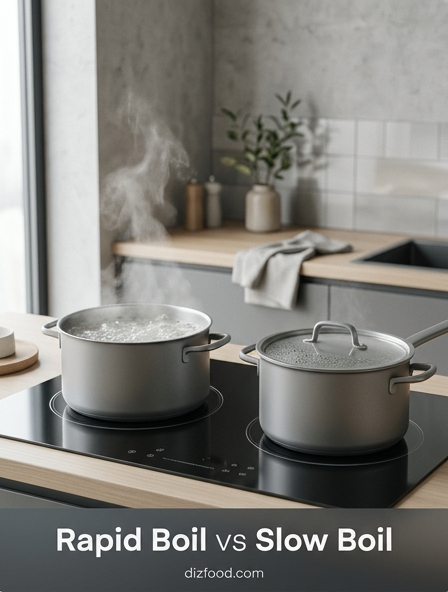
Understanding the Science of Rapid vs Slow Boiling
At the heart of every kitchen task involving water lies the fundamental principle of thermodynamics. Boiling occurs when the vapor pressure of a liquid equals the external pressure surrounding the liquid. In a rapid boil, also known as a rolling boil, the heat source is aggressive enough to cause massive agitation throughout the water column. This results in the constant formation and collapse of steam bubbles, which rise quickly to the surface. From a scientific perspective, once water reaches its boiling point-approximately 212°F at sea level-increasing the heat does not actually raise the temperature of the liquid. Instead, the additional energy is consumed by the latent heat of vaporization, turning liquid water into steam at a faster rate.
Conversely, slow boiling or simmering occurs at temperatures typically ranging from 185°F to 205°F. While the water is technically near its phase-change threshold, the heat input is moderated. This prevents the violent convection currents seen in a rapid boil. The physical movement of the water is much gentler, which significantly impacts how heat is transferred to the food items submerged within. Understanding this distinction allows cooks to manipulate the kinetic energy within the pot to achieve specific culinary results. While a rapid boil uses turbulent flow to distribute heat and move ingredients, a slow boil relies on steady, consistent thermal conduction with minimal mechanical interference.
Key Differences Between a Rolling Boil and Simmering
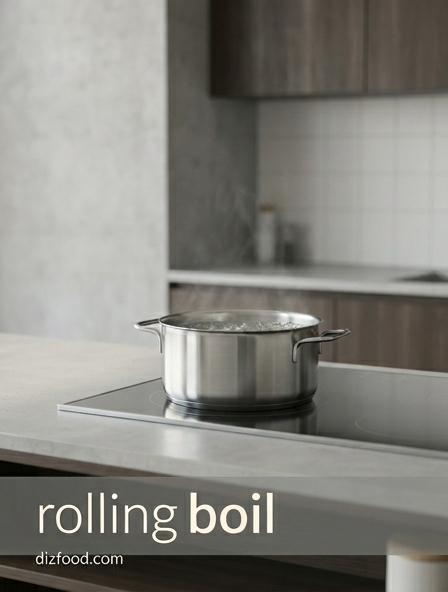
Differentiating between a rolling boil and a simmer is essential for following recipes accurately and ensuring the integrity of the ingredients. A rolling boil is characterized by large, vigorous bubbles that cannot be "stirred away" with a spoon. This state represents maximum agitation. A simmer, often referred to as a slow boil, is more subtle, featuring small bubbles that break the surface occasionally or remain clinging to the sides of the pot.
| Feature | Rolling Boil | Slow Boil / Simmer |
|---|---|---|
| Temperature | Strictly 212°F (100°C) | 185°F - 205°F |
| Bubble Activity | Violent, large, and constant | Small, infrequent, or "lazy" |
| Surface Agitation | High; food is tossed around | Low; food stays relatively still |
| Evaporation Rate | Extremely high | Moderate to low |
The choice between these two states usually depends on whether the cook requires the mechanical energy of the water to perform a task. In a rolling boil, the water acts almost like a physical whisk, keeping items separated and preventing them from sticking to the bottom or to each other. In a slow boil, the primary goal is a gentle environment where the temperature remains just below the point of violent evaporation, preserving the shape and structure of delicate ingredients while still providing enough heat to cook them thoroughly over time.
Optimal Cooking Scenarios for High Heat Boiling
A rapid, rolling boil is the preferred method for specific kitchen tasks where high energy and movement are required. The most common application is cooking dried pasta. The vigorous movement of the water ensures that the pasta shapes remain separated, preventing the starches on the surface from causing the pieces to clump together. Furthermore, the high heat helps the starch granules swell and gelatinize quickly, providing the desired "al dente" texture. Without this high level of agitation, pasta often turns into a gummy mass at the bottom of the pot.
Another critical scenario for high heat boiling is blanching vegetables. When green vegetables like broccoli, asparagus, or green beans are plunged into a large volume of rapidly boiling water, the enzymes that cause browning and flavor degradation are deactivated almost instantly. The high temperature also helps set the chlorophyll, resulting in a vibrant green color. Other scenarios include:
- Reducing thin liquids into thick syrups or glazes where rapid evaporation is desired.
- Cooking sturdy grains like farro or barley that require significant hydration and heat.
- Peeling certain fruits and nuts, such as tomatoes or almonds, by loosening the skins quickly.
- Ensuring a high "recovery time" when adding large amounts of cold food to the pot.
In these cases, the speed of the boil serves as a tool to maintain temperature stability and provide the necessary physical force to move the ingredients during the cooking process.
Why Low and Slow Boiling Enhances Complex Flavors
Low and slow boiling is the secret behind the depth of flavor found in traditional stocks, stews, and braises. When liquid is kept at a simmer, it allows for a gradual extraction of flavor compounds from aromatics, bones, and meats. If these ingredients were subjected to a rapid boil, the violent movement would emulsify fats and impurities into the liquid, resulting in a cloudy, greasy, and muddy-tasting broth. By maintaining a slow boil, the impurities rise to the top as a foam that can be easily skimmed, leaving behind a clear and refined liquid.
Furthermore, the chemical reactions responsible for complex flavors, such as the slow breakdown of connective tissues, require time rather than extreme heat. Collagen in tough cuts of meat begins to transform into gelatin at temperatures well below the boiling point. A slow, steady heat ensures this transformation happens uniformly without overcooking the muscle fibers, which would otherwise become dry and stringy. This process also allows for a better marriage of flavors, as the volatile aromatic compounds have time to infuse the liquid without being evaporated away too quickly by the steam of a rolling boil. In the world of soups and sauces, patience through controlled heat is the primary driver of quality and richness.
Energy Consumption Comparison of Boiling Techniques
Managing heat in the kitchen is as much about efficiency as it is about flavor. There is a common misconception that keeping a stove on its highest setting will continue to cook food faster once the water is already boiling. As established, water cannot exceed its boiling point. Therefore, maintaining a rolling boil for a task that only requires a simmer is a significant waste of energy. The extra heat energy is purely going into turning water into steam, which is then lost to the kitchen environment, often increasing the humidity and the load on cooling systems.
- Phase Change Energy: It takes significantly more energy to turn 212°F water into steam than it does to heat water from room temperature to boiling. High-heat boiling maximizes this energy loss.
- Lid Usage: Using a lid during a slow boil traps heat and steam, allowing the cook to maintain the temperature using a fraction of the burner's power.
- BTU Efficiency: Modern gas and induction burners are highly efficient at reaching a boil, but the steady maintenance of a simmer uses up to 70% less energy than a full-throttle rolling boil.
For long-duration cooking, such as making a beef stew for three hours, the cumulative energy savings of switching from a medium-high setting to a low simmer are substantial. Additionally, reducing the evaporation rate means less water needs to be added back to the pot, further conserving both water and the energy required to heat that new water back up to the cooking temperature.
The Effect of Boiling Speed on Food Texture
The physical state of the water directly dictates the final mouthfeel and structural integrity of the food. Rapid boiling is a high-impact environment. For delicate items like fish, eggs, or soft vegetables, this impact can be destructive. Poaching a piece of fish in a rolling boil will likely cause the flesh to flake apart and become tough as the proteins contract too quickly. In contrast, a slow boil or poaching environment keeps the proteins relaxed, resulting in a moist and tender texture. Similarly, when boiling eggs, a violent boil can cause the eggs to knock against each other or the pot, leading to cracked shells and rubbery whites.
Starchy foods also respond differently to boiling speeds. Potatoes, for example, are best started in cold water and brought to a gentle boil. If they are cooked in a rapid boil, the outside of the potato will overcook and slough off into the water before the center is tender, leading to a mushy exterior and a raw interior. For pasta, however, the texture benefits from the rapid boil because the constant motion prevents the noodles from sticking and ensures even hydration. The choice of boiling speed is essentially a choice between "shaking" the food and "cradling" it. Most proteins and delicate vegetables require the cradle of a simmer, while starches often benefit from the shake of a rolling boil.
Mastering Liquid Reduction Through Controlled Boiling
Reduction is the process of thickening and intensifying the flavor of a liquid by evaporating a portion of its water content. The speed of the boil during this process determines both the quality of the sauce and the time required. A rapid boil is used when a cook needs to reduce a thin, watery liquid-like a wine deglaze or a simple syrup-very quickly. The high surface activity and steam production facilitate rapid volume loss. However, this must be monitored closely, as the window between a perfect reduction and a burnt pan is very narrow at high heat.
For more complex sauces, such as a demi-glace or a tomato-based ragu, a slow and controlled boil is superior. A slow reduction allows the flavors to concentrate without the risk of scorching the sugars or proteins against the sides of the pot. As the liquid level drops, the concentration of solutes increases, which raises the boiling point slightly and makes the liquid more prone to burning. By using a slow boil, the cook maintains better control over the viscosity. This method also ensures that any fat remains separate and can be skimmed off, rather than being forced back into the sauce, which would result in a greasy finish. Mastering reduction is an exercise in balancing the rate of evaporation with the development of flavor and texture.
Nutrient Preservation in Rapid vs Slow Cooking
The impact of boiling on the nutritional value of food is a major concern for health-conscious cooking. Many vitamins, particularly Vitamin C and the B-complex vitamins, are water-soluble and heat-sensitive. When vegetables are boiled, these nutrients leach out into the cooking water. If that water is later discarded, the nutritional profile of the meal is diminished. A rapid boil can be particularly detrimental because the high heat and long exposure time maximize the rate of nutrient leaching. However, rapid boiling for a very short period-blanching-can sometimes be better than a long simmer because it minimizes the total time the food is exposed to heat.
A slow boil or simmer is often used for soups and stews where the cooking liquid is consumed as part of the dish. In this context, the nutrients that leach out of the vegetables and meats are retained within the broth, making the "slow and low" method more nutritionally efficient for the overall meal. Additionally, certain antioxidants and minerals become more bioavailable when cooked slowly at lower temperatures, as the cell walls of the plants are broken down gently. To maximize nutrient preservation, the rule of thumb is to use the minimum amount of water necessary and to choose the boiling speed that allows for the shortest cooking time without sacrificing the digestibility or flavor of the food.
Essential Kitchen Tools for Precise Temperature Control
Achieving the perfect boil requires more than just turning a knob; it requires the right tools to monitor and maintain the thermal environment. While many experienced cooks judge a boil by sight, precision tools can eliminate guesswork and ensure consistency across different batches of food. The most basic tool is a high-quality, heavy-bottomed pot. Materials like clad stainless steel or enameled cast iron distribute heat evenly, preventing "hot spots" that can cause localized rapid boiling and burning in an otherwise simmering pot.
For more technical tasks, the following tools are indispensable:
- Digital Instant-Read Thermometer: Allows the cook to check if a liquid is in the poaching (160°F-180°F), simmering (185°F-205°F), or boiling (212°F) range.
- Simmer Ring/Heat Diffuser: A metal plate placed between the burner and the pot to spread the heat, making it possible to maintain an ultra-low simmer on stoves that run too hot.
- Induction Cooktops: These offer the most precise control over temperature, allowing for specific wattage settings that can hold a simmer for hours without fluctuation.
- Lids with Steam Vents: These help manage the internal pressure and evaporation rate without requiring the lid to be propped open awkwardly.
Investing in these tools allows a cook to transition from "high-heat-only" cooking to a more nuanced approach where the temperature is tailored to the specific needs of the ingredients.
Choosing the Best Boiling Method for Every Dish
Selecting the correct boiling method is a fundamental skill that separates novice cooks from professionals. The decision should be based on the desired final texture, the delicacy of the ingredients, and whether the cooking liquid is intended to be a part of the final presentation. A rapid boil is a tool for speed, mechanical agitation, and starch management. Use it for pasta, sturdy vegetables, and quick reductions where the liquid is thin and resilient. It is the "power mode" of the kitchen, useful when the goal is to get in and out of the heat quickly.
A slow boil, or simmer, is the tool of the patient cook. It is the preferred method for almost everything else: tenderizing meats, developing clear and flavorful stocks, cooking delicate grains like rice or quinoa, and poaching proteins. By keeping the water just below the point of violent eruption, you protect the food from physical damage and chemical over-processing. When in doubt, it is usually safer to start with a lower heat and adjust upward. Understanding that boiling is not a singular state, but a spectrum of thermal and mechanical energy, allows for a more controlled and successful culinary experience regardless of the dish being prepared.

Comments