
The Science of Rolling Boils
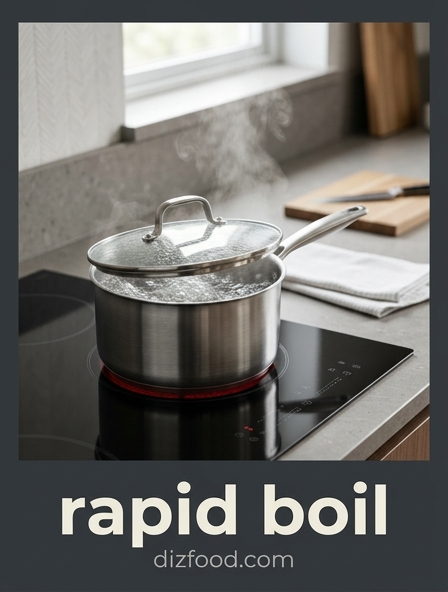
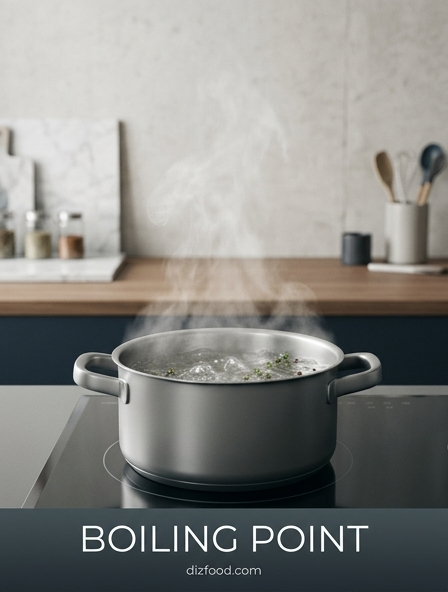
A rolling boil represents a state of vigorous agitation where bubbles form rapidly and break the surface with force, regardless of stirring. This phenomenon occurs when the vapor pressure of the liquid exceeds the atmospheric pressure, reaching 212°F (100°C) at sea level. The intense movement is driven by convection currents, where hotter, less dense water at the bottom of the pot rises rapidly while cooler water sinks. This creates a high-energy environment essential for certain culinary tasks.
Key characteristics of a true rolling boil include:
- Massive bubble formation originating from the base of the vessel.
- Continuous surface turbulence that cannot be suppressed by a wooden spoon.
- Maximum steam production indicating high kinetic energy within the liquid molecules.
- A constant temperature that will not rise further until all water has evaporated.
In the kitchen, the rolling boil serves as a mechanical tool. It provides the kinetic force necessary to keep heavy items, such as pasta or dumplings, suspended and moving, preventing them from resting on the hot bottom surface where they might scorch or stick to the cookware.
Starch Gelatinization and Heat
Starch gelatinization is the primary chemical process that occurs when cooking grains or pasta in boiling water. As temperatures rise above 140°F, starch granules begin to absorb water and swell. However, it is the rapid boil that ensures this process happens uniformly. At the boiling point, the crystalline structure of the starch breaks down, allowing the intermolecular bonds to weaken and the granules to engage in "gelation," where they become soft and edible.
Without sufficient heat, the starch molecules do not hydrate correctly. If the water is only lukewarm, the outer layers of the food may turn mushy before the core has reached the necessary temperature to gelatinize. High heat facilitates a rapid transition, locking in the structure of the starch matrix. This is particularly vital for achieving the desired mouthfeel in wheat-based products. The heat must be intense enough to penetrate the center of the food quickly, ensuring that the hydration gradient remains consistent from the surface to the interior, resulting in a cohesive and pleasant texture rather than a disintegrated mass.
Preventing Pasta Clumping Naturally
One of the most common kitchen frustrations is pasta sticking together. While many home cooks mistakenly rely on olive oil to prevent clumping, the most effective natural deterrent is a vigorous rolling boil. The mechanical agitation provided by the rising bubbles acts as a physical barrier between the strands or shapes. As the pasta begins to release surface starches, the constant motion prevents these starches from acting as a biological glue.
To maximize this natural prevention, follow these steps:
- Wait for the water to reach a full, aggressive boil before adding the pasta.
- Stir immediately after immersion to ensure all surfaces are wetted.
- Maintain high heat to return to a boil as quickly as possible.
- Ensure the pot is large enough to allow the water to circulate freely around each piece.
When the water is turbulent, the pasta is in a constant state of flux. This motion ensures that the sticky "amylose" starch that leaches out is diluted and washed away from the surface of the pasta into the surrounding liquid, rather than settling between adjacent pieces and causing them to fuse together during the critical first few minutes of cooking.
Maintaining Consistent Cooking Temperatures
Consistency is the hallmark of professional cooking, and maintaining a steady boiling point is essential for predictable results. When cold food is added to boiling water, the temperature inevitably drops. The goal of the cook is to minimize this recovery time. A sustained rolling boil indicates that the burner is providing enough energy to overcome the cooling effect of the food, ensuring the cooking process does not stall.
| Heat Level | Surface Activity | Best For |
|---|---|---|
| Simmer | Gentle, small bubbles | Soups and delicate proteins |
| Gentle Boil | Moderate movement | Vegetables |
| Rolling Boil | Violent, constant agitation | Dried pasta and grains |
Fluctuating temperatures can lead to unevenly cooked items, where the outside is overdone and the inside remains raw. By keeping the flame high and using a lid to initially bring the temperature back up, you ensure that the thermal energy remains constant. This stability allows the timing recommendations on packaging to be accurate, as those times are calculated based on a continuous 212°F environment.
The Role of Thermal Mass
Thermal mass refers to the ability of a body to store heat energy. In the kitchen, the "body" is the volume of water in your pot. A larger volume of water has a higher thermal mass, meaning it contains more total energy than a smaller volume at the same temperature. When you drop a pound of pasta into a small pot of boiling water, the temperature drops significantly, often stopping the boil entirely. Conversely, dropping that same pasta into a large gallon-sized pot results in a negligible temperature dip.
This principle is why using a large pot is not just about giving the pasta room to move; it is about heat preservation. A high thermal mass acts as a buffer, absorbing the cold impact of the pasta without losing the "rolling" state of the water. This ensures that the starch gelatinization begins immediately and continues without interruption. Professionals prefer heavy-bottomed pots with high water capacities because they retain heat more efficiently, providing a more stable and forgiving cooking environment that can handle large batches of food with minimal loss of momentum.
Achieving the Perfect Al Dente Texture
The term "al dente" translates to "to the tooth," describing a texture that is firm to the bite but fully cooked. Achieving this state requires precise timing and high heat. When pasta is cooked in a rapid boil, the exterior cooks quickly while the heat steadily works its way to the center. This creates a slight texture gradient that is the hallmark of quality pasta preparation. If the water is not hot enough, the pasta stays in the water longer, leading to a homogenous, soft texture throughout.
To ensure the perfect al dente finish, consider these factors:
- High heat ensures the starch matrix remains tight and resilient.
- Rapid boiling minimizes the total "soak time" which can lead to sogginess.
- Testing the pasta 2 minutes before the suggested time prevents overshooting the window.
- The mechanical action of the boil keeps the surface from becoming overly slimy.
Once the pasta reaches that perfect point of resistance, it should be removed from the heat immediately. The high-energy environment of the rapid boil allows for a very clear "cutoff" point in the cooking process, making it easier for the cook to identify the exact moment the pasta has transitioned from raw to perfectly firm.
Why Slow Simmers Fail Pasta
Attempting to cook pasta in simmering or barely hot water is a recipe for culinary failure. When the temperature is too low, the starch on the surface of the pasta begins to hydrate and dissolve into a gummy layer before the internal structure has a chance to set. This results in "mushy" pasta that lacks any structural integrity. Furthermore, without the agitation of a rolling boil, the pasta pieces will settle on top of each other, and that gummy surface starch will act as an adhesive, creating large, inseparable clumps.
The lack of convection currents in a simmer means that heat is not distributed as evenly. Some pieces of pasta may sit in cooler pockets of water, while those at the bottom are subjected to direct heat from the burner, leading to uneven cooking across the batch. Additionally, the longer cooking time required at lower temperatures allows more of the pasta's flavor and nutrients to leach out into the water. The end result is a bland, sticky, and structurally compromised product that fails to hold sauce effectively or provide a satisfying eating experience.
Optimizing Water Volume for Heat Retention
The ratio of water to food is a critical variable in heat retention. The standard recommendation is four to six quarts of water per pound of pasta. This ratio is optimized to balance energy efficiency with thermal stability. While it takes longer to bring a large volume of water to a boil, the benefits during the cooking phase are significant. A larger volume ensures that the concentration of leached starch remains low, which prevents the water from becoming "syrupy" and potentially boiling over.
To optimize your boiling process, follow this logical progression:
- Fill a large pot with cold water to ensure better oxygenation.
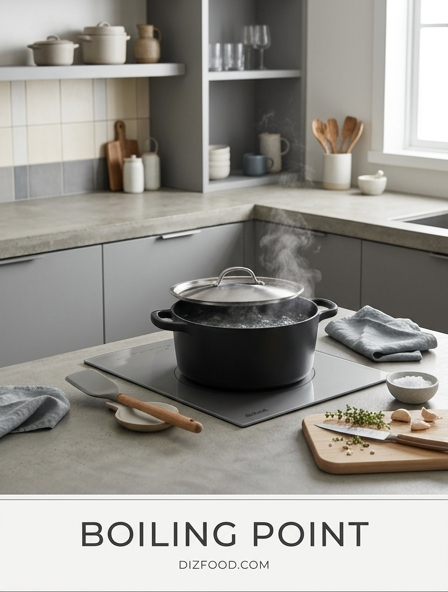
- Cover with a lid to trap steam and reach the boiling point faster.
- Add salt only once the water is boiling to prevent pitting the pot.
- Ensure the burner is set to its highest output to compensate for the pasta's mass.
By maintaining a high water-to-pasta ratio, you ensure that the water temperature stays as close to 212°F as possible throughout the entire duration. This thermal "momentum" is what allows the pasta to cook quickly and cleanly, maintaining the integrity of each individual shape.
Surface Agitation and Even Cooking
Surface agitation is the visible result of kinetic energy being released as steam. This turbulence is not merely for show; it serves a functional purpose in even cooking. In a stagnant or simmering pot, "hot spots" can develop where the water in contact with the bottom of the pot is significantly hotter than the water near the surface. A rolling boil eliminates these gradients through constant mixing. The bubbles act as tiny pistons, pushing the food around and ensuring every millimeter of the pasta's surface is exposed to the same temperature.
This agitation is also vital for heat transfer efficiency. Moving water transfers heat to the food more effectively than still water because it constantly replaces the cooler "boundary layer" of water immediately surrounding the food with fresh, boiling-hot water. This process, known as forced convection, accelerates the cooking time and ensures that the heat penetrates the food from all angles simultaneously. Without this vigorous motion, you risk a finished dish where some pieces are perfectly cooked while others remain unpleasantly firm or under-hydrated.
Starch Management During Rapid Boils
As pasta cooks, it sheds starch into the water, specifically amylose. In a concentrated environment, this starch can create a viscous foam on the surface that may lead to a "boil-over." A rapid boil helps manage this by distributing the starch evenly throughout the large volume of water. However, the cook must also be aware of how the water chemistry interacts with this starch. Adding salt doesn't just season the food; it affects how the starch granules swell and helps to keep the pasta's texture firm.
| Factor | Effect on Starch | Mitigation Strategy |
|---|---|---|
| Water Volume | Dilution of starch | Use at least 4 quarts per lb |
| Agitation | Prevents starch bonding | Maintain rolling boil |
| Salinity | Strengthens starch walls | Add 1-2 tbsp of salt |
Managing the starch concentration is the final step in mastering the rapid boil. By using enough water and maintaining a high temperature, the "pasta water" becomes a useful byproduct-a starchy liquid that can later be used to emulsify sauces-rather than a thick, gummy waste product that ruins the texture of the meal.



Comments