
Understanding how water responds to heat reveals fascinating insights into its chemical purity and molecular behavior. While tap water is filled with various minerals and dissolved solids that slightly alter its heat capacity, distilled water remains a pure H2O baseline, offering more predictable thermal performance. These impurities in tap water act as microscopic influencers, affecting heat transfer rates and the overall energy required to reach specific temperatures. For those curious about how these scientific nuances translate into everyday cooking or laboratory use, it is essential to understand the specific characteristics of distilled water boiling vs tap water boiling.
Mineral Solutes and Boiling Point Elevation
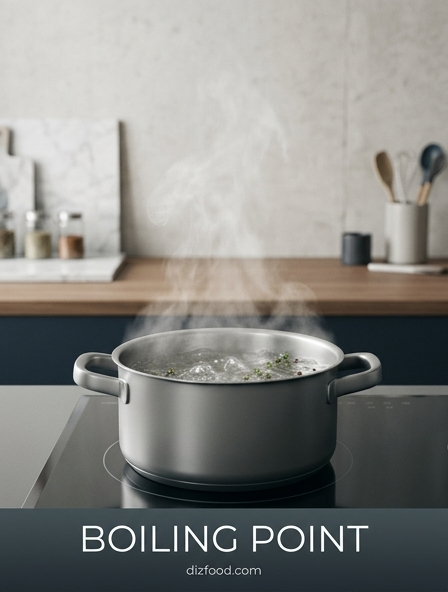
In the culinary environment, the addition of mineral solutes, most commonly sodium chloride, significantly alters the boiling characteristics of water. This phenomenon, known as boiling point elevation, is a colligative property where the temperature at which a liquid boils increases as the concentration of solutes rises. When salt dissolves in water, it dissociates into sodium and chloride ions, which create strong ion-dipole attractions with the polar water molecules. These interactions require additional kinetic energy to overcome, effectively pinning the water molecules in the liquid phase and preventing them from escaping into the atmosphere.
- Ion-Dipole Forces: Stronger than hydrogen bonds, necessitating higher thermal input.
- Concentration Dependency: The degree of elevation is proportional to the molality of the solution.
- Atmospheric Pressure: While solutes raise the threshold, local altitude remains a primary factor in the baseline boiling point.
While the temperature increase is mathematically measurable, typical kitchen concentrations of salt-such as a teaspoon per liter-only raise the boiling point by approximately 0.05 to 0.1 degrees Celsius. Consequently, the primary culinary purpose of salting water remains flavor enhancement rather than significantly reducing cooking times through increased heat.
Nucleation Sites and Bubble Formation Mechanics
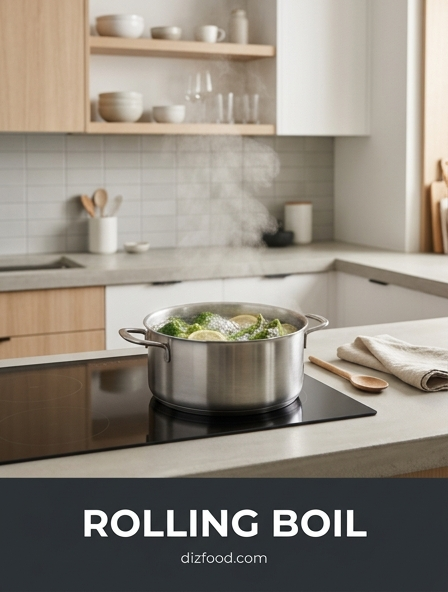
The transition from liquid to gas during boiling is not a uniform process but occurs at specific locations known as nucleation sites. In a kitchen pot, these sites are typically microscopic imperfections, scratches, or trapped air pockets on the interior surface of the cookware. Without these irregularities, water can become superheated, reaching a temperature above its boiling point without actually boiling, which poses a significant safety risk when the liquid is eventually disturbed.
- Induction Phase: Thermal energy creates localized pockets of high-energy molecules near the heat source.
- Bubble Embryo Formation: Vapor begins to collect in surface crevices where the energy barrier for phase change is lower.
- Buoyancy and Detachment: Once the internal pressure of the vapor bubble exceeds the surrounding hydrostatic pressure and surface tension, the bubble rises.
Modern non-stick coatings often reduce the number of available nucleation sites compared to aged stainless steel or cast iron. This reduction can lead to a more "violent" boil once the threshold is finally reached, as fewer sites must handle the same amount of latent heat transfer, resulting in larger, more turbulent bubbles.
Specific Heat Capacity Variations in Pure Water
Specific heat capacity defines the amount of thermal energy required to raise the temperature of one gram of a substance by one degree Celsius. Pure water possesses an unusually high specific heat capacity of approximately 4.184 Joules per gram, a result of its extensive hydrogen bonding network. This property makes water an excellent thermal buffer in the kitchen, allowing it to absorb significant heat before reaching its boiling point.
| Substance State | Specific Heat (J/g°C) | Thermal Stability |
|---|---|---|
| Pure Liquid Water | 4.184 | High |
| Water Vapor (Steam) | 2.080 | Moderate |
| Ice (0°C) | 2.050 | Moderate |
The consistency of pure water's heat capacity allows for predictable results in precision cooking techniques like sous-vide or poaching. However, as water approaches the boiling point, the energy input shifts from increasing the temperature to breaking the molecular bonds necessary for the phase change. This transition phase requires the latent heat of vaporization, which is significantly higher than the energy required for the preceding temperature ramp-up.
Impact of Dissolved Solids on Thermal Conductivity
Thermal conductivity in a boiling pot refers to how efficiently heat moves through the liquid medium. When tap water contains high levels of dissolved solids, such as calcium, magnesium, and bicarbonates, the internal movement of energy is slightly modified. These solids can interfere with the natural convection currents that distribute heat from the bottom of the vessel to the surface. As the liquid becomes more "crowded" with various ions and suspended particles, the path for heat transfer becomes more complex.
- Convection Interference: Heavy mineralization can increase the micro-viscosity of the fluid.
- Boundary Layer Effects: Solids may settle near the heating element, creating a thin resistive layer.
- Turbulence Modulation: Dissolved substances can alter the size and frequency of bubbles, which are the primary drivers of mixing during a rolling boil.
While the effect on overall cooking time is usually negligible for home chefs, industrial food processing must account for these variations. In a residential kitchen, the most noticeable impact of these dissolved solids is not the speed of heating, but the potential for "boil-over" events where impurities stabilize the foam created by escaping steam.
Vapor Pressure Differences Between Tap and Distilled
Boiling occurs when the vapor pressure of a liquid equals the surrounding atmospheric pressure. Tap water, which contains a cocktail of dissolved gases and minerals, exhibits a different vapor pressure profile compared to distilled water. Distilled water is a pure solvent, meaning every molecule at the surface is a water molecule capable of transitioning into the gas phase. In contrast, the solutes in tap water occupy surface area, reducing the number of water molecules available to escape at any given moment.
- Raoult's Law: The vapor pressure of a solution is lower than that of the pure solvent.
- Degassing: Tap water often releases dissolved oxygen and nitrogen as it heats, creating small "pre-boil" bubbles.
- Evaporative Resistance: Impurities create a slight barrier that must be overcome by higher kinetic energy.
Because distilled water lacks these impurities, it may reach a rolling boil more smoothly and predictably. Tap water's behavior is more erratic due to the varying concentrations of minerals which can change daily based on municipal treatment. This difference is why scientific experiments involving boiling points almost exclusively utilize distilled or deionized water to ensure consistency and eliminate variables introduced by local plumbing.
Evaporative Rate and Surface Tension Dynamics
Surface tension is the cohesive force that holds the surface of a liquid together, and it plays a critical role in how quickly water evaporates as it nears the boiling point. At the molecular level, water molecules are attracted to one another through hydrogen bonds. For a molecule to escape into the air, it must possess enough kinetic energy to break these bonds and overcome the surface tension. As the temperature of the water increases, the kinetic energy of the molecules rises, and the surface tension simultaneously decreases.
- Kinetic Excitation: Heat increases molecular velocity, weakening the "skin" of the water.
- Boundary Breakthrough: Molecules at the surface transition to vapor more frequently.
- Energy Cooling: Evaporation carries away the highest-energy molecules, which is why simmering water stays at a constant temperature.
The addition of surfactants, such as fats or soaps, can drastically lower surface tension, leading to faster evaporation and different bubble structures. In the kitchen, a layer of oil on top of boiling water can actually suppress evaporation by creating a secondary barrier, which may lead to higher internal temperatures but also increases the risk of the pot boiling over once the steam finally breaks through.
Limescale Accumulation and Heat Transfer Resistance
Limescale, primarily composed of calcium carbonate, is a common byproduct of boiling hard water in kettles and pots. This mineral buildup acts as a highly effective thermal insulator, which is detrimental to the efficiency of kitchen appliances. When a layer of scale forms on a heating element or the base of a pan, it creates a barrier of high thermal resistance that the heat must penetrate before it can reach the water. This results in the heating element running much hotter than intended while the water takes longer to boil.
| Layer Thickness | Energy Efficiency Loss | Potential Damage |
|---|---|---|
| 0.5 mm | ~5% | Minor overheating |
| 1.0 mm | ~10-12% | Element fatigue |
| 2.0 mm | >20% | Thermal fuse failure |
The presence of scale also changes the acoustics of boiling. A "noisy" kettle is often a sign of scale accumulation, as steam bubbles become trapped beneath the mineral crust and collapse violently, a process known as cavitation. Regularly descaling cookware ensures that the thermal response remains fast and that energy consumption is kept to a minimum.
Molecular Purity and Kinetic Energy Distribution
The boiling process is essentially a manifestation of the Maxwell-Boltzmann distribution, which describes the speeds of molecules in a liquid. In a pot of pure water, the kinetic energy is distributed among identical molecules. As heat is applied, the average kinetic energy increases until a sufficient portion of the population exceeds the energy threshold required for the phase change. Purity ensures that this distribution is uniform, leading to a sharp, well-defined boiling point at a given pressure.
- Homogeneity: Pure water molecules respond identically to thermal excitation.
- Energy Peaks: The transition to vapor occurs once the "high-energy tail" of the distribution reaches the escape velocity.
- Impact of Impurities: Foreign molecules skew the distribution, creating localized "hot spots" or "cold spots" at the molecular level.
When impurities are present, they can absorb energy without contributing to the vapor pressure, or they can disrupt the hydrogen bonding network of the water. This molecular interference means that the liquid requires more total energy to ensure that enough water molecules reach the necessary state for boiling, resulting in the slight temperature shifts observed in kitchen chemistry.
Density Fluctuations During Phase Transitions
As water reaches its boiling point, it undergoes dramatic density fluctuations that drive the physical movement of the liquid. Water is most dense at 4 degrees Celsius; as it continues to heat toward 100 degrees, its density steadily decreases. However, the most significant change occurs during the phase transition to steam. Vaporized water is approximately 1,600 times less dense than its liquid counterpart. This massive change in volume and density is what causes the vigorous agitation associated with boiling.
- Thermal Expansion: Liquid water expands slightly as it heats, losing density.
- Vapor Pocket Formation: High-energy zones create steam, which is significantly lighter than the surrounding water.
- Buoyant Ascent: The low-density bubbles accelerate toward the surface, creating displacement.
This density-driven agitation is vital for cooking, as it ensures the constant movement of the food and prevents localized burning. The rising steam also creates a pressure differential at the surface, which aids in the circulation of the liquid. Without these density fluctuations, heat would only move through the water via conduction, which is a much slower and less efficient process than the natural convection provided by boiling.
Thermal Response Times in Residential Cookware
The time it takes for water to reach its boiling point is heavily dependent on the material and thickness of the cookware. This is known as thermal response time, which is a function of the material's thermal conductivity and its own specific heat capacity. In a kitchen setting, we see a wide range of performance between different metals. For instance, copper and aluminum have high conductivity and low specific heat, meaning they heat up and transfer energy to the water almost immediately.
| Material | Conductivity (W/m·K) | Response Profile |
|---|---|---|
| Copper | 398 | Ultra-Fast |
| Aluminum | 235 | Fast |
| Cast Iron | 52 | Slow / High Retenion |
| Stainless Steel | 15 | Variable / Multi-clad |
Cast iron, by contrast, has a high thermal mass and lower conductivity. It takes significantly longer to reach boiling temperature, but it also retains that heat much better than thinner materials. Stainless steel is a poor conductor on its own, which is why high-quality pots often feature an aluminum or copper core. The interaction between the cookware's material properties and the water's boiling point determines how quickly a chef can bring a pot to a boil and how precisely they can control the simmer.

Comments