
Understanding Milk as a Bioactive Emulsion
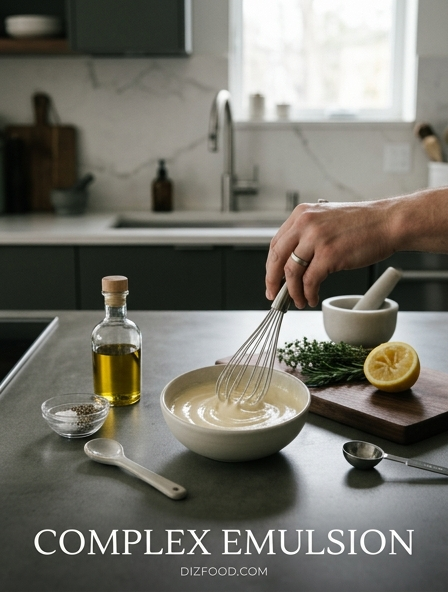
Milk is one of the most sophisticated examples of a natural oil-in-water emulsion found in the culinary world. It consists of a continuous aqueous phase containing dissolved lactose, minerals, and vitamins, within which a dispersed phase of lipid droplets resides. These lipid droplets are not merely free-floating fats; they are encapsulated within a complex biological structure known as the Milk Fat Globule Membrane (MFGM). This trilayer membrane, composed of phospholipids and specific proteins, prevents the droplets from coalescing and maintains the emulsion's stability under standard conditions.
Beyond its lipid content, milk functions as a colloidal suspension of protein aggregates called casein micelles. These micelles are held together by calcium phosphate bridges, creating a structural framework that interacts dynamically with the surrounding liquid. When used in cooking, understanding this bioactive arrangement is crucial, as the interplay between the hydrophobic core and hydrophilic surface of the milk components dictates how the emulsion responds to mechanical agitation and chemical shifts. The equilibrium of this system provides the foundational creaminess and mouthfeel essential to countless gastronomic applications.
Fat Globule Stability and Heat Conductivity
The stability of fat globules in milk is heavily influenced by the thermal environment of the kitchen. As heat is applied, the kinetic energy within the emulsion increases, impacting the integrity of the Milk Fat Globule Membrane. While the MFGM is robust at room temperature, excessive heat can cause these membranes to rupture, leading to the coalescence of fat and the eventual "oiling out" observed in poorly managed sauces. The conductivity of milk is slightly lower than that of pure water due to these suspended solids, which act as micro-insulators.
- Lipid Density: Fat conducts heat more slowly than the aqueous phase, creating micro-gradients of temperature within the fluid.
- Homogenization: Industrial milk is often homogenized to reduce globule size, which increases surface area and enhances emulsion stability against thermal stress.
- Viscosity Changes: As temperature rises, the viscosity of the lipid phase decreases, altering the flow characteristics of the liquid.
In high-fat dairy products like heavy cream, the concentration of these globules is so high that they provide significant structural support, allowing for the creation of stable foams and thick reductions through controlled evaporation.
Casein Micelle Sensitivity to High Temperatures
Casein micelles represent approximately 80% of the total protein content in bovine milk. These micelles are highly sensitive to the surrounding environment, particularly regarding pH and thermal energy. Under normal conditions, the micelles carry a negative net charge, which causes them to repel each other and remain suspended. However, as temperatures approach the boiling point, the internal structure of these micelles begins to shift. While caseins are generally considered heat-stable compared to whey proteins, they are not invincible.
The sensitivity of these proteins is characterized by the following components:
- alpha-s1 Casein: Provides the primary proteinaceous framework.
- beta-Casein: Highly hydrophobic, influencing the micelle's core stability.
- kappa-Casein: Located on the surface, providing the "hairy" layer that prevents aggregation.
When heat is combined with acidity, the protective kappa-casein layer is compromised. The repulsion forces diminish, leading to the collapse of the colloidal system and the formation of curds, a process essential for cheese making but often undesirable in soup or sauce preparation.
Preventing Coagulation in Boiling Liquids
Maintaining a smooth emulsion while heating milk-based liquids requires a strategic approach to molecular chemistry. Coagulation occurs when the proteins in milk lose their structural integrity and bond together, trapping moisture in a disorganized matrix. To prevent this in boiling liquids, chefs must manage the transition states of both casein and whey proteins. Introducing milk into a boiling acidic environment, such as a tomato base, almost guarantees curdling unless stabilizing agents are present.
| Technique | Mechanism |
|---|---|
| Tempering | Gradually equilibrates temperature to prevent thermal shock. |
| Starch Buffering | Starch molecules coat proteins, physically blocking aggregation. |
| pH Balancing | Using alkaline ingredients to neutralize acidity before adding dairy. |
A common culinary secret involves the use of a roux; the flour's starch granules swell and form a protective web that keeps milk proteins separated even as the liquid reaches a vigorous boil. Continuous agitation also helps by distributing heat evenly, preventing localized protein denaturation at the bottom of the vessel.
Thermal Dynamics of Dairy Emulsions
The thermal dynamics of dairy emulsions are governed by the specific heat capacity of milk, which is roughly 3.93 kJ/kg·K. This value is slightly lower than that of water, meaning milk heats up and cools down more quickly than pure water. When heating milk, convection currents play a vital role in distributing energy. As the liquid at the bottom of the pan warms, it becomes less dense and rises, while cooler, denser milk sinks to take its place. This cycle ensures a relatively uniform temperature distribution throughout the emulsion.
However, the presence of fats and proteins complicates this simple thermodynamic model. The dispersed lipids can cause localized "hot spots" if the emulsion is not sufficiently agitated. Furthermore, as the temperature rises, the solubility of calcium phosphate decreases. This can lead to the precipitation of minerals onto the heating surface, which changes the heat transfer efficiency of the cookware. Controlling these dynamics is the difference between a perfectly silken béchamel and a gritty, scorched sauce that has lost its emulsified balance.
The Science of Milk Surface Tension
Surface tension in milk is a primary factor in the formation of "skin" during heating. This phenomenon is a result of evaporation at the air-liquid interface, which concentrates proteins and fats at the surface. As water molecules escape into the air, the remaining solids-primarily lactalbumin and lactoglobulin-denature and cross-link, forming a thin, tough film. This skin acts as a barrier, trapping steam beneath it and causing the classic "boil-over" effect seen in kitchens worldwide.
The surface tension of milk is lower than that of water because of the presence of proteins and lipids which act as natural surfactants. These molecules migrate to the surface, reducing the energy required to expand the interface. To manage this in a culinary setting, one can minimize evaporation by covering the pot or by introducing a layer of fat, such as a knob of butter, to the surface. Additionally, mechanical foam (froth) created through whisking can disrupt the formation of a continuous film by increasing the surface area and allowing steam to escape through a network of bubbles rather than being trapped by a singular membrane.
Managing Scorching Through Emulsion Control
Scorching is the result of both protein sedimentation and the Maillard reaction occurring at the interface of the pan and the dairy emulsion. Because milk is a complex mixture of sugars (lactose) and proteins, it is highly susceptible to browning and eventual carbonization when exposed to direct, high-intensity heat. The proteins, specifically the casein micelles that have lost their stability, settle to the bottom of the vessel where the temperature is highest. Once pinned against the hot surface, they undergo rapid dehydration and chemical rearrangement.
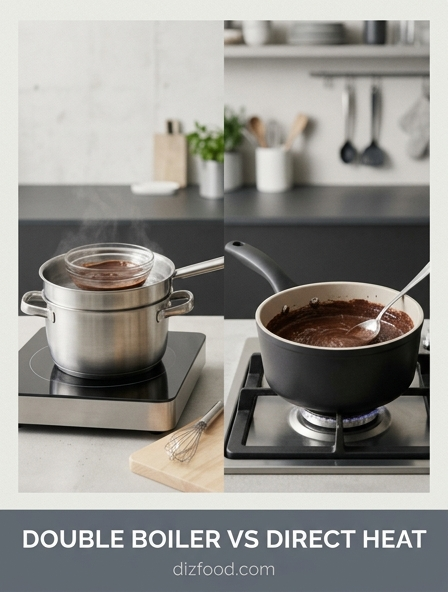
Effective management requires controlling the emulsion's movement and the pan's thermal profile. Heavy-bottomed pans made of materials with high thermal conductivity, such as copper or aluminum clad in stainless steel, are preferred because they eliminate hot spots. Constant stirring is essential; it provides mechanical energy that keeps the proteins in suspension and prevents them from resting on the heat source long enough to bond. By maintaining the emulsion's kinetic state, the chef ensures that no single portion of the milk reaches the critical temperature required for irreversible thermal degradation and the accompanying bitter, burnt flavors.
Denaturation of Whey Proteins During Heating
While caseins are heat-stable, whey proteins-specifically beta-lactoglobulin and alpha-lactalbumin-are highly thermolabile. Denaturation begins at approximately 65°C (149°F), where the proteins start to unfold from their native globular states. This unfolding exposes hydrophobic groups and sulfhydryl (-SH) groups that were previously buried within the protein structure. These exposed groups are then free to react with other proteins, most notably the kappa-casein on the surface of the casein micelles.
This interaction is a double-edged sword in the kitchen. In bread making, denatured whey proteins are desirable as they improve dough extensibility and loaf volume. However, in delicate custard or sauce making, this denaturation can lead to a "cooked" flavor characterized by the release of volatile sulfur compounds. The process of denaturation also alters the viscosity of the emulsion, as the unfolded protein chains occupy more volume and interact more frequently with the aqueous phase. Monitoring these molecular shifts allows for precise control over the texture and aromatic profile of dairy-heavy dishes, ensuring the emulsion remains sophisticated and palatable.
Achieving Uniformity in Scalded Milk
Scalding is a traditional culinary technique where milk is heated to just below the boiling point, typically around 82°C (180°F). At this specific temperature, the bioactive emulsion undergoes several transformative changes that are distinct from those at a full boil. Scalding serves to deactivate certain enzymes, such as lipases, which can cause off-flavors over time. It also effectively kills most spoilage bacteria and denatures specific whey proteins that would otherwise interfere with the structural development of yeast-leavened doughs.
To achieve uniformity during scalding, the heat must be applied gently and the liquid monitored closely for the appearance of small bubbles around the perimeter of the pan. This visual cue indicates that the emulsion is approaching the necessary temperature without reaching the turbulent state of boiling that might disrupt the fat-protein balance too aggressively. Scalded milk results in a smoother texture in finished products like puddings and ice cream bases, as the partial protein denaturation creates a more cohesive network when later combined with other ingredients. It is a bridge between the raw bioactive state of milk and the fully cooked, structurally altered state.
Molecular Precision in Culinary Temperature Control
In modern gastronomy, the management of dairy emulsions has shifted toward molecular precision. Using digital thermometry and controlled heating elements allows chefs to target specific molecular transitions within the milk. Every five-degree increment brings a different chemical state, from the melting of specific milk fats to the precise point of whey denaturation. This precision ensures that the emulsion's delicate balance is never accidentally compromised by overshoot.
| Temperature | Molecular Event |
|---|---|
| 37°C - 40°C | Complete melting of milk fat globules. |
| 65°C - 70°C | Onset of whey protein denaturation. |
| 82°C | Ideal scalding point; enzyme deactivation. |
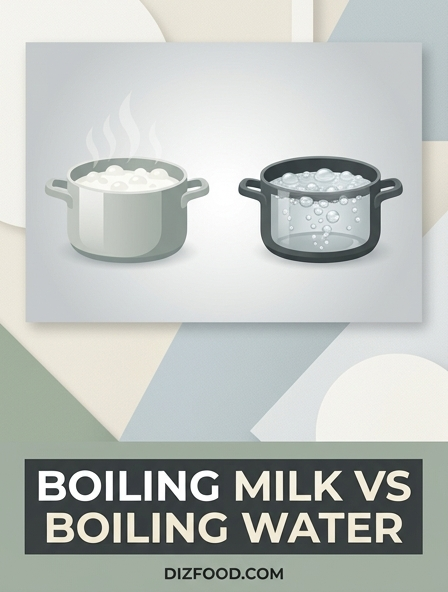
| 100°C | Boiling; risk of emulsion breakdown and skin formation. |
By applying these specific temperatures, one can manipulate the emulsion to yield specific results: a stable foam for a latte, a thick reduction for a sauce, or a smooth base for a custard. Mastering these thresholds represents the pinnacle of culinary science, turning a simple ingredient into a versatile tool for texture and flavor engineering.




Comments