
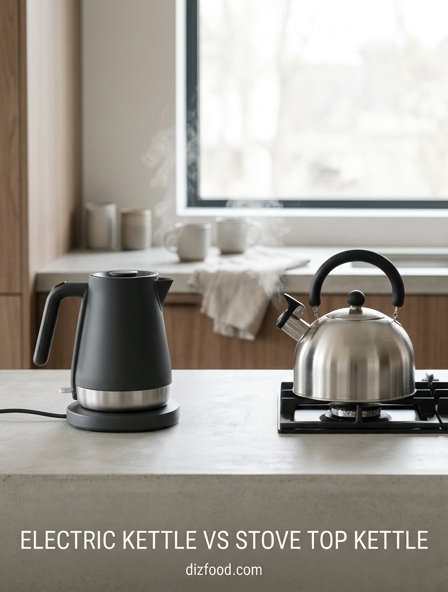
Deciding between an electric kettle and a traditional stovetop model ultimately comes down to balancing modern convenience with classic kitchen ritual. While the iconic whistle of a stovetop kettle offers a nostalgic charm, electric versions have surged in popularity by prioritizing raw speed and precision. If you are aiming to optimize your morning routine, electric kettles generally lead the pack in energy efficiency and rapid boiling, whereas stovetop kettles remain the champions of durability and timeless aesthetic. Understanding the specific trade-offs in heating technology and safety features will help you determine which vessel truly deserves that coveted spot on your countertop for the perfect brew.
| Feature | Electric Kettle | Stovetop Kettle |
|---|---|---|
| Boiling Speed | 3-5 minutes (Ultra-fast) | 5-10 minutes (Slower) |
| Energy Efficiency | ~80% (Direct heat immersion) | ~70% (Heat loss to ambient air) |
| Temp. Control | Variable digital presets | Manual/Visual monitoring only |
| Safety | Automatic shut-off & boil-dry | Audible whistle; requires manual off |
| Durability | 5-10 years (Circuitry limited) | Decades (Solid metal build) |
| Portability | Requires electrical outlet | Compatible with any heat source |
Boiling Speed and Energy Efficiency
When evaluating the performance of boiling water in a modern kitchen, the primary metrics are speed and energy conservation. Electric kettles are widely recognized for their superior efficiency because the heating element is typically submerged directly in the water or located immediately beneath the floor of the vessel. This configuration ensures that nearly 80% to 90% of the energy consumed is converted directly into heat for the water. In contrast, a stove top kettle relies on thermal conduction through the base of the pot, which results in significant heat loss to the surrounding air, especially when using a gas range where flames lick the sides of the kettle.
| Feature | Electric Kettle | Stove Top (Gas/Electric) |
|---|---|---|
| Average Boil Time (1L) | 3-5 Minutes | 8-12 Minutes |
| Energy Efficiency | High (Direct Transfer) | Low to Moderate (Heat Loss) |
| Heat Retention | Moderate (Insulated walls) | Varies (Metal thickness) |
The speed advantage of electric models becomes particularly evident during morning routines where every minute counts. Induction cooktops have narrowed the gap significantly, as they use electromagnetism to heat the kettle itself, mimicking the direct efficiency of electric units. However, for those using traditional radiant or gas stoves, the electric kettle remains the undisputed champion of rapid boiling and reduced carbon footprint in daily kitchen operations.
Safety Features and Automatic Shutoff
Safety is a paramount concern in the kitchen, and the technological gap between electric and stove top kettles is most apparent in their safety mechanisms. Electric kettles are engineered with internal sensors that detect steam pressure or temperature thresholds. Once the water reaches a rolling boil, the device automatically trips a switch to cut off power. This prevents the unit from boiling dry-a common cause of kitchen fires and damaged cookware. Furthermore, most modern electric units include "boil-dry protection," which prevents the element from activating if the reservoir is empty.
- Automatic Shutoff: Stops heating immediately once the boiling point is reached.
- Cool-Touch Exteriors: Many electric models use double-wall insulation to prevent accidental burns.
- Boil-Dry Protection: Sensors prevent the heating element from burning out if water is absent.
- Acoustic Alerts: Stove top kettles rely on a mechanical whistle which requires human intervention to stop the heat.
Stove top kettles offer a more rudimentary approach to safety. They utilize a physical whistle that sounds as steam escapes through a narrow aperture. While charming and nostalgic, this system relies entirely on the user being within earshot and capable of physically turning off the burner. If a stove top kettle is forgotten, the water will eventually evaporate entirely, leading to warped metal, melted handles, or catastrophic fire hazards. For households with children, elderly residents, or easily distracted cooks, the automated nature of the electric kettle provides a critical layer of protection.
Precision Temperature Control Comparison
For connoisseurs of delicate teas and specialty coffee, the temperature of the water is just as important as its purity. Different beverages require specific heat levels to extract flavor without scorching the leaves or beans. Electric kettles have evolved to include digital interfaces that allow users to select specific temperatures, ranging from 160°F for green tea to 212°F for herbal infusions. This precision eliminates the guesswork and ensures a consistent brewing experience every time.
- Pre-set Selections: Dedicated buttons for Coffee, Oolong, White, and Green tea.
- Real-Time Monitoring: Digital displays show the current temperature as it rises.
- Hold Temperature Function: Keeps water at a specific degree for up to 60 minutes.
- Manual Thermometry: Stove top users must use external thermometers to achieve similar accuracy.
Stove top kettles generally lack built-in temperature regulation. Achieving the perfect temperature for a pour-over coffee or a delicate white tea requires the user to manually monitor the process with a handheld thermometer or to wait a specific amount of time after the whistle blows for the water to cool. While "gooseneck" stove top kettles exist with integrated lid thermometers, they still require the user to actively watch the dial and manually kill the heat at the precise moment. The convenience of an electric kettle that simply stops at 185°F is a transformative upgrade for serious beverage enthusiasts.
Initial Cost and Long Term Value
The financial aspect of choosing a kettle involves balancing the initial purchase price against the expected lifespan and operational costs. Stove top kettles are often seen as a one-time investment. Because they lack electronic components, a high-quality stainless steel or copper stove top kettle can last for decades, potentially becoming a family heirloom. Their "value" is found in their simplicity and the absence of parts that can short-circuit or degrade over time.
| Cost Factor | Electric Kettle | Stove Top Kettle |
|---|---|---|
| Entry Price | $20 - $50 | $15 - $40 |
| Premium Price | $100 - $250 | $80 - $200 |
| Replacement Frequency | 3 to 7 years | 10 to 30 years |
Electric kettles, conversely, have a definitive expiration date. Even the most expensive models are subject to the eventual failure of their circuit boards, heating elements, or plastic seals. While a basic electric kettle is very affordable, the total cost of ownership may be higher if you find yourself replacing it every few years. However, when factoring in the time saved and the slight reduction in energy bills due to higher efficiency, many users find the recurring cost of an electric kettle to be a justified expense for the daily convenience it provides.
Design Aesthetics and Kitchen Style
The visual appeal of a kettle often dictates its place in the kitchen, as it is one of the few appliances that frequently remains on the counter or stove. Stove top kettles are celebrated for their classic, timeless silhouettes. From the iconic whistling tea kettle with a wooden handle to sleek, modern copper vessels, they serve as a decorative focal point on the range. They often complement traditional, farmhouse, or "shabby chic" kitchen designs, offering a sense of warmth and domestic ritual.
Electric kettles tend toward a more industrial or high-tech aesthetic. While manufacturers have recently introduced "retro" electric models to compete with the charm of stove top versions, most are characterized by brushed stainless steel, glass carafes with LED illumination, or minimalist matte finishes. These units fit seamlessly into contemporary, minimalist, or high-end professional kitchens where functionality and clean lines are prioritized. Because electric kettles require a base and a cord, they can sometimes contribute to "countertop clutter," whereas a stove top kettle utilizes the existing footprint of the range.
Ultimately, the choice depends on whether the user views the kettle as a tool to be tucked away or a design statement to be showcased. A glass electric kettle with blue internal lighting can be a stunning modern feature, while a brightly enameled Le Creuset stove top kettle provides a pop of color that anchors a traditional kitchen space.
Durability and Lifespan Expectations
Durability is the primary stronghold of the stove top kettle. Constructed from heavy-gauge stainless steel, cast iron, or copper, these vessels are nearly indestructible under normal conditions. There are no wires to fray, no sensors to fail, and no delicate motherboards to be damaged by steam. As long as the kettle is not left to boil dry frequently-which can damage the enamel or warp the base-a stove top kettle is likely to be the last one you ever buy.
- Material Integrity: Metal stove tops resist drops and impacts better than plastic or glass electrics.
- Mechanical Simplicity: The only moving part is usually the whistle hinge.
- Electronic Vulnerability: Electric kettles are susceptible to power surges and water damage to the base.
- Scale Build-up: While both suffer from limescale, electric heating elements can fail if scale prevents heat dissipation.
Electric kettles are inherently more fragile. The integration of plastic components, digital displays, and heating coils introduces multiple points of failure. In hard water areas, limescale can build up around the heating element, causing it to overheat and burn out. Even high-end electric models usually offer warranties of only one to two years, reflecting their shorter expected lifespan. For users who prioritize "buy it for life" sustainability, the stove top kettle is the superior option, whereas the electric kettle is viewed as a convenient but temporary appliance.
Cleaning and Maintenance Requirements
Maintenance for both types of kettles revolves primarily around the management of mineral deposits, known as "limescale." However, the ease of cleaning varies significantly based on design. Many stove top kettles have wide lids that allow a hand to fit inside for thorough scrubbing. Because they are often made of solid metal, they can be descaled with aggressive vinegar solutions or specialized cleaners without fear of damaging internal electronics.
Electric kettles require a more delicate touch. The base must never be submerged in water, and care must be taken to keep the electrical pins dry. If the heating element is "exposed" (a common trait in older or cheaper models), scrubbing around the coils can be difficult. Modern electric kettles usually feature a flat heating plate at the bottom, which is much easier to wipe down. Periodic descaling is mandatory for electric models; if ignored, the mineral buildup can insulate the sensor, leading to the kettle shutting off before the water boils or failing to shut off at all.
Exterior maintenance also differs. Stove top kettles are subject to grease splatter and "seasoning" from being located near other cooking pots on the range. They often require frequent polishing to maintain their luster. Electric kettles, usually kept on a separate counter area, stay cleaner on the outside but may require more frequent internal descaling to protect the sensitive electronic components that regulate heat and safety.
Portability and Storage Considerations
The footprint of a kettle in the kitchen is a significant factor for those with limited counter space. An electric kettle requires a dedicated electrical outlet and a flat surface. While the kettle itself is often "cordless" (lifting off a powered base), the base still occupies a permanent spot on the countertop. This makes it less ideal for extremely cramped kitchens where every square inch of prep space is vital. However, because it doesn't need a stove, an electric kettle can be placed in a home office, a bedroom, or a dorm room, offering portability that the stove top version lacks.
Stove top kettles are the ultimate space-savers in terms of "new" footprint. They live on the stove, an area that is already designated for cooking. When not in use, they don't require an outlet, and they don't have cords that tangle or look unsightly. For those who travel or go camping, a stove top kettle is the obvious choice as it can function over a gas burner, a campfire, or an electric hot plate.
If storage is the concern, many electric kettles are bulkier due to their insulated walls and electronic bases. Stove top kettles are generally more compact. However, the convenience of being able to move an electric kettle to a dining table for "tea service" without needing a trivet (due to their insulated bottoms) adds a different dimension of portability that many users appreciate during social gatherings.
Water Taste and Brewing Quality
The impact of a kettle on the flavor of water is a subject of much debate among tea purists. The material of the kettle's interior is the deciding factor. Many budget electric kettles are lined with plastic, which some users claim imparts a subtle "chemical" taste to the water, especially when the kettle is new or when the water is boiled multiple times. High-quality electric kettles and most stove top kettles use food-grade stainless steel or glass, which are inert materials that do not affect the water's flavor profile.
- Stainless Steel: Durable and flavor-neutral; found in both types.
- Borosilicate Glass: Provides the purest taste and allows visual inspection of water clarity.
- Plastic (BPA-Free): Lightweight but carries a risk of "off-tastes" in cheaper models.
- Copper/Brass: Traditional stove top materials that require tin lining to prevent metallic leaching.
Beyond taste, brewing quality is affected by the pour control. Stove top "gooseneck" kettles have long been the standard for pour-over coffee because they offer a slow, steady stream. Electric gooseneck kettles have now matched this quality, combining the perfect pour with the perfect temperature. If brewing quality is defined by precision, the electric kettle wins. If it is defined by the absence of potential plastic contaminants, a high-end stainless steel stove top kettle or a glass electric kettle are the top contenders for the purest cup.
Final Verdict for Your Kitchen
Choosing between an electric and a stove top kettle ultimately depends on your lifestyle priorities and kitchen habits. There is no universal "better" option, only a "better for you" option based on how you value time, precision, and longevity. If your morning is a race against the clock and you value the ability to "set and forget" your water, the electric kettle is an essential tool. Its safety features and speed are unmatched, making it the practical choice for most modern households.
However, if you view tea or coffee preparation as a slow, mindful ritual, the stove top kettle offers a tactile and auditory experience that an electric appliance cannot replicate. It appeals to the aesthetic minimalist and the sustainability-minded consumer who prefers a tool that will last for decades rather than years. For those who do not have a specialized need for temperature-sensitive teas, the simplicity of the stove top whistle remains a comforting kitchen staple.
| Choose Electric If... | Choose Stove Top If... |
|---|---|
| You need water in under 5 minutes. | You want a "buy it for life" product. |
| You brew delicate green/white teas. | You want to save countertop space. |
| You frequently forget things on the stove. | You love the traditional whistle and ritual. |
In many high-end kitchens, enthusiasts actually keep both: a precision electric kettle for their daily specialty coffee and a beautiful stove top kettle for heavy-duty boiling or as a permanent piece of kitchen decor. Assess your space, your budget, and your favorite beverages to make the final call.

Comments