
Thermodynamics of Water Phase Changes
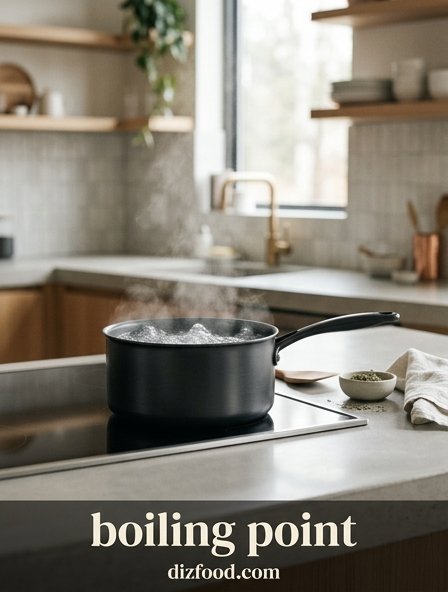
In the culinary environment, the transition of water from liquid to vapor is a fundamental thermodynamic process governed by the absorption of latent heat. When heat is applied to a pot of water, the kinetic energy of the molecules increases, reflected in a rising temperature. However, once the boiling point is reached at 100°C (212°F) at standard atmospheric pressure, the temperature remains constant despite continued heat input. This plateau occurs because the energy is being redirected to overcome intermolecular hydrogen bonds rather than increasing molecular velocity.
- Sensible Heat: The energy that causes a measurable change in temperature.
- Latent Heat of Vaporization: The energy required to transform liquid into gas without changing temperature.
- Nucleation: The formation of the first steam bubbles at the base of the vessel.
Understanding this phase change is critical for techniques like poaching or steaming. In steaming, the latent heat is released back onto the food surface as the vapor condenses, transferring energy more efficiently than boiling water. This thermodynamic efficiency allows for rapid cooking while maintaining the structural integrity of delicate ingredients.
Altitude Impact on Vapor Pressure
Cooking at high altitudes introduces variables that fundamentally alter the boiling point of water due to decreased atmospheric pressure. Boiling occurs when the vapor pressure of the liquid equals the surrounding atmospheric pressure. As elevation increases, the air becomes thinner and exerts less downward force on the surface of the water, allowing molecules to escape into a gaseous state at lower thermal thresholds. For every 500-foot increase in elevation, the boiling point of water drops by approximately 0.5°C.
| Elevation (ft) | Boiling Point (°C) | Boiling Point (°F) |
|---|---|---|
| 0 (Sea Level) | 100 | 212 |
| 2,000 | 98 | 208 |
| 5,000 | 95 | 203 |
| 7,500 | 92 | 198 |
This phenomenon necessitates significant adjustments in the kitchen. Because water boils at a lower temperature, it cannot transfer heat as quickly to the food. Consequently, boiling an egg or simmering a stew in high-altitude regions like Denver or the Andes requires substantially longer cooking times to achieve the same degree of protein denaturation or starch breakdown as at sea level.
Solute Effects on Boiling Temperatures
The addition of solutes, such as salt or sugar, to water results in a phenomenon known as boiling point elevation. This is a colligative property, meaning the change depends on the number of particles dissolved rather than their chemical identity. When a solute is introduced, it occupies space at the surface and interacts with water molecules, making it more difficult for them to escape into the vapor phase. Consequently, additional thermal energy is required to reach the boiling threshold.
- Vapor Pressure Lowering: Solutes decrease the rate at which water molecules evaporate.
- Thermal Increase: The system requires a higher temperature to regain the necessary vapor pressure for boiling.
- Practical Limits: In a kitchen, the amount of salt typically used for pasta water only raises the boiling point by about 0.1°C to 0.5°C.
While salt is primarily added for flavor, sugar concentrations in confectionery can raise the boiling point significantly. In candy making, measuring the boiling temperature of a syrup is a proxy for determining the concentration of sugar, as the boiling point rises predictably as water evaporates, leading to stages like "soft ball" or "hard crack."
Simmering vs Rolling Boil Efficiency
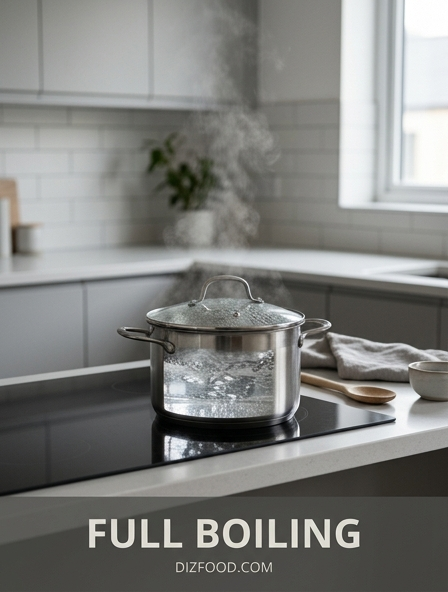
Distinguishing between a simmer and a rolling boil is essential for texture control and energy management. A simmer typically occurs between 85°C and 95°C, characterized by small, gentle bubbles that break the surface occasionally. A rolling boil occurs at the maximum temperature of the liquid, where vigorous convection currents and rapid bubble formation create significant agitation. Despite the visual intensity of a rolling boil, the temperature of the water is the same as a gentle boil; the extra heat simply accelerates evaporation.
- Simmering: Ideal for delicate proteins and stocks, as it prevents the mechanical breakdown of ingredients.
- Rolling Boil: Necessary for pasta to keep the noodles moving and prevent sticking through mechanical agitation.
- Evaporation Rate: Higher energy input at a rolling boil leads to faster reduction of sauces but risks scorching.
From an efficiency standpoint, once water reaches its boiling point, turning up the flame does not cook the food faster; it only wastes fuel and causes the water to vanish as steam. Maintaining a lower heat setting that sustains the boiling temperature is the most energy-efficient method for long-duration cooking tasks.
Starch Gelatinization Chemistry
The boiling point of water serves as the catalyst for starch gelatinization, a process that transforms the texture of grains, legumes, and tubers. Starch granules are semi-crystalline structures that are insoluble in cold water. As the temperature rises toward the boiling point, the kinetic energy causes the granules to vibrate and absorb water. Between 60°C and 85°C, the granules swell significantly, and the crystalline structure collapses, allowing amylose molecules to leach out into the surrounding liquid.
This process is what thickens sauces and softens rice. If the water does not reach a sufficient temperature, the starch remains gritty and indigestible. However, exceeding the boiling point or prolonged exposure to high heat can lead to "over-gelatinization," where the granules rupture completely, resulting in a gummy or pasty texture. Controlling the approach to the boiling point allows chefs to manipulate the viscosity of a roux or the fluffiness of a potato. The presence of fats or acids can also influence the temperature at which gelatinization occurs, often requiring higher heat to achieve the desired consistency.
Heat Transfer Dynamics in Liquid
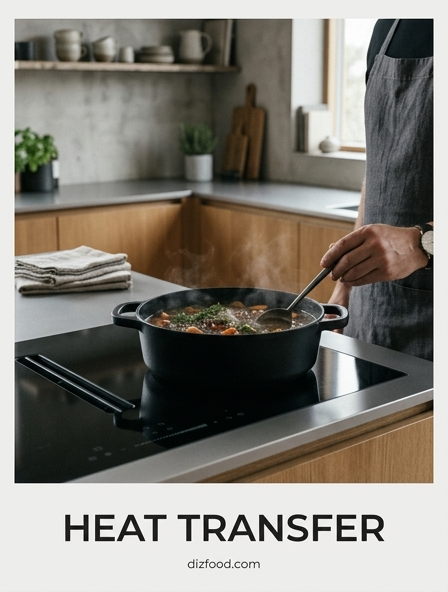
Heat transfer in boiling water occurs through a combination of conduction and convection. Conduction happens at the interface between the heated vessel and the water, where energy is passed through direct molecular contact. As the water at the bottom heats up, it becomes less dense and rises, while cooler, denser water sinks. This creates convection currents that distribute thermal energy throughout the pot, ensuring a relatively uniform temperature distribution compared to dry heat methods like roasting.
- Boundary Layer: A thin layer of stagnant liquid at the food's surface that can slow heat transfer.
- Turbulence: Created by boiling bubbles, which disrupts the boundary layer and increases cooking speed.
- Surface Area: Larger surface areas on food items allow for more rapid heat absorption from the surrounding liquid.
The efficiency of this transfer is why boiling is much faster than baking at the same temperature. Water is a significantly more effective thermal conductor than air. In the kitchen, understanding these dynamics helps in choosing the right pot size and water volume to ensure that the introduction of cold food doesn't drop the temperature so far that convection currents cease, leading to unevenly cooked results.
Pressure Cooking Science and Speed
Pressure cooking utilizes the relationship between pressure and the boiling point to significantly reduce cooking times. By sealing a vessel, the steam produced during heating is trapped, increasing the internal atmospheric pressure. According to the Gay-Lussac's Law, as pressure increases, the boiling point of the liquid also rises. In a standard pressure cooker operating at 15 psi (pounds per square inch) above sea level, the boiling point of water increases from 100°C to approximately 121°C (250°F).
| Pressure (psi) | Boiling Temp (°C) | Cook Time Reduction |
|---|---|---|
| 0 (Atmospheric) | 100 | Baseline |
| 5 | 108 | ~25% faster |
| 10 | 115 | ~50% faster |
| 15 | 121 | ~70% faster |
This elevated temperature accelerates the chemical reactions involved in cooking, such as the breakdown of tough connective tissues like collagen into gelatin. Tasks that usually take hours, such as braising a beef brisket or cooking dried beans, are completed in a fraction of the time. Furthermore, the high-pressure environment forces moisture into the food, preventing desiccation despite the intense heat.
Mineral Concentration and Thermal Capacity
The chemical composition of tap water, specifically its mineral content, can influence its thermal behavior in the kitchen. "Hard water" contains high concentrations of dissolved calcium and magnesium carbonates. These minerals can subtly alter the specific heat capacity of the water-the amount of heat required to raise the temperature by one degree. While the effect on the boiling point itself is negligible compared to salt, mineral accumulation can lead to the formation of "scale" on cookware.
Scale acts as an insulator, reducing the efficiency of heat transfer from the burner to the water. This can lead to hot spots or longer times to reach a boil. Additionally, minerals interact with the food being boiled:
- Pectin Stabilization: Calcium ions can strengthen plant cell walls, making vegetables stay tougher for longer.
- Tannin Interaction: Minerals can bind with tannins in tea or coffee, affecting clarity and flavor extraction.
- Alkalinity: High mineral content often correlates with higher pH, which can accelerate the Maillard reaction if the water evaporates.
For precision cooking, particularly in brewing or delicate vegetable preparations, using filtered or soft water ensures more consistent thermal performance and better control over the final texture and flavor profile of the ingredients.
Nutrient Retention and Temperature Control
Subjecting food to the boiling point of water has significant implications for its nutritional profile. Many vitamins, particularly the B-complex and vitamin C, are water-soluble and thermolabile, meaning they degrade at high temperatures or leach into the cooking liquid. Boiling vegetables often results in a higher loss of these nutrients compared to steaming or microwaving, as the food is fully submerged in a medium that carries the nutrients away.
- Leaching: The movement of nutrients from the food into the surrounding water.
- Thermal Degradation: The chemical breakdown of vitamins due to heat exposure.
- Enzymatic Inactivation: Brief boiling (blanching) can stop enzymes that cause spoilage, actually helping to preserve nutrients during freezing.
To maximize nutrient retention, it is often recommended to use the minimum amount of water necessary and to bring the water to a boil before adding the food to minimize exposure time. Alternatively, reusing the "pot liquor" or boiling water in soups and sauces ensures that the leached minerals and vitamins are consumed rather than discarded. Understanding the balance between achieving a boil for safety and maintaining lower temperatures for nutrition is key to healthy cooking.
Molecular Changes During Rapid Heating
When food is introduced to boiling water, it undergoes a series of rapid molecular transformations. For proteins, the primary change is denaturation, where the folded chains of amino acids begin to uncoil and subsequently cross-link, or coagulate. In eggs, this happens quickly at boiling temperatures, turning a liquid yolk into a solid. For meats, rapid heating to the boiling point can cause muscle fibers to contract violently, squeezing out moisture and resulting in a dry, tough texture if not managed correctly.
Beyond proteins, boiling affects the cellular structure of plants. The heat breaks down the middle lamella, the "glue" made of pectic substances that holds cells together, leading to a softer texture. Rapid heating also drives out dissolved gases within the plant tissues, which can initially brighten the color of green vegetables by making the chlorophyll more visible through the translucent cells. However, if the boiling continues and the environment becomes acidic, the chlorophyll molecules lose their magnesium ions and turn a dull olive-brown. Precise timing at the boiling point is therefore essential to capture the ideal balance of color, texture, and flavor.

Comments