
Mastering the art of a full boil is a game-changer for any home cook looking to achieve consistent, delicious results. When you maintain a vigorous, rolling boil, you ensure that intense heat penetrates dense ingredients quickly and evenly, making it the ideal technique for pasta, grains, and hardy vegetables. This method is specifically designed for immediate serving, as the sustained high temperature breaks down tough fibers until they reach a perfect, fork-tender texture. By keeping your pot at a steady 212°F, you eliminate culinary guesswork and bring out the best in your favorite dishes right away. To truly refine your kitchen skills, it's essential to understand the key differences between Parboiling vs Full Boiling.
The Science of the Rolling Boil
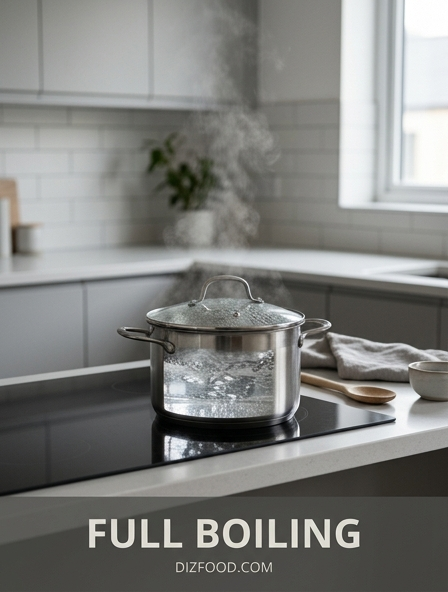
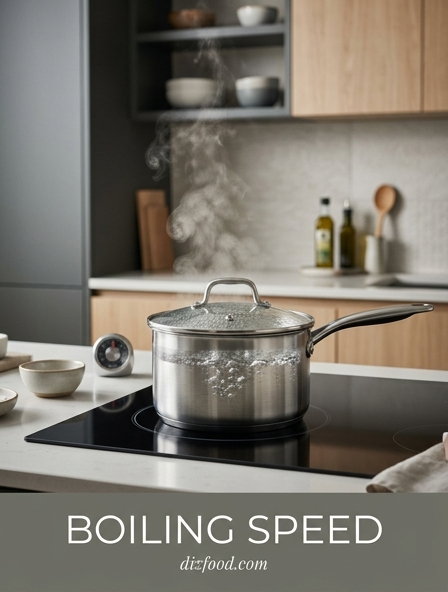
A rolling boil occurs when a liquid reaches its boiling point-typically 212°F (100°C) at sea level-and produces large, vigorous bubbles that cannot be interrupted by stirring. This physical state is driven by rapid phase transition where water molecules gain enough kinetic energy to overcome atmospheric pressure. In a culinary context, the rolling boil is essential because it ensures constant movement of the food particles, preventing them from sticking together or settling at the bottom of the vessel. The turbulence created by the escaping steam acts as a natural agitator, which is particularly vital for starches that release surface amylose.
- Nucleation Sites: Small imperfections on the pot surface where bubbles first form.
- Convection Currents: The circular movement of water that distributes heat evenly throughout the pot.
- Vapor Pressure: The force exerted by evaporated molecules that must equal atmospheric pressure to sustain the boil.
Understanding these mechanics allows a chef to manipulate texture. Without reaching this specific threshold of energy, proteins and starches may cook unevenly, leading to a gummy or "muddy" exterior rather than a clean, firm bite.
Optimal Water Ratios for Even Cooking
Maintaining a high ratio of water to food is the most effective way to ensure thermal stability. When a large volume of cold or room-temperature ingredients is added to a pot, the water temperature inevitably drops. If the volume of water is too low, the temperature falls below the boiling point for an extended period, leading to soggy textures. Using a generous amount of liquid ensures that the "recovery time"-the duration it takes for the water to return to a rolling boil-is minimized. This is especially critical for pasta and dense root vegetables that require immediate heat to set their structure.
| Ingredient Type | Recommended Ratio (Water:Food) | Purpose |
|---|---|---|
| Dried Pasta | 4:1 (Quarts to Pounds) | Prevents starch gumming |
| Root Vegetables | 3:1 (Volume) | Ensures uniform core heating |
| Green Vegetables | 5:1 (Volume) | Maintains chlorophyll stability |
By adhering to these ratios, the cook ensures that each piece of food is surrounded by a consistent heat jacket, promoting uniformity in every bite.
Essential Tools for Consistent Temperatures
Achieving and sustaining a full boil requires equipment that can handle high caloric output and distribute it effectively. Heavy-bottomed stockpots, particularly those with an aluminum or copper core sandwiched between stainless steel, are preferred for their thermal conductivity. These materials prevent "hot spots" that can scorch delicate ingredients at the bottom of the pot. Additionally, the geometry of the vessel plays a role; tall, narrow pots minimize surface area evaporation, while wide pots allow for faster reduction if that is the secondary goal.
- Digital Probe Thermometers: Essential for verifying that the liquid has reached the required threshold in high-altitude environments.
- Tight-Fitting Lids: Used to trap steam and pressure, significantly reducing the time required to reach a boil.
- High-BTU Burners: Necessary for maintaining momentum when working with large volumes of liquid.
The choice of tool directly impacts the efficiency of the kitchen. A thin, reactive pot may lose heat too quickly when the lid is removed, causing the boil to die and the cooking process to stall, which negatively affects the final product's texture.
Mastering Timing for Peak Tenderness
Timing in a rolling boil is measured from the moment the water returns to its vigorous state after the ingredients have been submerged. Precision is required because the high-energy environment accelerates chemical breakdowns, such as the softening of cellulose in plants or the gelatinization of starches. A few seconds can be the difference between a crisp-tender vegetable and one that is structurally compromised. Professional chefs often use the following sequence to master timing:
- Wait for the "Second Boil": Only start the timer once the water has recovered from the temperature drop.
- Frequent Sampling: Begin testing for doneness one minute before the anticipated completion time.
- The "Bite Test": Check for a consistent resistance throughout the ingredient, ensuring no raw core remains.
- Immediate Extraction: Use a spider or slotted spoon to remove items quickly, as carry-over cooking continues even after removal.
By controlling these temporal variables, you ensure that proteins remain succulent and carbohydrates retain their desired al dente integrity, preventing the common pitfall of over-boiling.
Salt and Seasoning for Flavor Infusion
Boiling is not merely a heat-transfer method; it is an opportunity for flavor infusion through osmosis. When water is seasoned correctly, it penetrates the cellular structure of the food, seasoning it from the inside out. This is most apparent with pasta and potatoes, which lack internal sodium. Many chefs advocate for water that "tastes like the sea," typically a 1% to 2% salinity concentration. This helps to tighten protein structures and can even help preserve the vibrant colors of certain vegetables by stabilizing pectin.
- Aromatics: Adding bay leaves, peppercorns, or garlic to the boiling water creates a flavorful poaching environment.
- Timing of Salt: Add salt only after the water reaches a boil to prevent pitting in stainless steel cookware.
- Acidic Additions: A splash of vinegar or lemon juice can prevent potatoes from falling apart by strengthening their exterior.
It is important to remember that as water evaporates during a long boil, the salt concentration increases. For long-duration boiling, start with slightly less salt than perceived necessary to avoid an overly saline final dish.
High Heat Techniques for Vibrant Vegetables
The secret to bright, restaurant-quality vegetables lies in the "Blanch and Shock" method. High-heat boiling facilitates the rapid expansion of gases within the vegetable's cells, which highlights the green chlorophyll. However, prolonged exposure to heat eventually breaks down these pigments and turns them a dull olive-gray. By using a full, rolling boil for a very short duration, you achieve the necessary softening of the cell walls without destroying the aesthetic appeal. This technique requires a high volume of water to keep the temperature from dipping.
- Submerge vegetables in salted, vigorously boiling water.
- Cook for 60 to 180 seconds depending on the density of the vegetable.
- Transfer immediately to an ice-water bath to halt the residual cooking process.
- Drain and pat dry to ensure subsequent fats or sauces adhere properly.
This method not only preserves color but also locks in a crisp texture that provides a satisfying contrast in salads, stir-fries, or as a stand-alone side dish.
Streamlining Prep for Immediate Service
In a professional kitchen, boiling is often the final step before plating, meaning prep must be perfectly synchronized. Because boiling is a rapid process, there is no time for cutting or measuring once the food hits the water. "Mise en place" is the governing principle here; every ingredient must be uniform in size to ensure they all reach the finish line at the exact same moment. If one piece of carrot is twice the size of another, the smaller piece will turn to mush before the larger one is cooked.
- Uniform Mandoline Slices: Ensure consistent thickness for chips or blanched garnishes.
- Staging Trays: Organize ingredients in the order they will be added to the pot.
- Dry Stations: Keep the area around the boiling pot dry to prevent slips and maintain safety.
Efficiency is further gained by using pasta baskets or blanching inserts. These allow for multiple batches to be cooked in the same seasoned water, maintaining the thermal momentum and flavor profile while allowing for rapid extraction and immediate service to the customer.
Maintaining Thermal Momentum for Uniformity
Thermal momentum refers to the ability of the cooking system to resist temperature fluctuations. In boiling, the greatest threat to uniformity is a "dead boil," which occurs when too much cold mass is added at once. To combat this, chefs often use heavy-duty equipment and cook in smaller, staggered batches. If the water stops bubbling, the food sits in lukewarm liquid, absorbing excess moisture and losing its structural integrity. Maintaining a constant state of agitation is the only way to ensure that heat reaches every surface area of the ingredient simultaneously.
| Action | Impact on Momentum | Resulting Quality |
|---|---|---|
| Covering the Pot | Increases Pressure | Faster Recovery Time |
| Overcrowding | Decreases Energy | Uneven/Soggy Texture |
| Pre-heating Ingredients | Reduces Thermal Shock | Higher Consistency |
By monitoring the intensity of the bubbles, the cook can adjust the flame to ensure the water stays at a true rolling boil, providing the kinetic energy needed for superior results.
Nutrient Retention in Full Boiling Methods
While boiling is sometimes criticized for nutrient loss, it can be optimized to retain a significant portion of vitamins and minerals. The key is to minimize the "soak time." The longer a vegetable sits in water, the more water-soluble vitamins (like B-complex and Vitamin C) leach out into the liquid. By utilizing a full rolling boil, the cooking time is slashed, thereby reducing the window of time for leaching to occur. Additionally, using just enough water to cover the vegetables-rather than an excessive amount-can help concentrate the nutrients.
- Skin-On Cooking: Boiling tubers with their skins on acts as a physical barrier to nutrient loss.
- Liquid Repurposing: Using the nutrient-rich boiling water as a base for soups or sauces.
- Flash Boiling: Utilizing the highest possible heat for the shortest possible duration.
Furthermore, boiling can make certain nutrients more bioavailable by breaking down tough plant fibers that the human digestive system otherwise struggles to process, such as the lycopene found in tomatoes or the beta-carotene in carrots.
Plating Strategies for Freshly Boiled Dishes
The presentation of boiled foods requires speed and precision because the steam that makes the dish look appetizing also represents moisture loss. As soon as an item is removed from the boiling liquid, it begins to dry out and cool down. To present a dish that looks vibrant and fresh, the chef must act quickly to coat the food in a fat-such as butter or olive oil-which seals in the remaining moisture and adds a reflective sheen that enhances the visual appeal on the plate.
- Drain thoroughly to prevent "pooling" on the plate, which can dilute sauces.
- Toss in a warm bowl with seasonings and fats to ensure even coating.
- Heighten the plate: Stack items like green beans or pasta vertically to trap residual heat at the center.
- Garnish with fresh herbs at the very last second to prevent wilting from the rising steam.
A well-plated boiled dish should look "alive," with bright colors and a slight glisten, conveying to the diner that the food has traveled from the pot to the table in the shortest time possible.

Comments