
Mastering the art of cooking often begins with understanding the science of heat, specifically how thermal conductivity shapes your culinary results. In modern kitchens, the materials making up your pots and pans act as the primary engine for energy transfer, influencing everything from sear quality to simmer consistency. Whether you are working with rapid-response metals or heavy-duty alloys designed for heat retention, selecting the right cookware material is essential for achieving precise temperature control and energy efficiency. To better understand how different metals perform under pressure, check out our in-depth comparison of Copper Pot Boiling vs Stainless Steel Boiling.
Understanding Heat Distribution and Boiling Speed
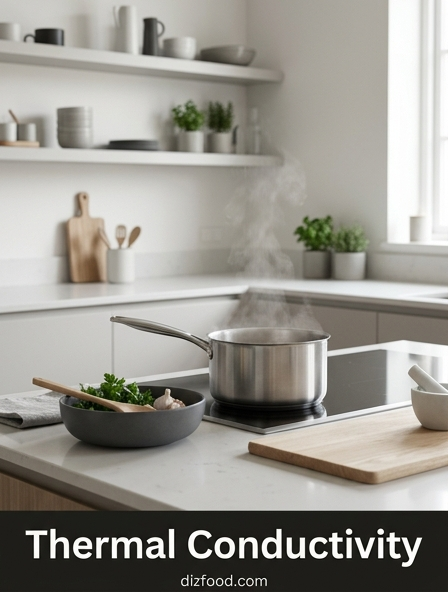
Thermal conductivity is the fundamental physical property that dictates how heat energy travels from a stove's heating element into the food being prepared. In the context of boiling water or simmering sauces, the efficiency of this transfer determines both the speed of the cooking process and the uniformity of the results. High thermal conductivity ensures that energy spreads rapidly across the entire surface of the cookware, minimizing the risk of localized "hot spots" that can lead to uneven cooking or scorching. When a vessel possesses superior heat distribution, it allows for a more predictable culinary outcome.
Conversely, materials with low conductivity often struggle to maintain consistent temperatures, requiring constant intervention from the cook to prevent burning. The rate of boiling is a direct reflection of how quickly a material can absorb thermal energy and transmit it to the liquid molecules. Understanding these dynamics is essential for selecting the right tools for specific kitchen tasks, ensuring that energy is used effectively and cooking times are minimized. By selecting materials that align with the desired heat profile, cooks can significantly enhance their control over the molecular changes occurring within the pot.
Copper The Gold Standard for Conductivity
Copper is widely recognized by culinary professionals as the gold standard for thermal conductivity, boasting a value of approximately 401 W/m·K. This atomic structure allows copper to respond almost instantaneously to changes in heat settings, providing a level of precision that other materials cannot match. Because heat moves so swiftly through copper, the walls of the pot reach the same temperature as the base nearly immediately, facilitating an exceptionally even cooking environment throughout the vessel.
- Unrivaled response to temperature adjustments for precision tasks.
- Exceptional lateral heat dispersion that eliminates cold zones.
- Significant reduction of thermal lag in professional kitchen settings.
This rapid response is particularly vital for delicate tasks like melting chocolate or reducing complex sauces where a few degrees can make the difference between success and failure. However, copper is highly reactive with acidic foods, which is why it is often lined with a thin layer of tin or stainless steel. Despite the maintenance required to keep its exterior polished, the functional benefits of copper in terms of heat acceleration and control remain unsurpassed for high-performance cooking.
Aluminum Core Efficiency in Multi Ply Bases
While copper offers peak performance, aluminum serves as the practical workhorse of the modern kitchen due to its high conductivity and lower cost. With a thermal conductivity rating of around 235 W/m·K, aluminum is significantly more efficient than steel or iron. To harness this power without the drawbacks of reactivity and warping, manufacturers often utilize multi-ply construction. This involves encasing a thick aluminum core between layers of durable stainless steel.
| Feature | Culinary Benefit |
|---|---|
| High Conductivity | Eliminates hot spots in the pan base |
| Low Density | Reduces physical strain during heavy use |
| Encapsulation | Prevents metal leaching into acidic ingredients |
The thickness of the aluminum core is a critical factor in performance; a thicker core can store more energy and distribute it more broadly, leading to faster boiling times and more consistent temperatures. This hybrid approach allows for the rapid thermal transit of aluminum while maintaining the food-safe surface of steel, making it the most common choice for high-quality consumer cookware.
The Thermal Performance of Stainless Steel
Stainless steel is prized for its durability, resistance to corrosion, and sleek appearance, yet its native thermal performance is relatively poor. With a conductivity rating of roughly 15 W/m·K, pure stainless steel is an inefficient conductor that tends to concentrate heat directly above the flame or induction element. This poor lateral heat transfer frequently results in uneven cooking. However, when used as an exterior cladding, stainless steel provides the structural integrity and non-reactive surface that more conductive metals lack.
The thermal performance of a stainless steel pan is almost entirely dependent on the internal layers of aluminum or copper it contains. Without these conductive cores, stainless steel would be prone to sticking and burning. For the home cook, the value of stainless steel lies in its ability to protect the highly conductive internal metals from oxidation while providing a safe, easy-to-clean surface for food contact. It acts as a protective shield for the high-performance materials working beneath its surface, ensuring the longevity of the cookware while the inner layers handle the heavy lifting of heat distribution.
Cast Iron Heat Retention and Searing Power
Cast iron represents the opposite end of the spectrum compared to copper. It has relatively low thermal conductivity, meaning it takes a significant amount of time to reach a uniform temperature. However, what it lacks in speed, it makes up for in thermal mass and heat retention. Once a cast iron skillet is fully heated, its high density allows it to hold a massive amount of energy. This "thermal inertia" is what gives cast iron its legendary searing power; when a cold protein is placed in the pan, the surface temperature does not drop significantly.
- Preheat slowly to avoid uneven expansion and cracking.
- Utilize high emissivity for superior radiant cooking.
- Maintain a proper seasoning layer to improve surface release.
The ability to maintain consistent heat makes cast iron ideal for frying and long-simmering stews. While it may not be the fastest material for boiling water, its capacity to radiate heat evenly over long periods makes it an essential tool for high-heat culinary techniques and rustic presentations that require the vessel to stay warm at the table.
Impact of Material Density on Boiling Time
The density and mass of a cooking vessel play a pivotal role in determining the time required to bring water to a boil. Material density affects the specific heat capacity, which is the amount of energy required to raise the temperature of the pot itself before any energy can be effectively transferred to the water inside. A heavy, dense pot like one made of cast iron or thick-gauge stainless steel requires more time and energy to "charge" with heat compared to a lightweight aluminum vessel.
- Heavy materials act as a heat sink, slowing the initial temperature rise.
- Lightweight materials allow for rapid thermal transit into the liquid.
- Wall thickness impacts the total volume of metal to be heated.
For rapid boiling, a thin-walled vessel with high conductivity is mathematically superior. However, there is a trade-off: thinner pots are more susceptible to warping and may not provide the even heat distribution necessary for thicker sauces or delicate proteins that require steady, gentle heat over time. Therefore, the ideal density depends largely on the volume of water and the required precision of the task.
Clad Cookware and Uniform Heat Transfer
Clad cookware represents the pinnacle of engineering in modern kitchenware, designed specifically to address the limitations of single-metal pots. By bonding multiple layers of different metals together, manufacturers create a composite material that utilizes the strengths of each. In fully clad cookware, the conductive core-usually aluminum or copper-extends from the bottom of the pan all the way up the side walls. This ensures that heat is not just applied to the bottom of the food but is conducted throughout the entire body of the vessel.
| Cladding Type | Core Material | Primary Benefit |
|---|---|---|
| 3-Ply | Aluminum | Balanced weight and rapid heating |
| 5-Ply | Aluminum/Copper | Maximum warp resistance and stability |
| 7-Ply | Multiple Alloys | Elite heat retention for induction |
The result of this construction is incredibly uniform heat transfer, which reduces the need for constant stirring and prevents the edges of the pan from remaining cold while the center boils. This "surround-heat" effect is essential for achieving professional results in home kitchens, especially when cooking large volumes.
Ceramic Coatings and Thermal Insulation Factors
Ceramic coatings are often marketed for their non-stick properties, but their impact on thermal conductivity is frequently overlooked. Ceramics are generally categorized as thermal insulators, meaning they resist the flow of heat compared to metals. When a metal pan is coated with a ceramic layer, it introduces a slight barrier to the transfer of energy. While this can help in maintaining a very steady temperature once reached, it can also increase the time it takes for the cooking surface to respond to burner adjustments.
- Insulation properties help prevent sudden temperature spikes.
- Lower thermal conductivity than traditional PTFE non-stick coatings.
- High heat resistance prevents coating degradation at searing temps.
For the cook, this means that ceramic-coated pans are excellent for medium-heat tasks but may require a longer preheating phase. The thermal insulation factor also means these pans stay warm slightly longer after being removed from the heat source. Understanding this lag is key to mastering ceramic cookware and ensuring that food is not overcooked by the residual heat trapped within the coating layers.
Optimizing Energy Efficiency During Water Boiling
Optimizing energy efficiency while boiling water involves a combination of material science and practical kitchen habits. Thermal conductivity dictates how fast the heat moves, but environmental factors dictate how much of that heat is actually retained within the system. Using a lid is the most effective way to improve efficiency; it prevents heat loss through evaporation and creates a slightly pressurized environment that accelerates the boiling process. Additionally, the relationship between the burner size and the pot diameter is crucial.
- Always use a tight-fitting lid to trap steam and latent heat.
- Match the pot base to the exact diameter of the heating element.
- Keep the bottom of cookware clean to ensure direct thermal contact.
When the pot is smaller than the burner, energy escapes into the surrounding air, significantly lowering the efficiency of the system. Conversely, using a pot that is too large for a small burner results in poor heat distribution, as the outer edges of the pot rely solely on the slow lateral conductivity of the material rather than the direct energy from the source.
Material Selection for Induction Cooking Technology
Induction cooking relies on magnetic induction rather than thermal conduction from an external flame. Therefore, the material selection for induction-compatible cookware is governed by magnetic permeability and electrical resistance. For a pot to work on an induction cooktop, it must contain a ferromagnetic material, typically cast iron or specialized 430-grade stainless steel. When the magnetic field from the cooktop penetrates the metal, it creates eddy currents that generate heat directly within the base of the pan.
| Material | Induction Success | Heat Profile |
|---|---|---|
| Cast Iron | Excellent | Slow build, high retention |
| Pure Copper | Fails | N/A without steel plate |
| Magnetic Steel | Excellent | Fast response, high efficiency |
The speed of induction is unparalleled because it bypasses the need for the stove itself to get hot. However, the internal thermal conductivity of the pan's layers remains vital; once the heat is generated in the magnetic layer, it must still be distributed evenly through the rest of the pan to ensure uniform cooking and prevent scorched spots in the center of the base.

Comments