
When deciding between distilled and tap water for your culinary tasks, the choice boils down to a balance between mineral flavor and mechanical efficiency. Tap water is the convenient, mineral-rich standard for boiling pasta or blanching vegetables, though its dissolved solids can leave stubborn limescale in your kettle and subtly alter the clarity of delicate broths. In contrast, distilled water undergoes a rigorous purification process that strips away all contaminants and minerals, providing a "blank canvas" that protects high-end appliances from buildup and ensures the purest extraction of flavors in specialty teas and coffees. Choosing the right purity level not only refines the taste of your recipes but also dictates how much maintenance your kitchen hardware will require over time.
| Feature | Tap Water | Distilled Water |
|---|---|---|
| Mineral Content | High (Calcium, Magnesium, Sodium) | Near Zero (99.9% pure H2O) |
| Boiling Point | Slightly higher due to solutes | Standard 100°C (212°F) at sea level |
| Appliance Impact | Causes limescale and mineral scaling | Prevents buildup; extends tool life |
| Flavor Profile | Distinctive, varies by local source | Neutral, flat, or "empty" taste |
| Best Kitchen Use | Pasta, soups, and general cleaning | Espresso machines, tea, and canning |
| Cost & Access | Instant access; negligible cost | Requires purchase or home distiller |
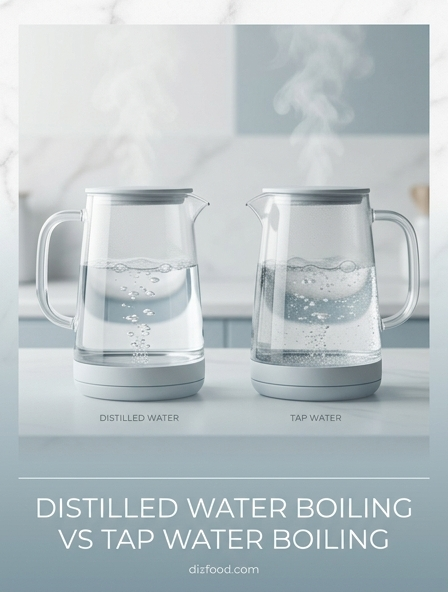
The Science of Boiling Distilled vs Tap Water
The fundamental difference between boiling distilled and tap water lies in their chemical composition. Tap water is a complex solution containing dissolved minerals such as calcium, magnesium, sodium, and various trace elements. These solutes influence the physical properties of the liquid, most notably through a phenomenon known as boiling point elevation. According to colligative properties in chemistry, the presence of non-volatile solutes increases the temperature at which a liquid transitions into vapor. Consequently, tap water technically boils at a slightly higher temperature than pure water, although this difference is often negligible in a standard kitchen environment.
In contrast, distilled water is purified through a process of evaporation and condensation, which removes virtually all dissolved solids and impurities. Because it lacks these mineral particles, distilled water behaves as a pure substance. This lack of impurities also affects how the water interacts with the surface of a pot or kettle. When boiling tap water, the minerals provide "nucleation sites," which are microscopic points where steam bubbles can easily form and rise to the surface. Distilled water, being devoid of these particles, may occasionally experience "superheating," where the liquid temperature rises slightly above the boiling point before suddenly erupting into a vigorous boil.
- Solute Concentration: Tap water contains variable PPM (parts per million) of minerals, whereas distilled water is near zero.
- Nucleation Sites: Dissolved solids in tap water facilitate more consistent bubble formation.
- Vapor Pressure: Distilled water reaches vapor pressure equilibrium more predictably than mineral-heavy tap water.
Mineral Residue and Limescale Accumulation Comparison
One of the most visible differences between boiling these two types of water is the residue left behind once the liquid evaporates. When tap water is boiled, the H2O molecules escape as steam, but the dissolved minerals remain in the vessel. Over time, these minerals-primarily calcium carbonate and magnesium-precipitate out of the solution to form a hard, white, or off-white crust known as limescale or "kettle fur." This accumulation is particularly aggressive in regions with "hard water," where the mineral concentration is high.
Distilled water, having undergone a rigorous purification process, contains no such minerals. You can boil distilled water repeatedly in the same vessel without ever developing a mineral film. This makes it an ideal choice for kitchen tasks where cleanliness and precision are paramount. The absence of residue ensures that the interior of your cookware remains pristine and that no chalky flakes end up in your food or beverages. The following table highlights the common differences in residue characteristics:
| Feature | Tap Water | Distilled Water |
|---|---|---|
| Residue Type | Limescale (Calcium/Magnesium) | None |
| Cleaning Frequency | Requires regular descaling | Rarely needed |
| Visual Appearance | Cloudy or white crust | Clear and transparent |
Does Distilled Water Boil Faster Than Tap Water
The question of boiling speed is a common point of debate among home cooks. In theory, distilled water should reach its boiling point faster than tap water because it has a slightly lower boiling point (due to the absence of solute-induced boiling point elevation) and a lower specific heat capacity. Specific heat is the amount of energy required to raise the temperature of one gram of a substance by one degree Celsius. Because tap water contains minerals that also absorb thermal energy, it technically requires a fraction more energy to heat.
However, in a practical kitchen setting, the difference is so minute that it is virtually impossible to detect without laboratory-grade thermometers and timers. Factors such as the material of the pot, the heat output of the stove, and the initial temperature of the water have a much larger impact on boiling time than the presence of minerals. Most users will find the following sequence of events occurs during the heating process:
- Initial heating: Both water types absorb energy at similar rates.
- Simmering: Tap water begins showing small bubbles earlier due to dissolved gases and nucleation sites.
- Rolling boil: Distilled water reaches a full rolling boil at 100°C (at sea level), while tap water may be at 100.1°C or 100.2°C.
- Total elapsed time: The difference is typically less than a few seconds per liter.
Impact on Cooking Flavor and Food Texture
Culinary experts often weigh in on the choice of water because it can significantly alter the sensory profile of a dish. Tap water minerals can act as flavor enhancers or detractors depending on the local water source. For instance, some minerals can make coffee taste bitter or metallic, while others might provide a "crisp" taste that people prefer. However, when boiling vegetables or pasta, the minerals in tap water can interact with the starches and fibers of the food, sometimes helping to maintain a firmer texture.
Distilled water is often described as having a "flat" or "hollow" taste because it lacks the electrolytes our palates are accustomed to. In cooking, this makes distilled water a "blank canvas." While this is excellent for delicate teas where you want the tea leaf's profile to be unadulterated, it can sometimes result in food that tastes under-seasoned. Furthermore, because distilled water is mineral-hungry, it may actually leach more nutrients and minerals out of vegetables during the boiling process compared to tap water, which is already saturated with minerals. This leaching can lead to slightly softer textures in boiled legumes and grains, which may or may not be desirable depending on the recipe.
Safety and Purity Differences After Boiling
Boiling is a time-tested method for making water safe to drink by killing biological pathogens like bacteria, viruses, and parasites. If you boil tap water, you are effectively neutralizing these biological threats. However, boiling does not remove chemical contaminants; in fact, it can concentrate them. As the water evaporates as steam, the remaining liquid has a higher concentration of non-volatile substances like lead, nitrates, or PFAS. Therefore, if your tap water is contaminated with heavy metals, boiling it makes it slightly more dangerous, not less.
Distilled water is already pure before it even reaches the pot. Boiling it serves no real purpose in terms of purification other than to ensure the vessel itself is sterilized. For individuals with compromised immune systems or those living in areas with poor water infrastructure, starting with distilled water provides a guarantee of purity that tap water cannot match. While tap water is generally regulated and safe in many regions, the boiling process specifically highlights the difference between "biological safety" and "chemical purity." Distilled water offers both, whereas boiled tap water only offers the former.
Protecting Kitchen Appliances from Mineral Damage
The longevity of kitchen appliances such as electric kettles, espresso machines, and steam ovens is directly tied to the type of water used. When tap water is boiled in these devices, the heating elements become the primary site for mineral precipitation. As the element heats up, the calcium and magnesium in the water crystallize and stick to the metal surface. This creates an insulating layer of scale that forces the appliance to work harder and run longer to reach the desired temperature, eventually leading to mechanical failure or burnout.
Using distilled water eliminates this risk entirely. Because there are no dissolved solids to precipitate, the heating elements remain clean and efficient for years. Many high-end coffee enthusiasts insist on using distilled water (often remineralized with specific, controlled amounts of salt) to protect their expensive machines from the devastating effects of limescale. The benefits of using distilled water for appliance maintenance include:
- Energy Efficiency: Clean heating elements transfer heat more rapidly, reducing electricity consumption.
- Reduced Maintenance: No need for monthly descaling cycles using vinegar or citric acid.
- Consistent Performance: Sensors and thermostats remain accurate without mineral interference.
Volatile Organic Compounds and Chlorine Evaporation
Tap water in municipal systems is frequently treated with chlorine or chloramines to prevent bacterial growth. When you boil tap water, these volatile chemicals are released into the air. This is why you might notice a "bleach-like" smell when a pot of tap water first begins to steam. Boiling for about 15 to 20 minutes is generally sufficient to remove most free chlorine, though chloramines are much more persistent and require longer boiling times or specialized filtration.
Distilled water has already had these volatile organic compounds (VOCs) and disinfectants removed during the distillation process. When you boil distilled water in your kitchen, there are no chemical fumes or unpleasant odors released. This contributes to a more neutral environment and ensures that no residual chemical flavors are absorbed into your food. For sensitive individuals or those who are particularly bothered by the smell of treated tap water, boiling distilled water offers a much cleaner olfactory experience. It avoids the "off-gassing" phase entirely, which is particularly beneficial in small, poorly ventilated kitchens where the smell of chlorine can become overwhelming during heavy cooking sessions.
Boiling Distilled Water for Medical and Laboratory Use
In certain kitchen-adjacent tasks, such as preparing baby formula, cleaning medical equipment (like CPAP humidifiers), or using a neti pot, the distinction between boiled tap and boiled distilled water becomes a matter of health safety. Tap water, even when boiled, can contain trace minerals that are irritating to sensitive membranes or can clog delicate medical tubing. Furthermore, some rare but dangerous organisms, like certain amoebae, may survive inadequate boiling of tap water if the temperature is not maintained for a sufficient duration.
Distilled water is the gold standard for these applications because it is guaranteed to be free of both minerals and pathogens. When you boil distilled water for these purposes, you are essentially performing a double-safety measure. It is commonly recommended for:
- Sterilizing Baby Bottles: Prevents mineral spots and ensures a high level of hygiene.
- Fermentation: Distilled water ensures that no chlorine or unknown minerals interfere with the delicate balance of beneficial bacteria in ferments like kombucha or sauerkraut.
- Canning: Prevents "cloudy" brine caused by the minerals in hard tap water reacting with the food.
Environmental and Cost Factors of Boiling Methods
The choice between boiling distilled and tap water also involves weighing environmental impact and household expenses. Tap water is extremely inexpensive and delivered directly to the kitchen sink with minimal carbon footprint. However, the long-term cost of tap water includes the purchase of descaling agents and the potential for shortened appliance lifespans. Additionally, if the tap water quality is poor, users may spend significantly on point-of-use filters.
Distilled water is considerably more expensive, whether purchased in plastic jugs or produced at home with a countertop distiller. Buying bottled distilled water contributes to plastic waste and the carbon emissions associated with transporting heavy liquids. Home distillers, while effective, consume a significant amount of electricity to boil and condense the water. The following table compares the two from a resource perspective:
| Factor | Tap Water | Distilled Water |
|---|---|---|
| Cost per Gallon | Fractions of a cent | $1.00 - $2.00 |
| Plastic Waste | None | High (if bottled) |
| Energy Use | Only for boiling | High (for production) |
Final Verdict on Boiling Distilled vs Tap Water
Choosing which water to boil depends entirely on the intended use and the specific priorities of the household. For everyday cooking, such as boiling pasta or making a quick pot of soup, tap water is generally the most practical and cost-effective choice. The minerals present in most tap water supplies are harmless to healthy individuals and can even contribute to the daily intake of essential elements like calcium and magnesium. However, users should be aware of the maintenance required to keep their kettles and pots free of limescale buildup.
Distilled water should be the preferred choice for specialty kitchen tasks and the maintenance of high-end appliances. If you are a coffee connoisseur, a frequent baker, or someone who uses steam-based kitchen technology, the purity of distilled water will prevent mechanical damage and provide a consistent flavor profile. Ultimately, a balanced approach is often best: use tap water for high-volume boiling where flavor and residue are less critical, and reserve distilled water for precision tasks where purity is the priority. This strategy maximizes the lifespan of your kitchen tools while minimizing unnecessary costs and environmental impact.

Comments