
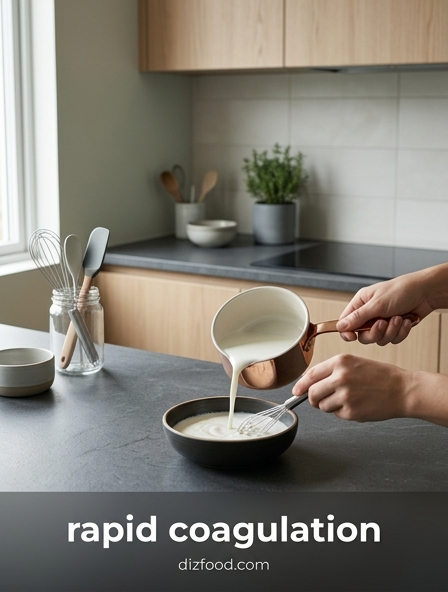
The Science of Rapid Protein Coagulation
Rapid protein coagulation occurs when amino acid chains in food, primarily found in meat, eggs, and seafood, are subjected to sudden thermal energy. As kinetic energy increases, the hydrogen bonds maintaining the protein's folded structure begin to vibrate and eventually rupture. This process, known as denaturation, causes the once-organized proteins to uncoil into loose, chaotic strands. Almost immediately, these strands collide and form new, permanent cross-links with neighboring molecules. In a culinary environment, this transition happens within seconds once the critical temperature threshold is surpassed.
- Denaturation: The initial unfolding of protein structures.
- Aggregation: The physical clumping of unfolded molecules.
- Cross-linking: The formation of covalent bonds that solidify the matrix.
- Syneresis: The expulsion of water as the protein network tightens.
When coagulation happens too quickly, the resulting structure is often dense and dry. This is because the rapid formation of the molecular mesh traps very little moisture, effectively squeezing out the natural juices that contribute to flavor and mouthfeel. Understanding the speed of this reaction is essential for controlling texture in high-heat cooking environments.
High Heat and Muscle Fiber Contraction
High-heat applications trigger an immediate physical response in muscle tissues. Meat is primarily composed of myofibrillar proteins, specifically actin and myosin, which are responsible for movement in the living animal. When exposed to rapid temperature spikes, these fibers undergo a violent contraction. This shortening of the sarcomeres acts like a sponge being squeezed, forcing intracellular fluid into the interstitial spaces and eventually out of the meat entirely. The rate of this contraction is directly proportional to the intensity of the heat source applied to the surface.
- Exposure to temperatures above 60°C initiates myosin shortening.
- Collagen sheaths begin to shrink at 70°C, exerting external pressure on fibers.
- Rapid moisture migration occurs as fiber diameters decrease.
- The protein matrix becomes increasingly rigid and opaque.
This mechanical stress is why a steak or chicken breast can go from tender to tough in a matter of seconds. The rapid contraction not only expels moisture but also packs the muscle fibers more tightly together, making it difficult for teeth to penetrate the protein structure. Managing this contraction requires a balance between surface browning and internal temperature equilibrium.
Optimal Boiling Temperatures for Tenderness
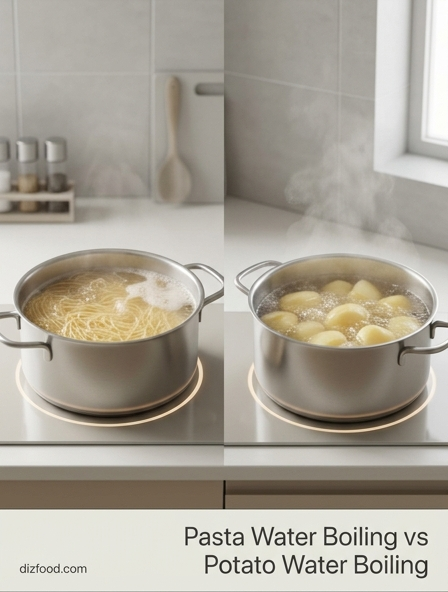
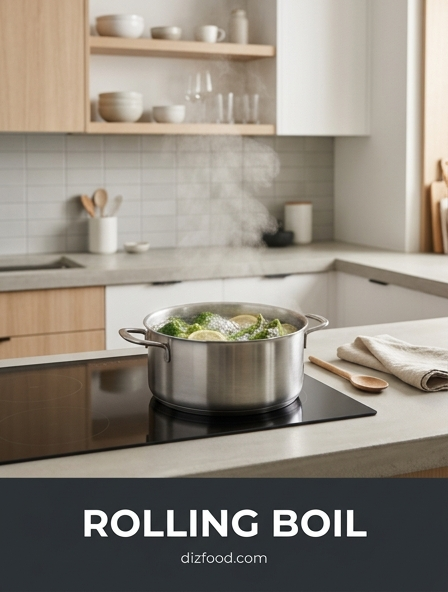
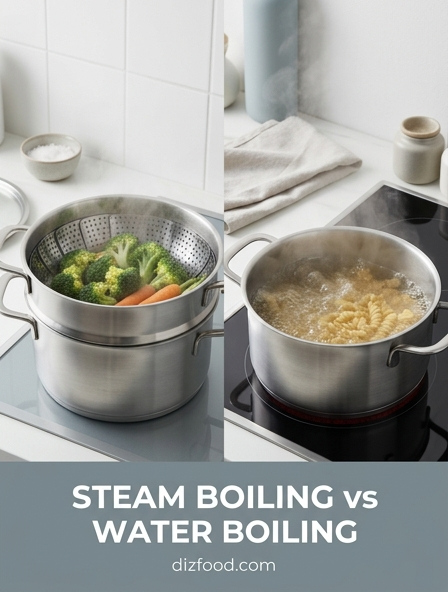
While many home cooks assume boiling at 100°C is a standard method, it is often detrimental to protein quality due to rapid coagulation. Water at a full rolling boil provides aggressive convective energy that overcooks the exterior of the protein while the interior remains under-processed. To achieve tenderness, chefs often utilize lower temperature ranges that allow for more controlled protein transformation. The following table illustrates how different water temperatures impact the coagulation process in common kitchen tasks.
| Temperature Range | Technique | Effect on Protein |
|---|---|---|
| 60°C - 75°C | Poaching | Slow, gentle coagulation; retains maximum moisture. |
| 80°C - 90°C | Simmering | Controlled tightening; ideal for collagen breakdown. |
| 100°C | Full Boil | Rapid tightening; causes "rubbery" texture in seafood. |
By keeping the liquid below the boiling point, the kinetic energy transferred to the protein is moderated. This prevents the "thermal shock" that leads to the toughening of muscle fibers and allows for a more uniform texture from the edge to the center of the food item.
Avoiding the Rubbery Texture Peak
The "rubbery" texture often associated with overcooked shrimp, squid, or eggs is a direct consequence of excessive protein cross-linking. When proteins coagulate too rapidly or for too long, the mesh of molecules becomes so tight that it loses all elasticity. At this peak of coagulation, the protein strands are essentially locked into a rigid, plastic-like state. For delicate items like shellfish, the window between perfectly tender and unpleasantly rubbery is extremely narrow, often lasting only thirty seconds of additional heat exposure.
- Over-aggregation: Molecules clump too tightly, creating a dense barrier.
- Moisture Loss: Excessive heat expels the lubricants between protein strands.
- Structural Stiffness: The inability of the protein matrix to flex under pressure.
To avoid this peak, it is vital to utilize residual heat or "carry-over" cooking. By removing the protein from the heat source just before it reaches the final target temperature, the coagulation process slows down. This prevents the secondary and tertiary bonding phases from reaching the point of total rigidity, ensuring the texture remains supple and palatable rather than tough and resilient.
Liquid Temperature Control in Protein Cooking
In liquid-based cooking, such as braising or poaching, the temperature of the medium acts as the primary regulator for coagulation speed. Unlike the dry heat of an oven, water is a highly efficient conductor of energy. This means that even a five-degree difference in liquid temperature can significantly alter the rate at which proteins denature. Maintaining a consistent temperature prevents the exterior of the protein from reaching the "rubberization" point while the center is still reaching safety thresholds. High-energy liquids cause the surface proteins to seize instantly, creating a barrier that can actually impede heat transfer to the center.
Precision is key when dealing with temperature-sensitive proteins like fish or eggs. Using a thermometer to monitor the liquid ensures that the thermal gradient between the pot and the food remains narrow. When the gradient is wide-such as dropping a cold egg into boiling water-the rapid coagulation of the outer white creates a tough exterior shell. Conversely, a gentle rise in temperature allows the proteins to form a softer, more delicate gel-like structure. Controlling the liquid environment is the most effective way to ensure uniform coagulation across the entire piece of food.
Molecular Impact of Flash Boiling
Flash boiling involves submerged proteins in 100°C water for a very brief duration. At a molecular level, this causes an instantaneous "setting" of the surface proteins. The high kinetic energy forces the peptide chains to bond so quickly that they form a disorganized and highly compact crust. This technique is often used in blanching to deactivate enzymes, but when applied to meats, it can be disastrous for texture. The suddenness of the heat does not allow for the gradual relaxation of connective tissues, resulting in a firm, constricted exterior.
- Immediate rupture of weak ionic bonds in protein chains.
- Instantaneous formation of disulfide bridges between strands.
- Creation of a dense superficial layer that traps internal steam.
- Rapid rise in internal pressure within the muscle fibers.
This process is functionally different from searing, as the presence of water prevents the Maillard reaction while still inducing rapid coagulation. The result is often a protein that is gray, tough, and lacking in flavor depth. Molecularly, the "flash" approach provides too much energy for the protein to handle gracefully, leading to a disorganized and rigid structural outcome that is difficult to reverse through further cooking.
Thermal Shock and Protein Tightening
Thermal shock occurs when a protein is moved from a cold state (such as the refrigerator) directly into a high-temperature environment. This extreme delta in temperature causes the outermost layers of the protein to contract violently before the inner core can react. The result is a significant structural tension throughout the meat or fish. This tightening is not just a surface phenomenon; the physical pull of the contracting outer fibers can actually squeeze the juices out of the still-raw center, leading to a loss of total moisture before the cooking process is even halfway complete.
- Inconsistent Expansion: The outer layers shrink while the core remains stable.
- Mechanical Shearing: The internal stress can tear delicate cellular membranes.
- Surface Hardening: The rapid formation of a "skin" of over-coagulated protein.
To mitigate thermal shock, tempering the protein-allowing it to sit at room temperature for a brief period-is often recommended. This reduces the temperature differential and slows the rate of coagulation. By narrowing the gap between the food's starting temperature and the cooking medium, the protein strands can denature more evenly, resulting in a more uniform and tender final product.
Managing Coagulation Rates for Juiciness
The secret to juiciness in cooked proteins lies in the management of coagulation rates. Juiciness is determined by the amount of water retained within the protein matrix after it has solidified. If coagulation happens slowly, the protein strands have time to align in a way that traps water molecules within the mesh. If the rate is too high, the mesh becomes too tight to hold any liquid. The relationship between time, temperature, and moisture retention is a delicate balance that defines culinary success.
| Coagulation Speed | Protein Arrangement | Moisture Outcome |
|---|---|---|
| Slow | Ordered, loose mesh | High retention (Juicy) |
| Moderate | Developing density | Standard retention |
| Rapid | Disordered, tight mesh | Low retention (Dry) |
By adjusting the heat source to ensure a slow coagulation rate, particularly during the final stages of cooking, the protein remains permeable enough to keep its natural juices. This is why low-and-slow methods or precision sous-vide techniques are favored for achieving maximum succulent results in lean proteins that lack fat to buffer the heat.
Strategic Simmering to Prevent Hardening
Strategic simmering is the practice of maintaining a cooking liquid just below the point of active agitation, usually between 85°C and 95°C. This specific range is critical for proteins because it provides enough energy to break down tough connective tissues (like collagen) without reaching the levels that cause rapid myofibrillar hardening. When a liquid is at a full boil, the physical turbulence combined with the high heat creates a "hammering" effect on the proteins, accelerating coagulation and leading to a tough, fibrous result.
- Observe the liquid for "lazy bubbles" that break the surface occasionally.
- Maintain a consistent heat level to prevent fluctuating coagulation speeds.
- Use a heavy-bottomed pot to ensure even heat distribution in the liquid.
- Avoid overcrowding, which can drop the temperature and stall the process.
Simmering allows the protein to undergo a "gentle" set. This is particularly important for stews and braises where the meat is cooked for a long duration. If the liquid is allowed to boil, the proteins will harden early in the process and may never truly soften, regardless of how long they are cooked. Proper simmer control ensures the proteins remain tender throughout the transformation.
Precision Heat Application for Delicate Proteins
Delicate proteins, such as those found in white fish, scallops, and egg yolks, have much lower coagulation thresholds than tougher red meats. For these items, rapid coagulation is the enemy of quality. Fish proteins, for example, begin to denature and coagulate at temperatures as low as 45°C. Applying high heat to these ingredients causes an almost instantaneous transition from raw to overcooked. Precision heat application involves using low-intensity methods or very short durations of high heat to "kiss" the protein without destroying its structure.
- Low-Temperature Steaming: Vapor heat provides gentle, even coagulation.
- Unilateral Cooking: Searing on one side only to protect delicate fibers.
The goal with delicate proteins is to stop the coagulation process exactly when the proteins have turned opaque but before they have lost their structural moisture. This requires a high degree of attentiveness and often the use of thermometers or tactile testing. When handled with precision, these proteins retain a buttery, melt-in-the-mouth texture that is entirely lost if the heat is applied too aggressively or too quickly.

Comments