
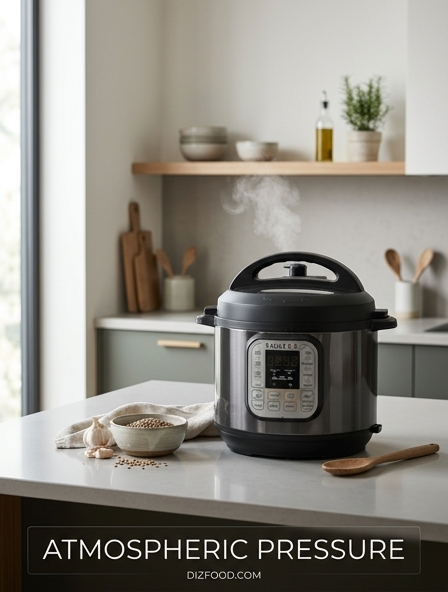
Understanding Atmospheric Pressure and Boiling
Atmospheric pressure is the force exerted by the weight of the air above us. In a kitchen environment, this pressure plays a critical role in how ingredients react to heat. When heating a liquid, boiling occurs when the vapor pressure of the liquid equals the surrounding atmospheric pressure. At sea level, this happens at 212°F (100°C) because the air is dense and exerts significant force, keeping water molecules in a liquid state longer. As one moves to higher elevations, the air becomes thinner and the atmospheric pressure decreases.
This reduction in pressure means that water molecules require less energy-and thus less heat-to escape into the air as steam. Key concepts to remember include:
- Pressure directly influences the boiling point of all liquids.
- Lower pressure environments facilitate faster evaporation.
- Standard recipes are typically developed for sea-level pressure.
- Atmospheric changes affect both stovetop and oven performance.
Understanding these physical laws is the first step for any chef relocating from the coast to the mountains, as it dictates the fundamental behavior of moisture and heat within the cooking vessel during daily meal preparation.
Altitude Impact on Water Boiling Points
Altitude significantly alters the temperature at which water boils, a phenomenon that can frustrate unsuspecting cooks. For every 500-foot increase in elevation, the boiling point of water drops by approximately 0.9°F. This linear relationship means that at high altitudes, "boiling" water is actually much cooler than it is at sea level. Because the water is cooler, it lacks the thermal energy required to cook food at the expected speed, leading to undercooked pasta or crunchy grains if adjustments are not made.
The following table illustrates the decrease in boiling point as altitude increases:
| Altitude (Feet) | Boiling Point (°F) | Boiling Point (°C) |
|---|---|---|
| 0 (Sea Level) | 212.0°F | 100.0°C |
| 2,000 | 208.1°F | 97.8°C |
| 5,000 | 202.4°F | 94.7°C |
| 7,500 | 197.6°F | 92.0°C |
| 10,000 | 192.9°F | 89.4°C |
This data highlights why a "rolling boil" at 10,000 feet is not nearly as effective for sterilization or cooking as a gentle simmer at sea level. Cooks must be aware that the visual cue of bubbles does not always guarantee the standard heat intensity.
Adjusting Cook Times for High Elevation
Because the boiling point of water is lower at high elevations, food takes longer to reach the desired level of doneness. When boiling or simmering, the temperature of the water remains constant once it reaches its boiling point, regardless of how high the flame is turned. Therefore, you cannot simply increase the heat to speed up the process; you must increase the duration. This is particularly noticeable with slow-cooked items like legumes and tough cuts of meat that require collagen breakdown.
To manage these changes, consider these steps:
- Check for doneness 20% earlier than suggested, but expect to cook 25% longer.
- Use a thermometer to ensure internal temperatures of meats reach safety standards.
- Keep a tight-fitting lid on the pot to minimize heat loss through steam.
- Increase the amount of liquid used to compensate for extended boiling times.
By accounting for these variables, cooks can ensure that their meals are tender and fully cooked, despite the atmospheric challenges posed by high-altitude environments. Patience is a primary ingredient when cooking at height.
Science of Air Pressure in the Kitchen
The science of air pressure in the kitchen extends beyond the boiling point to the very structure of the food we prepare. Atmospheric pressure acts as an invisible weight that holds things in place. In the world of baking, this weight assists in regulating the expansion of gases. When yeast or leavening agents produce carbon dioxide, the atmospheric pressure pushes back against the cell walls of the dough. In low-pressure environments, this resistance is weakened, causing dough to rise more rapidly and often excessively.
If the structure of the dough stretches too far before it is set by heat, the air bubbles can burst, leading to a collapsed cake or bread. Furthermore, the lower pressure causes moisture within the food to turn to steam at lower temperatures. This premature evaporation can leave baked goods dry and crumbly. Understanding the interplay between external pressure and internal gas expansion allows professional bakers to manipulate flour types, hydration levels, and leavening amounts to maintain the integrity of their products regardless of the geographic location of their kitchen.
Why Water Boils at Lower Temperatures
The reason water boils at lower temperatures in high-altitude regions is rooted in the relationship between vapor pressure and external atmospheric force. At any given temperature, water molecules at the surface are trying to escape into the air. The atmosphere acts like a lid, pressing down on the surface of the liquid. For a bubble of steam to form and rise, its internal pressure must be strong enough to push back against the weight of the air above it.
In mountain regions, there is less air above the pot, meaning:
- The "lid" of atmospheric pressure is much lighter.
- Less kinetic energy (heat) is required for molecules to break free.
- Bubbles form at temperatures well below the standard 212°F.
- Steam escapes more easily, cooling the remaining liquid through evaporation.
This physical reality means that heat transfer through boiling is less efficient. Since the water cannot get as hot as it would at sea level, it simply cannot transfer as much energy to the food, necessitating longer exposure times or the use of specialized equipment like pressure cookers to artificially increase the local pressure.
High Altitude Cooking Time Adjustments
High altitude cooking time adjustments are essential for stovetop preparations. Because the maximum temperature of boiling water is reduced, any food that relies on water as a heat transfer medium will require a revised schedule. For every 1,000 feet above sea level, the decrease in temperature becomes more pronounced, drastically affecting the chemical breakdown of starches and proteins.
The following table provides estimated time increases for common kitchen staples:
| Food Item | Sea Level Time | 5,000+ Feet Time |
|---|---|---|
| Hard Boiled Eggs | 10-12 minutes | 15-20 minutes |
| Dry Pasta | 8-10 minutes | 12-15 minutes |
| White Rice | 18 minutes | 22-25 minutes |
| Dry Beans | 1-2 hours | 3-4 hours |
Note that for foods with very long cooking times, such as beans, the difference is exponential. Without these adjustments, beans may never reach a softened state because the water temperature is too low to dissolve the hemicellulose in the cell walls. Using a pressure cooker can counteract this by artificially raising the internal pressure and temperature.
The Role of Pressure in Heat Transfer
Heat transfer in the kitchen occurs through conduction, convection, and radiation. Atmospheric pressure specifically modulates the efficiency of convection and phase-change cooling. In a standard boiling scenario, the water acts as the medium for conduction. However, because low pressure allows water to boil at a lower temperature, the "ceiling" for heat transfer is lowered. This means that while the water is boiling vigorously, it is not actually as "hot" as a cook might assume.
In addition to boiling, the density of the air affects the efficiency of convection in an oven. Thinner air at high altitudes carries heat less effectively than dense sea-level air. This can lead to uneven cooking or longer preheating times. Furthermore, the role of steam becomes more complex; while steam forms more easily, it also carries less latent heat than steam produced at higher pressures. To overcome these limitations, chefs often rely on increasing the surface area of the food or utilizing sealed environments where pressure can be manually increased to force heat into the center of the ingredients more effectively.
Essential Tips for Mountain Top Cooking
Mastering mountain top cooking requires a mix of scientific understanding and practical intuition. When working at elevations above 3,000 feet, the rules of the kitchen shift. One of the most important habits a cook can develop is the constant monitoring of moisture. Because liquids evaporate so quickly, sauces can reduce too far and become overly salty or thick before the primary ingredients are actually cooked.
Consider these essential tips for success:
- Always use a lid to trap moisture and maintain a stable temperature.
- Increase liquid in recipes by 10% to 15% to compensate for evaporation.
- Decrease leavening agents like baking powder by 25% to prevent collapse.
- Increase oven temperatures by 15°F to 25°F to help set the structure quickly.
By making these small but significant changes, you can produce consistent results that rival those made at sea level. Paying attention to the humidity and the behavior of your ingredients will help you navigate the unique challenges of high-altitude culinary arts and prevent common kitchen failures.
How Elevation Changes Food Preparation
Elevation changes food preparation by affecting the chemical and physical properties of ingredients. For example, sugar concentrations become more intense as water evaporates faster, which can ruin the texture of candies and syrups. In baking, the relationship between gluten and moisture is altered. Because flour dries out faster in thin air, you may need to add more liquid to achieve the same dough consistency found in a sea-level kitchen.
Preparation usually follows this sequence of adjustments:
- Hydrate dry ingredients more thoroughly than usual.
- Reduce the amount of sugar to prevent the structural weakening of cakes.
- Beat egg whites slightly less to avoid over-incorporating air.
- Shift toward using high-protein flours to provide better structure.
These steps are necessary because the lower atmospheric pressure allows gases to expand too quickly for the delicate protein structures in food to support them. By modifying the preparation phase, you create a more robust foundation that can withstand the reduced pressure of the high-altitude environment during the actual cooking process.
Managing Evaporation Rates at High Altitudes
Evaporation is one of the most aggressive factors in high-altitude cooking. With less atmospheric pressure holding the water molecules in place, they transition from liquid to gas at a much faster rate. This isn't just about boiling water; it affects the moisture content of everything in the kitchen, from a resting steak to a bowl of rising dough. Rapid evaporation can lead to the formation of a "skin" on sauces or a dry, hard crust on bread dough before it even enters the oven.
To manage these rates, chefs must be proactive. Wrapping dough tightly in plastic or using damp towels is essential. When simmering soups or stews, the rapid loss of water can significantly concentrate flavors, often leading to an over-seasoned final product. It is often better to under-salt at the beginning and adjust at the very end. Additionally, keeping a pan of water in the oven can help maintain a humid environment, which slows down the evaporation from the surface of baked goods, allowing them to rise and set more naturally despite the low-pressure conditions.

Comments