
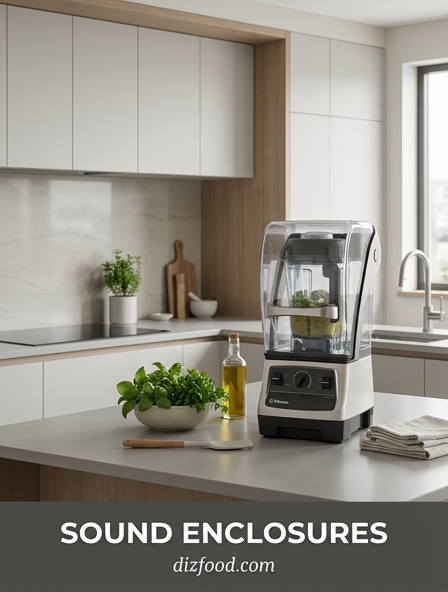
The Physics of Kitchen Noise Suppression
Understanding the physics of noise suppression in a kitchen environment requires an analysis of sound waves as kinetic energy. When high-speed appliances, such as blenders or mixers, operate, they create pressure waves that travel through the air. These waves are characterized by their frequency and amplitude. Effective sound enclosures work by employing three primary physical principles: reflection, absorption, and transmission loss. Reflection bounces the sound waves back into the enclosure, while absorption converts the kinetic energy of the sound into trace amounts of heat within the material itself.
The effectiveness of these enclosures is often measured by the Sound Transmission Class (STC) rating, which quantifies how well a barrier reduces the decibel (dB) level. Because kitchen noise is often a complex mixture of low-frequency vibrations and high-frequency mechanical whines, a multifaceted approach is necessary. To achieve significant suppression, the enclosure must be constructed from materials with sufficient mass to resist movement when struck by sound waves. This physical resistance ensures that the sonic energy is dissipated rather than passed through the barrier to the surrounding environment, protecting the acoustic comfort of the workspace.
Anatomy of an Integrated Sound Enclosure
An integrated sound enclosure is far more than a simple plastic cover; it is a precision-engineered system designed to encapsulate noise at its source. The anatomy typically consists of a high-impact transparent dome, a heavy-duty base, and a series of gaskets that ensure an airtight seal. Each component plays a specific role in the overall acoustic performance of the appliance. The dome is usually shaped with curved surfaces to prevent standing waves from forming inside the chamber, which could otherwise amplify the noise.
| Component | Primary Function | Material Typically Used |
|---|---|---|
| Outer Shield | Sound Reflection | Tritan or Polycarbonate |
| Base Gasket | Vibration Isolation | Silicone or Nitrile Rubber |
| Hinge Mechanism | Structural Integrity | Reinforced Polymer/Steel |
| Acoustic Liner | Sound Absorption | Open-cell Foam |
By integrating these components into a single unit, manufacturers can ensure that there are no weak points where sound might leak out. The synergy between the rigid shield and the flexible gaskets allows the appliance to operate at peak performance without disrupting the kitchen's atmosphere.
Internal Dampening versus External Sound Barriers
In the quest for a quiet kitchen, engineers distinguish between internal dampening and external sound barriers. Internal dampening refers to treatments applied directly to the motor and internal housing of the appliance. This often involves the use of specialized coatings or heavy rubber pads that reduce the "ringing" of metal parts. This method targets the source of the vibration, attempting to stop the noise before it even enters the air. In contrast, external sound barriers, such as a blender's sound shield, focus on containing the airborne noise once it has been generated.
- Internal Dampening: Focuses on mass-loading and reducing the resonant frequency of the motor components.
- External Barriers: Focuses on the transmission loss through clear, dense materials that block the path of sound waves.
- Hybrid Systems: Combine both methods to tackle both structure-borne and airborne noise simultaneously.
While internal dampening is effective for reducing low-end rumble, external barriers are far superior at blocking the high-pitched mechanical sounds common in high-RPM appliances. Using both techniques provides a comprehensive solution for professional-grade noise reduction.
How Integrated Shields Neutralize High Frequency Pitch
High-frequency sounds, often described as whines or screeches, have short wavelengths that are particularly susceptible to being blocked by solid surfaces. Integrated shields are specifically engineered to capitalize on this characteristic. Because high-frequency waves do not easily "bend" around obstacles, a well-sealed enclosure can effectively trap these irritating pitches inside. The thickness of the shield is a critical factor; the material must be dense enough to prevent the short waves from vibrating the shield itself and turning it into a secondary radiator of sound.
Furthermore, the geometry of the shield helps in neutralizing these pitches. Angular designs can sometimes cause sound to bounce and find small gaps, whereas rounded, aerodynamic shapes tend to diffuse the energy more evenly. When the high-frequency waves strike the interior surface of a dense polycarbonate shield, they lose energy rapidly. This results in a perceived noise that is not just quieter, but also "thicker" or "mellower" in tone. By shifting the sound profile away from the harsh high-end frequencies, the kitchen environment becomes significantly more tolerable for both staff and patrons during peak hours of operation.
Engineering Airflow for Quiet Motor Ventilation
A significant challenge in designing sound enclosures is providing adequate cooling for the motor while preventing sound from escaping through the ventilation ports. Without airflow, the motor would quickly overheat and fail; however, air vents are naturally "acoustic leaks." To solve this, engineers utilize complex baffled pathways. These pathways force the air to travel through a series of turns, usually in an S-shape or a labyrinthine pattern. While air can flow freely through these curves, sound waves-which travel in straight lines-strike the walls of the baffles and lose energy.
- Acoustic Baffles: Lined with sound-absorbent material to soak up energy at every turn.
- Directional Venting: Directing exhaust air toward the rear or base to minimize direct noise paths to the user.
- Variable Speed Fans: Fans that adjust their RPM based on thermal needs to keep cooling noise at a minimum.
This sophisticated thermal management ensures that the appliance remains cool even during heavy use, without compromising the integrity of the sound enclosure. Precision engineering allows for a balance between aerodynamic efficiency and acoustic containment.
Structural Advantages of Built In Acoustic Housing
Built-in acoustic housing offers structural advantages that aftermarket or "add-on" shields cannot match. When an appliance is designed from the ground up with an integrated enclosure, the entire chassis is optimized for noise reduction. This integration allows for a more rigid connection between the motor base and the sound shield, reducing the likelihood of sympathetic vibrations. In a built-in system, the enclosure is not just a lid; it is a structural component that contributes to the overall stability of the machine, preventing the "walking" or shifting that can occur with high-speed vibration.
Additionally, integrated designs allow for better ergonomic access. Because the housing is part of the original design, hinges can be placed more effectively, and the footprint can be kept compact. This is especially important in crowded commercial kitchens where counter space is at a premium. The permanent nature of built-in housing also means that the seals are more durable and less prone to misalignment over time. By treating the acoustic housing as a primary design requirement rather than an afterthought, manufacturers can achieve a level of quiet operation that feels seamless and professional.
Vibration Decoupling and Soundwave Absorption Technology
Vibration decoupling is the process of separating the vibrating motor from the rest of the kitchen environment to prevent sound from traveling through solids, such as countertops. This is achieved through the use of isolators, which are typically made of high-damping elastomers. These materials absorb the mechanical energy and prevent it from turning into audible noise. When combined with soundwave absorption technology inside the enclosure, the result is a dramatic decrease in the overall noise floor of the kitchen.
| Technology Type | Mechanism | Benefit |
|---|---|---|
| Elastomeric Mounts | Kinetic absorption | Eliminates counter vibration | Viscous friction | Reduces internal echo |
| Mass-Loaded Vinyl | Inertial resistance | Blocks low-frequency hum |
Absorption technology often uses open-cell foams or micro-perforated layers that trap sound waves within their structure. As the sound waves enter these pores, they are forced to vibrate the air molecules within the tight spaces, creating friction and converting the sound into thermal energy. This dual approach of decoupling and absorption ensures that noise is tackled both as a vibration and as an airborne wave.
Material Science in High Performance Blender Shields
The materials used in high-performance blender shields are chosen for their specific acoustic and mechanical properties. Most professional enclosures utilize advanced polymers like Tritan or heavy-gauge polycarbonates. These materials are favored because they offer a rare combination of optical clarity and high density. Density is the most critical factor for a sound barrier; the heavier and more rigid the material, the less it will vibrate in response to internal sound pressure. This prevents the shield itself from becoming a speaker that broadcasts the motor's noise to the room.
Beyond density, material science focuses on the "damping factor" of the polymer. Some plastics are naturally "dead," meaning they do not ring when struck, while others are "live" and resonant. Engineers often use multi-layered composites or specific resin blends to increase the damping factor. Furthermore, these materials must be resistant to the chemical stress of kitchen cleaners and the physical impact of daily use. The result is a shield that remains crystal clear for visibility while providing a formidable barrier against the high-energy output of a commercial-grade motor spinning at over 20,000 RPM.
Precision Fit Seals for Maximum Decibel Reduction
Even the thickest sound enclosure will fail if it is not equipped with precision-fit seals. In acoustics, even a tiny gap-representing only 1% of the surface area-can allow up to 50% of the sound energy to escape. This phenomenon makes the quality of gaskets and seals the most critical aspect of enclosure assembly. Precision seals are designed to compress slightly when the enclosure is closed, creating an airtight bond that prevents sound "leaks." These seals are typically made from silicone or thermoplastic elastomers (TPE) because these materials maintain their shape and elasticity over thousands of uses.
- Compression Gaskets: Create a physical barrier at the junction of the lid and the base.
- Overlap Joints: Design elements where the shield fits into a recessed groove to create a longer path for sound.
- Acoustic Gaps: Intentional small spaces designed to be filled by high-damping materials.
By ensuring a tight tolerance between all moving parts, manufacturers can achieve decibel reductions that make a blender quiet enough for a normal conversation to take place right next to it. Regular maintenance of these seals is essential to keep the enclosure performing at its original specifications.
Optimizing Kitchen Environments Through Integrated Design
Optimizing a kitchen environment goes beyond simply buying quiet appliances; it involves integrating sound suppression into the overall design of the workspace. Integrated sound enclosures play a pivotal role in this strategy by reducing the ambient noise floor, which in turn reduces worker fatigue and improves communication. In open-concept kitchens or juice bars, where the customer is in close proximity to the preparation area, these enclosures are essential for maintaining a premium brand experience. A quiet environment allows for better customer service and a more relaxed atmosphere for diners.
From an ergonomic perspective, integrated enclosures are designed to fit into the natural workflow of the chef or barista. Features like one-handed opening mechanisms, magnetic latches, and easy-clean surfaces ensure that the pursuit of silence does not hinder speed of service. When appliances are designed with these acoustic housings, they become tools that enhance both the productivity and the sensory quality of the kitchen. Ultimately, the integration of high-performance sound technology represents a shift toward more thoughtful, human-centric kitchen engineering that values the auditory health of everyone in the space.




Comments