
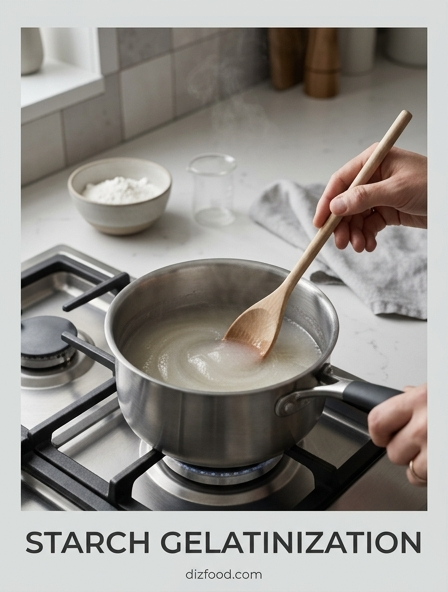
The Science of Oat Starch Molecules
Oat starch is composed of two primary glucose polymers: amylose and amylopectin. Amylose consists of long, linear chains that contribute to the gelling strength of the liquid, while amylopectin features a highly branched structure that influences the initial thickening and viscosity. In the context of culinary applications, the ratio of these two molecules determines how the starch behaves when hydrated. Oats typically contain a higher proportion of amylopectin, which provides a smooth, creamy mouthfeel but also makes the mixture susceptible to becoming overly viscous if not managed correctly.
- Amylose: Responsible for the structural integrity and firm gel formation upon cooling.
- Amylopectin: Facilitates rapid thickening and contributes to the adhesive quality of the starch paste.
- Lipid Content: Oats contain more internal lipids than other cereal starches, which can form complexes with amylose to slow down the swelling process.
When these molecules are suspended in water, they remain insoluble until thermal energy is applied. Understanding the molecular density of these polymers is essential for controlling the final texture of homemade or industrial oat-based beverages and puddings.
Optimal Blending Temperatures for Texture
Temperature control is the most critical variable during the mechanical blending of oats. Unlike traditional grains, oats contain beta-glucans and sensitive starches that react almost instantly to heat. If the water used during blending is too warm, the starch granules begin to absorb liquid prematurely, leading to a "gummy" or "slimy" consistency that is difficult to filter. Maintaining a cold environment ensures that the granules remain intact throughout the physical breakdown of the grain.
| Temperature Range | Effect on Oat Starch | Resulting Texture |
|---|---|---|
| 35°F - 50°F | Minimal swelling; granules stay dormant. | Clean, thin, and easily strainable. |
| 60°F - 80°F | Partial hydration of surface molecules. | Slightly thicker, potential for minor grit. |
| 90°F+ | Rapid gelatinization and beta-glucan release. | High viscosity, slimy or mucus-like. |
To achieve a professional-grade consistency, many culinary experts recommend using ice-cold filtered water. This prevents the friction generated by high-speed blender blades from raising the internal temperature above the gelatinization threshold.
How Heat Triggers Gelatinization
Gelatinization is a multi-step thermodynamic process that occurs when starch granules are heated in the presence of water. As the temperature rises, the kinetic energy causes the hydrogen bonds between the amylose and amylopectin chains to weaken. This allows water molecules to penetrate the tightly packed granules, causing them to swell significantly in size. For oat starch, this transition typically begins between 130°F and 160°F, depending on the specific oat variety and processing method used.
- Hydration: Water enters the amorphous regions of the starch granule.
- Swelling: The granule expands to several times its original volume, increasing the viscosity of the surrounding liquid.
- Amylose Leaching: Linear amylose molecules escape the granule and enter the aqueous phase, creating a thickened matrix.
- Total Disruption: If heating continues, the granules eventually burst, releasing all internal contents and potentially leading to a loss of viscosity.
In the kitchen, controlling this window is the difference between a velvety sauce and a solidified mass. Monitoring the heat ensures the starch reaches its peak thickening power without losing its structural fluidity.
Achieving Creamy Viscosity Without Sliminess
The primary complaint regarding oat-based liquids is a "slimy" mouthfeel, which is often caused by the over-extraction of soluble fibers known as beta-glucans. While these fibers are nutritionally beneficial, they create a heavy, mucilaginous texture when agitated excessively or heated too quickly. To achieve creaminess without this undesirable trait, one must balance mechanical force with chemical stability. Using a short blending pulse-typically under thirty seconds-minimizes the physical shearing of the cell walls, which keeps the larger fiber complexes from leaching into the milk.
Furthermore, the choice of oats matters. Rolled oats are steamed and pressed, which partially pre-gelatinizes the starch, making them more prone to sliminess than steel-cut oats. If a creamy viscosity is desired, the use of an enzyme or a specific straining technique, such as a nut milk bag without over-squeezing, can preserve the liquid's integrity. By avoiding the temptation to squeeze the pulp, you prevent the forced passage of highly hydrated starch particles into the final product, resulting in a cleaner, lighter mouthfeel that mimics dairy cream.
The Role of Amylase Enzymes
Amylase enzymes are the secret to commercial oat milk's natural sweetness and liquid stability. These enzymes act as biological catalysts that break down long-chain starch molecules into shorter-chain maltose and glucose. By introducing alpha-amylase during the heating phase, the chef can liquefy a thick oat paste into a pourable beverage. This process, known as enzymatic hydrolysis, effectively manages the gelatinization process by preventing the starch from forming a rigid gel network upon cooling.
- Liquefaction: Alpha-amylase breaks the 1,4-glycosidic bonds, reducing the viscosity of the starch "gel."
- Saccharification: Glucoamylase can further break down fragments into glucose, increasing the perceived sweetness without added sugar.
- Texture Control: These enzymes ensure the milk remains fluid even after being heated for coffee or lattes.
For the home cook, adding a small amount of sprouted grain flour (which is naturally rich in amylase) or a food-grade enzyme powder can replicate this industrial effect. This allows the oat milk to be heated and frothed without turning into porridge in the steaming pitcher.
Molecular Changes During the Blending Process
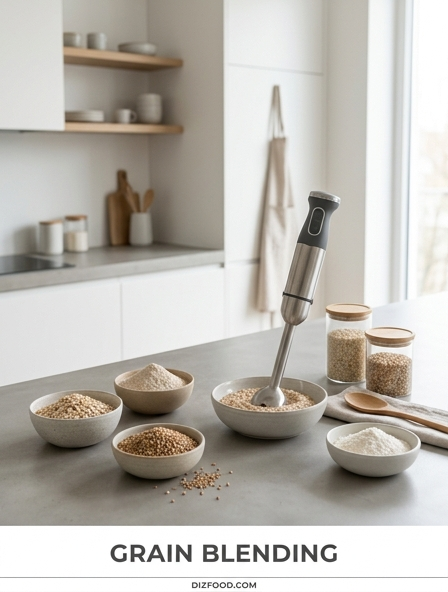
Blending is more than just a physical reduction of size; it is a catalyst for molecular interaction. When oats are subjected to high-shear forces in a blender, the protective bran and endosperm structures are pulverized, exposing the starch granules to the water. At the molecular level, the high-speed blades can cause mechanical degradation of the starch polymers. If the blending is too intense, the amylose chains are sheared into smaller fragments, which changes the way they interact with water and other ingredients.
This mechanical energy also generates localized heat. Even if the water starts cold, the friction at the blade tip can reach temperatures high enough to initiate localized gelatinization. This creates a micro-gel environment where individual starch molecules begin to bridge with one another, forming the aforementioned slimy texture. To maintain molecular integrity, it is often recommended to blend in short bursts or use high-speed settings only briefly. This ensures that the grain is sufficiently broken down to release its fats and proteins into the emulsion without completely dismantling the starch granule structure prematurely.
Impact of Water Ratios on Thickness
The concentration of starch granules relative to the volume of water determines the final density of the gelatinized mixture. In oat-based cooking, the ratio typically dictates whether the result is a thin milk, a thick creamer, or a solid pudding. As the starch-to-water ratio increases, the distance between individual granules decreases. Upon heating, these granules swell and begin to collide, creating significant internal friction and viscosity.
| Oat to Water Ratio | Purpose | Viscosity Profile |
|---|---|---|
| 1:4 | Standard Milk | Low viscosity, light mouthfeel. |
| 1:3 | Coffee Creamer | Medium viscosity, coats a spoon. |
| 1:2 | Base for Custard | High viscosity, heavy and rich. |
| 1:1 | Oatmeal/Porridge | Semi-solid, fully gelled matrix. |
Adjusting these ratios allows for precise control over the texture. However, higher concentrations of starch also require more careful temperature management, as the "slimy" threshold is reached much faster when the granules are densely packed and more likely to interact with leached beta-glucans.
Managing Gel Strength in Plant Based Milk
Gel strength refers to the ability of a cooled starch-water mixture to hold its shape. In plant-based milks, a high gel strength is usually undesirable, as it leads to separation or a "jelly-like" sludge at the bottom of the container. The strength of the gel is primarily dictated by the amylose content and the degree of retrogradation. To manage this, ingredients like fats or emulsifiers can be added to interfere with the starch's ability to form a continuous network. Adding a small amount of oil, such as rapeseed or sunflower oil, can coat the starch molecules and inhibit excessive hydrogen bonding.
Furthermore, pH levels play a role in gel stability. Extremely acidic environments can break down starch chains, potentially weakening the gel but also causing the milk to curdle if proteins are present. By maintaining a neutral pH and introducing lipids, the cook can ensure that the starch remains in a suspended, liquid state rather than settling into a firm gel. This management is vital for "barista-style" milks that need to maintain a consistent texture throughout their shelf life and when exposed to the heat of coffee.
The Cooling Phase and Final Consistency
The behavior of oat starch during the cooling phase is defined by a process called retrogradation. As the temperature drops, the kinetic energy of the amylose and amylopectin chains decreases, allowing them to realign and reform hydrogen bonds. This realignment often excludes water from the starch matrix, a phenomenon known as syneresis, which can cause the liquid to separate. The final consistency of the product is not truly realized until it has reached room temperature or been chilled for several hours.
- Recrystallization: Amylose chains begin to associate into double helices, forming a firm structure.
- Thickening: The liquid reaches its maximum set point, often appearing much thicker than when it was hot.
- Phase Separation: Water may be pushed out of the network, creating a layer of liquid on top of a dense starch base.
To prevent a hard set, it is important to either use enzymes to shorten the chains or ensure the starch was not over-hydrated during the initial heating phase. Proper agitation during cooling can also help maintain a more uniform and fluid final consistency.
Troubleshooting Texture Issues in Oat Milk
Achieving the perfect oat milk texture often requires adjusting techniques based on specific results. If the milk is consistently too thin, the culprit is likely an insufficient oat-to-water ratio or the use of steel-cut oats without a soaking period. Conversely, if the milk is too thick or "gloopy," the blending time was likely too long or the water was too warm. Troubleshooting requires a systematic approach to identifying which part of the starch gelatinization process went out of control.
- Issue: Sliminess. Solution: Use ice-cold water and blend for no more than 20-30 seconds. Do not squeeze the pulp during straining.
- Issue: Chalky Texture. Solution: Ensure oats are fully pulverized or increase the soaking time to soften the grain before blending.
- Issue: Separation. Solution: Add a pinch of salt or a teaspoon of oil to act as a stabilizer, and always shake before use to redistribute suspended solids.
If the milk "sludges" when added to hot coffee, the starch is gelatinizing upon contact with the heat. To fix this, the starch must be pre-treated with amylase or the milk must be slightly diluted to reduce the concentration of reactive granules.

Comments