
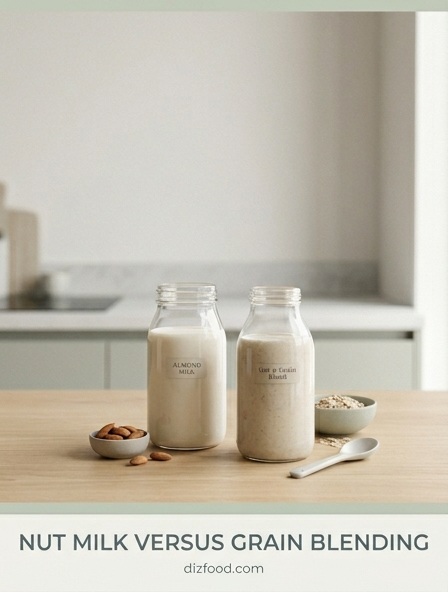
If you've ever wondered why your DIY almond milk feels thin while homemade oat milk can sometimes turn out velvety-or accidentally slimy-you're diving into the heart of the "Nut vs. Grain" debate. Achieving that perfect, barista-style mouthfeel depends entirely on whether you're extracting fats or gelatinizing starches. While nut milks rely on high-speed pulverization and meticulous straining to release rich, emulsified oils, grain blending utilizes the natural thickening power of complex carbohydrates to create a denser, more viscous liquid. Understanding these mechanical differences is the ultimate secret to mastering a rich, creamy pour that won't disappear in your morning coffee.
| Feature | Nut Milk (Almond, Cashew) | Grain Milk (Oat, Rice, Barley) |
|---|---|---|
| Creaminess Source | High monounsaturated fat content. | Starch gelatinization and fiber. |
| Texture Profile | Silky, smooth, and lightweight. | Thick, heavy, and coat-the-tongue viscous. |
| Processing Need | Requires fine straining (nut milk bag). | Minimal straining; heat sensitive. |
| Best "Cream" Choice | Cashew (blends fully, no waste). | Oat (naturally mimics dairy thickness). |
| Flavor Impact | Rich, toasted, and distinctively nutty. | Sweet, earthy, and neutral. |
| Stability | Separates easily; needs shaking. | Holds emulsion better due to starches. |
Nut Milk vs Grain Milk Nutritional Comparison
When evaluating the nutritional landscape of homemade plant milks, the primary distinction lies in the macronutrient distribution between fats and carbohydrates. Nut milks, such as those derived from almonds, walnuts, or cashews, are naturally higher in healthy monounsaturated and polyunsaturated fats. These fats provide a satiety factor that grain milks often lack. Furthermore, nut milks are typically lower in glycemic impact, making them a preferred choice for individuals monitoring blood sugar levels. They are also excellent sources of Vitamin E and various minerals like magnesium and phosphorus.
In contrast, grain milks like oat, rice, and barley milk are characterized by a higher carbohydrate profile. While they offer a natural sweetness and a quick source of energy, they often lack the protein density found in certain nuts. However, grain milks-particularly oat milk-contain specific types of soluble fiber such as beta-glucans, which are renowned for heart health and cholesterol management. Because grains are naturally higher in sugars, they often do not require additional sweeteners to be palatable, unlike some nut bases that may taste slightly bitter without a catalyst.
| Nutrient Category | Nut-Based Milk (Almond/Cashew) | Grain-Based Milk (Oat/Rice) |
|---|---|---|
| Primary Energy Source | Healthy Fats | Complex Carbohydrates |
| Caloric Density | Moderate (Variable) | Higher (due to starch) |
| Protein Content | Moderate | Low to Moderate |
| Fiber Type | Insoluble (unless strained) | Soluble (Beta-glucans) |
The Texture Guide to Nut and Grain Blending
The culinary experience of plant-based milk is largely dictated by its "mouthfeel" or viscosity. Nut-based milks are prized for their richness and ability to mimic the silkiness of dairy cream. Cashews are particularly unique in this category; because they lack a fibrous outer skin and have a high fat content, they can be blended so thoroughly that straining becomes unnecessary. Almonds, however, produce a thinner liquid that requires meticulous straining through a nut milk bag to remove the gritty "pulp" or meal that remains after blending.
Grain milks offer a completely different textural challenge, primarily due to their starch content. Oat milk is celebrated for its natural thickness, which stems from the way the grain absorbs water. However, grains can become "slimy" or overly viscous if over-processed or blended with hot water, as the heat gelatinizes the starches. Managing the temperature and blending time is critical when working with grains to ensure a smooth, liquid consistency rather than a porridge-like result.
- Cashew Milk: Best for ultra-creamy, no-strain applications like coffee creamers.
- Almond Milk: Provides a light, watery texture ideal for cereal and refreshing drinks.
- Oat Milk: Naturally thick and frothy, making it the superior choice for lattes.
- Rice Milk: Very thin and watery, often requiring a thickening agent or grain blend.
- Macadamia Milk: Extremely rich and buttery, high in fat for a luxurious mouthfeel.
Cost Analysis of Nut Versus Grain Based Milks
For the budget-conscious kitchen, grain milks are the undisputed champion. The raw materials-oats, rice, and barley-are among the most affordable pantry staples globally. A single cup of rolled oats, which costs only a few cents when purchased in bulk, can produce up to a quart of milk. This makes grain milk an economically sustainable option for families who consume large volumes of milk daily for cooking, baking, and drinking. The equipment required is also minimal, as even a standard blender can handle soft grains.
Nut milks occupy the premium end of the price spectrum. Almonds, walnuts, and especially "luxury" nuts like macadamias or pine nuts carry a high price per pound. When you factor in the "yield loss" from straining out the pulp, the cost per ounce of homemade almond milk can be significantly higher than its store-bought counterpart. However, many enthusiasts argue that the quality of homemade nut milk, which lacks the fillers and gums of commercial brands, justifies the higher price point of the raw ingredients.
- Bulk Purchasing: Grains offer better economies of scale for large households.
- Waste Utilization: Nut milk costs can be offset by using the leftover pulp for flour or snacks.
- Yield Ratios: Grains generally require less raw material to reach a desired thickness.
- Zero Preservatives: Eliminates synthetic chemicals and shelf-stabilizers.
- Sugar Control: Allows for natural sweetening with dates or no sugar at all.
- Bioavailability: Freshly ground ingredients may offer better nutrient absorption.
- Allergen Safety: Total control over cross-contamination in the kitchen.
- Soak: Hydrate nuts or grains to soften fibers and improve digestion.
- Rinse: Discard soak water to remove bitter tannins and anti-nutrients.
- Blend: Combine with fresh, filtered water at a 1:3 ratio.
- Strain: Use a nut milk bag to remove solids for a smooth texture.
- Season: Add a pinch of salt, vanilla, or dates to enhance the flavor profile.
- Temperature: Keep stored at or below 40°F (4°C).
- Container: Glass bottles are preferred for purity and temperature retention.
- Separation: Shake well before use; this is a sign of a natural product.
- Small Batches: Prepare only what you can consume within 72 to 96 hours.
- Nut Pros: Creamy texture, low glycemic index, rich in healthy fats.
- Nut Cons: High cost, potential allergens, high water footprint.
- Grain Pros: Affordable, eco-friendly, naturally sweet, great for frothing.
- Grain Cons: Higher starch/carb content, potential for "slimy" texture if over-blended.
Environmental Impact of Nut and Grain Milks
Sustainability is a major driver in the shift toward plant-based milks, yet not all alternatives are created equal in terms of ecological footprint. Nut milks, particularly almond milk, have faced scrutiny due to their high water requirements. Most of the world's almonds are grown in drought-prone regions like California, where it takes over a gallon of water to produce a single almond. While still more water-efficient than dairy, almond milk is the most resource-intensive among the popular plant-based options. If environmental impact is a primary concern, choosing nuts like hazelnuts or walnuts, which require less irrigation, is a better strategy.
Grain milks generally boast a superior environmental profile. Oats and rice are hardier crops that can be grown in diverse climates with significantly lower water inputs than nuts. Oat milk, in particular, has been lauded for its low greenhouse gas emissions and minimal land usage. However, rice milk has a unique drawback: submerged rice paddies can emit methane, a potent greenhouse gas, and the crop can require substantial water. When comparing the two categories, grain milks-specifically oat and barley-are typically the most "green" choices for the environmentally conscious consumer.
Health Benefits of Homemade Plant Based Milks
The primary advantage of making plant milk at home, whether nut or grain-based, is the absolute control over ingredients. Commercial plant milks are often laden with additives such as carrageenan, xanthan gum, and guar gum to improve shelf life and texture. Many brands also add high amounts of cane sugar or "natural flavors" that can detract from the health benefits. By blending at home, you eliminate these industrial fillers, resulting in a cleaner product that is easier on the digestive system, especially for those with sensitivities to emulsifiers.
Furthermore, homemade milks retain a higher percentage of the raw ingredient's integrity. While commercial milks are heavily diluted-often containing only 2% to 5% actual nuts-homemade versions typically use a much higher ratio of solids to water, resulting in a more nutrient-dense beverage. You can also customize the milk to meet specific health goals, such as adding flax seeds for Omega-3 fatty acids or using alkaline-rich nuts like almonds to balance the body's pH. The freshness of the product also ensures that volatile oils and vitamins have not degraded due to long-term shelf storage.
Best Grains and Nuts for Homemade Milk
Selecting the right base depends on the intended use of the milk. For those seeking a neutral flavor that won't overpower coffee or tea, almonds and oats are the industry standards. Almonds provide a subtle nuttiness, while oats offer a creamy, cereal-like sweetness. If the goal is a rich, culinary-grade milk for sauces or desserts, cashews and macadamias are superior due to their high fat content and lack of skin, which creates a very smooth emulsion. For a unique flavor profile, hazelnuts offer a toasted, chocolate-complementary taste, and walnuts provide a distinct earthiness rich in antioxidants.
On the grain side, rice milk is the most hypoallergenic option, making it ideal for those with multiple food sensitivities. It is naturally sweet but very thin. For a more robust grain milk, barley or spelt can be used, offering a rustic flavor and a hearty texture. Buckwheat, though technically a pseudocereal, creates a deeply flavored, earthy milk that is gluten-free. Mixing these bases-such as an oat and cashew blend-often yields the best results, combining the sweetness and stability of grains with the creamy fat of nuts.
| Ingredient | Best For | Key Characteristic |
|---|---|---|
| Almonds | Cereal & Smoothies | Mild and versatile |
| Cashews | Coffee & Cooking | Extremely creamy; no straining |
| Oats | Latte Art | Naturally sweet and frothy |
| Hazelnuts | Hot Chocolate | Strong, aromatic flavor |
| White Rice | Allergy-friendly diets | Light and neutral |
How to Blend Nuts and Grains for Milk
The process of creating homemade milk is straightforward but requires attention to preparation. For nut milks, soaking is a critical first step. Soaking softens the nuts, making them easier to blend, and helps neutralize phytic acid, which can interfere with nutrient absorption. Typically, nuts should be soaked for 4 to 12 hours depending on their hardness. After soaking, the nuts are rinsed and added to a high-speed blender with fresh water. The standard ratio is one cup of nuts to three or four cups of water, depending on the desired thickness.
Grain milks require a slightly different approach to avoid a gummy texture. For oat milk, it is often recommended to use cold water and avoid over-blending; 30 seconds is usually sufficient. Unlike nuts, oats do not always require long soaking and can be blended raw for a cleaner taste. Once blended, both nut and grain milks (except for cashew) should be strained through a fine-mesh nut milk bag or cheesecloth. Squeeze the bag firmly to extract all the liquid, leaving the dry pulp behind. This pulp can be saved for use in baking or as a fiber addition to oatmeal.
Flavor Profiles of Nut and Grain Dairy Alternatives
The flavor of plant milk is highly subjective and varies significantly between the two categories. Nut milks generally offer a more sophisticated and layered palate. Almond milk is characterized by a clean, slightly floral, and nutty finish. Walnuts produce a milk that is noticeably more bitter and "tannic," which pairs exceptionally well with chocolate. Cashew milk is perhaps the most neutral of the nut family, offering a mild, buttery flavor that acts as a blank canvas for other ingredients. When nuts are toasted prior to blending, the flavor deepens into a rich, smoky profile reminiscent of roasted snacks.
Grain milks lean toward the sweeter side of the spectrum. Oat milk has a comforting, nostalgic flavor similar to the milk left over in a bowl of oatmeal. It has a natural maltiness that many find appealing in coffee. Rice milk is very sweet but lacks depth, often described as "thin sugar water" if not properly balanced. Barley milk has a toasted, bread-like quality that is quite savory. Because grains are naturally higher in starch, they undergo a slight enzymatic change when blended that releases sugars, giving them an inherent sweetness that nut milks generally lack without the addition of fruit or syrups.
Shelf Life and Storage for Blended Milks
One of the trade-offs of homemade plant milk is its limited shelf life. Because these milks are fresh and contain no preservatives or pasteurization, they typically last between three to five days in the refrigerator. The absence of stabilizers means that separation is entirely natural; the heavier solids and fats will settle at the bottom of the container, while the water rises to the top. This does not indicate spoilage; a quick shake of the bottle before each use will re-emulsify the mixture. Proper storage starts with using airtight glass containers, as plastic can sometimes impart off-flavors to the delicate milk.
To maximize the freshness of your milk, ensure that the blender and storage bottles are thoroughly cleaned and sanitized. Keeping the milk in the coldest part of the refrigerator-usually the back of the bottom shelf rather than the door-can also extend its life by a day or two. If you find you cannot finish a batch in time, plant milks freeze surprisingly well. You can freeze the milk in ice cube trays to use later in smoothies or iced coffee. Signs of spoilage include a sour smell, a slimy texture, or any visible mold around the cap of the bottle.
Pros and Cons of Nut Versus Grain Milks
Deciding between nut and grain milks involves balancing nutritional needs, flavor preferences, and lifestyle factors. Nut milks are superior for those seeking a low-carbohydrate, high-fat diet and for those who value a rich, creamy texture in their beverages. They are also generally higher in vitamins like Vitamin E. However, the high cost of ingredients and the environmental impact of water-intensive crops like almonds are significant drawbacks. Additionally, nut allergies are common, making these milks unsuitable for many social settings or school environments.
Grain milks offer a highly accessible, low-cost, and environmentally friendly alternative. They provide a natural sweetness and a texture that is particularly suited for frothing in coffee drinks. The main disadvantage is their higher carbohydrate and sugar content, which may not be suitable for everyone. They also tend to be lower in protein compared to certain nut-based options. For most home cooks, the best solution is a hybrid approach-using grain milks for daily baking and cereal to save money, and reserving nut milks for specialized culinary uses or as a high-protein treat.






Comments