
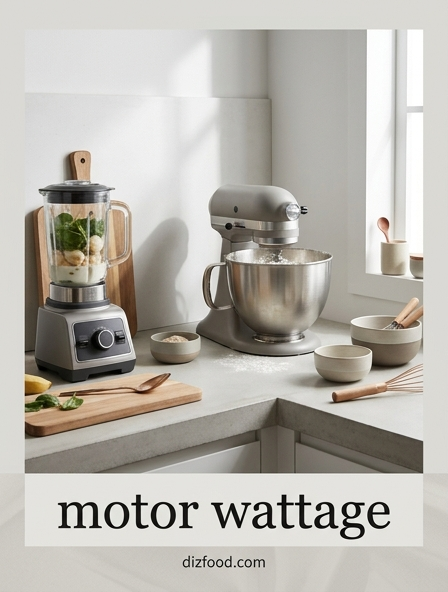
Defining Blender Motor Wattage Basics
In the realm of kitchen appliances, motor wattage serves as the primary metric for measuring a blender's potential power. Technically, wattage represents the amount of electrical energy consumed by the motor to perform its tasks. When you see a rating like 600W or 1200W on a blender, it indicates the electrical draw the device requires from your wall outlet. Understanding this baseline is crucial because it sets the ceiling for what the appliance can theoretically achieve during operation.
However, it is important to distinguish between input wattage and output efficiency. While a higher wattage often suggests a more capable motor, the engineering of the internal components determines how effectively that electricity is converted into mechanical work. To better understand these basics, consider the following components that interact with wattage:
- Voltage: The pressure of the electricity from your home circuit.
- Amperage: The flow rate of the electrical current.
- Load: The resistance provided by ingredients inside the jar.
Ultimately, wattage provides a convenient shorthand for consumers to gauge the intended use-case of a blender, ranging from light mixing to heavy-duty pulverizing.
Wattage Versus Torque and Performance
While marketing materials often emphasize high wattage as the sole indicator of quality, performance is equally dependent on torque. Wattage measures power consumption, but torque refers to the rotational force that keeps the blades spinning when they encounter resistance. A blender with high wattage but low torque may stall when faced with thick mixtures like nut butters or heavy doughs. High-performance blenders balance these two factors to ensure the motor does not overheat under stress.
The relationship between speed and force is often managed by the blender's internal gearing and cooling systems. A well-designed motor can produce significant torque at lower speeds, which is essential for emulsifying oils or chopping vegetables without turning them into a puree. In contrast, cheaper motors might rely on high-speed "bursts" that lack the sustained force necessary for consistent results. When evaluating performance, look for appliances that mention "peak" versus "rated" power, as these figures highlight how the motor handles sudden increases in resistance during the blending cycle.
Low Wattage Blenders for Soft Foods
Low wattage blenders, typically ranging from 200 to 400 watts, are designed for specific, lighter culinary tasks. These machines are most commonly found in the form of personal "bullet" blenders or basic handheld immersion blenders. Because their motors have limited cooling capacity and lower rotational force, they are ideally suited for liquids and soft solids. Using these devices for heavy ice crushing or dry grinding can lead to motor burnout or stripped gears.
These blenders excel at creating quick protein shakes, frothing milk, or mixing vinaigrettes. Because they use less power, they are often quieter and more compact, making them perfect for small kitchens or office environments. Below are the common applications for low-wattage motors:
- Mixing soft fruits like bananas and berries.
- Blending protein powders with milk or water.
- Pureeing cooked vegetables for soups.
- Whisking eggs or light batters.
By staying within these operational boundaries, users can extend the lifespan of a lower-powered motor significantly while still achieving smooth textures for simple recipes.
Mid Range Power for Daily Smoothies
For the average household, a mid-range blender offering between 500 and 900 watts represents the "sweet spot" of utility and value. These machines are robust enough to handle daily use, including the processing of frozen fruits and small amounts of ice, provided there is enough liquid to facilitate a vortex. They are versatile workhorses capable of handling everything from morning smoothies to weekend salsas and margaritas.
In this power tier, manufacturers often include better thermal protection and sturdier blade assemblies compared to entry-level models. This allows the motor to run for longer durations-usually up to 60 seconds-without the risk of thermal shutoff. Users will notice a significant improvement in texture when moving from a 300W motor to a 700W motor, particularly when blending fibrous greens like spinach or kale. While they may still struggle with bone-dry ingredients or large batches of thick hummus, they offer a balanced performance profile that satisfies the needs of most home cooks without the premium price tag of professional-grade equipment.
High Wattage Benefits for Tough Ingredients
High wattage blenders, typically exceeding 1000 watts and reaching up to 1800 watts, are engineered for demanding culinary applications. These machines provide the raw power necessary to pulverize the toughest ingredients into a microscopically smooth consistency. At this power level, the friction generated by the blades spinning at high speeds can actually heat ingredients, allowing the user to cook hot soups directly in the blender jar. This is a level of performance simply not possible with lower-wattage motors.
The following table outlines how high wattage impacts the processing of difficult ingredients compared to standard models:
| Ingredient | High Wattage (1200W+) | Standard Wattage (600W) |
|---|---|---|
| Raw Almonds | Creamy nut butter in 2 mins | Gritty meal, potential stall |
| Frozen Strawberries | Instant sorbet consistency | Chunks remain without liquid |
| Fibrous Ginger | Completely liquefied | Stringy fibers remain |
| Dry Grains | Fine flour texture | Uneven, cracked pieces |
Investing in high wattage ensures that the motor remains cool even when under heavy load, providing a smoother finish for complex recipes.
The Role of Horsepower in Blending
In the high-end blender market, manufacturers often switch from discussing wattage to discussing horsepower (HP). One horsepower is equivalent to approximately 746 watts of electrical power. When a blender is rated at 2.0 or 3.0 HP, it indicates a motor designed for industrial-level performance. However, consumers should be aware of the difference between "peak horsepower" and "rated horsepower." Peak horsepower refers to the maximum output the motor can achieve for a fraction of a second when it first starts or hits a hard object.
Rated horsepower, or continuous duty power, is a more accurate reflection of how the blender will perform during a standard two-minute cycle. A high-horsepower motor is essential for heavy-duty tasks because it maintains high RPMs (revolutions per minute) even when the jar is filled with thick, viscous material. This prevents the "lugging" sound and smell of burning plastic that often accompanies underpowered blenders when they are pushed beyond their limits. For enthusiasts who make their own flours or nut milks daily, horsepower ratings are the most reliable indicator of professional-grade durability and power.
Heat Dissipation and Motor Longevity
One of the most critical but often overlooked aspects of motor wattage is the heat generated during operation. Higher wattage blenders draw more current, which naturally produces more heat within the motor housing. To prevent the copper windings from melting or the plastic components from warping, these machines require sophisticated cooling systems. High-quality blenders feature large internal fans and strategically placed vents to circulate air and dissipate thermal energy quickly.
Motor longevity is directly tied to how well the machine manages this heat. Many modern high-wattage blenders include an automatic thermal shut-off switch. This safety feature cuts power to the motor if it detects an unsafe internal temperature, protecting your investment from permanent damage. To ensure your motor lasts for years, it is important to avoid "lugging" the motor-running it at low speeds with a heavy load-because the cooling fan usually spins slower at lower settings. Using the high-speed setting for thick mixtures actually allows the fan to work at maximum efficiency, keeping the internal components cool while the wattage is put to work.
Crushing Ice and Frozen Fruit Requirements
Crushing ice is perhaps the most strenuous task for a kitchen motor. It requires high initial torque to break the crystalline structure of the ice and high wattage to maintain blade speed as the ice turns into a thick, frozen slush. Lower wattage motors often rely on sharp blades to "cut" the ice, but over time, these blades dull, and the motor begins to strain. High wattage blenders, conversely, often use blunt, heavy-duty blades that rely on brute force and speed to pulverize ice into snow.
For consistent results with frozen ingredients, a motor should ideally be rated at 1000 watts or higher. This power level allows the blades to move fast enough to create a "cyclonic action," pulling the frozen chunks down into the blade path repeatedly. Without sufficient wattage, the ice will simply sit on top of the blades, or the motor will overheat as it tries to push through the resistance. If your culinary habits include daily frozen margaritas, acai bowls, or ice-based smoothies, prioritizing a high-wattage motor will prevent frustration and ensure a uniform, cafe-quality texture.
Energy Consumption and Blending Efficiency
While high wattage blenders draw more power from the outlet, they are often more energy-efficient in the long run for specific tasks. This paradox exists because a high-wattage motor can complete a blending cycle in a fraction of the time required by a low-power motor. For example, pulverizing a green smoothie might take a 1200W blender 30 seconds, whereas a 400W blender might struggle for three minutes and still produce an inferior result. The total kilowatt-hours used are often comparable, but the high-wattage machine provides a superior user experience.
Efficiency also relates to the design of the motor and its ability to maintain speed under load. An efficient motor converts more electrical energy into rotational kinetic energy and less into wasted heat. When shopping, users should consider their frequency of use. For a person who blends once a day for 60 seconds, the impact on the monthly electricity bill is negligible, regardless of wattage. Therefore, it is usually better to choose the wattage that matches your toughest ingredient rather than trying to save a few cents on energy, as the efficiency of the "result" is what truly matters in the kitchen.
Matching Motor Power to Your Recipes
Choosing the right blender wattage requires a clear understanding of your typical recipes. There is no need to invest in a 1500-watt machine if your primary goal is to mix soft protein shakes or froth coffee. Conversely, attempting to make almond butter in a 300-watt personal blender will lead to disappointment and a broken appliance. Matching the motor to the task is the most effective way to ensure both culinary success and appliance longevity.
To assist in your selection, consider the following general guidelines for power tiers:
- 200W - 400W: Best for liquids, soft fruits, protein shakes, and light dressings.
- 500W - 800W: Suitable for daily fruit smoothies, frozen berries, and standard vegetable chopping.
- 900W - 1200W: Ideal for heavy ice crushing, green smoothies with kale, and occasional nut milks.
- 1300W+: Required for frequent nut butters, grinding grains into flour, and making hot soups from raw ingredients.
By aligning the wattage with your most demanding ingredients, you ensure that the motor operates within its "comfort zone," providing the best texture and the longest possible service life for your kitchen equipment.


Comments