

Centrifugal Force and Thermal Transfer
Centrifugal extraction relies on high-speed rotation, often exceeding 10,000 revolutions per minute, to separate liquid juice from solid plant fibers. As the internal basket spins, it generates significant centrifugal force that flings the pulverized produce against a fine mesh screen. This rapid mechanical motion inevitably leads to thermal transfer. The kinetic energy generated by the motor and the resistance of the produce against the spinning components translate into heat. This heat is transferred to the juice as it passes through the cutting disc and the mesh.
While the duration of contact is brief, the intensity of the friction can raise the temperature of the liquid relative to the ambient temperature of the fruit or vegetable. This thermal shift is a critical factor in kitchen science, as it influences the immediate state of the juice. Understanding the relationship between angular velocity and heat generation allows for better control over the final product's quality and temperature. The following factors contribute to thermal transfer during this process:
- The speed settings of the centrifugal motor.
- The sharpness and material composition of the cutting disc.
- The density and initial temperature of the raw ingredients.
Friction Mechanisms in High Speed Blending
In high-speed blending and centrifugal systems, friction is the primary mechanism responsible for temperature elevation. When blades move at high velocities, they encounter resistance from both the food particles and the surrounding air. This mechanical friction occurs at the molecular level, where the rapid shearing of cell walls releases energy in the form of heat. The more viscous the substance being processed, the higher the friction encountered, leading to a more rapid rise in internal temperature.
Furthermore, air friction within the chamber contributes to the warming effect. As the blades spin, they draw in air, creating a vortex that can further accelerate the oxidation and warming of the liquid. In culinary applications, this is often managed by pulsing the machine or using chilled containers. The friction mechanism is not merely a byproduct but a fundamental characteristic of high-RPM kitchen tools. Excessive friction can lead to unintended cooking of raw ingredients, which alters the flavor profile and nutritional integrity of the extract. Balancing extraction efficiency with friction-induced heat is a primary challenge for chefs and home enthusiasts alike.
Enzyme Sensitivity to Kinetic Heat
Enzymes are specialized proteins that act as catalysts for various biological reactions, and they are notoriously sensitive to thermal changes. In the context of centrifugal extraction, the kinetic heat generated by high-speed blades can reach levels that threaten the stability of these enzymes. When a juice's temperature rises beyond certain thresholds, the delicate three-dimensional structure of enzymes like bromelain in pineapple or amylase in vegetables can begin to denature. Once denatured, these proteins lose their biological functionality.
Kinetic heat is particularly sneaky because it is localized and instantaneous. Even if the bulk of the juice feels cool, the micro-environment at the cutting edge may exceed safe limits for enzyme preservation. To maintain the maximum enzymatic activity, extraction must be performed quickly and at the lowest effective speed. The loss of enzymes not only reduces the perceived health benefits of the juice but also impacts the digestive properties that many consumers seek from raw extractions. Monitoring the temperature during the extraction phase is essential to ensure that the "living" components of the produce remain intact and functional for the consumer.
Bioavailability and Nutrient Preservation
The goal of extraction is to maximize the bioavailability of vitamins, minerals, and phytonutrients. Centrifugal extraction is highly effective at breaking down tough cellulose walls, making the nutrients inside more accessible for human digestion. However, the preservation of these nutrients is a delicate balance. High-speed extraction can expose sensitive vitamins, particularly Vitamin C and various B vitamins, to heat and light, which may lead to degradation. The rapid spinning action increases the surface area of the liquid, which, while aiding in separation, also creates more opportunities for nutrient breakdown.
Despite the concerns regarding heat, centrifugal systems are praised for their efficiency in liberating minerals from the fibrous matrix of greens and root vegetables. To optimize preservation, users often implement specific strategies. The following table highlights the impact of extraction methods on common nutrient types:
| Nutrient Type | Sensitivity | Retention Strategy |
|---|---|---|
| Vitamin C | High Heat/Oxygen | Immediate consumption |
| Minerals | Low | Fine filtration |
| Enzymes | High Heat | Pre-chilling produce |
Oxidation Rates in Centrifugal Systems
Oxidation is the chemical reaction that occurs when juice is exposed to oxygen, leading to browning and the loss of nutritional potency. Centrifugal systems are inherently prone to high oxidation rates because of the way they operate. As the juice is spun out of the produce and forced through the mesh, it is atomized into tiny droplets. This process vastly increases the surface area of the liquid exposed to the air pulled in by the motor's fan and the spinning basket. The more air that is incorporated into the juice, the faster the oxidation occurs.
This rapid aeration is often visible as a layer of foam on top of the fresh juice. While this foam can contain concentrated flavors, it is also a sign of high air incorporation. High oxidation rates mean that centrifugal juice typically has a much shorter shelf life compared to other methods. The flavor can change within minutes as volatile aromatic compounds react with oxygen. To mitigate this, many practitioners recommend drinking centrifugal juice immediately after extraction to capture the nutrients before the oxidative process significantly degrades the quality and taste of the beverage.
Comparing Cold Press and Centrifugal Output
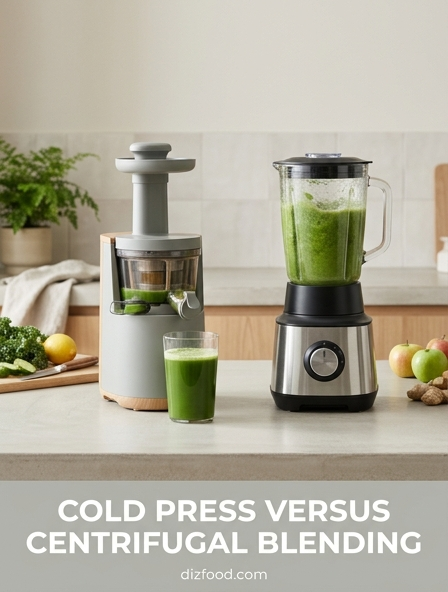
When evaluating kitchen extraction methods, the primary comparison lies between centrifugal systems and cold press (masticating) juicers. Centrifugal units are prized for their speed and convenience, making them ideal for high-volume environments. In contrast, cold press juicers operate at much lower speeds, using an auger to crush and squeeze produce. This slower process results in less friction and heat, which typically yields a juice with lower oxidation and a longer stable shelf life. However, centrifugal systems often produce a lighter, crisper juice that many prefer for immediate consumption.
The output differences are quantifiable in terms of yield and quality. While cold press juicers are generally more efficient with leafy greens, centrifugal juicers excel with hard fruits and vegetables like apples and carrots. The choice between the two often depends on the user's priority: speed and clarity versus nutrient density and storage capability. Both methods have distinct places in the modern kitchen, serving different culinary and logistical needs. Understanding these differences allows for more informed decisions regarding equipment selection based on specific dietary or operational requirements.
Temperature Thresholds for Fresh Juice
In the realm of raw food preparation, maintaining juice temperature below a specific threshold is vital for preserving its "raw" status. Most culinary experts agree that temperatures should ideally remain below 118°F (48°C) to prevent the denaturation of enzymes and the loss of heat-sensitive vitamins. Centrifugal juicers, if run for extended periods or with very hard produce, can occasionally approach these limits. Monitoring the exit temperature of the liquid is a common practice in professional kitchens to ensure quality control.
- 40°F - 50°F: Ideal starting temperature for produce.
- 70°F - 85°F: Common exit temperature for centrifugal juice.
- 118°F: The critical threshold where enzyme degradation accelerates.
Exceeding these thresholds not only affects the nutritional value but can also alter the color and clarity of the juice. To stay well below the danger zone, it is recommended to refrigerate produce thoroughly before extraction. This creates a thermal buffer, ensuring that the friction-induced heat does not push the liquid beyond the optimal range for health and flavor preservation.
Impact on Molecular Structure and Flavor
The molecular structure of juice is significantly impacted by the mechanical stress of centrifugal extraction. The high-speed shearing of fibers and the rapid separation of solids can lead to a more homogenous liquid but can also cause "bruising" at a molecular level. This refers to the breaking of long-chain molecules and the premature release of compounds that might otherwise remain trapped within the cellular matrix. From a flavor perspective, this can lead to a more intense, immediate hit of sweetness and acidity, as the sugars and acids are instantly liberated.
However, the rapid aeration mentioned previously can also cause the loss of delicate volatile organic compounds (VOCs) that provide the complex aroma and "nose" of the fruit. This is why centrifuged juice often tastes very bright initially but can quickly become flat if left to sit. The emulsification of tiny amounts of fats and oils from seeds or skins can also occur, slightly altering the mouthfeel compared to juices produced through pressing. The result is a unique sensory profile that is characteristic of high-speed extraction methods, often described as refreshing but volatile.
Minimizing Heat During High Speed Extraction
Managing heat is the primary concern for users of high-speed centrifugal equipment. Since heat is a direct byproduct of friction and motor operation, strategies must be employed to minimize its impact. One of the most effective methods is the "cold-in, cold-out" approach. By using produce that has been chilled to near-freezing temperatures, the baseline heat of the system is offset. The ice-cold ingredients absorb the kinetic energy produced by the blades, keeping the final liquid at a refreshingly low temperature.
Another technique involves the timing of the extraction. Avoiding long, continuous runs prevents the motor and the housing from heating up. Pulsing the machine or allowing it to rest between large batches can significantly reduce the ambient temperature within the extraction chamber. Additionally, keeping the cutting disc sharp reduces the resistance and friction required to slice through tough produce, thereby lowering the heat generated per ounce of juice. These practical steps ensure that even with the high speeds of a centrifugal system, the integrity of the juice is maintained through clever thermal management.
Long Term Stability of Centrifuged Nutrients
The long-term stability of nutrients in centrifuged juice is relatively low compared to other extraction methods. Due to the high degree of aeration and the slight temperature increase during processing, the degradation of vitamins and minerals begins almost immediately after the juice exits the machine. Separation is also a common issue; the solids and liquids tend to stratify quickly because the centrifugal process does not create the same level of colloidal stability found in slower extraction methods. This requires the juice to be stirred or shaken before consumption.
To maximize the window of stability, storage conditions are paramount. If the juice is not consumed immediately, it should be kept in an airtight, opaque container and refrigerated instantly. Reducing the headspace in the bottle minimizes the amount of oxygen available for further reaction. Even with these precautions, it is generally recommended that centrifuged juice be consumed within 6 to 12 hours. Beyond this timeframe, the sensory quality declines noticeably, and the nutritional value begins to drop as the oxidative and enzymatic processes continue to break down the complex molecules that make fresh juice so beneficial.





Comments