
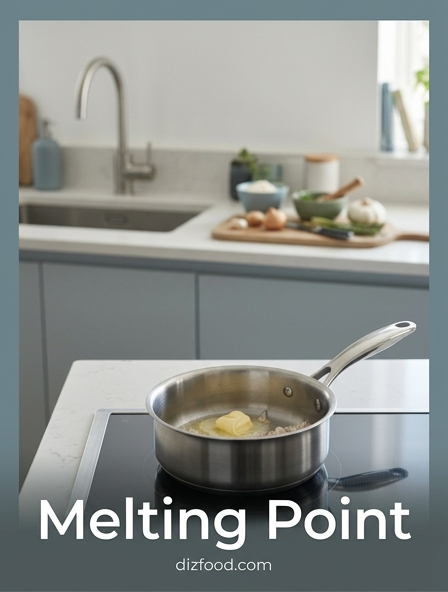
The Science of Melting Points in Baking
In the culinary arts, the melting point of a lipid determines the physical transition from a solid crystalline state to a liquid state. This transition is not instantaneous for most kitchen fats because they are composed of a mixture of various triglycerides, each with its own unique melting threshold. Consequently, fats like butter or lard exhibit a plastic range-a temperature window where they are soft enough to be molded but firm enough to retain their shape. This plasticity is fundamental to creating the desired texture in baked goods.
When a fat reaches its melting point during the baking process, it releases trapped air bubbles and water vapor into the surrounding dough or batter. The timing of this phase change is critical. If a fat melts too early, the structure of the pastry may collapse before the proteins and starches have set. Conversely, if the melting point is too high, the fat may fail to integrate properly, leading to a waxy mouthfeel. Understanding these thermal properties allows bakers to manipulate the final crumb, volume, and stability of their creations through precise temperature control.
Butter versus Shortening Texture Comparison
Butter and shortening are often used interchangeably, yet their distinct melting points yield vastly different results. Butter has a relatively low and narrow melting range, typically between 90°F and 95°F, which is just below human body temperature. Vegetable shortening is engineered to have a higher melting point, often exceeding 115°F, providing greater stability in warm kitchen environments.
| Feature | Butter | Shortening |
|---|---|---|
| Melting Point | 90°F - 95°F | 115°F - 120°F |
| Water Content | ~15-18% | 0% |
| Texture Result | Crisp, flavorful | Soft, tender |
| Spread Level | High | Moderate |
The absence of water in shortening means it does not contribute to steam production, resulting in a softer, more uniform texture. Butter, containing water, contributes to leavening but can cause cookies to spread more rapidly as it liquifies quickly in the oven. The choice between them depends on whether flavor or structural integrity is the primary goal.
How Fat Solids Affect Dough Structure
The ratio of solid fat to liquid oil at a given temperature is known as the Solid Fat Content (SFC). This ratio dictates how a dough behaves under mechanical stress. Solid fat crystals provide the structural framework necessary to support air cells during the mixing phase. As the dough is worked, these solids coat flour particles, hindering the development of gluten by acting as a physical barrier between water and wheat proteins.
- Gluten Inhibition: Higher solid fat proportions result in a "short" crumb, which is more tender.
- Aeration: Solid crystals trap air during creaming, contributing to the eventual rise.
- Stability: Fats with high SFC at room temperature prevent dough from becoming greasy or unmanageable.
When the SFC is too low, the dough becomes oily and lose its ability to hold shape. When it is too high, the dough can become brittle and difficult to roll. The interplay between these solid crystals and the surrounding liquid oil ensures that the dough remains pliable while maintaining enough strength to encase the gases produced by leavening agents.
The Role of Temperature in Creaming
Creaming is the process of aerating fat and sugar to create a light, voluminous base for cakes and cookies. For this to be effective, the fat must be at the optimal temperature to exhibit maximum plasticity. For butter, this is generally between 65°F and 68°F. At this specific temperature, the butter is soft enough to be deformed by the sugar crystals but firm enough to maintain the walls of the tiny air pockets being created.
If the butter is too cold, it will be too hard to incorporate air, and the sugar will simply slide over the surface rather than digging in to create voids. If the butter is too warm and approaches its melting point, the fat becomes too liquid to support the weight of the air bubbles. These bubbles will then collapse, resulting in a dense, heavy cake with poor volume. Monitoring the temperature of the fat before beginning the creaming process is perhaps the most vital step in ensuring a light and airy finished product, as the air trapped here provides the foundation for the entire leavening process.
Lamination Secrets and Melting Thresholds
Lamination is the technique of folding fat into dough to create hundreds of alternating layers, as seen in puff pastry and croissants. The secret to success lies in keeping the fat in a solid yet pliable state. If the melting point of the fat is exceeded during the rolling or "turning" process, the fat will soak into the dough layers rather than remaining a separate sheet. This destroys the lamination, turning a flaky pastry into a bread-like texture.
The physics of lamination rely on the water within the fat (or dough) turning into steam. As the pastry heats up in the oven, the solid fat layers act as a barrier, trapping the steam produced by the moisture. This steam forces the dough layers apart before the fat finally melts and is absorbed. To achieve the maximum lift, bakers often use fats with a higher melting point or perform the rolling process in chilled environments. This ensures the fat remains a physical separator until the very last possible moment, allowing the steam to do its work of expanding the delicate layers into a crisp, flaky architecture.
Why Oil Produces Moister Cake Crumbs
Cakes made with oil often feel moister than those made with solid fats like butter. This perception of moisture is directly related to the melting point of the lipids used. Because oil is a liquid at room temperature and even when refrigerated, it does not solidify within the crumb of the cake. When a consumer eats an oil-based cake, the lipid is already in a liquid state, providing an immediate sensation of succulence and smoothness on the tongue.
Furthermore, oil is 100% fat, whereas butter contains approximately 15% to 18% water. While the water in butter evaporates or contributes to gluten development, the oil remains purely as a lubricant. Oil is also more efficient at coating flour proteins than solid fat, which significantly limits gluten formation and results in a more tender, delicate structure. Because oil does not have the ability to trap air through creaming, oil-based cakes typically rely more heavily on chemical leaveners like baking powder or soda to achieve their rise. This trade-off between aeration and lubrication defines the structural difference between a sturdy pound cake and a light, moist chiffon.
Impact of Lipids on Cookie Spread
The spread of a cookie in the oven is a race between the fat melting and the structure setting. Different fats influence this "flow" based on their thermal stability. When the fat in a cookie dough melts, the viscosity of the dough drops sharply, allowing the sugar and flour to spread outward across the baking sheet. If the fat has a low melting point, this spread begins almost immediately upon entering the oven.
- Butter: Low melting point leads to significant spread and thinner, crispier edges.
- Shortening: Higher melting point keeps the cookie thick and soft as the edges set before the center fully flows.
- Margarine: Results vary by water content, but generally falls between butter and shortening in terms of spread.
By adjusting the melting point of the fats used, a baker can control the final diameter and thickness of the cookie. Chilling the dough before baking is a common tactic to delay the melting process, providing more time for the starches to gelatinize and the proteins to coagulate before the fat turns into a liquid, thereby reducing the total spread and resulting in a puffier cookie.
Achieving Flakiness Through Cold Solid Fats
Flakiness in pie crusts and biscuits is achieved by maintaining large, discrete "pockets" of solid fat within the dough. Unlike creaming, where the goal is to integrate the fat and sugar into a homogenous paste, the goal here is to keep the fat cold and intact. Ideally, the fat should be broken down into pea-sized chunks. These chunks must remain solid through the mixing and rolling phases. If the fat melts due to warm hands or a hot kitchen, it integrates into the flour, resulting in a crumbly, shortbread-like texture rather than distinct flakes.
The science behind this involves the physical separation of dough. During baking, these cold fat pockets melt, leaving behind voids. Simultaneously, the water in the fat turns to steam, expanding these voids into large horizontal gaps. This creates the characteristic layers associated with a flaky crust. Using fats with a high melting point, such as lard or shortening, can make this easier to achieve, but many bakers prefer the flavor of butter, necessitating a strict temperature regimen of chilling the flour, the fat, and even the mixing bowl to ensure the melting point is not reached prematurely.
Mouthfeel and Flavor Release Dynamics
The melting point of a fat significantly influences how flavor is perceived by the palate. Butter is highly prized in the culinary world because its melting point is slightly below the temperature of the human mouth. As a result, butter melts instantly upon contact with the tongue, releasing its volatile flavor compounds in a rapid, clean burst. This creates a luxurious mouthfeel without leaving a greasy or waxy residue. The "clean finish" of high-quality pastries is almost always a result of using fats that liquify at body temperature.
In contrast, fats with melting points higher than 98.6°F, such as certain hydrogenated oils or waxes, do not fully melt in the mouth. This can lead to a "filmy" sensation, as the solid fat crystals coat the tongue and roof of the mouth, acting as a barrier that masks other flavors. This is often observed in lower-quality chocolates or commercial frostings. When selecting a fat for a filling or a coating, the melting point must be considered not just for structural stability, but for the sensory experience of the final consumer, ensuring that the flavor release is timed perfectly with the bite.
Selecting Fats for Optimal Crumb Results
Choosing the correct fat involves balancing the desired flavor profile with the necessary physical characteristics of the baked good. A baker must consider the melting point, the water content, and the plasticity of the lipid. For items requiring high volume and a fine crumb, a fat that creams well is essential. For items where tenderness is the priority, a liquid oil or a high-plasticity fat that coats flour effectively is the better choice.
| Baking Goal | Recommended Fat | Melting Property |
|---|---|---|
| Flaky Pie Crust | Cold Butter / Lard | Stays solid until oven heat |
| Moist Cake | Vegetable Oil | Liquid at all stages |
| High-Rise Cake | Room Temp Butter | Plastic at 65-68°F |
| Soft Cookies | Shortening | High melting threshold |
Ultimately, the success of a recipe depends on the baker's ability to manage these melting thresholds. By understanding that fat is not just an ingredient but a structural component that responds to thermal energy, one can troubleshoot common baking failures like collapsed cakes, tough crusts, or greasy cookies. The strategic selection of fats ensures that the internal architecture of the bake aligns with the intended sensory outcome.

Comments