
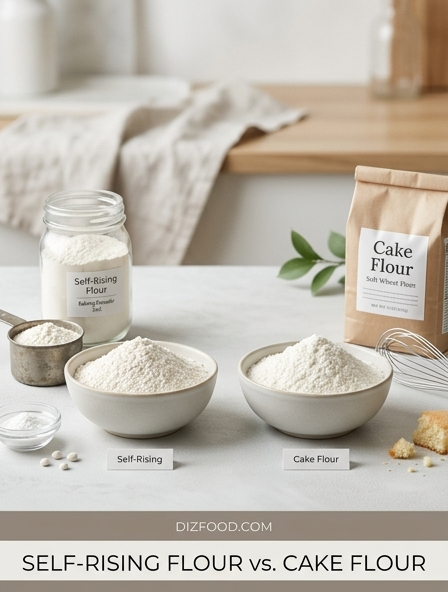
Choosing between self-rising flour and cake flour is the secret to mastering the structural chemistry of your favorite recipes. While self-rising flour acts as a convenient "all-in-one" solution by incorporating leavening agents and salt directly into the grain, it is designed for maximum lift in hearty classics like southern biscuits and quick breads. Conversely, cake flour is a specialized, low-protein powerhouse milled to an ultra-fine consistency, specifically treated to hold onto moisture and fats for that signature melt-in-your-mouth tenderness. Selecting the right foundation ensures you aren't just baking, but engineering the perfect crumb, whether you're aiming for a sky-high scone or a delicate, velvety sponge.
| Feature | Self-Rising Flour | Cake Flour |
|---|---|---|
| Protein Content | Moderate (approx. 8.5% - 10.5%) | Low (approx. 6% - 8%) |
| Core Ingredients | Flour, baking powder, and fine salt | 100% soft wheat (often bleached) |
| Texture/Milling | Standard medium-fine grain | Extra-fine, silky, and soft |
| Leavening Power | Built-in; rises without added agents | None; requires external leaveners |
| Best Application | Biscuits, scones, and soda breads | Chiffons, sponges, and pound cakes |
| Resulting Crumb | Sturdy, airy, and well-structured | Tender, tight, and delicate |
Understanding the Basics of Self-Rising and Cake Flour
In the diverse world of baking, the type of flour you choose acts as the foundation for your final product. Self-rising flour and cake flour are two specialized varieties that serve distinct purposes in the kitchen. Understanding their fundamental differences is essential for any baker looking to achieve professional results. While they may look similar to the naked eye, their chemical compositions and mechanical properties are designed for very different outcomes in the oven.
Self-rising flour is essentially a convenience product. It is a pre-blended mixture of all-purpose flour, chemical leavening agents, and a touch of salt. Historically rooted in Southern American cooking, it was designed to provide a consistent lift without the need for bakers to measure out separate rising agents. On the other hand, cake flour is a specialty flour milled from soft wheat. It is characterized by its exceptionally fine texture and low protein content. Unlike self-rising flour, cake flour contains no added leaveners or salt, leaving the control of the rise entirely to the baker.
Choosing between these two involves more than just picking a bag off the shelf; it requires an understanding of how gluten and leavening interact. Self-rising flour is about volume and ease, whereas cake flour is about tenderness and a delicate "mouthfeel." Each has a specific role in the pantry, and misusing one for the other can lead to significant textural failures, such as a cake that is too salty or a biscuit that fails to rise.
Key Ingredient Differences and Protein Content
The primary difference between these flours lies in their protein content and the additives included during processing. Protein is the precursor to gluten; the more protein a flour has, the more gluten it can develop when mixed with liquid. This structural network determines whether a baked good is chewy, like bread, or tender, like a sponge cake. Here is a breakdown of the typical components found in each:
- Self-Rising Flour: Usually contains between 8.5% and 10.5% protein. It is made from a blend of soft and hard wheat and includes baking powder (monocalcium phosphate and sodium bicarbonate) and salt.
- Cake Flour: Contains the lowest protein levels of any wheat flour, typically between 6% and 8%. It is made exclusively from soft wheat and undergoes a unique bleaching process.
The bleaching process for cake flour is not just for color; it involves treatment with chlorine gas. This chemical treatment slightly acidifies the flour and alters the starches, allowing the flour to absorb more moisture and fat than untreated flours. This results in a stable structure that can support high amounts of sugar without collapsing. Self-rising flour, meanwhile, relies on its higher protein count to provide the structure necessary to hold the air bubbles produced by its built-in leaveners. While both are considered "soft" compared to bread flour, self-rising is sturdier, while cake flour is the most fragile option available in most grocery stores.
The Role of Leavening Agents in Self-Rising Flour
The defining characteristic of self-rising flour is its internal lifting power. Because the baking powder is already distributed evenly throughout the flour, it ensures an incredibly uniform rise. This is particularly beneficial for recipes where over-mixing is a concern. In traditional baking, adding baking powder separately requires thorough whisking to avoid "pockets" of leavener that can cause uneven holes or a bitter metallic taste. Self-rising flour eliminates this step, allowing the baker to incorporate ingredients quickly and gently.
The leavening agents in self-rising flour are typically "double-acting." This means they react twice: once when they come into contact with moisture (like milk or buttermilk) and a second time when they are exposed to the heat of the oven. This dual reaction provides a significant boost in volume, which is why self-rising flour is the gold standard for tall, fluffy biscuits. However, this convenience comes with a shelf-life warning. Over time, the chemical leaveners can lose their potency, especially in humid environments. If your self-rising flour is older than six months, it may not provide the lift you expect, resulting in heavy or flat baked goods.
It is also important to note that because the salt is pre-added, using self-rising flour in a recipe that calls for additional salt requires careful adjustment. Most commercial brands include about 1.5 teaspoons of baking powder and half a teaspoon of salt per cup of flour. This fixed ratio makes the flour less versatile for recipes that require specific, non-standard levels of leavening or seasoning.
Why Cake Flour Produces a Finer Crumb
If you have ever wondered why professional bakery cakes have a velvety, tight-knit texture while home-made cakes can sometimes feel coarse, the answer is often cake flour. The "crumb" of a cake refers to the size and distribution of the air cells within the sponge. Cake flour is milled to a much smaller particle size than other flours. This fine granulation allows it to be dispersed more easily throughout the batter, preventing the formation of large, uneven air pockets.
The low protein content is the second half of the equation. Since there is less gluten-forming potential, the batter remains soft and fluid during the mixing process. High-protein flours create a tough, elastic web that resists expansion; cake flour creates a weak web that yields easily to the gases produced by eggs or baking powder. Furthermore, the chlorination process mentioned earlier plays a vital role in texture. The treated starches in cake flour set faster in the oven, which helps the cake hold its shape even with a high ratio of sugar and liquid.
This combination of fine milling, low protein, and starch modification results in a "short" texture. This means the crumb breaks easily when bitten, rather than stretching or tearing. For delicate desserts like Angel Food cake or Genoise sponge, where the structure is supported primarily by whipped egg whites, cake flour is the only choice that ensures the cake doesn't become rubbery or heavy under its own weight.
Best Recipes for Using Self-Rising Flour
Self-rising flour is the workhorse of quick, rustic baking. Because it provides both structure and lift, it is ideal for recipes that need to go from the mixing bowl to the oven in a matter of minutes. Its most famous application is the Southern-style biscuit. In these recipes, the moderate protein content of self-rising flour allows for a crisp exterior and a light, flaky interior that isn't as fragile as a cake but isn't as tough as bread.
Beyond biscuits, self-rising flour is excellent for "quick breads" and simple breakfast items. It is frequently used in pancakes, waffles, and cobbler toppings. Because it contains salt and leavening, it simplifies the ingredient list for these everyday staples. Here are some of the best uses for this flour type:
- Two-Ingredient Dough: A popular mixture of self-rising flour and Greek yogurt used for easy bagels or pizza crusts.
- Beer Bread: The carbonation of the beer works in tandem with the flour's leaveners for a dense, flavorful loaf.
- Scones: The flour helps create the characteristic lift and crumbly texture of traditional English scones.
- Muffins: Especially fruit-heavy muffins where a sturdy but moist crumb is needed to support the weight of berries or nuts.
While self-rising flour is convenient, it is less suited for delicate pastries or items that require long fermentation times, such as sourdough or yeast-raised breads. The chemical leaveners would react too quickly and potentially interfere with the yeast activity.
When to Reach for Cake Flour in Baking
Cake flour should be your primary choice whenever the goal is a refined, tender, and "melt-in-your-mouth" texture. Its specific engineering makes it the elite choice for high-ratio cakes-cakes where the weight of the sugar is equal to or greater than the weight of the flour. This is because cake flour's modified starches can carry that heavy load of sugar and fat without the structure collapsing into a gummy mess.
You should reach for cake flour when making classic birthday cakes, pound cakes, and delicate cupcakes. It is also the secret ingredient in many "soft-batch" cookie recipes. In cookies, replacing a portion of the all-purpose flour with cake flour results in a cookie that is softer and more puffy, rather than thin and crisp. It is also indispensable for recipes that rely on "folding" techniques, such as chiffon cakes, where maintaining the aeration of whipped eggs is critical.
Professional bakers often prefer cake flour for petit fours and laminated doughs that require an extremely light finish. However, you should avoid cake flour for anything that needs "chew." You would never use cake flour for a baguette, a thick pizza crust, or a hearty loaf of whole-wheat bread. In those cases, the low protein content would fail to provide the structural integrity required to trap the large gas bubbles produced by yeast, leading to a flat and unappealing result.
Comparing Protein Percentages for Better Texture
To master baking, one must view protein percentages as a sliding scale of texture. The amount of protein directly correlates to the "strength" of the flour. When protein meets water, it forms gluten. More gluten equals more strength, while less gluten equals more tenderness. Understanding where self-rising and cake flour fall on this scale allows you to manipulate the final texture of your baked goods with precision.
| Flour Type | Protein Range | Typical Texture |
|---|---|---|
| Cake Flour | 6% - 8% | Silky, tender, fine-crumbed |
| Self-Rising Flour | 8.5% - 10.5% | Fluffy, airy, moderate structure |
| All-Purpose Flour | 10% - 12% | Chewy, versatile, sturdy |
| Bread Flour | 12% - 15% | Tough, elastic, holey |
As the table demonstrates, cake flour sits at the very bottom of the protein scale, making it the least structural. Self-rising flour occupies a middle ground, often overlapping with the lower end of all-purpose flour. This explains why self-rising flour is great for biscuits; it has enough protein to create distinct flaky layers, whereas cake flour would simply crumble. Conversely, the extra protein in self-rising flour would make a sponge cake feel slightly "bready" compared to the refined finish of a cake made with cake flour.
How to Substitute One Flour for the Other
If a recipe calls for one of these flours and you only have all-purpose flour on hand, you can create a DIY version with common pantry staples. However, substituting self-rising flour for cake flour (or vice versa) is more complex because of the added salt and leavening agents in the self-rising variety. Directly swapping them 1:1 will almost always result in a failed recipe because of the chemical imbalance.
To make a Self-Rising Flour Substitute, measure out one cup of all-purpose flour and add 1.5 teaspoons of baking powder and 1/4 to 1/2 teaspoon of fine salt. Whisk these together thoroughly to ensure the leavener is evenly distributed. If you are starting with cake flour but need self-rising, you would follow the same addition of leaveners, but be aware that your final product will be much more fragile and less voluminous than if you had used the standard blend.
To make a Cake Flour Substitute, use the cornstarch method. Measure out one level cup of all-purpose flour, remove two tablespoons of the flour, and replace those two tablespoons with two tablespoons of cornstarch. Sift the mixture at least twice. The cornstarch inhibits gluten formation and lightens the texture, mimicking the low protein content of real cake flour. While this won't have the chlorination benefits of commercial cake flour, it is a reliable fix for most home baking needs.
The Impact of Added Salt in Self-Rising Flour
Salt is a powerful ingredient in baking that does much more than provide flavor. In self-rising flour, the salt is pre-measured and mixed in. This inclusion is designed to enhance the flavor of the wheat and balance the bitterness that can sometimes come from baking powder. However, this "built-in" salt can be a disadvantage if you are following a recipe that is highly sensitive to sodium levels or if you are using salted butter.
From a chemical standpoint, salt also impacts the strength of the gluten. It helps to tighten the gluten strands, making the dough more stable. In self-rising flour, this helps the biscuits or quick breads hold their shape as they expand rapidly in the heat. However, if you attempt to use self-rising flour in a recipe that calls for yeast, the pre-added salt can be problematic. Salt is a yeast inhibitor; too much salt in direct contact with yeast can slow down or even kill the fermentation process. This is why self-rising flour is almost exclusively used in chemically-leavened recipes.
When using self-rising flour, it is best practice to omit any additional salt called for in the recipe unless you have tasted the batter and determined it needs more. Most bakers find that the standard amount of salt in the flour is sufficient for neutral or savory dishes, but it might be slightly high for very delicate, sweet desserts. This Lack of control over the seasoning is the primary reason many pastry chefs prefer to mix their own dry ingredients from scratch using cake or all-purpose flour.
Choosing the Right Flour for Perfect Baking Results
The final choice between self-rising and cake flour comes down to the specific goals of your recipe. If your priority is height, convenience, and a hearty but fluffy texture, self-rising flour is your best friend. It is the shortcut to perfect Southern comfort food and easy morning bakes. It handles the "heavy lifting" of the chemistry for you, ensuring that even a novice baker can achieve a respectable rise in their biscuits and cobblers.
If your priority is elegance, a velvety crumb, and a professional-grade tenderness, cake flour is the clear winner. Its low protein and specialized milling are designed to create the softest possible texture. While it requires you to measure your own baking powder and salt, it rewards you with a level of delicacy that other flours simply cannot match. It is the tool of the precise baker who wants to control every variable of the cake-making process.
In summary, keep both in your pantry for different occasions. Use self-rising for "everyday" bakes and rustic treats where a little extra protein helps provide a satisfying bite. Reserve the cake flour for "special occasion" bakes where the texture needs to be as impressive as the flavor. By respecting the science behind these flours, you can avoid the common pitfalls of tough cakes or flat biscuits and ensure every dish comes out of the oven exactly as intended.

Comments