
Whether you're whipping up a delicate puff pastry or a batch of chewy chocolate chip cookies, the choice between salted and unsalted butter is more than just a matter of taste-it's about culinary precision. While salted butter offers a convenient, savory boost perfect for spreading on fresh bread, its fluctuating sodium levels can make seasoned recipes unpredictable. Most professional bakers reach for unsalted butter as their gold standard because it provides a "blank canvas," allowing for total control over the flavor profile and ensuring the natural, sweet creaminess of the dairy shines through. By understanding how these two staples interact with your ingredients, you can achieve the perfect balance of seasoning and texture in every bake.
| Feature | Salted Butter | Unsalted Butter |
|---|---|---|
| Sodium Content | ~1/4 tsp salt per stick (varies by brand) | 0mg; pure cream |
| Flavor Profile | Bold, savory, and enhanced dairy notes | Sweet, mellow, and neutral cream |
| Recipe Control | Low; salt levels are pre-determined | High; allows for precise manual seasoning |
| Shelf Life | Longer; salt acts as a natural preservative | Shorter; tastes freshest when used quickly |
| Water Content | Often higher; can impact gluten development | Lower; ideal for flaky, crisp textures |
| Primary Use | Table spreading, finishing, and sautéing | Professional baking, pastries, and frosting |
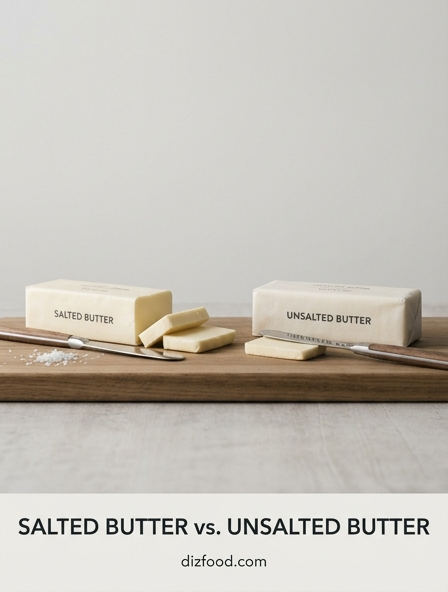
Salted vs Unsalted Butter Understanding the Core Differences
At its most fundamental level, the difference between salted and unsalted butter lies in a single ingredient: sodium chloride. Salted butter is prepared by adding fine salt to the churned cream, typically in a concentration ranging from 1.5% to 2% of the total weight. This addition serves two primary purposes: it acts as a flavor enhancer and functions as a natural preservative, extending the product's shelf life. Unsalted butter, often referred to as "sweet cream butter," consists purely of churned cream without any added seasoning, offering the most natural and neutral expression of dairy fat.
Beyond flavor, the presence of salt affects the water content and the overall chemistry of the butter. In many commercial brands, salted butter may contain slightly more water than its unsalted counterpart to account for the solubility of the salt crystals. This minute difference in moisture can alter the behavior of the fat when it is subjected to high heat or integrated into delicate emulsions. Understanding these core variations is essential for home cooks who wish to master the nuances of temperature control and seasoning balance.
| Feature | Salted Butter | Unsalted Butter |
|---|---|---|
| Primary Use | Spreading, finishing, savory cooking | Baking, precision recipes, pastries |
| Shelf Life | Longer (3-5 months refrigerated) | Shorter (approx. 1 month refrigerated) |
| Flavor Profile | Savory, pronounced dairy notes | Mild, sweet, pure cream flavor |
Why Professional Bakers Prioritize Unsalted Butter
In the world of professional pastry and baking, control is the most valuable currency. Professional bakers almost exclusively use unsalted butter because it allows them to dictate the exact amount of salt in a recipe. Because different dairy brands utilize varying levels of salt in their products-ranging from a light dusting to a heavy brine-using salted butter introduces a variable that can ruin a delicate cake or a batch of cookies. By starting with a neutral base, the baker ensures that the final product tastes exactly as intended every time, regardless of the brand of butter purchased.
Furthermore, unsalted butter is generally fresher than salted butter. Because salt acts as a preservative, salted butter can sit on grocery store shelves for significantly longer periods without spoiling. Unsalted butter, lacking this preservative, has a faster turnover rate in the supply chain, meaning it is often closer to the date of production when it reaches the kitchen. For high-end pastries where the flavor of fresh cream is paramount, this freshness is non-negotiable. There are several specific reasons why professionals make this choice:
- Precise Seasoning: It prevents the "double-salting" effect when recipes call for added kosher salt.
- Gluten Control: Salt can strengthen gluten; using unsalted butter prevents unintended toughness in tender crumbs.
- Maillard Reaction: Controlling salt levels helps manage how crusts brown and caramelize in the oven.
- Flavor Purity: It highlights the natural sweetness of high-quality European-style creams.
The Role of Salted Butter in Savory Cooking
While unsalted butter reigns supreme in the bakery, salted butter is often the hero of the savory stovetop. In savory applications, such as sautéing aromatics, basting a ribeye steak, or finishing a pan sauce, salted butter provides a convenient, pre-integrated seasoning that permeates the dish more evenly than coarse salt crystals might. The salt in the butter is already dissolved within the fat and water emulsion, allowing it to distribute flavor across the surface of vegetables and proteins instantly upon contact with heat.
When making a classic beurre monté or whisking butter into a reduction, the salted variety adds a "rounded" quality to the flavor profile. It helps to bridge the gap between acidic components, like wine or lemon juice, and the rich fats of the dairy. Additionally, the salt helps to draw out the moisture in vegetables like mushrooms and onions during the initial stages of cooking, facilitating better browning and flavor concentration. For many home cooks, the ease of using salted butter means one less step in the seasoning process, ensuring that every layer of the dish is appropriately savory from the beginning of the sear to the final plating.
How to Substitute Salted Butter for Unsalted
It is a common kitchen dilemma: a recipe calls for unsalted butter, but the refrigerator only holds salted sticks. Fortunately, these two ingredients are interchangeable if you apply a simple mathematical adjustment. The general rule of thumb is that one stick of salted butter (1/2 cup or 113 grams) contains approximately 1/4 teaspoon of salt. To maintain the structural integrity and flavor balance of your dish, you must subtract this amount from the additional salt called for in the recipe instructions.
If you find yourself in this situation, follow these steps to ensure your substitution does not result in an overly salty finished product:
- Check the butter quantity: Determine how many sticks or tablespoons of butter the recipe requires.
- Calculate the salt offset: For every 8 tablespoons (one stick) of salted butter used, plan to remove 1/4 teaspoon of salt from the "dry ingredients" list.
- Measure carefully: If the recipe calls for a very small amount of salt (e.g., 1/8 teaspoon), and you are using salted butter, omit the added salt entirely.
- Taste as you go: In batters that are safe to consume raw, or in stovetop sauces, taste the mixture after the butter is integrated before adding any supplemental seasoning.
This conversion ensures that the chemical balance of the recipe remains intact. While the moisture content may vary slightly between the two types, the impact on most home-cooked meals and standard baked goods like brownies or muffins is usually negligible.
Comparing the Sodium Content and Nutritional Profiles
From a nutritional standpoint, salted and unsalted butter are nearly identical in terms of caloric density, fat grams, and vitamin content. Both are primarily composed of milk fat (at least 80% in the US, and often 82-84% in European styles). The divergence occurs entirely within the mineral content, specifically sodium. For individuals monitoring their blood pressure or following a low-sodium diet, the choice between these two can have a measurable impact over time, especially if butter is a dietary staple.
A single tablespoon of unsalted butter contains approximately 0 to 2 milligrams of naturally occurring sodium. In contrast, a tablespoon of salted butter typically contains between 90 and 100 milligrams of sodium. While this may seem like a small amount in isolation, it accounts for about 4% to 5% of the recommended daily intake of sodium. When a recipe calls for a full cup of butter, the difference becomes a significant 1,600 milligrams of sodium. The table below illustrates the typical nutritional breakdown for a standard serving size.
| Nutrient (per 1 tbsp) | Unsalted Butter | Salted Butter |
|---|---|---|
| Calories | 100 kcal | 100 kcal |
| Total Fat | 11g | 11g |
| Saturated Fat | 7g | 7g |
| Sodium | 2mg | 95mg |
| Cholesterol | 30mg | 30mg |
The Impact of Salt on Butter Shelf Life and Freshness
One of the most practical reasons for the existence of salted butter is its longevity. Historically, salt was added to butter to keep it from going rancid during transport and storage before modern refrigeration was available. Salt acts as an antimicrobial agent by reducing "water activity," which inhibits the growth of bacteria and molds. Even in the modern era of cold chain logistics, salted butter remains more resilient than unsalted versions. It can typically stay fresh in a refrigerator for up to five months, whereas unsalted butter begins to lose its peak flavor after about four to eight weeks.
Freshness is a double-edged sword in the grocery aisle. Because unsalted butter has a shorter shelf life, grocery stores must restock it more frequently. This often means that the unsalted butter you buy is "fresher" in terms of production date than the salted butter sitting next to it. For this reason, many culinary experts recommend buying unsalted butter for any application where the flavor of the cream is the star of the show. If you choose to keep salted butter on the counter in a butter bell, the salt provides an extra layer of protection against spoilage, making it the safer choice for room-temperature storage over short periods.
Texture and Consistency Differences in Pastry Making
In the high-stakes environment of pastry making, the physical properties of butter are as important as its flavor. Salt is hygroscopic, meaning it attracts and holds onto water. This property can subtly alter the moisture content of salted butter compared to unsalted butter. In recipes like puff pastry, croissants, or pie crusts, the goal is to create distinct layers of fat and dough. When the water in the butter evaporates in the hot oven, it creates steam, which lifts the layers and creates flakiness. The slight variations in water and salt content can affect the melting point of the fat and the elasticity of the dough.
Moreover, salt can have a toughening effect on flour proteins. When making a very tender shortbread or a delicate cake, the presence of salt in the butter can lead to slightly more gluten development if the dough is over-mixed. Unsalted butter provides a more predictable environment for these chemical reactions. In cold-prep applications, such as making a buttercream frosting, unsalted butter creates a smoother, more uniform emulsion. Salted butter can sometimes retain a slight graininess if the salt crystals were not fully dissolved during the manufacturing process, which can negatively impact the mouthfeel of a silky Swiss meringue buttercream.
When to Use Salted Butter as a Finishing Touch
There are certain culinary moments where salted butter is undeniably superior. These are "finishing" moments where the butter is not hidden within a batter or a complex sauce, but is instead enjoyed as a primary flavor. The most obvious example is the simple act of buttering warm bread or toast. The salt crystals in the butter provide a sharp contrast to the starch of the bread, elevating the experience from simple nourishment to a gourmet treat. The same principle applies to corn on the cob, where the salted fat melts into the crevices of the kernels, providing a seasoned coating that would be difficult to replicate with dry salt alone.
Salted butter is also the preferred choice for creating compound butters. By starting with a salted base, you provide a foundation for additional flavors like garlic, herbs, or citrus zest. It is also excellent for finishing grilled meats or roasted vegetables just before serving. Some of the best uses for salted butter as a finishing touch include:
- Melting over a stack of hot pancakes or waffles.
- Placing a pat on top of a seared steak to create a rich glaze.
- Stirring into steamed rice or mashed potatoes for instant seasoning.
- Smearing onto radishes or crusty baguettes in the French tradition.
- Adding to popcorn for that classic cinema-style flavor profile.
Common Mistakes When Swapping Butter in Recipes
The most frequent mistake cooks make is assuming that all salted butter is created equal. Different brands contain different concentrations of salt, which makes substitution a bit of a guessing game. If a cook uses a highly salted brand of butter and then adds the full amount of salt called for in a recipe, the result can be an inedible, over-seasoned dish. This is particularly problematic in reduction sauces, where the salt concentration increases as the liquid evaporates, potentially leading to a sauce that is far too salty by the time it reaches the desired consistency.
Another error involves the temperature of the butter during the swap. Salted butter tends to soften at a slightly different rate than unsalted butter due to its chemical composition. When making "room temperature" butter preparations like cookies, using salted butter straight from the fridge can lead to uneven mixing if the cook does not account for these subtle physical differences. Finally, many people forget that "sweet butter" is a culinary term for unsalted butter, while "sweet cream butter" can be either salted or unsalted. Confusing these labels at the grocery store can lead to the wrong purchase, potentially compromising a sensitive recipe that requires strict sodium control.
Final Verdict Choosing the Right Butter for Every Occasion
In the ultimate debate of salted versus unsalted butter, the "right" choice depends entirely on the task at hand. There is no objective winner, but there are clear winners for specific scenarios. For the baker, unsalted butter is the essential tool of the trade, providing the blank canvas necessary for precision and consistency. For the cook preparing a quick weeknight dinner, salted butter offers a convenient shortcut to flavor, ensuring that everything from sautéed spinach to pan-seared chicken is seasoned from within. Both products deserve a place in a well-stocked kitchen.
If you prefer to keep only one type of butter on hand to save space, unsalted butter is the more versatile option. You can always add salt to unsalted butter to mimic the flavor of salted butter, but you can never remove the salt from a salted stick. However, for those who value the perfect piece of toast or the ultimate finish on a steak, the unique savory profile of high-quality salted butter is irreplaceable. By understanding the chemical, nutritional, and culinary differences between these two staples, you can make informed decisions that will improve the flavor and texture of every dish you create.


Comments