
Choosing between heavy cream and double cream can be the secret ingredient that transforms a standard dish into an unforgettable culinary masterpiece. While heavy cream is a versatile staple in American kitchens with a butterfat content typically around 36%, double cream is its more decadent British cousin, boasting a luxurious 48% fat concentration that delivers unparalleled thickness and stability. Understanding these fat percentages is crucial for your recipes, as they dictate how the cream behaves under heat and agitation; double cream offers a velvety mouthfeel that resists curdling, whereas heavy cream provides a lighter, airy aeration perfect for fluffy toppings and everyday sauces. Whether you are aiming for a stiff, pipeable finish or a rich, glossy glaze, selecting the right richness level ensures your textures are always spot-on.
| Feature | Heavy Cream (US) | Double Cream (UK) |
|---|---|---|
| Butterfat Content | 36% - 40% | 48% - 50% |
| Consistency | Liquid, easily pourable | Extremely thick, spoonable |
| Whipping Profile | Doubles in volume; light/airy | Becomes very stiff quickly; easy to over-whip |
| Heat Stability | Good; thickens when reduced | Excellent; resists splitting in high heat |
| Primary Use | Ganache, soups, whipped topping | Dessert pouring, clotted cream, rich sauces |
| Availability | Standard in North America | Standard in UK/Europe; specialty in US |
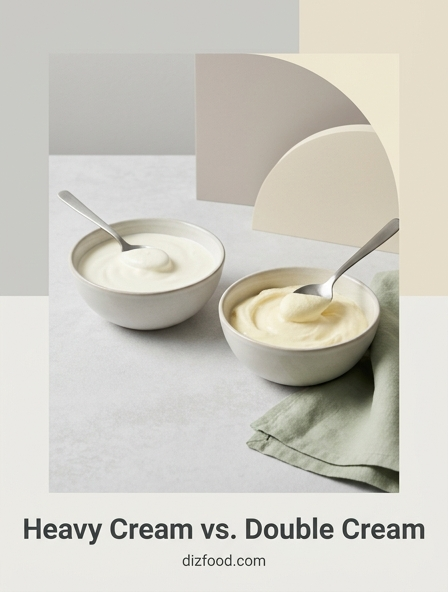
Understanding the Differences Between Heavy and Double Cream
When navigating the dairy aisle, the distinctions between various types of cream can often seem subtle, yet they play a critical role in the success of culinary endeavors. At the heart of the comparison between heavy cream and double cream lies the concentration of butterfat. In the United States, heavy cream is the standard high-fat dairy product found in most grocery stores. It is a versatile ingredient used for everything from enriching coffee to creating stable whipped peaks. However, in the United Kingdom and parts of Europe, double cream reigns supreme as the more indulgent counterpart, offering a significantly higher fat percentage that alters its behavior under heat and mechanical agitation.
The primary difference is not just about calories, but about the physical properties the fat imparts. Heavy cream typically contains enough fat to whip effectively but remains liquid enough to pour easily. Double cream, by contrast, is exceptionally thick, sometimes to the point of requiring a spoon to remove it from the container. Understanding these differences is essential for bakers and chefs who wish to achieve specific textures in their dishes. While they are often treated as interchangeable in casual cooking, the higher fat content of double cream provides a level of stability and richness that heavy cream cannot always replicate without modification. This initial understanding of fat density sets the stage for more complex applications in both sweet and savory kitchen tasks.
Fat Content Comparison Heavy Cream vs Double Cream
The defining characteristic that separates these two dairy products is their legal and chemical fat composition. Regulatory bodies in different countries set specific standards for what can be labeled as "heavy" or "double." In the United States, the FDA dictates that heavy cream must contain at least 36% milk fat, though some premium brands may reach up to 40%. This range is sufficient for the cream to hold air when whipped, though it remains a pourable liquid at refrigerated temperatures.
In contrast, British double cream is a much denser product, with a minimum fat content of 48%. It is not uncommon to find varieties that reach as high as 50% or 52% fat. This substantial increase in butterfat changes the molecular structure of the liquid, making it far more viscous and resistant to curdling when boiled. The following table provides a quick reference for the standard fat percentages encountered in common kitchen creams across regions:
| Cream Variety | Typical Fat Content | Primary Region |
|---|---|---|
| Whipping Cream | 30% - 35% | US / UK |
| Heavy Cream | 36% - 40% | United States |
| Double Cream | 48% - 50% | United Kingdom |
| Extra Thick Double Cream | 50% + | United Kingdom |
As seen in the data, double cream contains nearly 25% more fat than standard American heavy cream. This disparity explains why double cream can be over-whipped into butter much faster than its American counterpart and why it provides a more coating mouthfeel in sauces.
The Best Culinary Uses for Heavy Whipping Cream
Heavy whipping cream is the workhorse of the American kitchen, prized for its ability to transition from a liquid to a semi-solid state. Its primary culinary strength lies in its aeration capabilities. Because it has a fat content between 36% and 40%, it is light enough to incorporate significant amounts of air, doubling in volume when beaten. This makes it the ideal candidate for creating mousses, Bavarians, and the classic Chantilly cream used to top pies and sundaes. Its versatility extends beyond just sweets; it is thin enough to be stirred into hot coffee without clumping, yet rich enough to add body to a morning bowl of oatmeal or a smooth ganache.
In savory applications, heavy cream is frequently used to finish soups like tomato bisque or clam chowder. Because its fat content is high, it is relatively stable under heat, though it does not possess the extreme resistance to splitting that double cream offers. Some of the most common uses include:
- Creating light, airy whipped toppings for cakes and fruit.
- Thickening pan sauces after deglazing with wine or stock.
- Enriching mashed potatoes for a silky, professional texture.
- Acting as a base for homemade ice cream custards.
- Softening the acidity in tomato-based pasta sauces like Penne alla Vodka.
Because it is widely available and standardized, many recipes are calibrated specifically for the moisture-to-fat ratio of heavy cream, making it a reliable staple for consistent results in everyday cooking and baking.
Why Double Cream is the Ultimate Choice for Desserts
For those seeking the pinnacle of indulgence, double cream is often considered the ultimate ingredient for dessert preparation. Its exceptionally high fat content, hovering around 48%, gives it a natural sweetness and a buttery depth that lower-fat creams cannot match. One of the most notable features of double cream is its "extra thick" variant, which is heat-treated to be spoonable straight from the jar. This makes it a perfect accompaniment to scones, tarts, and fresh berries, where it acts more like a spread than a liquid. When used in baking, it adds a level of moisture and tenderness to sponges and scones that is noticeably superior.
Furthermore, double cream is more stable when whipped. While heavy cream can sometimes weep or lose its shape over several hours, whipped double cream holds its form with remarkable rigidity. This makes it the preferred choice for piping onto cakes that need to sit at room temperature or for creating thick layers in a trifle. In the world of chocolate, double cream produces a ganache that is far firmer and more decadent, ideal for hand-rolled truffles. Its ability to be boiled without separating also allows for the creation of rich caramel sauces and possets, where the cream must be heated intensely to achieve the desired chemical transformation and set. For a dessert enthusiast, the richness of double cream provides a luxurious "clinging" quality to the palate that defines high-end confectionery.
Can You Substitute Heavy Cream for Double Cream
Substituting heavy cream for double cream is a common challenge for bakers following international recipes. While they are similar, they are not exact replacements for one another because of the 12% to 15% difference in fat. If a recipe calls for double cream and you only have access to American heavy cream, the result may be thinner and less stable. However, with a few adjustments, you can often achieve a workable result. Because double cream is essentially a concentrated version of heavy cream, the goal of substitution is often to increase the fat solids while reducing the relative water content.
If you need to make a substitution, consider the following steps to better approximate the properties of double cream using standard heavy cream:
- For sauces: Use heavy cream as is, but simmer it longer to reduce the volume and concentrate the fats through evaporation.
- For richness: Mix 3/4 cup of heavy cream with 1/4 cup of melted unsalted butter to boost the fat percentage, though this will not whip as well as pure cream.
- For whipping: Chill your bowl and whisk thoroughly, and avoid over-sweetening, which can soften the peaks.
- For baking: Use heavy cream but slightly reduce other liquids in the recipe to compensate for the higher water content in the cream.
It is important to note that you cannot easily substitute double cream for heavy cream in recipes where a lighter texture is required. Using double cream in a recipe designed for heavy cream can result in a dish that is overly oily or a cake batter that is too heavy to rise properly. Always consider the role of the cream-whether it is for moisture, fat, or aeration-before making the swap.
Regional Naming Conventions US vs UK Cream Varieties
The terminology used for dairy products varies significantly across the Atlantic, often leading to confusion for home cooks. In the United States, the naming convention is primarily based on the minimum fat percentage required by the USDA. "Heavy Cream" and "Heavy Whipping Cream" are largely the same, requiring 36% fat. Below that is "Whipping Cream" (30-35%) and "Half-and-Half," which is a mixture of milk and cream containing roughly 10.5% to 18% fat. These terms are straightforward but do not account for the ultra-high fat varieties found in other cultures.
In the United Kingdom, the system is more tiered. "Single Cream" is the equivalent of a lighter pouring cream, containing about 18% fat, and is generally not used for whipping. "Whipping Cream" in the UK is distinct, usually set at 35% fat. Then comes "Double Cream" at 48%. Beyond this, the British market offers "Extra Thick Double Cream," which is pasteurized and then cooled to create a spoonable consistency, and "Clotted Cream," which is heat-treated to reach a minimum of 55% fat. Understanding these regional labels is vital when following recipes from British authors like Mary Berry or Nigella Lawson, as using American "Heavy Cream" when "Double Cream" is specified will result in a sauce or topping that lacks the intended thickness and opulent mouthfeel.
How Fat Percentage Affects Whipping and Stability
The science of whipping cream relies on the interaction between air bubbles and fat globules. When you whisk cream, you introduce air while simultaneously stripping the protective membranes from the fat globules. These "naked" fat globules then stick together, forming a structural network that traps the air bubbles in place. The higher the fat percentage, the more building blocks you have to create this internal skeleton. This is why double cream, with its 48% fat content, whips much faster and into a much stiffer foam than heavy cream. In fact, double cream can reach a "stiff peak" stage in a matter of seconds, and if one is not careful, it can quickly turn into butter.
Stability is also directly proportional to fat content. A foam created with 36% fat (heavy cream) is somewhat fragile. Over time, the air bubbles escape and the water content begins to leak out, a process known as syneresis or weeping. Because double cream has less water and more fat, the structural network is denser and more resilient. This stability is why double cream is preferred for professional cake decorating; it holds its shape against the weight of cake layers and resists melting better than lower-fat alternatives. For cooks, knowing this relationship means realizing that higher fat doesn't just mean more flavor-it means better mechanical performance in the kitchen.
Texture and Mouthfeel Differences in Cooking
Mouthfeel is a technical term used by food scientists to describe the physical sensations produced by a food in the mouth, and in the case of cream, this is defined by viscosity and "cling." Heavy cream provides a silky, liquid texture that is excellent for sipping in coffee or lightly coating a spoon. It feels clean on the palate and dissipates quickly. In contrast, double cream offers an "unctuous" or "velvety" mouthfeel. Because it is so dense with lipids, it coats the tongue and lingers, carrying flavors longer than thinner liquids. This richness is often perceived as a premium quality in fine dining.
In hot applications, these textures change further. When heavy cream is added to a boiling liquid, it thins out significantly before it begins to reduce. Double cream, however, maintains its body even when heated. This makes double cream the superior choice for "quick" sauces where there isn't time for a long reduction. It provides an immediate thickness and a luxurious gloss to the dish. For example, a pasta sauce made with double cream will cling to the noodles with a thick, opaque coating, whereas a heavy cream sauce may appear more translucent and accumulate at the bottom of the bowl. These tactile differences are why professional chefs often seek out the highest fat content possible for their signature sauces and purees.
Using High Fat Creams in Savory Sauces and Soups
In savory cooking, high-fat creams serve two primary purposes: emulsification and flavor balancing. One of the greatest risks when adding dairy to a savory dish is "breaking" or curdling. This occurs when the proteins in the cream clump together due to high heat or the presence of acidic ingredients like lemon juice, wine, or tomatoes. High-fat creams are much more resistant to this phenomenon. The high ratio of fat to protein acts as a buffer, preventing the proteins from bonding too tightly. Because double cream has the highest fat content, it is almost impossible to curdle, making it the safest choice for high-heat reductions and acidic pan sauces.
When incorporating these creams into your savory repertoire, consider these specific techniques:
- Reduction: Use heavy cream when you want to slowly simmer a sauce to concentrate flavors over 10-15 minutes.
- Finishing: Swirl in double cream at the very end of a soup's cooking time to provide an instant hit of richness without thinning the base.
- Enrichment: Use high-fat cream to mount a sauce (monter au beurre style) for a glossy, professional finish.
- Acid Management: Always use the highest fat cream available when making creamy mustard or citrus-based sauces to ensure a smooth emulsion.
While heavy cream is sufficient for most home recipes, the use of double cream in savory cooking provides a foolproof way to achieve a restaurant-quality consistency that is thick, stable, and deeply satisfying.
Choosing the Right Cream for Your Specific Recipe
Ultimately, the choice between heavy cream and double cream depends on the specific requirements of your recipe and the desired final texture. You must ask yourself whether the cream is being used as a structural component, a liquid thickener, or a simple flavor enhancer. For recipes where volume and lightness are key-such as a delicate chocolate mousse or a fluffy whipped topping for a pie-heavy cream is often the better choice. Its lower fat content allows for a higher expansion of air, resulting in a product that feels less "heavy" on the stomach despite its name.
Conversely, for recipes that demand stability, richness, and thickness, double cream is the clear winner. If you are making a traditional English trifle, a thick ganache for truffles, or a stand-alone accompaniment for fruit, the density of double cream is irreplaceable. It is also the preferred option for any recipe that involves boiling dairy with acidic ingredients. When shopping, always check the label for the fat percentage rather than relying solely on the name, as brands can vary. By matching the fat content of your cream to the functional needs of your dish, you ensure that your sauces never break, your whips never weep, and your desserts always possess that perfect, indulgent finish that only high-quality dairy can provide.

Comments