
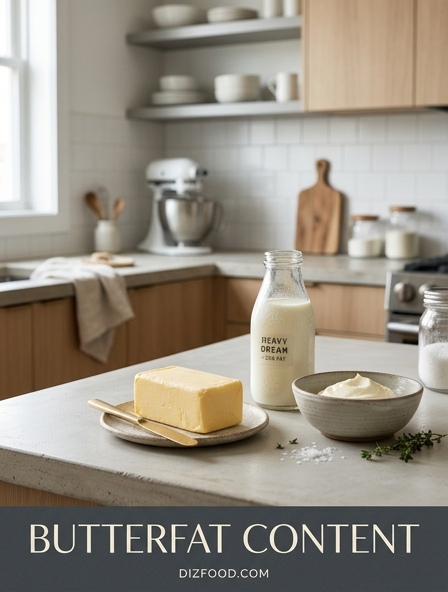
Understanding Butterfat Percentages
Butterfat is the essential fatty portion of milk, consisting primarily of triglycerides. In the culinary world, particularly in baking, the percentage of butterfat determines the ratio of fat to water and milk solids. Standard American butter typically contains 80% butterfat, while premium or European-style versions range from 82% to 86%. This small percentage difference significantly alters the performance of the ingredient in various recipes.
| Butter Type | Butterfat Content | Water Content |
|---|---|---|
| Standard American | 80% | 16-18% |
| European Style | 82-85% | 13-15% |
| Clarified/Ghee | 99-100% | 0% |
The remaining percentage in butter is mostly water and a small amount of protein. When the butterfat content is higher, there is less water available to react with flour proteins, leading to more predictable results in delicate pastries. Understanding these ratios allows chefs to select the appropriate fat for specific textures, whether they require the structural support of water or the tenderizing power of pure lipids.
The Science of Flakiness
The creation of flaky layers in crusts and puff pastries relies heavily on the physical state of butterfat. When cold butter is rubbed into flour or laminated into dough, it forms distinct pockets of solid fat. As the pastry bakes, the butterfat melts, and the small amount of water trapped within the butter evaporates into steam. This steam expands, pushing the surrounding dough upward and creating the characteristic gaps we recognize as flakes.
- High butterfat minimizes excess water that might make the dough gummy.
- Solid fat provides a physical barrier between dough layers.
- A higher melting point allows the layers to set before the fat fully integrates.
If the butterfat content is too low, the higher water content can lead to premature gluten development, resulting in a tough, bread-like texture rather than a crisp, shattered crumb. Therefore, maintaining the butter at a cold temperature ensures the fat remains a solid structural component until the heat of the oven triggers the physical transformation necessary for lamination.
Enhancing Richness and Mouthfeel
Butterfat is the primary driver behind the luxurious mouthfeel associated with high-end baked goods and sauces. Unlike vegetable oils, butterfat has a unique melting point that sits just below human body temperature. This means that as soon as a butter-rich product enters the mouth, the fat begins to liquefy, releasing a burst of flavor and coating the palate in a smooth, velvety film. This sensation is often described as "richness."
The lipids in butterfat also act as a vehicle for other flavors, lingering on the tongue longer than water-based ingredients. In savory applications, such as a beurre blanc or a finished risotto, the butterfat emulsifies with other liquids to create a thick, glossy consistency that water alone cannot achieve. The density of the fat provides a satisfying weight to the food, signaling satiety to the brain. Because butterfat is a complex mixture of fatty acids, it offers a depth of creaminess that single-source fats often lack, making it indispensable for achieving a professional-grade finish in both sweet and savory kitchen preparations.
Butterfat and Gluten Inhibition
In the chemistry of baking, butterfat serves as a powerful "shortening" agent. This term refers to the fat's ability to shorten gluten strands. Gluten is formed when two proteins in wheat flour, glutenin and gliadin, come into contact with water and are agitated. Because butterfat is hydrophobic, it coats the flour particles, creating a protective barrier that prevents water from reaching the proteins and forming long, elastic chains.
- Reduced gluten leads to a "short" or crumbly texture.
- Higher fat percentages ensure more efficient coating of flour molecules.
- Controlled inhibition prevents the dough from becoming overly elastic or tough.
By strategically incorporating butterfat, bakers can control the toughness of their final product. For example, in shortbread or tart crusts, a high ratio of butterfat to flour ensures that the resulting texture is tender and melt-in-the-mouth rather than chewy. This inhibition is crucial in cakes as well, where a soft, fine crumb is desired over the robust, elastic structure found in artisanal breads.
Structural Integrity in Cakes
While butterfat is often associated with tenderness, it also plays a critical role in the structural integrity of cakes. During the mixing process, butterfat works alongside eggs and sugar to form a stable emulsion. This emulsion traps air and supports the weight of the flour and leavening agents as the cake rises in the oven. If the butterfat content is too low or the fat is replaced with oil, the cake may lack the necessary "backbone" to hold its shape, leading to a collapsed or overly dense center.
Furthermore, as the cake cools, the butterfat begins to transition back from a liquid to a semi-solid state. This crystallization provides a firm but soft structure that allows the cake to be sliced cleanly without crumbling excessively. The balance between the fat and the liquid components ensures that the cake remains moist while still possessing enough strength to support layers of frosting or heavy fillings. Without the specific crystalline structure of butterfat, cakes would lose their refined crumb and uniform appearance.
Aeration and Creaming Success
The process of creaming butter and sugar is a fundamental technique in cake and cookie production. Butterfat is essential here because its plastic nature allows it to be beaten into a foam. As the sharp edges of sugar crystals are dragged through the butter, they carve out millions of tiny air pockets that are then stabilized by the fat matrix.
- Use room temperature butter (approx. 65°F) for optimal plasticity.
- Beat until the mixture changes from yellow to a pale ivory color.
- Observe the increased volume as air becomes trapped in the fat.
The air trapped during this stage expands when heated in the oven, providing much of the lift in the final product. High-quality butterfat is particularly effective at this because it maintains its structure even when manipulated. If the butter is too warm, the fat melts and the air pockets collapse; if it is too cold, the fat is too brittle to incorporate air. Success in aeration depends on the butterfat's ability to remain flexible yet strong enough to hold the mechanical air introduced during mixing.
European Versus American Butter
The primary distinction between European and American butter lies in the butterfat percentage and the production method. American butter is regulated by the USDA to contain at least 80% butterfat. In contrast, European butters typically start at 82% and can go as high as 86%. This difference significantly impacts the moisture content and performance of the butter in the kitchen.
| Feature | American Butter | European Butter |
|---|---|---|
| Fat Minimum | 80% | 82% |
| Fermentation | Rarely cultured | Often cultured (tangy) |
| Churning Time | Shorter | Longer (denser) |
European butter is often churned longer, resulting in a denser texture and a richer flavor, frequently enhanced by the addition of live cultures. For the baker, using European butter means less water in the dough, which translates to a lower risk of gluten development and more pronounced flakiness in laminated pastries like croissants. However, because it melts faster due to the higher fat concentration, it requires more careful temperature management during handling.
Stability in Buttercream Frosting
Butterfat is the literal foundation of buttercream frosting, providing both the volume and the stability required for piping intricate designs. The fat acts as a medium that suspends powdered sugar and flavorings. Because butterfat is solid at room temperature but soft enough to spread, it creates a frosting that holds its shape under the weight of multiple cake layers while remaining palatable.
High butterfat content is particularly beneficial for stability in warmer environments. A higher fat-to-water ratio means there is less moisture to dissolve the sugar, which prevents the frosting from becoming "weepy" or losing its definition. Furthermore, the emulsion created during the whipping of buttercream relies on the fat's ability to coat air bubbles and liquid droplets. If the fat is of poor quality or has too low a percentage, the buttercream may break or curdle, resulting in a grainy texture. Achieving a silky finish requires the consistent, dense lipid structure found in premium butterfat, which ensures the frosting remains smooth and structurally sound.
Flavor Release and Aroma
Butterfat is prized not just for its texture, but for its role as a flavor carrier. Many of the most desirable aromatic compounds in cooking are fat-soluble, meaning they dissolve in fats rather than water. Butter contains a complex array of over 400 different fatty acids, which contribute to its signature aroma, primarily driven by a compound called diacetyl.
- Fat-soluble vitamins and aromatics are released slowly as the fat melts.
- Sautéing in butterfat transfers these aromas to vegetables and proteins.
- Maillard browning is enhanced by the presence of milk solids in the fat.
When butterfat is heated, it undergoes chemical changes that amplify its nutty and toasted notes. This is especially evident in "brown butter" (beurre noisette), where the milk solids caramelize while the fat reaches higher temperatures. The butterfat protects these delicate flavor molecules, allowing them to coat the ingredients and linger on the palate. Without a sufficient percentage of butterfat, the flavor profile of a dish would be flat and dissipate quickly after the first bite.
Moisture Retention and Shelf Life
One of the less discussed benefits of butterfat is its ability to extend the shelf life of baked goods through moisture retention. Butterfat acts as a physical barrier that slows down the migration of moisture from the crumb to the crust and eventually into the air. By coating the starch granules and proteins, the fat prevents them from drying out and becoming brittle, which is the primary cause of staling.
In products like pound cakes or cookies, the high butterfat content ensures that the interior remains moist and tender for several days after baking. This is because fats do not evaporate like water does; they remain trapped within the matrix of the food, providing a consistent sense of freshness. Additionally, butterfat helps to prevent "starch retrogradation," the process where starch molecules reorganize and harden as they cool. By interfering with this process, butterfat keeps the texture soft and pliable. For home bakers and commercial producers alike, maximizing butterfat is a natural way to preserve the quality and edible lifespan of their kitchen creations.

Comments