
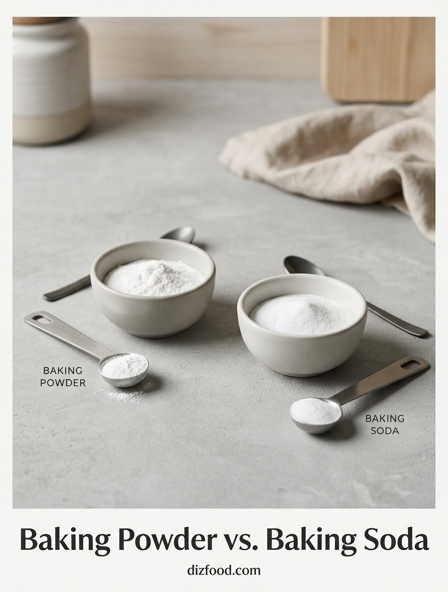
Ever wondered why some cookies turn out perfectly fluffy while others stay surprisingly flat? Understanding the nuance between baking powder and baking soda is the ultimate secret to mastering kitchen chemistry and achieving the perfect crumb. While both serve as chemical leavening agents that release carbon dioxide to create lift, they are far from interchangeable. Baking soda is pure sodium bicarbonate that requires an acidic trigger-like buttermilk, yogurt, or lemon juice-to react, making it ideal for recipes with tangy ingredients. On the other hand, baking powder is a complete leavening package, containing both the base and a built-in dry acid, ensuring a reliable rise in neutral batters. Choosing the right one depends entirely on your recipe's pH balance and the specific texture you desire in your finished bake.
| Feature | Baking Soda | Baking Powder |
|---|---|---|
| Composition | 100% Sodium Bicarbonate | Sodium Bicarbonate + Acid + Cornstarch |
| Activation | Requires an acid (vinegar, citrus, cocoa) | Requires liquid and/or heat |
| Leavening Strength | 3-4x stronger than baking powder | Standardized lift; more predictable |
| Reaction Speed | Immediate; must bake right away | Often "Double-Acting" (initial mix + oven heat) |
| Flavor Impact | Bitter/Metallic if not neutralized by acid | Neutral flavor profile |
| Best For | Chewy cookies, soda bread, tangy cakes | Biscuits, light sponges, neutral batters |
The Science Behind Baking Soda and Baking Powder
Chemical leavening is the process that allows baked goods to rise without the lengthy fermentation required by yeast. At the heart of this process are baking soda and baking powder, two substances that rely on a chemical reaction to produce carbon dioxide gas. When these leaveners are mixed into a batter or dough, the release of gas creates tiny bubbles that expand during the baking process. As the heat sets the structure of the flour and eggs, these gas pockets are trapped, resulting in a light, airy, and porous crumb. Without these agents, cakes and cookies would remain dense, hard, and flat.
The primary active ingredient in both substances is sodium bicarbonate. However, the mechanism by which they release gas differs significantly based on their chemical composition. Sodium bicarbonate is a base that requires an external acid to react. In contrast, baking powder is a complete system containing both the base and a built-in acid. The science of baking is essentially the science of managing these acid-base reactions to ensure the gas is released at the precise moment the batter is strong enough to hold it but before the heat solidifies the crust. Understanding the molecular behavior of these powders allows bakers to manipulate the final volume and density of their culinary creations.
- Sodium bicarbonate serves as the alkaline component.
- Carbon dioxide (CO2) is the byproduct responsible for lift.
- Heat acts as a catalyst for double-acting powders.
- Moisture is the initial trigger for most chemical leavening reactions.
Key Differences Between Baking Soda and Baking Powder
While baking soda and baking powder may look identical-white, fine, and powdery-they are not interchangeable in equal amounts. Baking soda, or pure sodium bicarbonate, is roughly three to four times stronger than baking powder. Because it is a concentrated base, it requires an acidic liquid to activate. If used in a recipe without an acid, it will not produce the necessary gas and will leave behind a distinct, unpleasant metallic or soapy taste. Its primary role is to provide immediate leavening and to assist in the browning of the crust through the neutralization of acids.
Baking powder is a mixture of sodium bicarbonate, a dry acid (such as cream of tartar or sodium aluminum sulfate), and a stabilizer like cornstarch. The cornstarch serves two purposes: it prevents the base and acid from reacting prematurely by absorbing moisture, and it ensures the powder remains free-flowing. Most modern baking powders are "double-acting," meaning they release gas twice-once when they hit the wet ingredients and again when they are exposed to the heat of the oven. This provides a more reliable rise for slow bakers or thick batters.
| Feature | Baking Soda | Baking Powder |
|---|---|---|
| Ingredients | 100% Sodium Bicarbonate | Bicarbonate, Acid, and Cornstarch |
| Activation | Requires external acid and liquid | Requires liquid and/or heat |
| Potency | Very High (small amount needed) | Moderate (larger amount needed) |
| Primary Effect | Leavening and browning | Consistent, sustained lift |
How Baking Soda Reacts with Acidic Ingredients
The reaction between baking soda and an acid is a classic example of an acid-base neutralization. When sodium bicarbonate comes into contact with an acidic liquid, it immediately breaks down into salt, water, and carbon dioxide. This reaction happens almost instantaneously. Because the gas begins to escape the moment the ingredients are combined, bakers must work quickly to get the batter into the oven. If a batter sits for too long on the counter, the gas bubbles will dissipate, and the final product will lose its intended volume. This is why recipes using only baking soda often emphasize "mixing until just combined" and immediate baking.
Common acidic ingredients used to trigger baking soda include buttermilk, yogurt, sour cream, lemon juice, vinegar, molasses, applesauce, and even natural cocoa powder. The choice of acid can significantly impact the flavor profile of the dish. For example, the tang of buttermilk is a classic pairing for soda-leavened biscuits. Beyond just providing lift, the reaction neutralizes the sharpness of the acid, which balances the overall flavor. However, if there is too much baking soda for the amount of acid present, the excess soda will remain unreacted, leading to a bitter aftertaste and a yellowish hue in the crumb.
The amount of baking soda required is typically quite small. Generally, a quarter teaspoon is sufficient to leaven one cup of flour, provided there is enough acid to facilitate the reaction. This delicate balance is what ensures a neutral pH in the finished cake, resulting in a clean flavor and a tender texture.
The Role of Cream of Tartar in Baking Powder
Cream of tartar, known chemically as potassium bitartrate, is the most common acidic component found in homemade or single-acting baking powders. It is a byproduct of the winemaking process, specifically a salt of tartaric acid that crystallizes in wine casks. In the context of baking powder, cream of tartar acts as the dry acid that waits for moisture to dissolve it, at which point it can react with the sodium bicarbonate. Because it dissolves easily at room temperature, baking powders made exclusively with cream of tartar are considered "single-acting," as they do all their work the moment they get wet.
In addition to its role in leavening, cream of tartar is often used independently in the kitchen to stabilize egg whites. When added to meringues or soufflés, it lowers the pH of the whites, which helps the protein strands bond more effectively, creating a foam that is less likely to collapse. In baking powder, its presence ensures that the leavening reaction is controlled and predictable. Many commercial "double-acting" powders use a combination of cream of tartar for the initial rise and a second, heat-activated acid like sodium aluminum phosphate for the secondary rise in the oven.
- Provides the acidic trigger for sodium bicarbonate in dry mixes.
- Assists in creating a fine, uniform crumb structure.
- Prevents sugar crystallization in certain frostings and candies.
- Contributes to the distinctive "tang" in Snickerdoodle cookies.
When to Use Baking Soda for Texture and Browning
While the primary goal of leaveners is to provide volume, baking soda has a unique secondary effect on the appearance and texture of baked goods. Baking soda increases the pH level of the batter, making it more alkaline. An alkaline environment is highly conducive to the Maillard reaction, which is the chemical process responsible for the browning and development of deep flavors in foods. This is why cookies made with baking soda often have a darker, more golden-brown color and a crispier exterior than those made with baking powder alone.
Furthermore, baking soda affects the spread and texture of dough. In cookie recipes, a more alkaline dough weakens the gluten structure and allows the dough to spread more before it sets in the oven. This results in a thinner, chewier cookie with a crinkled surface. In cakes, baking soda can tenderize the crumb by breaking down some of the protein bonds in the flour. For recipes where a deep, mahogany color is desired-such as gingerbread or chocolate cake-baking soda is indispensable. When used with natural cocoa powder, it reacts to darken the cocoa, resulting in a rich, dark chocolate color rather than a pale reddish-brown.
It is important to note that because baking soda promotes browning so effectively, using too much can lead to over-browning or even burning before the interior of the item is fully cooked. Balancing the amount of soda is key to achieving a perfect balance between a crisp, browned crust and a fully baked, moist interior.
Why Some Recipes Require Both Leavening Agents
It is common to see recipes, particularly for muffins, pancakes, and certain cakes, that list both baking soda and baking powder in the ingredients. This is rarely a mistake; rather, it is a calculated effort to achieve a specific balance of lift, browning, and flavor. The most frequent reason for using both is that the amount of acid in the recipe (like a small amount of lemon juice or yogurt) is not sufficient to provide the full leavening required to lift the heavy batter. In this scenario, baking soda reacts with the available acid for an initial boost, while baking powder provides the additional lift needed to ensure the cake reaches its full height.
Another reason for the combination is the management of acidity and browning. If a recipe contains a highly acidic ingredient for flavor-such as a large amount of buttermilk-using only baking powder would leave the batter too acidic. This would result in a pale cake with a sharp, tangy flavor. By adding a bit of baking soda, the baker can neutralize some of that excess acid, which mellows the flavor and encourages the Maillard reaction for better browning. The baking powder then steps in to handle the bulk of the aeration duties.
- To provide extra lift when the acid-soda reaction is insufficient.
- To neutralize excess acid for better flavor balance.
- To enhance browning while maintaining a consistent rise.
- To create a specific crumb structure that requires both immediate and delayed gas release.
Substituting Baking Soda for Baking Powder Safely
If you find yourself mid-recipe and realize you are out of baking powder, you can create a substitute using baking soda, but it requires careful calculation and the addition of an acid. The standard ratio is to use 1/3 teaspoon of baking soda for every 1 teaspoon of baking powder required. However, simply adding the soda is not enough; you must also provide the acid that would have been present in the powder. This is usually done by adding 1/2 teaspoon of cream of tartar for every teaspoon of baking powder being replaced. If you don't have cream of tartar, you can use liquid acids like lemon juice or white vinegar.
When using liquid acids as a substitute, use 1 teaspoon of lemon juice or vinegar for every 1/2 teaspoon of baking soda. Because you are adding liquid to the recipe, you may need to reduce the other liquids (like milk or water) by a similar amount to maintain the correct batter consistency. Keep in mind that substituting with baking soda and a liquid acid will result in a single-acting leavening process. This means the batter must go into the oven immediately, as there is no secondary heat-activated rise. The flavor may also be slightly altered depending on the acid used, though white vinegar is usually neutral enough to go unnoticed in most baked goods.
Conversely, replacing baking soda with baking powder is easier but less effective for browning. You generally need three times the amount of baking powder to match the lift of baking soda, which can sometimes lead to a slightly bitter or "chemical" taste if the amount becomes excessive. It is always best to stick to the original leavener if possible to preserve the intended texture and flavor.
How to Test if Your Baking Powder is Still Active
Baking powder and baking soda have limited shelf lives, and using expired leaveners is one of the most common reasons for baking failures. Baking soda is relatively stable and can last for years if kept in a cool, dry place, but it can eventually lose its potency if exposed to moisture or odors. Baking powder is much more sensitive because it contains both a base and an acid; even a small amount of humidity in the air can trigger a slow, internal reaction that eventually "wears out" the powder, leaving it unable to produce gas when you actually need it for a recipe.
To test baking powder, simply pour a small amount of hot tap water into a bowl and add half a teaspoon of the powder. If it bubbles vigorously and immediately, it is still active and safe to use. If the reaction is sluggish or non-existent, the powder has expired and should be discarded. To test baking soda, the process is slightly different because it requires an acid to react. Place half a teaspoon of baking soda in a bowl and add a few drops of vinegar or lemon juice. It should fizz violently upon contact. If it only bubbles slightly, it has lost its strength and will not provide the necessary lift for your baked goods.
- Test baking powder with hot water.
- Test baking soda with an acid (vinegar or lemon juice).
- Store leaveners in airtight containers away from steam and heat.
- Check potency every six months for the best results.
The Impact of Leaveners on Flavor and Crumb
The choice and quantity of leavening agents dictate the physical "architecture" of a cake. Baking powder tends to produce a fine, even, and mechanical-looking crumb. Because it is a balanced chemical system, it creates uniform bubbles that result in a soft, sponge-like texture. This is ideal for delicate cakes like chiffon or sponge cakes where a consistent appearance is prized. If too much baking powder is used, however, the bubbles can become too large and merge, causing the cake to collapse or creating large, unsightly holes in the middle of the crumb.
Baking soda has a more transformative effect on flavor. Because it neutralizes acids, it can significantly alter the taste of ingredients like chocolate, honey, and fruit. In the right proportion, it creates a clean, rounded flavor profile. In excess, it leaves a residual sodium carbonate that tastes like soap or metal. Beyond flavor, the alkaline environment created by soda softens the flour's proteins, leading to a "short" or tender crumb that melts in the mouth. This is particularly noticeable in items like Irish soda bread or heavy muffins where a rustic, hearty texture is desired. The interplay between the chemical leavener and the fats/flours in the recipe defines whether a cake feels velvety, crumbly, or chewy. Precision in measurement is the only way to ensure the leavener performs its structural duties without compromising the sensory experience of the food.
Common Baking Troubleshooting for Flat Cakes
When a cake comes out of the oven flat, dense, or sunken in the middle, the leavening agent is often the first suspect. One of the most frequent errors is the use of expired baking powder, which fails to provide the secondary lift needed during the baking phase. Another common issue is the "over-mixing" of batter. When you mix flour with liquid, gluten begins to develop. If you mix too vigorously or for too long, the gluten becomes tough and elastic. This "tough" structure can actually trap the gas bubbles too tightly, preventing them from expanding, or it can become so heavy that the bubbles pop and escape before the cake sets.
Oven temperature also plays a critical role in leavening success. If the oven is too cool, the cake will take too long to set, allowing the gas produced by the baking powder to escape before the structure is firm enough to hold it. This results in a flat, heavy cake. Conversely, if the oven is too hot, the outside of the cake may set and crust over before the middle has had a chance to rise, leading to a cracked top or a raw, sunken center. Finally, ensure that you are not opening the oven door too early in the baking process. A sudden drop in temperature or a physical jar to the oven can cause the fragile, gas-filled cells of the rising cake to collapse, leading to a permanent dent in the center of your dessert.
| Problem | Likely Cause | Solution |
|---|---|---|
| Sunken Center | Underbaked or expired leavener | Test powder; check internal temp |
| Dense/Heavy Crumb | Over-mixing or lack of acid | Fold ingredients gently; check pH |
| Coarse/Large Holes | Too much leavening agent | Measure accurately with level spoons |
| Pale Color | Lack of baking soda/acidity too high | Add a pinch of baking soda |



Comments