
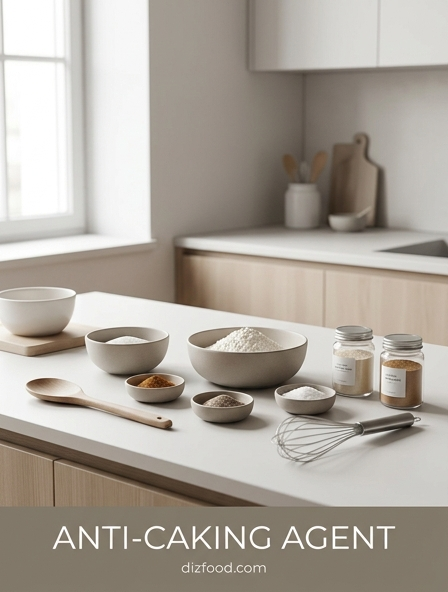
Defining Confectioners Sugar and Icing Sugar
Confectioners sugar, also widely recognized as icing sugar or powdered sugar, is a specialized form of granulated sucrose that has been mechanically ground into an extremely fine, dust-like consistency. Unlike standard table sugar, which consists of distinct crystalline grains, this variety undergoes intensive processing to ensure it dissolves almost instantly upon contact with moisture. This characteristic makes it the primary choice for culinary applications where a smooth, grit-free texture is essential, such as in the production of delicate creams, mousses, and various styles of cake frostings. Because the mechanical grinding increases the surface area of the sugar particles, the substance becomes highly susceptible to moisture absorption from the atmosphere.
- Composed primarily of finely milled granulated white sugar.
- Contains a small percentage of anti-caking agents to maintain flow.
- Characterized by its ability to dissolve without heat.
- Essential for achieving smooth finishes in confectionery work.
- Processed through high-speed impact mills to reach micron-level fineness.
To counteract the natural tendency of these tiny particles to clump together into hard mass, manufacturers blend the sugar with a moisture-absorbing starch. This addition is what technically distinguishes commercial confectioners sugar from pure, pulverized sucrose. Without this additive, the sugar would quickly turn into solid blocks when stored in humid kitchen environments, rendering it useless for precise baking measurements.
Regional Names and Global Differences
While the product is chemically similar across the globe, the nomenclature used by bakers varies significantly depending on the region and the specific standards of local food industries. In the United States, the terms "powdered sugar" and "confectioners sugar" are used interchangeably to describe the standard product found in grocery stores. In contrast, the United Kingdom, Australia, and many Commonwealth nations refer to the substance exclusively as "icing sugar." These regional differences often extend to the type of anti-caking agent used, which can slightly alter the flavor profile and performance of the sugar when used in specific recipes.
| Region | Primary Name | Common Starch Additive |
|---|---|---|
| United States | Confectioners / Powdered | Cornstarch |
| United Kingdom | Icing Sugar | Cornflour or Tricalcium Phosphate |
| France | Sucre Glace | Potato Starch or Silica |
| Germany | Puderzucker | Cornstarch |
In some European markets, "snow sugar" or "non-melting sugar" is a specialized variation that includes fats or different starches to prevent the sugar from dissolving when dusted onto hot pastries or moist fruit. Understanding these regional distinctions is crucial for bakers following international recipes, as the subtle difference between cornstarch and potato starch can affect the final thickening properties of a glaze or the stability of a royal icing batch.
Manufacturing and Grinding Processes
The industrial production of confectioners sugar is a sophisticated process that involves more than just simple crushing. Manufacturers utilize massive high-speed impact mills or hammer mills that pulverize granulated sugar until the crystals are broken down into microscopic particles. The degree of fineness is often categorized by an "X" rating system, which denotes the number of times the sugar has been processed or the specific mesh size of the screens used during the milling phase. This mechanical reduction is carefully monitored to ensure consistency, as uneven particle sizes would lead to a sandy texture in finished culinary products.
- Granulated sugar is fed into a high-capacity industrial mill.
- Beaters or hammers spin at high velocities to shatter the crystals.
- The sugar dust is passed through fine-mesh sieves to verify particle size.
- Anti-caking agents are metered into the sugar at a precise ratio.
- The mixture is blended thoroughly to ensure the starch coats every particle.
- The final product is packaged in moisture-resistant materials.
Standard grocery store sugar is typically "10X," representing a very fine grade suitable for most household baking. Professional bakers might occasionally use 6X or 12X for specific textures. Throughout this process, heat management is vital, as the friction of grinding can cause the sugar to caramelize or melt if temperatures are not strictly controlled during the milling cycle.
The Role of Cornstarch and Additives
The inclusion of anti-caking agents is the most critical technical aspect of commercial confectioners sugar. Because the surface area of the sugar is so vast after grinding, it becomes extremely hygroscopic, meaning it greedily pulls water molecules from the surrounding air. Without a barrier, these water molecules would create liquid bridges between the sugar particles, causing them to fuse into hard lumps. Cornstarch is the most common additive used to prevent this phenomenon, typically making up about 3% to 5% of the total weight of the product.
- Absorbs ambient moisture before it can reach the sugar particles.
- Physically coats the sugar dust to provide a "ball-bearing" effect for better flow.
- Provides slight thickening properties when the sugar is used in heated glazes.
- Tricalcium phosphate is sometimes used as an alternative for a cleaner taste.
- Tapioca starch is a common substitute for corn-free or grain-free diets.
While these additives are essential for shelf stability, they can occasionally impact the flavor and clarity of a recipe. Some high-end pastry chefs find that cornstarch imparts a slightly metallic or "chalky" aftertaste in raw applications. In these instances, they may seek out sugar brands that use tricalcium phosphate or choose to grind their own sugar immediately before use to avoid the need for any anti-caking additives whatsoever.
Texture and Particle Size Comparison
The primary difference between various kitchen sugars lies in the physical dimensions of their particles. Granulated sugar crystals are relatively large, providing a structural crunch and reflecting light in a way that makes them appear sparkly. As the sugar is refined into finer grades, the physical behavior of the substance changes. Confectioners sugar particles are so small that they feel soft and velvety to the touch, almost like flour. This extreme fineness is what allows the sugar to integrate into fats like butter without leaving behind a gritty residue, which is the hallmark of a high-quality buttercream frosting.
| Sugar Type | Average Particle Size | Visual Appearance |
|---|---|---|
| Granulated Sugar | 400 - 600 Microns | Clear, distinct crystals |
| Caster Sugar | 200 - 300 Microns | Fine, sand-like grains |
| 10X Powdered Sugar | 10 - 45 Microns | Opaque white powder |
| Fondant Sugar | Under 10 Microns | Ultra-fine, silky dust |
The transition from 400 microns down to 10 microns significantly alters the solubility and the way the sugar interacts with light. Because the particles are smaller than the human tongue can individually distinguish, the resulting sensation is one of total smoothness. This makes the fine texture of powdered sugar indispensable for creating "melt-in-your-mouth" cookies and silky smooth chocolate ganaches that require a refined finish.
Best Culinary Uses and Applications
Confectioners sugar is highly versatile, serving both functional and aesthetic purposes in the professional kitchen. Its primary role is in the creation of frostings and icings. Because it dissolves instantly in the water content of butter or cream cheese, it creates a stable, pipeable medium that holds its shape. Beyond frostings, it is the standard sweetener for royal icing, which hardens into a candy-like coating for decorative cookies. The starch content in the sugar also provides a small amount of structural stability to whipped creams, helping them maintain their peaks for longer periods when used as a topping.
- Decorative Dusting: Applied to brownies, tarts, and stollen for a snowy finish.
- Glazes: Mixed with milk or lemon juice for a quick donut or bundt cake topping.
- Shortbread: Used in the dough to create a crumbly, tender texture.
- Candy Making: Essential for fudge, divinity, and marshmallow production.
- Anti-Stick Agent: Dusting surfaces when rolling out fondant or marzipan.
In addition to these uses, it is frequently employed to sweeten cold beverages where granulated sugar would simply sink to the bottom. However, cooks must be mindful of the starch content; when used in large quantities in a cooked sauce, the anti-caking agent can act as a thickener, potentially altering the intended viscosity of the liquid if not accounted for during the recipe formulation.
Substitution Rules for Bakers
Substituting sugars is a common challenge in baking, and confectioners sugar is particularly tricky due to its volume and density differences. One cannot simply swap one cup of granulated sugar for one cup of powdered sugar. Because powdered sugar is so much finer, a cup of it contains much more air and less actual sugar by weight than a cup of granulated crystals. Furthermore, the presence of cornstarch in commercial powdered sugar means that a direct substitution might introduce an unwanted thickening agent into a recipe that relies on the pure caramelization of sucrose.
- By Weight: Use roughly 120g of powdered sugar to replace 100g of granulated if including starch.
- By Volume: Generally, 1 3/4 cups of powdered sugar equals 1 cup of granulated sugar.
- For Texture: Never use granulated sugar in raw frostings; the result will always be gritty.
- For Sifting: Always measure powdered sugar after sifting if the recipe specifies "sifted sugar."
If a recipe calls for confectioners sugar and you only have granulated, you can manufacture a substitute by processing granulated sugar in a high-speed blender with a small amount of cornstarch. However, reverse substitution-using granulated in place of powdered-is rarely successful in cold applications like buttercream. In cooked applications, like a cake batter, you may be able to use powdered sugar in a pinch, but the resulting crumb will be denser and tighter due to the fine particle size and the starch content.
The Impact of Anti Caking Agents
The presence of anti-caking agents like cornstarch or tricalcium phosphate has a profound impact on the chemical behavior of the sugar. While these additives are necessary for maintaining a powdery state, they change how the sugar reacts to heat and moisture. In raw applications, the starch provides a matte finish to icings, preventing them from looking overly greasy. However, when heated, the starch granules undergo gelatinization. This means that if you try to make a clear sugar syrup or a caramel using confectioners sugar, the result will likely be cloudy and significantly thicker than a syrup made with pure granulated sugar.
- Clarity: Cornstarch renders syrups and glazes opaque rather than transparent.
- Taste: High concentrations of anti-caking agents can leave a subtle, floury aftertaste.
- Stability: The starch helps "set" icings by absorbing excess moisture from the air.
- Melting Point: The additives can slightly alter the temperature at which the sugar begins to liquefy.
For most home bakers, these impacts are negligible or even beneficial. The stability provided by the starch is what allows a sugar-dusted lemon tart to look fresh for several hours. However, for specialized tasks like making clear hard candies or delicate spun sugar, the anti-caking agents are considered contaminants. In these professional scenarios, chefs will strictly avoid confectioners sugar in favor of ultra-fine caster sugar or freshly ground pure sucrose.
DIY Powdered Sugar Instructions
Creating homemade confectioners sugar is a simple process that requires only two ingredients and a high-powered blending device. This is an excellent solution for bakers who run out of the store-bought version or those who wish to control the type of starch used. A standard blender can work, but a high-speed blender or a dedicated spice grinder will produce the finest results. The key to success is ensuring the equipment is completely dry, as even a single drop of water will cause the sugar to clump and stick to the blades, preventing a fine powder from forming.
- Measure one cup of standard granulated white sugar.
- Add one tablespoon of cornstarch (or arrowroot powder for a grain-free version).
- Place the mixture into a high-speed blender or clean coffee grinder.
- Pulse or blend on high for 30 to 60 seconds until the mixture looks like a fine mist.
- Wait a few seconds for the sugar dust to settle before opening the lid.
- Sift the resulting powder through a fine-mesh strainer to remove any remaining crystals.
While the homemade version may not be quite as fine as the industrially milled "10X" sugar, it is perfectly suitable for most frostings, cookies, and dusting needs. One advantage of the DIY method is the ability to use alternative sweeteners, such as coconut sugar or xylitol, though these may require longer blending times and different starch ratios to achieve the desired flowability and moisture resistance.
Storage Tips for Fine Sugars
Proper storage is vital for maintaining the quality of confectioners sugar, as its high surface area makes it exceptionally sensitive to environmental conditions. Even with the inclusion of anti-caking agents, the sugar can still develop lumps if exposed to high humidity or fluctuating temperatures. To prevent this, the sugar should be kept in an airtight container, such as a glass jar with a rubber seal or a heavy-duty plastic bin. If the sugar is stored in its original paper box, it is susceptible to picking up odors from other strong-smelling pantry items like spices or onions.
- Keep in a cool, dark, and dry pantry away from the stove or dishwasher.
- Transfer to a sealed container once the original packaging is opened.
- Avoid storing in the refrigerator, as the condensation will cause significant clumping.
- Use a dedicated sifter or fine-mesh sieve before adding to any recipe.
- Place a piece of parchment paper under the lid to provide an extra moisture barrier.
If you find that your sugar has already developed lumps, it is rarely "spoiled." In most cases, the sugar is still perfectly safe to use; it simply needs to be mechanically de-clumped. Sifting the sugar through a fine-mesh strainer is the most effective way to restore its powdery texture. For very stubborn lumps, you can briefly pulse the sugar in a blender to break them down before use. Provided it is kept dry, confectioners sugar has an almost indefinite shelf life.



Comments