
The Science of Aeration in Modern Baking
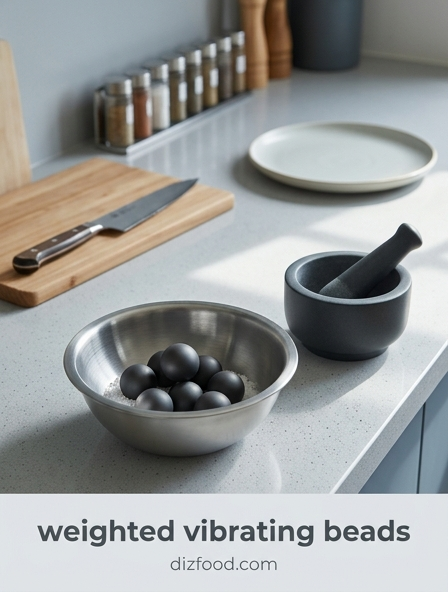
Aeration is the fundamental process of incorporating gas into a liquid or semi-solid matrix to create structural lightness. In modern baking, this is traditionally achieved through mechanical agitation, which stretches protein strands or fat molecules to trap air. However, the introduction of weighted vibrating beads has revolutionized this thermodynamic interaction. Unlike a standard whisk that relies on broad, sweeping strokes, these beads utilize micro-oscillations to break the surface tension of ingredients at a molecular level. This process creates a higher density of air pockets, known as nucleation sites, which are significantly smaller and more numerous than those produced by manual stirring.
The physics of this method centers on the kinetic energy transferred from the beads to the batter. As the beads vibrate, they create localized pressure differentials that pull air into the mixture without the destructive force that often collapses delicate foams. This scientific approach ensures that the aeration is deep and structural, rather than superficial, providing a foundation for baked goods that maintain their rise through the duration of the cooling process, preventing the common issue of post-oven deflation.
Anatomy of Weighted Vibrating Beads
The design of weighted vibrating beads is a marriage of material science and ergonomic engineering. These tools are specifically engineered to withstand the high-viscosity environments of heavy doughs while remaining sensitive enough for light creams. The core is typically composed of a high-density tungsten or lead-free alloy to provide the necessary gravitational "drag" that keeps the tool submerged. This core is then encased in a thick layer of medical-grade, non-stick silicone or polished 304 stainless steel, ensuring food safety and heat resistance.
| Component | Material | Primary Function |
|---|---|---|
| Inner Core | Heavy Metal Alloy | Provides ballast and depth stability |
| Outer Shell | Food-Grade Silicone | Ensures non-reactive contact and easy cleaning |
| Vibration Motor | Micro-Piezoelectric | Generates high-frequency ultrasonic pulses |
| Power Source | Lithium-Ion | Supplies consistent energy for long durations |
The outer texture of the beads is often slightly dimpled. These dimples act as additional friction points, increasing the surface area for air-binding during the vibration cycle. The weight ensures the beads do not simply float on the surface, allowing for bottom-up aeration in deep mixing vessels.
Mechanics of High Frequency Whisking
High-frequency whisking operates on the principle of rapid displacement. Traditional whisks move at a rate of approximately 3 to 5 strokes per second when operated by hand. In contrast, weighted vibrating beads oscillate at frequencies ranging from 50 to 200 Hertz. This rapid movement creates a "shear zone" around the bead, where the viscosity of the fluid is temporarily lowered, allowing for more efficient blending of ingredients that would otherwise remain stratified. The mechanical energy is concentrated into small, intense bursts, which is far more effective at denaturing egg proteins than the blunt force of a wire whisk.
This high-frequency action also minimizes the "dead zones" in a mixing bowl. Because the vibrations travel through the liquid medium as waves, the entire volume of the batter is influenced by the movement, even if the beads are localized in one area. This creates a homogeneous mixture where fats and liquids are fused at a microscopic scale, leading to a more consistent crumb and flavor profile in the final product. The mechanics ensure that every milliliter of the batter receives the same level of energy input.
Achieving Superior Volume in Egg Whites
The creation of a stable meringue is often considered the ultimate test of a baker's skill. Weighted vibrating beads simplify this task by optimizing the unfolding of albumin proteins. When egg whites are subjected to the targeted vibration of weighted beads, the protein bonds break and reform around air bubbles with remarkable speed and precision. The result is a foam that is both voluminous and incredibly stable. The benefits of using this technology for egg whites include:
- Reduced risk of over-beating, which causes protein strands to snap and leak water.
- Uniform bubble size, creating a smooth, satiny texture rather than a grainy one.
- Faster transition from soft peaks to stiff peaks, saving critical prep time.
- Enhanced thermal resistance, allowing the foam to hold its shape better during folding.
By using beads, the baker can achieve a volume increase of up to 20% more than traditional whisking. This is because the micro-vibrations fill the protein matrix with smaller air cells that pack together more tightly, creating a structure that is physically more robust against the weight of added sugars or flours.
Precision Texture Control for Delicate Batters
Delicate batters, such as those for chiffon cakes, macarons, or génoise, require a level of precision that manual whisking often fails to provide. The primary challenge is incorporating dry ingredients without deflating the carefully curated air bubbles. Weighted vibrating beads allow for "active folding," where the vibration gently coaxes the flour into the wet foam. This eliminates the need for aggressive stirring, which is the leading cause of "toughness" in cakes due to over-developed gluten. The precision control offered by these beads ensures that the texture remains light and ethereal.
Bakers can adjust the frequency of the vibration to match the specific needs of the batter. A lower frequency is ideal for thick pancake batters where some lumps are desired, while a higher frequency is used for silken custards or ultra-light batters. This adaptability provides a level of customization that is impossible with fixed-speed stand mixers or hand whisks. By controlling the kinetic input, the chef can dictate the exact "mouthfeel" of the dessert, ensuring a professional-grade result every time the recipe is executed.
The Impact of Kinetic Energy on Emulsification
Emulsification is the process of forcing two immiscible liquids, like oil and water, into a stable union. In the kitchen, this is the basis for vinaigrettes, hollandaise, and mayonnaise. The kinetic energy generated by weighted vibrating beads is uniquely suited for this task. As the beads vibrate, they shatter oil droplets into microscopic particles. This increase in surface area allows the emulsifying agent, such as lecithin in egg yolks, to surround and stabilize the droplets more effectively. The result is a thick, creamy emulsion that is far less likely to "break" or separate.
Unlike traditional methods that require a slow, drizzling pour of oil, the intense vibration of the beads can handle a faster incorporation rate. The constant energy input ensures that the suspension remains active throughout the process. For professional chefs, this means a reduction in the physical labor required to mount a butter sauce or create a stable aioli. The kinetic energy does the heavy lifting, maintaining the delicate balance of the emulsion even under the stress of heat or acidic additions like lemon juice or vinegar.
Overcoming Common Manual Whisking Limitations
Manual whisking is fraught with human limitations, primarily physical fatigue and inconsistency of motion. As a chef tires, the speed and angle of the whisking change, leading to uneven aeration and potential failure of the recipe. Weighted vibrating beads act as a constant, tireless force in the kitchen. They provide a predictable output that does not waver, regardless of the duration of the mixing process. This technology addresses several key limitations:
- Eliminates repetitive strain on the wrist and forearm, reducing the risk of carpal tunnel.
- Provides a constant RPM (rotations per minute) equivalent that human hands cannot sustain.
- Ensures the bottom of the bowl is reached, preventing "hot spots" of unmixed ingredients.
- Allows the chef to use their hands for other tasks, such as tempering chocolate or measuring dry goods.
Furthermore, manual whisking often introduces too much oxygen too quickly, which can lead to large, unstable bubbles. The controlled vibration of weighted beads ensures a gradual, systemic build-up of structure, which is much more resilient during the baking process, leading to fewer "sunken" centers in cakes and pastries.
Optimizing Bubble Distribution for Fluffier Cakes
The "fluffiness" of a cake is determined by the distribution and size of its internal air cells. Large, irregular bubbles result in a coarse, bread-like texture, while small, uniform bubbles create a fine, velvety crumb. Weighted vibrating beads are specifically designed to optimize this distribution. The vibrational waves act as a sieve, breaking down larger air pockets and redistributing the gas evenly throughout the medium. This uniformity is essential for even heat distribution during baking; smaller bubbles expand at the same rate, preventing the cake from warping or cracking.
In addition to size, the distribution of bubbles ensures that leavening agents like baking powder or soda are perfectly dispersed. If a leavener is concentrated in one area, it creates a large void; if it is sparse, the cake remains dense. The beads ensure that every cubic centimeter of the batter has the same chemical and structural composition. This leads to a predictable rise in the oven and a superior "spring-back" texture when the cake is touched. The optimization of bubble geometry is a key factor in achieving the "cloud-like" consistency sought after in high-end pastry shops.
Efficiency Gains in Professional Pastry Work
In a professional pastry kitchen, efficiency is the difference between profit and loss. Weighted vibrating beads represent a significant upgrade in workflow management. Because these tools can operate somewhat autonomously within a bowl, they reduce the "active time" a pastry chef must spend on a single component of a recipe. While the beads are aerating a meringue or stabilizing a ganache, the chef can focus on more complex tasks like sugar work or plating. This multi-tasking capability increases the total output of the kitchen without the need for additional staff.
Moreover, the cleanup and maintenance of these beads are significantly faster than cleaning complex stand mixer attachments or multiple wire whisks. Their streamlined, non-stick surfaces can be sanitized in seconds. In high-volume environments where dozens of different batters are prepared daily, the time saved on both preparation and cleaning translates into a substantial increase in overall productivity. The beads also consume less space than bulky machinery, making them ideal for smaller "boutique" kitchens where every square inch of counter space is at a premium.
Consistency Standards for Gourmet Confections
For gourmet confections like marshmallows, nougats, and aerated chocolates, consistency is the hallmark of quality. Consumers expect the same texture and density every time they purchase a product. Weighted vibrating beads provide a measurable, repeatable standard for aeration that manual methods cannot replicate. By setting the vibration frequency and duration, a confectioner can ensure that every batch of marshmallow has the exact same density and "chew." This level of standardization is vital for brand reputation and quality control.
The use of beads also aids in the integration of flavor oils and colors. Vibrations ensure that these concentrated additives are dispersed at a microscopic level, preventing streaks or "flavor bursts" that can ruin a delicate confection. In the world of high-end candy making, where the margin for error is razor-thin, the precision of weighted vibrating beads offers a fail-safe against the variability of human touch. It allows for the mass production of artisanal-quality sweets, maintaining the "hand-crafted" feel while utilizing modern mechanical advantages to ensure perfection in every piece.

Comments