
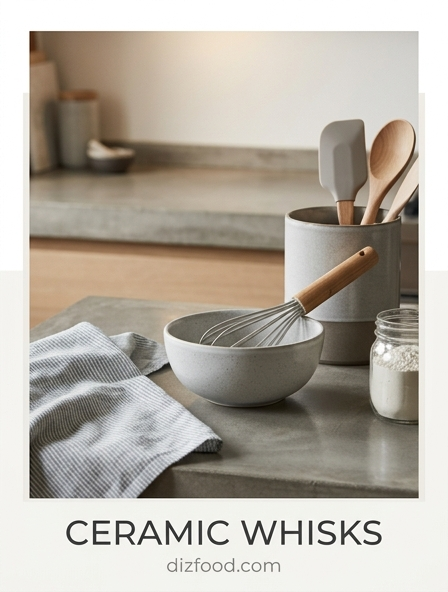
Sustainable Materials for Professional Whisking Performance
The culinary industry is experiencing a significant shift toward sustainable materials that do not compromise on professional utility. Ceramic whisks represent the pinnacle of this movement, utilizing earth-derived components that offer exceptional rigidity and performance. Unlike traditional metal or plastic alternatives, high-performance ceramics are engineered to withstand the rigorous demands of a professional kitchen while maintaining a minimal environmental footprint. These materials are sourced from abundant natural minerals, processed through high-heat vitrification to ensure they remain inert and highly durable.
Professional chefs appreciate the unique weight and balance that ceramic tines provide. The material density allows for a more consistent stroke, which is essential for emulsifying delicate sauces or tempering chocolate. By choosing ceramic, professionals align their craft with ecological responsibility. The benefits of using these sustainable materials include:
- Reduced reliance on non-renewable metal ores and mining processes.
- Enhanced structural integrity that prevents warping over time.
- Complete resistance to oxidation and metallic aftertastes in food.
- A lower ecological impact during the initial manufacturing stages.
Eliminating Microplastics in the Modern Kitchen
Modern kitchens are increasingly scrutinized for their contribution to microplastic pollution, often stemming from the degradation of nylon and silicone utensils. Ceramic whisks offer a definitive solution to this problem by providing a completely inorganic and synthetic-free tool for food preparation. When plastic whisks are exposed to high heat or abrasive ingredients, they shed microscopic particles that eventually enter the human food chain and the wider environment. Ceramic, by contrast, is a vitrified substance that does not peel, flake, or erode into the ingredients being processed.
The transition to ceramic tools ensures that every whisking action remains pure and free from polymer contamination. To understand the transition toward a plastic-free kitchen, consider these steps for implementing ceramic tools:
- Audit existing nylon whisks for signs of fraying or heat damage.
- Replace aging synthetic tools with high-density ceramic alternatives.
- Utilize ceramic whisks for high-friction tasks like blending heavy batters.
- Educate kitchen staff on the physical stability of ceramic surfaces.
Longevity and the Eco Conscious Tool Investment
Investing in kitchen tools requires a balance between upfront cost and long-term utility. Ceramic whisks are designed for longevity, often outlasting several generations of cheaper, disposable alternatives. This durability is the cornerstone of eco-conscious consumption; by purchasing a tool that does not need frequent replacement, consumers significantly reduce the volume of kitchen waste sent to landfills. While the initial investment might be higher, the cost-per-use ratio of a ceramic whisk is remarkably low over its extended lifespan.
The following table illustrates the comparative longevity and environmental impact of common whisk materials over a five-year period of regular kitchen use:
| Material | Average Lifespan | Environmental Impact |
|---|---|---|
| Plastic/Nylon | 1-2 Years | High (Microplastics) |
| Thin Stainless | 3-4 Years | Medium (Corrosion) |
| High-Tech Ceramic | 10+ Years | Low (Sustainable) |
Toxic Free Preparation for Healthier Culinary Results
Health-conscious cooking extends beyond the ingredients to the tools used in the preparation process. Many conventional whisks contain coatings or chemical stabilizers, such as BPA, phthalates, or PFOA, which can leach into food under certain conditions. Ceramic whisks are inherently toxic-free, providing a chemically inert surface that does not react with acidic ingredients like lemon juice or vinegar. This ensures that the flavor profile of the dish remains untainted and that no harmful chemicals are introduced during the cooking process.
The safety of ceramic is particularly vital when preparing baby food or meals for individuals with chemical sensitivities. Using ceramic ensures a higher standard of culinary purity by adhering to the following safety profiles:
- Zero lead or cadmium content in professional-grade glazes.
- Non-reactive properties that prevent the "metallic tang" in acidic sauces.
- Naturally hypoallergenic surfaces that do not harbor chemical residues.
- Resistance to chemical bonding with detergents and sanitizers.
Superior Heat Resistance and Energy Efficiency
Ceramic whisks excel in high-heat environments where traditional materials often fail. While plastic whisks melt and metal whisks conduct heat rapidly to the handle, ceramic remains stable and comfortable to hold. This superior thermal resistance allows for seamless transitions from cold emulsions to stovetop reductions. Furthermore, the heat-retention properties of ceramic can contribute to subtle energy efficiencies; the tool does not act as a heat sink that siphons energy away from the cooking vessel, maintaining a more consistent temperature within the sauce or custard.
This thermal stability makes ceramic the ideal choice for demanding tasks. The specific advantages of ceramic's heat resistance include:
- Safe use in boiling liquids and hot caramel without structural softening.
- Stay-cool handle designs that eliminate the need for bulky oven mitts.
- Resistance to thermal shock, allowing for quick cleaning after hot use.
- Minimal expansion and contraction, preventing the loosening of whisk tines.
Reducing Carbon Footprints with Ceramic Durability
The carbon footprint of a kitchen tool is calculated by its manufacturing energy, transport emissions, and frequency of replacement. Ceramic whisks contribute to a lower overall carbon footprint primarily through their extreme durability. Because ceramic does not rust, bend out of shape, or degrade under UV light, the need for repetitive manufacturing cycles is eliminated. A single ceramic whisk can replace a dozen plastic alternatives over a decade, significantly reducing the energy required for production and the carbon emissions associated with global shipping and logistics.
To maximize the carbon-reducing potential of these tools, users should follow a sustainable maintenance routine:
- Hand wash with biodegradable soaps to preserve the ceramic finish.
- Store in dedicated racks to prevent impact damage with metal tools.
- Use for specialized tasks like sourdough starters where acidity is high.
- Repurpose old ceramic tools as garden markers at the end of their life.
Why Professional Chefs Choose Sustainable Ceramic
In high-pressure culinary environments, tool reliability is non-negotiable. Professional chefs are increasingly turning to sustainable ceramic whisks because they offer a unique combination of stiffness and precision. Unlike stainless steel tines that can "spring" or lose their tension, ceramic maintains a rigid geometry that allows for better control over aeration and texture. This precision is vital for creating the perfect peak in meringues or the smoothest possible béchamel. Furthermore, the aesthetic appeal of ceramic fits the modern, open-kitchen concept that many high-end restaurants adopt.
The professional preference for ceramic is often based on several key performance metrics compared to standard tools:
| Feature | Steel Whisk | Ceramic Whisk |
|---|---|---|
| Flexibility | High (Can warp) | Low (Precision) |
| Reactivity | Reactive to Acids | Completely Inert |
| Aesthetics | Industrial | Modern/Artisan |
Non Porous Surfaces for Optimal Food Safety
Food safety is a paramount concern in any kitchen, and the material of a whisk plays a critical role in hygiene. Ceramic is naturally non-porous, meaning it does not have the microscopic cracks or pores where bacteria, mold, and food particles can hide. Even after extensive use, a ceramic whisk remains easy to sanitize, as its surface does not harbor bio-films. This is a significant advantage over wooden handles or plastic tines that develop scratches over time, creating breeding grounds for cross-contamination.
Maintaining a sterile cooking environment is simplified with ceramic tools. Users benefit from the following hygiene-centric features:
- Complete resistance to odor absorption, even with garlic or fish.
- Stain-resistant surfaces that do not discolor from turmeric or berries.
- Compatibility with high-temperature dishwasher cycles for total sterilization.
- Smooth finish that prevents ingredients from sticking and drying in crevices.
Precision Aeration Without Synthetic Components
The primary function of a whisk is to incorporate air into liquids, and the physics of ceramic tines are uniquely suited for this task. The inherent rigidity of ceramic allows for thinner, sharper tine designs that slice through heavy creams and egg whites more efficiently than blunt plastic. This precision aeration results in finer bubbles and more stable foams, achieved without the use of any synthetic coatings or chemical additives. The result is a mechanical advantage that relies purely on the structural properties of the material itself.
Achieving the perfect texture requires understanding the interaction between the tool and the ingredient. Ceramic whisks provide several advantages for aeration:
- Consistent tine spacing that optimizes air entrapment.
- Low-friction surfaces that allow for faster whisking speeds.
- Weight distribution that reduces wrist fatigue during long whipping tasks.
- Structural memory that keeps tines perfectly aligned for even mixing.
The Environmental Edge of High Performance Ceramic
The environmental edge of high-performance ceramic lies in its lifecycle. From the extraction of clay and minerals to the final product, the process is increasingly optimized for sustainability. Unlike metal smelting, which requires massive energy and creates toxic byproducts, modern ceramic firing can be powered by renewable energy sources. Furthermore, at the end of its long life, ceramic is an inert material that does not leach toxins into the soil. It is essentially returned to an earth-like state, closing the loop on a truly sustainable kitchen tool.
Choosing ceramic is a commitment to a healthier planet. To ensure the highest environmental standards, consumers should look for the following:
- Manufacturers that utilize kiln-heat recovery systems.
- Brands that use lead-free, natural mineral glazes.
- Products packaged in plastic-free, recyclable cardboard.
- Tools designed with replaceable handles to extend the head's life.

Comments