
The evolution of artisanal bread toasting
The history of bread toasting has transitioned from simple open-fire methods to highly specialized electrical appliances. In the mid-20th century, the rise of industrial, pre-sliced white bread dictated the design of standard household toasters. These machines featured narrow, uniform slots that were perfectly suited for the thin, square dimensions of mass-produced loaves. However, as culinary culture shifted back toward traditional methods, the demand for artisanal boules, sourdough, and ciabatta grew significantly.
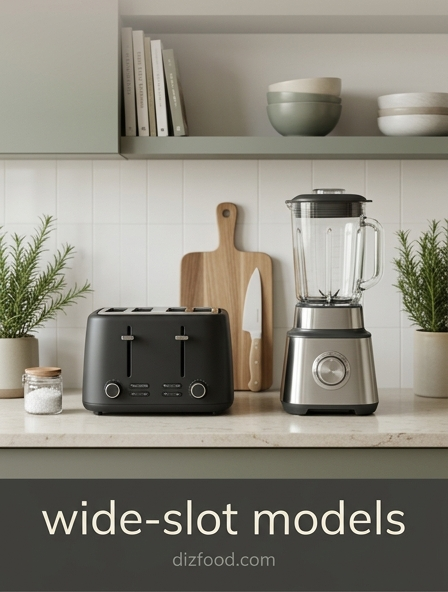
Modern consumers now prioritize the complex textures and flavors of hand-crafted breads, which often feature irregular shapes and hearty crusts. This evolution has forced a redesign of the classic kitchen toaster. Wide-slot models emerged as a direct response to this gourmet movement, allowing for thicker slices that do not fit into vintage or budget-tier machines. The transition reflects a broader trend in kitchen technology where versatility and the accommodation of fresh, unprocessed ingredients are paramount. Today, a toaster is no longer just a convenience tool for breakfast; it is an essential piece of equipment for the contemporary baker's kitchen.
Why standard slots crush rustic sourdough
Standard toaster slots, typically measuring approximately one inch in width, were never intended to handle the robust architecture of a rustic sourdough. When a home cook attempts to force a thick, hand-cut slice into a narrow aperture, several structural failures occur. The most immediate issue is the physical compression of the bread's crumb. Sourdough is prized for its open, airy hole structure, which provides a unique mouthfeel. Forcing this bread into a tight space collapses those air pockets, resulting in a dense, chewy, and unappealing texture once heated.
Furthermore, the friction caused by a tight fit often shears off the delicate outer crust or tears the soft interior. This not only ruins the aesthetic appeal of the toast but also creates a mess of crumbs that can lead to smoking or fire hazards within the heating chamber. The lack of clearance prevents the bread from "breathing" during the initial stages of the Maillard reaction. Without that small cushion of air, the heat is applied through direct contact with the metal cages rather than radiant heat, leading to uneven patches and crushed edges that fail to capture the essence of the original loaf.
Benefits of extra wide toaster openings
The primary advantage of extra-wide toaster openings is the sheer flexibility they provide for diverse meal preparation. Beyond just standard bread, these models accommodate a vast array of artisanal goods that would otherwise require a toaster oven or a stovetop pan. Wide slots, often measuring between 1.5 to 2 inches, provide the necessary clearance for thick-cut Texas toast, halved bagels, and even pastries like croissants or danishes.
| Feature | Standard Slot (1") | Wide Slot (1.5"+) |
|---|---|---|
| Artisanal Sourdough | Requires trimming | Fits comfortably |
| New York Bagels | Often jams | Slides in easily |
| Hand-Cut Loaves | Crushes crumb | Preserves texture |
| Heat Distribution | Direct contact risk | Radiant air flow |
By investing in a wide-slot model, users reduce the frustration of stuck bread and the danger of using metal utensils to pry out jammed slices. This increased safety, combined with the ability to toast specialty items, makes wide-slot models a superior choice for busy households that enjoy variety in their morning routines.
Achieving even browning on thick slices
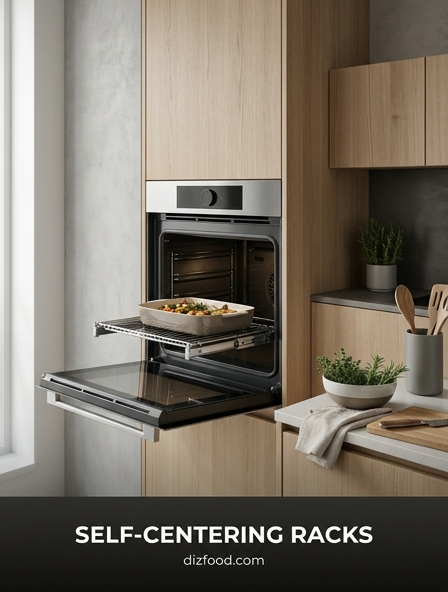
Toasting a thick slice of bread requires more than just high heat; it requires precision and proper positioning. Wide-slot toasters are engineered with advanced centering guides that are crucial for achieving a uniform golden-brown finish. When the lever is pressed, these internal metal frames adjust to the specific thickness of the slice, ensuring it remains perfectly equidistant from the heating elements on both sides.
- The bread is placed into the extra-wide aperture.
- Self-centering guides collapse inward to grip the slice firmly.
- The bread is aligned vertically to prevent leaning or uneven exposure.
- Heating elements radiate energy evenly across the increased surface area.
- Moisture evaporates from the crust while the interior remains soft.
This mechanism is vital for thick-cut breads because any slight tilt toward one element would result in one side being charred while the other remains pale and soft. By maintaining a strict geometric center, wide-slot models utilize radiant heat to penetrate the outer layers of dense loaves, ensuring the crunch is consistent from the top edge down to the bottom crust, regardless of the slice's thickness.
Preventing stuck bread and burnt edges
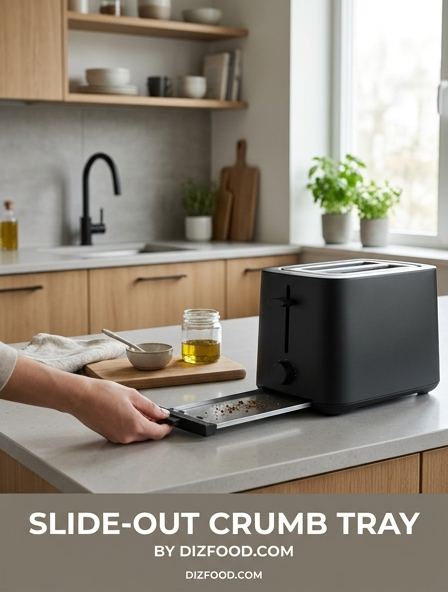
One of the most persistent nuisances in kitchen maintenance is the smell of burning bread remnants trapped at the bottom of a toaster. This problem is exacerbated by narrow slots that scrape the sides of the bread, causing seeds, grains, and crust fragments to fall into the heating coils. Wide-slot models significantly mitigate this issue by providing ample "elbow room" for the bread. When the slice can move freely within the slot, there is less friction to dislodge toppings or tear the surface of the dough.
Furthermore, many wide-slot models are equipped with high-lift levers. This feature is a secondary safety and convenience mechanism that allows the user to push the carriage higher than the standard resting position once the toasting cycle is complete. This is particularly useful for smaller specialty items like English muffins or short ends of a sourdough loaf that might otherwise remain below the rim. By combining wide clearances with high-lift technology, these toasters ensure that the user never has to reach into the hot slots with fingers or tools, preventing both burnt edges on the bread and potential injury to the user.
Versatility for bagels and hand-cut loaves
The versatility of a wide-slot toaster is most evident when dealing with items of varying densities and shapes. Bagels, specifically, are a challenge for traditional toasters due to their thickness and the requirement that only the cut side be toasted while the back remains chewy. Most wide-slot models feature a dedicated "Bagel" setting that works in tandem with the larger opening. This setting adjusts the power levels of the inner and outer heating elements, providing the intense heat needed for the cut face while gently warming the exterior.
- Accommodates oversized New York-style bagels without flattening them.
- Allows for irregular, rustic slices from homemade Dutch oven breads.
- Supports the toasting of thick-sliced brioche for French toast preparation.
- Enables even heating for frozen waffles and thicker specialty pancakes.
For those who prefer to bake their own bread or buy unsliced loaves from local bakeries, the ability to hand-cut slices to a desired thickness is a luxury that narrow toasters cannot accommodate. Whether it is a hearty two-inch slab for avocado toast or a thick piece of fruit-filled tea bread, the wide-slot model handles the variability with ease, ensuring the kitchen remains a place of culinary freedom rather than restriction.
Optimal heat circulation for dense textures
Dense breads, such as rye, pumpernickel, or heavy multigrain varieties, require a specific thermal environment to toast effectively. Unlike light white bread, which browns almost instantly, dense loaves contain more moisture and a tighter crumb structure. Wide-slot toasters excel here because the extra space around the bread allows for superior heat circulation. This creates a mini-convection effect where hot air can flow around the entire surface of the slice rather than being trapped in localized hot spots.
This air circulation is essential for removing the surface moisture that prevents the Maillard reaction from occurring. In a cramped slot, moisture can turn into steam, which makes the bread soggy before it finally burns. In a wide-slot model, the moisture is efficiently evaporated, allowing the heat to build a crisp exterior while the density of the interior retains its characteristic chewiness. This balance is difficult to achieve in narrow machines, where the proximity to the elements often results in a "flash burn" on the outside while the center of the dense slice remains cold or damp. Proper spacing ensures the thermal energy is distributed deeply into the bread's fibers.
Protecting the delicate crumb of specialty bread
Specialty breads, particularly those with high hydration levels or gluten-free formulations, often have a very delicate crumb. This internal structure is easily damaged by mechanical pressure. When using a wide-slot toaster, the bread is treated with a level of "gentleness" that is impossible in tighter configurations. Because the bread does not need to be forced or wedged into the machine, the vertical integrity of the slice is maintained from the moment it is inserted until it pops back up.
For gluten-free breads, which can be notoriously crumbly and fragile, the extra width is a necessity. These slices often lack the elastic strength of traditional wheat breads and can fall apart if they catch on the sides of a narrow slot. The wide-slot design allows these delicate slices to sit loosely within the centering guides, protected from the scraping that leads to structural failure. By preserving the crumb, the toaster ensures that the final product holds its integrity when butter or jam is applied, providing a professional-grade experience with even the most temperamental specialty loaves. Protecting the bread's physical state is the first step in ensuring a high-quality sensory experience.
Engineering the perfect golden crunch
The "perfect" toast is defined by a specific contrast: a crisp, golden-brown exterior and a warm, soft interior. Achieving this balance is an engineering challenge that wide-slot toasters solve through calibrated heating cycles. Because these toasters are designed for thicker items, their heating elements are often more robust, providing consistent infrared radiation across a larger area. This engineering ensures that the heat penetrates just far enough into the slice to create a satisfying crunch without drying out the heart of the bread.
Precision timing is another critical factor. Many premium wide-slot models use sensors to monitor the internal temperature of the toasting chamber, adjusting the duration based on whether the toaster is already hot from a previous cycle. This prevents over-browning on subsequent rounds. When you combine this electronic precision with the physical space of a wide slot, you get an appliance that understands the thermodynamics of bread. The result is a slice that shatters slightly upon the first bite-the hallmark of the golden crunch-while remaining tender enough to absorb toppings. This synergy of space, timing, and temperature control is what separates basic toasting from culinary engineering.
Why slot width matters for gourmet kitchens
In a gourmet kitchen, the quality of the tools must match the quality of the ingredients. A high-end kitchen often features a variety of specialized breads, from artisanal sourdough to hand-laminated pastries. Utilizing a cheap, narrow-slotted toaster in such an environment creates a bottleneck in the cooking process and diminishes the quality of expensive, high-quality ingredients. Slot width is a key indicator of an appliance's versatility and its ability to handle a chef's diverse needs.
- Aesthetic Integration: Wide-slot models often feature premium finishes like brushed stainless steel or matte porcelain.
- Functional Superiority: They eliminate the need for secondary appliances like toaster ovens for simple tasks.
- Culinary Consistency: Professional-grade results require the precision airflow that only wider apertures provide.
- Investment Value: Durable construction in wide-slot models usually points to a longer lifespan.
For the serious home cook, the toaster is not an afterthought but a critical component of the breakfast station. Choosing a model with wide slots ensures that no matter what the bakery offers, the kitchen is equipped to handle it. It represents a commitment to quality, ensuring that every slice of bread, regardless of its origin or dimensions, is treated with the respect it deserves.

Comments