
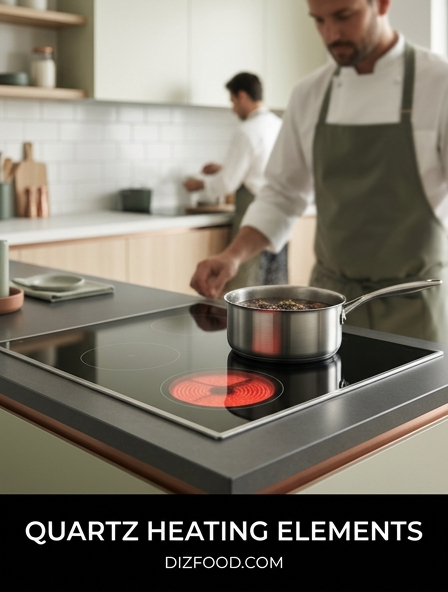
Rapid Heat Response for Perfect Toast
Quartz elements are known for their ability to reach peak operating temperatures in seconds. Unlike traditional metal coils that require a significant preheating period, quartz tubes utilize high-quality silica glass to house resistive wires. This design allows for immediate infrared radiation, which hits the bread surface the moment the toaster is engaged. This rapid response is critical for busy mornings where every second counts. Because the heat is instantaneous, the toasting cycle is often thirty percent faster than older models. This efficiency does not just save time; it ensures that the bread does not sit in a warm, dry environment for too long, which can lead to a stale texture. By hitting the bread with intense heat right away, the quartz element locks in the internal moisture while simultaneously creating a crisp exterior. Manufacturers favor these elements in premium appliances because they provide a reliable, high-speed performance that consumers expect from modern kitchen technology. The result is a consistent golden-brown finish that is difficult to achieve with slower, less responsive heating methods.
Energy Efficient Infrared Heating Technology
Quartz heating elements operate primarily through infrared radiation, a highly efficient method of energy transfer. Instead of heating the air inside the appliance, which then eventually heats the food, infrared energy travels directly to the surface of the bread or bagel. This direct transmission reduces the energy loss typically associated with convection or traditional conduction heating systems.
- High wavelength absorption: Bread surfaces absorb infrared waves exceptionally well.
- Low thermal mass: Quartz tubes cool down as quickly as they heat up, preventing residual energy waste.
- Directional precision: The tubes can be positioned to target specific areas of the food item.
By utilizing this technology, kitchen appliances can operate at lower total wattages while delivering superior results. The infrared spectrum emitted by quartz is specifically tuned to interact with the sugars and proteins in food, facilitating the Maillard reaction more effectively than standard resistive heating. This focus on energy efficiency makes quartz-based appliances an environmentally conscious choice for modern households looking to minimize their carbon footprint without sacrificing culinary quality.
Uniform Radiant Heat Distribution
One of the primary challenges in toasting is achieving a uniform color across the entire surface of the bread. Traditional wire elements often suffer from hot spots where the coil is closest to the food, leading to uneven browning or burnt edges. Quartz elements solve this problem through their linear design and the reflective housings in which they are usually mounted. The radiant heat emitted from the quartz tube is distributed evenly across the length of the element, ensuring that every square inch of the toast receives the same intensity of infrared energy. This uniformity is enhanced by the specialized coatings often applied to the interior of the toaster, which bounce the radiant heat back toward the center. When heat is distributed evenly, the risk of charring is significantly reduced, and the bread develops a beautiful, consistent crust. This is particularly important for larger items like artisan sourdough slices or long baguettes, where traditional elements often fail to reach the extremities. The predictable nature of radiant heat distribution allows for professional-grade results in a home kitchen setting.
Instant Warm Up vs Metal Elements
When comparing modern quartz elements to traditional metal heating elements, the differences in thermal performance are stark. Metal elements, typically made of nichrome or calrod, have a high thermal mass, meaning they require a substantial amount of energy just to reach their operating temperature.
| Feature | Quartz Elements | Metal Elements |
|---|---|---|
| Warm-up Time | 2-5 Seconds | 30-60 Seconds |
| Heat Transfer | Infrared Radiation | Conduction/Convection |
| Cool-down Speed | Near Instant | Slow/Retained Heat |
As shown, quartz elements offer a significant advantage in speed and control. The metal elements continue to radiate heat long after the cycle has ended, which can lead to over-toasting if a second batch is started immediately. In contrast, quartz tubes allow for better consistency because they reset to a neutral state almost immediately. This makes them ideal for large families or commercial environments where the toaster is in constant use.
The Science of Quick Surface Browning
Quick surface browning is more than just a convenience; it is a scientific necessity for high-quality toast. The Maillard reaction, which is the chemical interaction between amino acids and reducing sugars, occurs most effectively at high temperatures. Quartz elements facilitate this reaction rapidly by bombarding the surface of the food with high-intensity infrared light. This process creates a sear on the bread, much like a steak on a hot grill. By browning the surface quickly, the internal moisture of the bread remains trapped within the crumb. If the heating process is too slow, the heat penetrates deep into the bread, evaporating the water content and resulting in a piece of toast that is dry and brittle throughout. Quartz technology allows for a high-temperature gradient, meaning the surface becomes extremely hot while the interior stays relatively cool and soft. This scientific advantage is why high-end toasters equipped with quartz tubes consistently win taste tests. They provide the perfect balance of a crunchy, flavorful crust and a tender, moist interior.
Precision Temperature Control for Consistent Results
Achieving the same level of browning every time requires precise control over the heating environment. Quartz elements are uniquely suited for this because they respond almost instantly to changes in power levels. Modern electronic controllers can pulse the power to quartz tubes with millisecond precision, maintaining a steady temperature that traditional elements cannot match.
- Sensory Feedback: Many quartz toasters use sensors to monitor the internal cavity temperature.
- Variable Intensity: Power can be adjusted for different types of bread, from dense rye to light white.
- Repeatability: The lack of residual heat ensures the first slice is the same as the tenth.
This precision eliminates the guesswork often associated with older toasters. Users can select a specific shade setting and trust that the appliance will deliver that exact result regardless of how many times it has been used that morning. This level of consistency is a hallmark of quartz technology, providing a reliable experience that enhances the overall functionality of the kitchen.
Reducing Kitchen Energy Consumption
In the modern kitchen, energy conservation is a high priority for both manufacturers and consumers. Quartz heating elements contribute significantly to this goal by reducing the total operating time of the appliance. Because they reach cooking temperatures almost instantly, there is no dead time where the appliance is drawing power without performing work. Furthermore, because infrared heating is more direct and efficient at transferring energy to the food, quartz toasters often require less total energy to achieve the same browning results as their metal-element counterparts. Over the course of a year, the cumulative energy savings can be substantial, especially in households where the toaster is used daily. Additionally, because the kitchen stays cooler due to the lack of long-term radiant heat waste, there is a secondary saving on air conditioning during the summer months. By choosing appliances with quartz tubes, consumers are investing in technology that prioritizes both performance and ecological responsibility, proving that high-speed convenience does not have to come at the cost of high energy consumption.
Durability of High Performance Quartz Tubes
A common misconception about quartz heating elements is that they are fragile due to their glass-like appearance. However, high-performance quartz tubes are engineered from high-purity silica that is incredibly resistant to thermal shock. This means they can transition from room temperature to over one thousand degrees Fahrenheit in seconds without cracking or degrading. Unlike metal elements, which can oxidize and become brittle over time after repeated heating and cooling cycles, quartz elements remain chemically stable. The resistive wire inside the tube is also protected from oxygen and food debris, which prevents the corrosion that often leads to the failure of traditional coils. This protection ensures a longer lifespan for the appliance and maintains the purity of the heating environment. Modern quartz tubes are also often encased in protective grates or reinforced structures to prevent physical damage from accidental contact with bread tongs or kitchen utensils. When handled with basic care, these elements offer a durable, long-lasting solution that outshines traditional heating technologies in both longevity and sustained performance levels.
Achieving the Ideal Toasted Texture
The perfect toast is defined by a specific textural contrast: a crisp, golden-brown shell and a warm, soft center. Achieving this balance is the specialty of quartz heating technology. The process follows a specific sequence of thermal events:
- Instant Infrared Burst: The elements fire immediately to begin surface dehydration.
- Flash Caramelization: High heat triggers the Maillard reaction on the outermost layer.
- Moisture Retention: The rapid speed prevents the core of the bread from drying out.
- Controlled Finishing: The elements pulse to finalize the color without burning.
Traditional toasters often produce crouton-style toast, which is hard all the way through because the heating process takes too long. By using quartz, the appliance focuses all its energy on the surface texture. This creates a more pleasant eating experience, as the bread retains its structural integrity while providing the satisfying crunch that consumers desire. Whether toasting thick-cut brioche or thin slices of wheat, the ability to control texture through rapid heat application is a game-changer for culinary enthusiasts.
Maximizing Speed in Modern Toasters
Speed is a defining characteristic of the modern lifestyle, and kitchen appliances have evolved to meet this demand. Toasters equipped with quartz heating elements are at the forefront of this evolution, offering significantly reduced cycle times. In a commercial setting, such as a busy breakfast cafe, the speed of quartz elements can increase throughput by a large margin, allowing more customers to be served in less time. For the home user, it means the toaster is finished before the coffee is even done brewing. This maximization of speed is achieved through the combination of low thermal mass and high-intensity infrared output. As technology advances, we are seeing quartz elements integrated into multi-function toaster ovens and air fryers, where their rapid heat-up times eliminate the need for preheating entirely. This shift not only saves time but also streamlines the cooking process, making high-quality food preparation more accessible and less time-consuming. The adoption of quartz is a clear indicator of the kitchen's move toward faster, smarter, and more efficient technology that respects the user's schedule.


Comments