
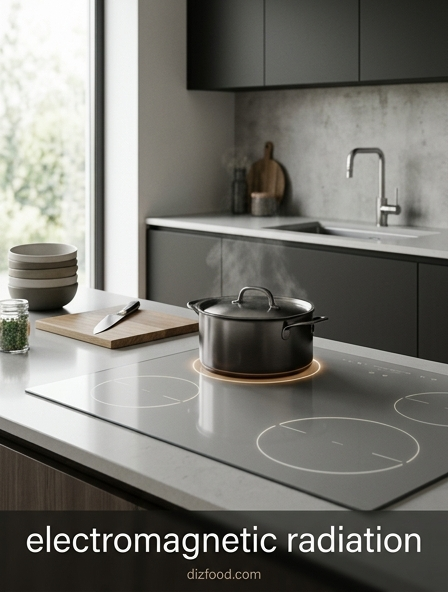
The Science of Infrared Heating in Modern Toasters
Modern toasters utilize infrared radiation to transfer thermal energy directly to the surface of food items. Unlike convection, which relies on air as a medium, infrared heating involves electromagnetic waves primarily in the near-to-far infrared spectrum. These waves are emitted by heating elements, typically made of nichrome wire or quartz tubes, which glow as they reach high temperatures. When these photons strike the bread, they excite the molecules on the surface, causing rapid vibration and an immediate increase in temperature. This process is highly efficient because it minimizes the energy lost to the surrounding air.
- Wavelength Range: Typically 0.75 to 1000 micrometers.
- Primary Emitters: Nichrome alloys or carbon fiber filaments.
- Mechanism: Radiative heat transfer via electromagnetic displacement.
- Absorption: High efficiency in organic matter like wheat and starches.
The intensity of the radiation is governed by the Stefan-Boltzmann law, which states that the power radiated is proportional to the fourth power of the absolute temperature. Consequently, even slight increases in element temperature result in significant boosts in browning capability, allowing for the rapid dehydration of the bread's exterior necessary for the perfect toast.
Optimizing Wave Frequency for Even Bread Browning
To achieve uniform browning, engineers must calibrate the electromagnetic frequency emitted by the toaster's elements. Different wavelengths penetrate materials to varying depths. Short-wave infrared provides deep penetration, which can dry out the interior of the bread, while long-wave infrared is absorbed almost entirely at the surface. Finding the "sweet spot" ensures a crisp exterior while maintaining a soft, moist crumb inside. This balance is critical for commercial-grade appliances that prioritize consistency across different bread densities.
| Wave Type | Wavelength | Thermal Effect |
|---|---|---|
| Short-wave | 0.7-1.4 µm | Deep penetration, rapid core heating. |
| Medium-wave | 1.4-3.0 µm | Balanced surface and subsurface heating. |
| Long-wave | 3.0-100 µm | Surface-level absorption, ideal for crusting. |
By utilizing quartz glass sleeves, manufacturers can filter specific frequencies to optimize the radiation pattern. This precision prevents "hot spots" where certain areas of the bread might char while others remain undercooked. The geometry of the reflective internal housing further ensures that electromagnetic waves are distributed evenly across the bread's entire surface area.
Precision Control Systems for Electromagnetic Cooking
The efficacy of electromagnetic cooking is highly dependent on the precision of the control systems managing the power output. Modern kitchen appliances use Pulse Width Modulation (PWM) to regulate the intensity of the heating elements. By rapidly cycling the power on and off, the system can maintain a very specific temperature without the fluctuations common in older bimetallic strip thermostats. This digital precision allows for specialized settings, such as "bagel mode," where radiation is directed primarily toward one side of the slot.
These control systems often incorporate microcontrollers that interpret data from resistance sensors. As the heating element warms up, its electrical resistance changes; the controller monitors this shift to calculate the actual thermal output. This feedback loop ensures that the first slice of toast in a session is identical to the fifth, regardless of the appliance's initial internal temperature. Furthermore, user-defined darkness settings are translated into specific millisecond durations of electromagnetic exposure, providing a level of repeatability that was previously impossible in mechanical designs. This integration of software and physics defines the modern culinary experience.
Energy Efficiency Benefits of Radiant Heat Transfer
Radiant heat transfer is inherently more energy-efficient for specific kitchen tasks than traditional thermal conduction or convection. Because electromagnetic waves travel at the speed of light and do not require a medium to move through, the "pre-heat" time is virtually eliminated. In a standard toaster, the energy consumed is focused almost exclusively on the food surface rather than heating the entire volume of air within the appliance. This targeted delivery reduces the total wattage required to reach the desired chemical state in the food.
- Direct Energy Path: Waves travel directly from source to target.
- Reduced Thermal Mass: Elements reach operating temperature in seconds.
- Minimized Leakage: Insulated reflective interiors bounce waves back to the food.
- Instant Off: Energy emission stops immediately when the circuit is broken.
When compared to a standard oven, which may require ten minutes of energy consumption just to reach a functional temperature, a radiant toaster performs the same browning task with a fraction of the kilowatt-hours. This makes electromagnetic radiation the preferred choice for high-speed, low-footprint kitchen operations where energy conservation and speed are prioritized.
Mastering the Maillard Reaction Through Targeted Radiation
The Maillard reaction is the chemical cornerstone of flavor in toasted foods, occurring when amino acids and reducing sugars react under heat. This reaction typically begins at approximately 140 to 165 degrees Celsius. Electromagnetic radiation is the most effective way to induce this reaction because it can rapidly elevate surface temperatures to this threshold without overcooking the interior. The high-energy photons emitted by infrared elements break chemical bonds and facilitate the creation of complex molecules responsible for the savory, toasted aroma.
Precise control over the radiation intensity allows for the "tuning" of this reaction. If the radiation is too intense, the surface will carbonize (burn) before the Maillard reaction can develop fully. Conversely, if the intensity is too low, the bread will simply dehydrate and become hard without browning. Modern appliances use specific radiant flux densities to ensure the surface stays within the optimal temperature window for the longest possible duration. This results in a superior flavor profile characterized by rich, nutty notes and a golden-brown hue, achieved through the calculated application of electromagnetic energy.
The Evolution of Electromagnetic Heating in Kitchen Appliances
The history of electromagnetic heating in the kitchen has progressed from simple resistive wires to sophisticated solid-state emitters. Early 20th-century toasters used exposed nichrome wires that were prone to oxidation and uneven heating. These devices relied on rudimentary radiation patterns that often resulted in striped browning. As materials science advanced, manufacturers introduced ceramic supports and eventually quartz-encased elements, which allowed for higher operating temperatures and better protection of the radiant source.
- 1900s: Introduction of Nichrome (Nickel-Chromium) alloy.
- 1950s: Integration of automatic timing and pop-up mechanisms.
- 1980s: Wide-scale adoption of quartz infrared tubes.
- 2010s: Introduction of digital PID controllers and sensors.
Today, the evolution continues with the exploration of variable-spectrum heating. We are seeing a shift from "dumb" heaters to intelligent systems that can adjust their electromagnetic output based on the specific moisture content and thickness of the food. This progression reflects a broader trend in kitchen technology toward precision, efficiency, and the mastery of the electromagnetic spectrum to provide better culinary results with less human intervention.
Comparing Microwave and Infrared Toasting Technologies
While both microwaves and toasters utilize electromagnetic radiation, they operate in different frequency bands and produce vastly different culinary results. Microwaves operate at roughly 2.45 GHz, a frequency that penetrates deep into food and excites water molecules throughout the entire volume. This leads to rapid heating but prevents the surface browning required for toast. Infrared radiation, however, operates at much higher frequencies, which are absorbed almost immediately at the surface, creating the high-heat environment necessary for crust formation.
| Feature | Microwave (RF) | Toaster (Infrared) |
|---|---|---|
| Frequency | 2.45 GHz | ~300 GHz to 430 THz |
| Interaction | Dipolar rotation (water) | Molecular vibration (surface) |
| Browning | None (without grill) | Excellent (Maillard reaction) |
The primary challenge with microwaves in a toasting context is the lack of a moisture gradient; the interior becomes as hot as the exterior, leading to a rubbery texture. Infrared heating excels because it creates a thermal differential, drying the outside while the inside remains relatively cool. Hybrid appliances now combine these technologies to offer the speed of microwaves with the textural benefits of infrared radiation.
Harnessing Selective Absorption for Perfect Crust Texture
Selective absorption is the principle that different materials absorb electromagnetic energy at different rates depending on the wavelength. In the context of kitchen science, bread is a complex matrix of water, proteins, and carbohydrates. Water has specific absorption peaks, particularly around 3 micrometers. By engineering heating elements to emit radiation at these specific peaks, toasters can quickly evaporate surface moisture to create a crisp crust without needing to heat the entire bread slice to high temperatures.
This "targeted" approach to heating allows for extreme efficiency. Once the surface moisture is removed, the absorption characteristics of the bread change, allowing the Maillard reaction to take over. Advanced toasters can even shift their output spectrum during the toasting cycle. They might start with a wavelength optimized for moisture evaporation and then transition to a wavelength optimized for sugar caramelization. This mastery of the absorption spectrum is what separates high-end culinary equipment from basic heating elements. By respecting the physics of selective absorption, appliances can produce a texture that is simultaneously crunchy on the outside and pillowy on the inside.
Smart Sensors and Real-Time Radiation Adjustment
The integration of smart sensors has revolutionized how electromagnetic radiation is applied during the cooking process. Rather than relying on a simple timer, which cannot account for the starting temperature or moisture level of the bread, modern systems use optical and thermal sensors to monitor the food in real-time. These sensors detect the changing color of the bread-shifting from white to gold to brown-and feed this data back to a central processor that adjusts the radiant intensity accordingly.
- Optical Pyrometers: Measure surface temperature via infrared emission.
- Reflectance Sensors: Detect browning by measuring light bounce-back.
- Humidity Sensors: Monitor the rate of steam release.
- PID Algorithms: Continuously adjust power to maintain a perfect heating curve.
This real-time adjustment allows the appliance to compensate for variables like voltage fluctuations in the home's power grid or the residual heat from a previous toasting cycle. If the sensor detects the bread is browning too quickly, it can reduce the power to the heating elements or pulse the radiation to allow heat to dissipate slightly. This ensures a perfect result every time, regardless of external conditions.
The Future of High-Speed Precise Thermal Processing
The future of kitchen technology lies in high-speed, precise thermal processing using solid-state electromagnetic emitters. Emerging technology, such as Radio Frequency (RF) solid-state heating, allows for even more granular control than traditional infrared elements. Unlike traditional vacuum tubes or resistive wires, solid-state chips can change their frequency, phase, and power output almost instantaneously. This allows for "volumetric heating," where the appliance can target specific areas of a food item with different amounts of energy based on its composition.
In the next generation of toasters and ovens, we may see the total elimination of "dead spots" and the ability to cook complex multi-ingredient dishes perfectly in seconds. The precision will be so high that an appliance could toast the bread of a sandwich while keeping the lettuce inside cold. By treating electromagnetic radiation not just as a heat source, but as a programmable tool, the kitchen of the future will offer levels of consistency and speed that mimic industrial laboratory settings. This shift toward high-speed precision will redefine our relationship with food preparation and energy consumption.



Comments