
The Science of Maillard Browning
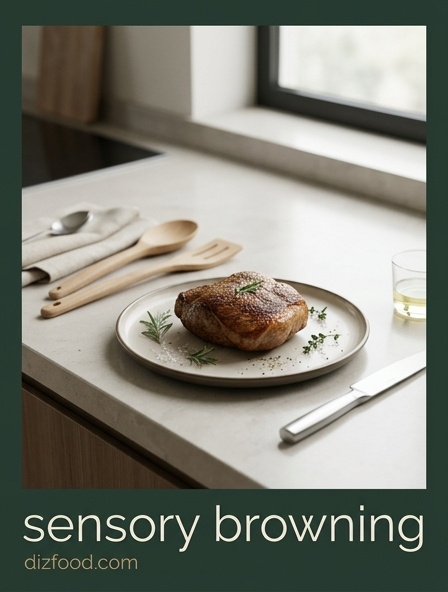
The Maillard reaction is the fundamental chemical process responsible for the complex flavors and enticing colors associated with browned foods in the kitchen. This non-enzymatic reaction occurs between reducing sugars and amino acids, typically accelerating at temperatures between 285°F and 330°F. When heat is applied, the reactive carbonyl group of the sugar reacts with the nucleophilic amino group of the amino acid, creating a diverse range of molecules that result in savory, nutty, and toasted aromas. In bread, this process transforms the pale dough into a golden-brown crust, altering the chemical structure of the surface.
- Temperature Threshold: Reactions begin noticeably at 140°C (284°F).
- pH Influence: Alkaline environments accelerate the browning process.
- Moisture Levels: Excess surface water inhibits the reaction by capping temperature at the boiling point.
- Product Diversity: Hundreds of different flavor compounds are created depending on the specific amino acids present.
Controlling this reaction is essential for achieving the perfect balance between flavor development and avoiding the bitter carbonization associated with burning. Chefs and engineers alike study these pathways to optimize the sensory profile of everything from seared steaks to the morning slice of toast.
Precision Heat Monitoring Systems
Modern kitchen technology relies heavily on precision heat monitoring to ensure consistent results across various cooking cycles. Traditional bimetallic strips are increasingly being replaced by sophisticated thermistors and infrared sensors that provide millisecond-accurate data to the control unit. These systems monitor the ambient temperature within the heating chamber as well as the surface temperature of the food item. By using Proportional-Integral-Derivative (PID) controllers, the appliance can make real-time adjustments to power output, preventing the "overshoot" common in older mechanical models.
This level of precision is particularly critical when dealing with consecutive use. For example, a toaster that has already been running for several cycles will have significant residual heat. A precision monitoring system detects this elevated starting temperature and reduces the active heating time accordingly. This ensures that the fifth slice of bread emerges with the same level of browning as the first. Without these sensors, the progressive heat buildup would inevitably lead to charred edges and uneven results, frustrating the user's expectations of a standardized culinary outcome.
Achieving Consistent Golden Hues
Consistency in browning is often the hallmark of a high-quality kitchen appliance. The visual appeal of a "golden" hue is a specific target that represents the ideal balance of the Maillard reaction without reaching the stage of pyrolysis. To achieve this, engineers utilize colorimetric standards to calibrate heating elements. This process involves measuring the light reflectance of the surface; as the bread browns, it reflects less light and absorbs more, a change that can be tracked with optical sensors.
| Browning Level | Surface Characteristic | Flavor Profile |
|---|---|---|
| Light | Pale yellow to gold | Mild, slightly sweet |
| Medium | Deep amber/golden | Nutty, toasted, complex |
| Dark | Rich brown | Bitter, bold, sharp |
By mapping these visual stages to specific thermal energy inputs, manufacturers can offer users a predictable scale of doneness. Maintaining this consistency across different batches requires the system to compensate for internal component drift and varying bread thicknesses, ensuring the "golden" target is hit every time the lever is pressed.
Sensory Technology and Toast Texture
The sensory experience of eating toast extends beyond flavor and color into the realm of haptics and acoustics. Sensory technology now allows for the quantification of "crunch" and "snap" through force-deformation testing and acoustic monitoring. High-end development labs use specialized microphones to capture the sound of a mechanical probe breaking the toasted surface. A higher frequency sound often correlates with a more desirable, brittle crust, while lower frequencies may indicate a leathery or under-toasted texture.
These sensory metrics are used to refine heating profiles. The goal is to create a gradient where the outer 1-2 millimeters are completely dehydrated and browned, while the interior remains soft and hydrated. Advanced sensors can detect the release of steam from the bread, which acts as a proxy for internal temperature. By monitoring the rate of moisture loss, the system can determine when the "crunch" factor has been optimized without drying out the crumb entirely. This integration of acoustic and thermal data represents the cutting edge of domestic kitchen engineering, focusing on the multi-sensory delight of the perfect bite.
Optimal Heat Distribution Methods
Uniform browning is impossible without a sophisticated strategy for heat distribution. In a confined kitchen environment, heat is transferred via radiation, conduction, and convection. Most toasters rely heavily on radiant heat from nichrome wires or quartz elements. However, the placement of these elements is vital; if they are too close to the food, "hot spots" occur, leading to a striped or blotchy appearance. To counter this, engineers design reflective internal shielding that bounces infrared waves in a diffuse pattern across the entire surface.
- Parallel Element Arrays: Ensures edge-to-edge coverage of the bread surface.
- Reflective Cavity Linings: Mirror-finished metals redirect stray heat back toward the center.
- Active Convection: Small fans circulate air to break up the boundary layer of moisture.
- Variable Height Control: Adjusts the distance between the food and the heat source.
Optimal distribution ensures that the corners of the bread, which tend to dry out and burn faster than the center, are protected from excessive intensity. By balancing the radiant flux across the vertical and horizontal axes, appliances can achieve a "wall-to-wall" brown that is visually stunning and culinarily superior.
Visual Cues for Perfect Doneness
While machines use sensors, the human element of cooking relies on visual cues to determine the moment of perfect doneness. The transition from white bread to a finished product involves a predictable spectrum of color changes. Initially, the surface appears to "matte" as moisture evaporates. Following this, a faint yellowing begins, which quickly transitions into the caramel and ochre tones synonymous with the Maillard reaction. Experts look for the "rimming effect," where the very edges of the crust turn a shade darker than the face of the bread, providing a structural and visual frame.
Another key visual cue is the appearance of surface texture. As the sugars caramelize, the surface may take on a slight sheen or "glassy" look before turning into the matte finish of well-developed toast. If smoke or rapid darkening of the edges is observed, it indicates that the temperature has exceeded the Maillard range and has entered carbonization. Understanding these visual markers allows for manual intervention, though modern smart appliances now use computer vision to "see" these changes just as a chef would, automatically halting the process at the peak of aesthetic and flavorful perfection.
Mastering the Crunch Factor
The "crunch factor" is a specific structural state achieved when the surface starch granules have undergone both gelatinization and subsequent dehydration. Achieving this requires a two-stage thermal approach. First, the heat must penetrate deep enough to set the structure, and second, the surface intensity must be high enough to create a brittle lattice. If the heat is too low, the bread becomes "zwieback" or twice-baked, turning hard throughout rather than just on the surface. Conversely, too much heat creates a thin, burnt skin over a soggy interior.
- Initial Dehydration: The surface moisture is driven off to allow temperature rise.
- Starch Transformation: High heat breaks down starch into smaller dextrins.
- Crust Formation: The chemical structure hardens into a crisp, airy matrix.
- Cooling Stabilization: As the bread cools, the crispness sets and becomes more audible.
Mastering this balance involves controlling the "ramp-up" time of the heating elements. A fast ramp-up preserves the internal moisture while focusing energy on the exterior, resulting in the coveted contrast between a crisp outer shell and a pillow-soft crumb that defines high-quality toasted goods.
Advanced Moisture Control Techniques
Moisture is the enemy of browning but the friend of texture. Managing this duality requires advanced moisture control techniques in the kitchen. When bread is heated, the water molecules move from the center toward the surface. If this steam is trapped, it "stews" the bread, preventing the temperature from rising above 212°F (100°C) and stalling the Maillard reaction. Advanced toasters and ovens utilize venting systems or "steam-burst" cycles to manage this vapor pressure.
In some high-end steam toasters, a small amount of water is added at the beginning of the cycle. This may seem counterintuitive, but the steam creates a thin film on the bread's surface that conducts heat more efficiently than dry air, leading to a more rapid and even initial cook. Once the steam dissipates, the surface dries quickly, creating a shatteringly crisp crust while the interior remains remarkably hydrated. This precise manipulation of the humidity within the cooking chamber represents a shift from simple heating to comprehensive atmospheric control, allowing for professional-grade results in a domestic setting.
Uniformity Across Different Bread Types
Different breads react uniquely to heat based on their chemical composition, density, and sugar content. A slice of white sandwich bread with high sugar content will brown much faster than a rustic, fermented sourdough. Achieving uniformity requires the appliance to understand these variables. For instance, the high fat and sugar in brioche make it prone to burning quickly, whereas a dense rye bread requires a longer, more intense heating cycle to achieve the same level of browning.
| Bread Type | Sugar Content | Browning Speed |
|---|---|---|
| White Bread | Medium-High | Fast |
| Sourdough | Low | Slow |
| Brioche | High | Very Fast |
| Whole Grain | Medium | Moderate |
To handle this diversity, smart algorithms allow users to select the specific grain or bread type. The system then adjusts the wattage and timing to compensate for the specific thermal properties of the loaf. This ensures that whether a user is toasting a gluten-free slice or a thick piece of artisanal muesli bread, the resulting color and texture remain perfectly consistent with their preferences.
Smart Algorithms for Even Browning
The final frontier in kitchen browning is the application of smart algorithms that govern the entire heating process. These algorithms use machine learning models trained on thousands of toasting cycles to predict how bread will respond to heat. They account for variables like ambient kitchen temperature, the voltage coming from the wall outlet, and even the altitude of the kitchen, which affects the boiling point of water and thus the browning rate. By synthesizing data from multiple sensors, the algorithm creates a dynamic heating curve.
These systems also feature "auto-compensation" for the age of the heating elements. Over time, radiant elements can lose efficiency; the smart algorithm detects the slower rise in temperature and increases the power or duration to maintain the desired output. Furthermore, "smart" toasters can remember user preferences across different types of bread, automatically refining the algorithm based on manual "stop" or "add time" inputs. This creates a personalized cooking experience where the machine learns the user's specific definition of "perfect toast," delivering it with mathematical precision every single morning.

Comments