
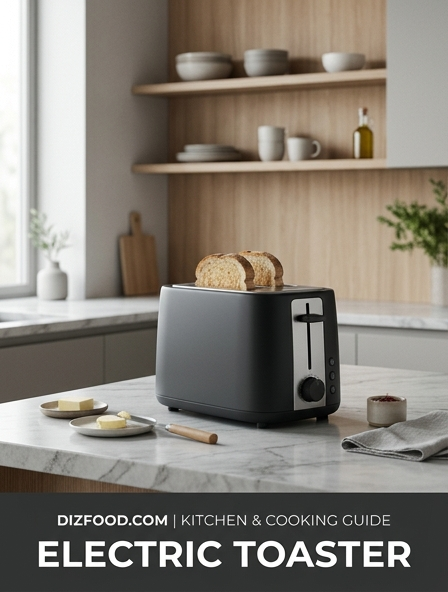
While there are many ways to crisp bread, nothing beats the convenience and consistency of a high-quality electric toaster for your morning routine. These specialized appliances take the guesswork out of breakfast by utilizing fixed heating elements and precision timing to deliver even browning across every inch of the slice. By providing a controlled environment, an electric toaster ensures your preferred level of crunch is repeatable every single day, making it the ultimate tool for achieving that elusive perfect slice. If you're curious about how traditional methods compare to modern convenience, explore the key differences in Stovetop Toasting Vs Electric Toasting.
Consistent Heat Distribution for Even Browning
The hallmark of a high-quality electric toaster is its ability to provide uniform heat across the entire surface of a bread slice. This is primarily achieved through the strategic arrangement of Nichrome heating elements. These wires are wound tightly around mica sheets, ensuring that infrared radiation is emitted evenly from top to bottom. Unlike rudimentary heating methods, modern toasters are engineered to minimize "cold spots," which often result in patchy or under-cooked edges.
To achieve the perfect golden-brown finish, the distance between the bread and the heating filaments is meticulously calibrated. If the bread is too close, it chars; too far, and it dries out before browning. By maintaining a consistent thermal environment, the toaster ensures that every batch of toast meets the same aesthetic and textural standards. This reliability is essential for those who value culinary consistency in their daily breakfast routine.
- Parallel filament alignment for edge-to-edge coverage.
- Mica sheet backing for efficient heat reflection.
- Centering guides that hold bread equidistant from heat sources.
- Optimized airflow to prevent localized overheating.
Precision Control Settings for Desired Crispness
Modern electric toasters offer a level of precision that transforms a simple kitchen task into a customizable culinary experience. The browning dial is not merely a timer; in many advanced models, it interacts with sophisticated circuitry to adjust the duration and intensity of the heat cycle. This allows users to achieve specific textures, ranging from a light, soft warmth to a deep, crunchy dark roast. Whether one is toasting artisanal sourdough or standard white bread, these settings provide the flexibility required for various densities.
- Level 1-2: Ideal for reheating or light toasting of delicate pastries.
- Level 3-4: The standard range for golden-brown sandwich bread.
- Level 5-7: Best for thick-cut bagels or dense rye that requires deep heat penetration.
This granularity in control ensures that the user never has to settle for "close enough." The integration of electronic sensors allows the toaster to compensate for the internal temperature of the device, ensuring that the second round of toast is just as precise as the first, despite the appliance already being warm.
Electric Toaster vs Oven Broiling Efficiency
When comparing the efficiency of an electric toaster to a standard kitchen oven for the purpose of browning bread, the specialized appliance is the clear winner in both energy consumption and speed. An oven requires a significant amount of time and electricity to preheat a large internal cavity just to toast a small surface area. In contrast, an electric toaster focuses energy exclusively on the small slots where the bread is placed, leading to immediate heat transfer and lower utility costs.
| Feature | Electric Toaster | Oven Broiling |
|---|---|---|
| Preheat Time | None | 5-10 Minutes |
| Energy Usage | Low (Focused) | High (Ambient) |
| Browning Control | Automatic Sensors | Manual Observation |
| Cleanup | Removable Crumb Tray | Requires Full Rack Cleaning |
The specialized nature of the toaster allows it to reach the Maillard reaction threshold much faster than a broiler. This efficiency not only saves time during a busy morning but also prevents the kitchen from unnecessarily heating up, making it a more sustainable choice for daily use.
Uniform Results with Specialized Heating Elements
The internal architecture of a toaster relies heavily on specialized heating elements designed to withstand repeated thermal expansion and contraction. Most traditional toasters utilize Nichrome wire, an alloy of nickel and chromium, which possesses high electrical resistance and forms a protective layer of chromium oxide when heated. This material is ideal because it does not oxidize easily at high temperatures, ensuring a long lifespan for the appliance and consistent performance over years of use.
In premium models, quartz heating elements are becoming more common. These tubes reach peak temperature almost instantly and emit a specific wavelength of infrared light that penetrates the bread more effectively. This technology results in a more uniform toast, as the heat is less dependent on air convection and more on direct radiant energy. By utilizing these specialized materials, manufacturers can guarantee that the heat output remains stable, preventing the fluctuations that lead to unevenly toasted bread or burnt corners.
The Advantage of Dedicated Toasting Sensors
One of the most significant advancements in kitchen technology is the inclusion of dedicated toasting sensors within electric toasters. Traditional toasters relied on simple bimetallic strips that would bend when heated to trigger the "pop-up" mechanism. While effective, these were often inconsistent. Modern sensors, however, monitor the actual surface temperature of the bread or the moisture levels being released, providing a much higher degree of accuracy.
- Internal Thermistors: Monitor the toaster's ambient heat to prevent over-browning on consecutive cycles.
- Optical Sensors: Some high-end models use light sensors to "see" the color of the bread in real-time.
- Voltage Compensation: Ensures that fluctuations in home power supply do not affect the toasting time.
- Humidity Detectors: Adjust the cycle based on how much moisture is left in the bread.
These sensors remove the guesswork from the process. If the toaster is already hot from a previous cycle, the sensor will automatically shorten the next cycle to ensure the toast comes out identical to the first batch. This intelligence is what separates a basic appliance from a high-performance kitchen tool.
Preserving Internal Moisture and Bread Texture
The secret to a perfect piece of toast lies in the contrast between a crisp exterior and a soft, moist interior. This balance is difficult to achieve without the rapid, intense heat provided by an electric toaster. Because the toaster applies high heat directly to the surface of the bread, it triggers the Maillard reaction quickly-the chemical process that creates the brown color and savory flavor-before the heat has a chance to evaporate all the moisture from the center of the slice.
If bread is toasted too slowly, such as in a low-temperature oven, it dehydrates completely, turning into a hard, brittle rusk. An electric toaster's ability to "flash-sear" the surface locks in the remaining water molecules, preserving the crumb's elasticity. This is particularly important for artisanal breads like brioche or ciabatta, where the internal texture is just as vital to the eating experience as the crunch of the crust. The result is a superior mouthfeel that combines structural integrity with a tender bite.
User Friendly Design for Morning Routine Convenience
In the context of a busy morning, the user interface and physical design of an electric toaster contribute significantly to its value. Designers focus on ergonomics and intuitive controls to ensure the appliance is accessible to everyone. Features such as high-lift levers allow users to retrieve small items like English muffins without the risk of burning their fingers. Additionally, the inclusion of wide slots accommodates various bread thicknesses, from thin sandwich slices to hand-cut artisan loaves.
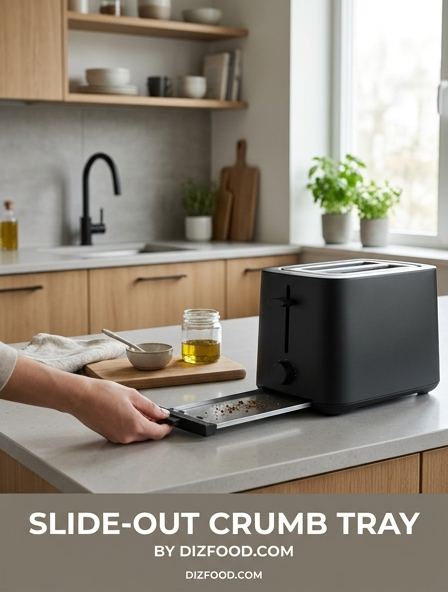
Maintenance is another critical aspect of user-friendly design. A well-placed, removable crumb tray prevents the buildup of carbonized debris, which can cause smoke or even fire hazards. The exterior housing is often constructed with "cool-touch" materials, ensuring that the outer shell remains safe to handle even during extended use. These thoughtful design choices streamline the breakfast process, allowing users to focus on their meal rather than struggling with the appliance.
- Extra-wide slots for versatile bread selection.
- Illuminated buttons for clear operation in low light.
- Non-slip feet to ensure stability on countertops.
- Integrated cord storage for a clutter-free kitchen.
Customized Functions for Bagels and Pastries
Standard bread toasting is just one aspect of the modern toaster's capabilities. Specialized functions have been developed to handle the unique requirements of different baked goods. For example, the "Bagel" setting is a sophisticated feature that alters the power distribution to the heating elements. In this mode, the inner elements operate at full power to toast the cut side of the bagel, while the outer elements are reduced or turned off to gently warm the crust without burning it.
- Defrost Function: Gradually thaws frozen bread before transitioning into the toast cycle.
- Reheat Mode: Warms a previously toasted slice without further browning it.
- Cancel Button: Provides an immediate override for safety and precision.
- Pastry Setting: Designed for lower temperatures to prevent sugar glazes from burning.
These customized settings ensure that more complex items are treated with the appropriate thermal profile. By recognizing that a frozen waffle requires a different heat curve than a fresh slice of white bread, the electric toaster becomes a versatile tool capable of handling a wide array of breakfast favorites with ease.
Reliable Timing Mechanisms for Consistent Results
The evolution of timing mechanisms in electric toasters highlights the transition from mechanical engineering to digital precision. Early models used clockwork timers, which were prone to wear and tear. These were eventually replaced by bimetallic strips that used thermal expansion to trip the release catch. While charmingly simple, these mechanical systems lacked the ability to adapt to varying conditions, such as the initial temperature of the toaster or the ambient humidity of the kitchen.
Today, most toasters utilize electronic timers integrated with a capacitor and a simple microprocessor. When the lever is pushed down, the capacitor begins to charge; once it reaches a specific voltage, an electromagnet is released, and the toast pops up. This electronic method is far more reliable and allows for the "bit more" or "quick look" features found on modern machines. By providing a stable and repeatable countdown, these mechanisms ensure that users receive the exact level of browning they expect every single time they use the appliance.
Safety and Speed in Modern Kitchen Toasting
Safety is a paramount concern in the design of modern electric toasters, given the combination of high heat and electrical components. Manufacturers integrate several fail-safe features to protect the user and the home. Automatic shut-off functions are now standard, ensuring that if bread becomes jammed in the slots, the heating elements will cut out immediately to prevent overheating or fire. Furthermore, the use of grounded plugs and polarized cords reduces the risk of electrical faults in a kitchen environment where water may be present.
Speed is the other major factor in the popularity of the electric toaster. High-wattage elements (ranging from 800 to 1500 watts) allow the appliance to reach browning temperatures in seconds. This rapid heating cycle is essential for modern lifestyles where efficiency is prioritized. By combining this speed with robust safety protocols, the electric toaster remains one of the most trusted and essential appliances in the contemporary kitchen.
- Automatic jam protection and power cutoff.
- Shielded heating elements to prevent direct contact.
- Internal heat shields to protect countertop surfaces.
- High-wattage performance for sub-two-minute toasting.

Comments