
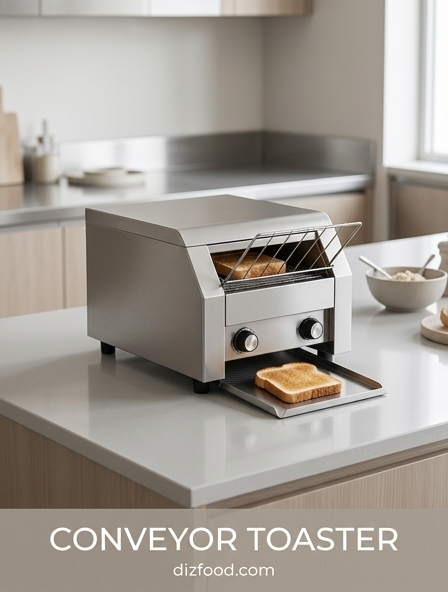
Maximizing Throughput with High Volume Conveyor Toasters
In high-traffic commercial kitchens, the ability to process hundreds of slices of bread per hour is not just a luxury but a fundamental operational requirement. High-volume conveyor toasters are engineered to handle the relentless demands of peak service periods, ensuring that the kitchen line never stalls due to a bottleneck at the bread station. Unlike standard pop-up units, these machines utilize a continuous belt system that allows for a steady stream of products to move through the heating chamber without interruption. This ensures a consistent output that can range from 300 to over 1,000 slices per hour depending on the specific model and power rating.
- High-speed conveyor belts reduce individual wait times for toasted items.
- Front-loading designs allow for rapid insertion of multiple bread types.
- Heated holding areas keep finished products warm during high-demand windows.
- Dual-belt configurations allow for simultaneous processing of different items.
By integrating a high-capacity unit, operators can effectively manage the surge of a morning breakfast rush or a busy lunch service. The continuous motion of the conveyor means that as soon as one slice exits, another is ready to be plated, facilitating a rhythmic and predictable kitchen environment.
Consistent Toasting Results for Quality Control
Uniformity is the hallmark of a professional kitchen, and conveyor toasters provide a level of consistency that manual methods simply cannot replicate. By controlling the speed of the belt and the intensity of the heating elements, these machines ensure that every slice of bread achieves the exact same level of browning and crispness. This precision is vital for maintaining brand standards across different shifts and various staff members. When customers receive a perfectly toasted sandwich or bagel every time they visit, it builds trust and encourages repeat business.
| Feature | Impact on Quality |
|---|---|
| Variable Belt Speed | Controls duration of heat exposure for precise browning. |
| Independent Heat Controls | Adjusts top and bottom elements for different textures. |
| Insulated Chambers | Maintains steady internal temperatures despite ambient kitchen heat. |
Advanced sensor technology in modern units can even detect fluctuations in voltage or ambient temperature, making micro-adjustments to the belt speed to compensate. This automated quality control minimizes food waste caused by burnt or under-toasted products, directly contributing to the bottom line while satisfying guest expectations for every order served.
Streamlining Breakfast Service Workflow
The morning rush is often the most stressful period for any food service operation, requiring rapid coordination and efficient movement. A conveyor toaster acts as a central hub for breakfast production, allowing staff to focus on more complex tasks like egg preparation or plating while the bread components are handled automatically. To optimize the workflow during these hours, the placement and operation of the toaster must be strategically planned within the kitchen layout.
- Position the toaster near the prep station to reduce footsteps for assembly.
- Set specific belt speeds early in the shift based on the day's bread inventory.
- Designate a "toast runner" to clear the discharge chute and organize orders.
- Utilize the top warming tray for pre-staging butter or holding small batches.
By creating a dedicated station for toasting, the kitchen avoids the chaos of multiple chefs crowding around a single appliance. The predictable exit point of the finished product allows for a linear assembly line, where toasted items are immediately buttered, topped, and sent to the pass. This systematic approach reduces the total ticket time and ensures that the breakfast service remains fluid even during peak capacity.
Versatile Heat Settings for Diverse Menu Items
Modern menus often feature a wide variety of baked goods, from dense sourdough and thick-cut Texas toast to delicate brioche buns and chewy bagels. A one-size-fits-all heating approach is insufficient for such diversity. Conveyor toasters solve this by offering sophisticated heat management systems that can be tailored to the specific moisture content and thickness of different items. Operators can adjust the top and bottom heating elements independently, which is crucial for items like bagels that require a toasted cut side and a warmed exterior.
- High heat/low speed settings for dense, frozen items that need core warming.
- Low heat/high speed for thin pastries that brown quickly.
- One-sided toasting modes specifically designed for buns and bagels.
- Standby modes that keep the unit warm but reduce energy during slow periods.
This versatility allows a single machine to serve as a multipurpose tool, handling everything from the morning bagel service to the lunch burger bun caramelization. The ability to switch between settings quickly ensures that the kitchen can pivot between different menu requirements without significant downtime or the need for multiple specialized appliances taking up valuable space.
Reducing Labor Costs through Automated Toasting
Labor remains one of the highest expenses in the hospitality industry, making automation a key strategy for maintaining profitability. A conveyor toaster essentially replaces the need for a dedicated staff member to stand over a grill or watch a pop-up toaster. Once the bread is placed on the belt, the machine takes over the entire cooking process, freeing up the cook to perform higher-value tasks such as protein cooking or garnishing. This "set and forget" functionality is essential in fast-paced environments where every second counts.
- Minimizes the training required for entry-level staff to achieve perfect results.
- Reduces the risk of human error, such as forgetting a slice on the flat top.
- Allows for a smaller kitchen crew to handle higher customer volumes.
- Decreases active prep time per order, increasing overall labor efficiency.
The automated nature of these devices means that even during staffing shortages, the quality of the toasted components remains high. By shifting the responsibility of timing and heat management to the machine, the kitchen can operate with leaner teams without compromising the speed of service or the final presentation of the food.
Energy Efficient Features for Commercial Kitchens
Commercial kitchens are notorious for high energy consumption, and traditional toasters that remain fully powered all day contribute significantly to utility costs. However, modern conveyor toasters are designed with energy conservation in mind. Many units now feature "power saver" or "standby" modes that reduce energy consumption by up to 75% during idle periods. These systems allow the heating elements to dim when no bread is detected on the belt, yet they can return to full operating temperature in seconds once service resumes.
| Energy Feature | Benefit for Kitchen Operators |
|---|---|
| Power Save Mode | Reduces electricity bills during off-peak hours. |
| Cool-Touch Exterior | Prevents heat loss and reduces air conditioning load. |
| Reflective Liners | Directs infrared heat toward the food, not the room. |
Furthermore, the use of high-efficiency infrared heating elements allows for faster heat-up times and deeper penetration of heat into the bread, which uses less power overall compared to traditional metal sheathed elements. By investing in energy-efficient conveyor toasting technology, businesses can significantly lower their overhead while maintaining high performance standards throughout the day.
Compact Designs for Optimized Counter Space
Kitchen real estate is often at a premium, requiring appliances to provide maximum output within a minimal footprint. Manufacturers have responded by developing compact conveyor toasters that deliver high-volume performance without dominating the workspace. Many of these units are designed with narrow widths and vertical orientations, allowing them to fit into tight spaces on a prep line or a service counter. Additionally, some models offer stackable configurations, enabling a kitchen to double its toasting capacity by utilizing vertical space rather than additional counter width.
- Rear or front discharge options to fit various counter depths.
- Wall-mount brackets for specific specialized kitchen layouts.
- Internalized cooling fans that allow for close placement next to other equipment.
- Lightweight construction for easy repositioning during cleaning or service changes.
The thoughtful design of these machines often includes integrated cord storage and low-profile legs, ensuring that they do not interfere with other kitchen operations. For smaller cafes or food trucks, these compact units are indispensable, providing the power of industrial toasting in a frame that respects the constraints of a limited environment.
Easy Maintenance for Long Term Reliability
To ensure that a conveyor toaster remains a reliable asset in a busy kitchen, it must be easy to clean and maintain. Daily use leads to the accumulation of crumbs and grease, which can affect performance and pose a fire hazard if not addressed. Modern conveyor toasters are built with user-friendly maintenance features that allow staff to perform routine cleaning quickly and thoroughly. Stainless steel construction is standard, providing a durable surface that resists corrosion and is easy to sanitize.
- Removable crumb trays catch debris and can be emptied in seconds.
- Easy-to-access conveyor belts allow for brushing away stuck particles.
- Snap-out heating element guards facilitate deep cleaning of the interior.
- External surfaces are designed with minimal crevices to prevent grime buildup.
Regular maintenance not only ensures food safety but also extends the lifespan of the heating elements and the motor. Many units also feature self-lubricating drive chains and high-temperature bearings that reduce the need for technical servicing. By following a simple daily cleaning schedule, operators can prevent common mechanical failures and ensure that the toaster provides consistent service for many years, maximizing the return on investment.
Improving Order Accuracy and Speed
In the context of a quick-service restaurant or a busy cafeteria, order accuracy is directly linked to speed. Conveyor toasters contribute to this by providing a predictable and visible process. When a cook places an item on the belt, the clear progress of the bread through the machine helps staff time the rest of the meal assembly perfectly. This synchronization reduces the time food sits under a heat lamp, ensuring the customer receives a fresh, hot product. The speed of the conveyor can be fine-tuned to match the exact pace of the kitchen's assembly line.
- Standardized color settings eliminate guesswork for staff.
- Faster throughput reduces the likelihood of orders backing up.
- Visible progress allows for better coordination between kitchen stations.
- Reduced manual handling decreases the chance of dropping or damaging items.
Furthermore, because the machine handles the timing automatically, there is no risk of a "forgotten" slice burning while a cook is distracted by another task. This reliability ensures that the pace of the kitchen remains steady, preventing the frantic "catch-up" periods that often lead to mistakes in order customization or plating, ultimately resulting in a more professional service.
Essential Features of Modern Conveyor Toasters
When selecting a conveyor toaster for a commercial environment, several essential features should be considered to ensure the unit meets the specific needs of the operation. Modern technology has introduced a range of enhancements that improve safety, efficiency, and food quality. One of the most important features is "Cool-Touch" technology, which uses double-walled insulation and cooling fans to keep the exterior of the machine at a safe temperature, protecting staff from accidental burns in cramped quarters.
- Digital controls for precise and repeatable speed and heat settings.
- Infrared heating elements for rapid heat-up and energy efficiency.
- Automatic shut-off sensors to prevent overheating or belt jams.
- Adjustable opening heights to accommodate bagels, buns, or thick breads.
Another critical feature is a robust motor and drive system designed for continuous duty. In a commercial setting, the conveyor must move smoothly for hours at a time without stuttering or slipping. High-quality stainless steel belts are also preferred for their longevity and ease of cleaning. By focusing on these essential features, kitchen managers can choose a machine that not only performs exceptionally well under pressure but also provides a safe and user-friendly experience for the entire culinary team.



Comments