
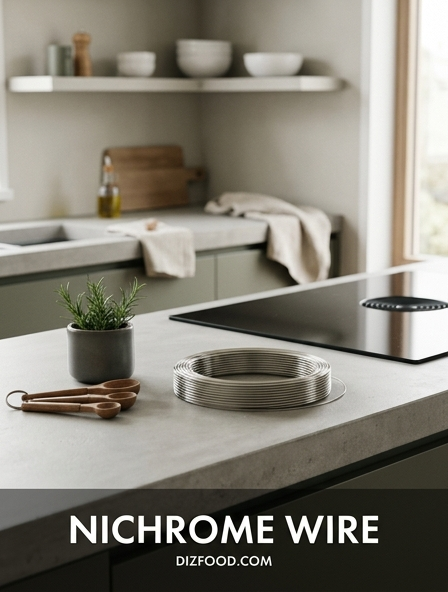
Understanding Nichrome Alloy Properties
Nichrome is a non-magnetic alloy primarily composed of nickel and chromium, often in a ratio of 80% nickel to 20% chromium. This specific formulation is engineered to provide high electrical resistivity and a remarkably high melting point, making it the industry standard for heating elements in kitchen appliances. Unlike standard copper wiring, which would melt or oxidize rapidly under intense thermal loads, nichrome remains stable and functional even when heated to glowing red temperatures. This stability is due to the unique atomic structure of the alloy, which resists the flow of electrons just enough to convert electrical energy into heat through Joule heating.
- High melting point: Approximately 1,400 degrees Celsius.
- High electrical resistivity: Ensures efficient heat generation.
- Ductility: Allows the wire to be coiled into tight shapes for compact appliances.
- Stable resistance: Maintains consistent performance across varying temperatures.
In the context of the kitchen, these properties allow manufacturers to create thin, lightweight heating elements that can withstand thousands of heating and cooling cycles without becoming brittle or losing their conductive properties. This makes nichrome the backbone of modern cooking technology.
Superior Heat Resistance in Commercial Toasters
Commercial kitchen environments demand equipment that can operate continuously during peak hours without failure. In a high-volume toaster, the heating elements must reach temperatures exceeding 1,100 degrees Celsius almost instantly and maintain that heat for hours. Nichrome wire is uniquely suited for this task because it does not lose its mechanical strength when heated. While other metals might soften or sag under their own weight when reaching high temperatures, nichrome maintains its shape and tension. This prevents the wire from touching metal housings or short-circuiting against other internal components.
Furthermore, the thermal expansion coefficient of nichrome is relatively low, meaning it does not significantly grow or shrink during the rapid temperature fluctuations common in a busy diner or bakery. This dimensional stability ensures that the spacing between the wire coils remains uniform, which is essential for safety and performance. Without the superior heat resistance of nichrome, commercial toasters would require frequent element replacements, leading to increased operational costs and potential fire hazards in professional settings where heat management is critical for staff safety and food quality.
Oxidation Resistance for Long Term Use
One of the most significant challenges for any metal used in a kitchen is the presence of oxygen, moisture, and fats. When most metals are heated, they react with oxygen to form a brittle oxide layer that eventually flakes off, thinning the wire until it snaps. Nichrome solves this problem through a self-protecting mechanism. When heated for the first time, the chromium in the alloy reacts with oxygen to form a thin, adherent layer of chromium oxide. This layer acts as a barrier, preventing further oxygen from reaching the inner nickel-chromium core.
| Property | Nichrome Benefit |
|---|---|
| Surface Barrier | Chromium oxide prevents deep corrosion. |
| Adhesion | Oxide layer sticks firmly even when expanding. |
| Durability | Resists degradation from steam and kitchen grease. |
Because this protective layer is extremely stable, nichrome elements can last for years in humid kitchen environments. This resistance to oxidation is why a toaster or waffle iron can be used daily for a decade without the heating element failing, despite being exposed to various food particles and moisture during the cooking process.
Rapid Heating Performance in Heavy Duty Appliances
In a fast-paced professional kitchen, speed is a vital component of efficiency. Appliances such as salamanders, high-speed ovens, and heavy-duty griddles rely on the rapid heating performance of nichrome wire to minimize preheating times. Because nichrome has a high resistivity, it converts electricity into thermal energy with incredible speed. Within seconds of power application, a nichrome coil can transition from room temperature to a bright orange glow, emitting the infrared radiation necessary for searing meats or melting cheese.
This rapid response time is also critical for precision cooking. Modern digital kitchen appliances use sensors to cycle the power on and off to maintain a specific temperature. Nichrome's ability to heat up and cool down predictably allows these control systems to manage thermal output with high accuracy. In heavy-duty appliances where throughput is measured in hundreds of servings per hour, the instantaneous nature of nichrome heating ensures that the kitchen never falls behind. This performance ensures that chefs can rely on their equipment to be ready the moment an order is placed, maintaining the flow of the service line without unnecessary delays.
Consistent Heat Distribution for Perfect Toasting
Uniformity is the hallmark of professional food preparation. Whether it is a slice of sourdough or a bagel, customers expect even browning across the entire surface area. Nichrome wire excels in this regard due to its consistent internal resistance. Manufacturers can precisely calculate the length and gauge of the wire to ensure that heat is emitted evenly along the entire length of the heating element. This eliminates "cold spots" that often plague cheaper or poorly designed appliances using inferior alloy substitutes.
- Precise wire winding ensures even spacing between heat sources.
- The high emissivity of nichrome translates to better radiant heat transfer.
- Constant resistance prevents localized overheating or "hot spots" on the food.
In a toaster, the nichrome wire is typically wound around mica sheets. The combination of the reflective properties of the appliance interior and the consistent output of the nichrome wire ensures that the heat reaches the bread from all angles. This level of control is why nichrome is preferred for delicate tasks like browning pastries, where a few degrees of variance can mean the difference between a golden finish and a burnt product.
Structural Integrity Under High Temperatures
When metal is subjected to extreme heat, it undergoes a process called "creep," where it slowly deforms over time. In a kitchen appliance, this can be disastrous; a sagging heating element could touch a plastic casing or come into contact with the food itself. Nichrome is specifically valued for its high creep resistance. Even at temperatures where other alloys would become soft and pliable, nichrome maintains a high degree of structural integrity. This allows engineers to design vertical heating elements, such as those found in rotisseries or vertical broilers, without worrying about the coils collapsing over time.
This structural strength also contributes to the safety of the appliance. A wire that maintains its shape is less likely to suffer from mechanical fatigue or vibration-induced breakage. In busy commercial kitchens where appliances might be moved, bumped, or cleaned vigorously, the robustness of nichrome ensures that the internal heating components remain in their designated positions. This long-term structural stability reduces the risk of electrical shorts and ensures that the appliance remains compliant with safety standards throughout its operational life, providing peace of mind to business owners and home cooks alike.
Energy Efficiency of Nichrome Heating Elements
While often overlooked, the energy efficiency of heating elements is a major factor in the design of modern green kitchens. Nichrome wire is highly efficient at converting electrical energy into radiant heat. Because almost 100% of the electricity passing through the wire is converted into heat, there is very little "lost" energy in the system. This efficiency is critical for appliances like convection ovens and air fryers, where maintaining a specific thermal profile is necessary without excessive power draw. The ability of nichrome to operate effectively at thinner gauges also means that less energy is required to heat the mass of the element itself.
By reaching cooking temperatures faster, nichrome-based appliances reduce the total time the unit must be powered on. In a commercial setting, where dozens of appliances may be running simultaneously, this cumulative efficiency can lead to significant savings on utility bills. Furthermore, the longevity of nichrome means that the energy embedded in the manufacturing and shipping of the appliance is amortized over a longer period, reducing the overall environmental footprint of the kitchen. This makes nichrome not just a performance choice, but a sustainable one for the modern culinary industry.
Minimizing Downtime with Durable Alloys
In the restaurant industry, equipment failure during a dinner rush can result in lost revenue and dissatisfied customers. Nichrome wire is a key component in minimizing this downtime. Its durability stems from its ability to withstand thermal shock-the rapid change from cold to hot. Many materials would crack or shatter under these stresses, but nichrome's ductile nature allows it to expand and contract without compromising its internal structure. This reliability ensures that the toaster, grill, or oven works every time the switch is flipped.
- Reduced frequency of heating element burnouts.
- Resilience against physical shocks and kitchen vibrations.
- Lower maintenance requirements for heating assemblies.
- Ease of replacement in modular heating systems.
When maintenance is eventually required, the standardized nature of nichrome wire makes it easy for technicians to source parts and perform repairs. However, because nichrome is so resistant to the common causes of element failure-such as oxidation, sagging, and melting-repairs are rarely needed. For a professional kitchen, this translates to higher uptime and a more predictable workflow, allowing the staff to focus on food preparation rather than equipment troubleshooting.
Impact on Kitchen Appliance Longevity
The lifespan of a kitchen appliance is often dictated by the survival of its heating element. Once the element breaks, the appliance is usually rendered useless. By using high-grade nichrome wire, manufacturers significantly extend the lifecycle of their products. This is particularly important for high-end consumer appliances and heavy-duty commercial gear where the initial investment is substantial. Nichrome's ability to remain chemically and physically stable over thousands of hours of operation ensures that the consumer receives value for their money. This longevity is a primary differentiator between "throwaway" appliances and professional-grade tools.
Furthermore, the resistance of nichrome to common kitchen contaminants, such as salt and acidic vapors from cooking, prevents the premature corrosion that often destroys lesser metals. In environments like pizzerias or bakeries, where flour dust and high heat are constant, the robust nature of nichrome is essential. By preventing the heating element from becoming the "weakest link," nichrome allows other components, like high-quality stainless steel casings and digital controllers, to fulfill their full potential. This results in a cohesive, long-lasting product that can withstand the rigors of daily use for many years.
Why Professional Kitchens Rely on Nichrome
Professional kitchens are high-stress environments where every piece of equipment must earn its place through reliability and performance. Nichrome has earned its status as the "gold standard" for heating because it offers a perfect balance of properties that no other affordable alloy can match. From the high-speed searing required for a steak to the gentle, consistent heat needed for a delicate souffle, nichrome provides the necessary thermal control. Its ability to operate at extreme temperatures without losing its shape or oxidizing ensures that the kitchen remains safe and productive at all times.
Chefs and kitchen managers rely on nichrome-based appliances because they offer predictable results. When a recipe calls for a specific temperature, the fast response and even distribution of nichrome heating elements ensure that the food is cooked exactly as intended. Moreover, the cost-effectiveness of nichrome makes it possible to have high-performance heating in everything from the smallest hand-held torch to the largest industrial oven. Ultimately, the ubiquity of nichrome in the kitchen is a testament to its unparalleled durability, efficiency, and performance in the most demanding culinary applications world-wide.

Comments