
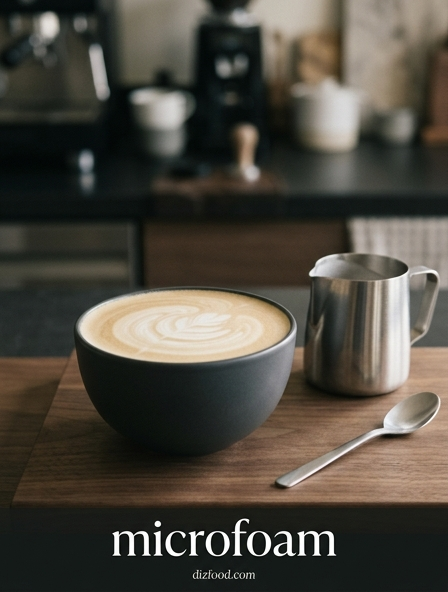
The Science of Microfoam Density
Microfoam is a colloidal suspension consisting of millions of microscopic air bubbles encapsulated within a liquid milk matrix. Unlike the stiff, dry foam found on traditional cappuccinos, true microfoam is a "wet foam" characterized by its high density and fluid mobility. The creation of this substance relies on the denaturation of milk proteins, specifically whey and casein. When steam is injected into the milk, these proteins unfold and wrap around the air molecules, creating a stable membrane that prevents the bubbles from coalescing into larger, visible pockets of air.
The density of the microfoam is determined by the ratio of air to liquid and the uniformity of the bubble size. Ideally, the bubbles are so small that they are invisible to the naked eye, giving the milk a glossy, reflective surface similar to wet paint. This structural integrity allows the foam to remain suspended within the liquid espresso during pouring, which is essential for creating complex latte art. If the density is too low, the foam will dissipate quickly; if it is too high, it becomes overly viscous and loses its ability to flow through the narrow stream required for intricate designs.
Optimal Milk Temperature for Elasticity
Temperature plays a critical role in the structural elasticity and perceived sweetness of microfoam. As milk is heated, the lactose becomes more soluble, increasing the sweetness of the beverage. However, exceeding specific temperature thresholds can cause the proteins to permanently break down, leading to a loss of foam stability and a burnt flavor profile. Most baristas aim for a final temperature between 55°C and 65°C to achieve the perfect balance of texture and taste.
| Temperature Range | Milk State and Texture |
|---|---|
| 4°C - 37°C | Cold/Lukewarm: Unstable bubbles; difficult to integrate. |
| 55°C - 65°C | Optimal: High elasticity, maximum sweetness, silky finish. |
| 70°C+ | Scalded: Proteins denature completely; foam collapses; sulfurous notes. |
Maintaining elasticity is vital for the longevity of the foam. When milk is textured within the optimal range, the protein structures remain flexible enough to stretch during the pouring process. Once the milk surpasses 70°C, the chemical bonds are destroyed, and the microfoam loses its glossy sheen, turning into a rigid, clumped texture that is difficult to manipulate for latte art or consistent mouthfeel.
Steam Wand Positioning and Angle
The physical placement of the steam wand determines the efficiency of both aeration and the subsequent mixing phase. To achieve a high-quality microfoam, the wand should be positioned slightly off-center in the pitcher, roughly halfway between the middle and the edge. This placement facilitates a natural vortex, or whirlpool effect, which is necessary for pulling large bubbles down into the liquid and breaking them into microscopic particles. The angle of the wand should be approximately 15 to 30 degrees relative to the surface of the milk.
If the wand is placed directly in the center, the air will simply rise back to the top without being properly integrated, resulting in a layer of dry foam sitting atop hot milk. Conversely, if the wand is too close to the side, it may create turbulent splashing rather than a smooth rotation. By finding the "sweet spot" near the pitcher wall, the barista can control the velocity of the milk flow. This controlled movement ensures that the heat is distributed evenly while the air is sheared into the smallest possible units, creating that coveted liquid-silk appearance.
The Two Phases of Aeration
Texturing milk is traditionally divided into two distinct functional phases that must be executed in sequence to produce high-quality microfoam. The transition between these phases is usually determined by the temperature of the milk as felt through the side of the pitcher.
- Stretching: This is the initial phase where air is introduced. The tip of the steam wand is kept near the surface, creating a "paper-tearing" sound. This should be completed before the milk reaches body temperature (approx. 37°C).
- Texturing (Rolling): Once enough air is introduced, the wand is submerged slightly deeper to stop the intake of air and focus on the vortex. This phase breaks down the bubbles and integrates them into a homogenous mixture.
Failure to separate these phases often results in poor texture. If stretching continues for too long, the foam becomes too thick and stiff. If stretching is skipped or cut short, the milk will be hot but thin, lacking the body required for a proper latte or flat white. Precision in the first 10 seconds of the steaming process is the most defining factor in the final quality of the microfoam.
Rolling the Milk for Consistency
The "rolling" phase is arguably the most important step for achieving a professional finish. After the initial aeration or stretching is complete, the goal shifts entirely to circulation. By submerging the steam wand tip just a few millimeters deeper into the milk, the barista stops the "hissing" sound and focuses on the kinetic energy of the steam to spin the milk. This whirlpool effect acts as a mechanical blender, shearing any remaining large bubbles into the microfoam matrix and ensuring that the foam and liquid milk are perfectly emulsified.
A consistent roll prevents the milk from separating into layers. In a poor texture job, the air quickly rises to the top, leaving watery milk at the bottom. A strong, consistent roll keeps the micro-bubbles trapped in a state of suspension throughout the entire volume of the pitcher. The visual indicator of a successful roll is the disappearance of any matte surface bubbles, replaced by a uniform, glossy reflection. The process should continue until the pitcher becomes too hot to touch comfortably, at which point the steam must be turned off immediately to preserve the protein structure.
Choosing the Right Milk Pitcher
The design of the milk pitcher, often called a frothing jug, significantly influences the barista's ability to control the flow and texture of the milk. Professional pitchers are typically constructed from high-grade stainless steel, which provides excellent thermal conductivity, allowing the user to monitor temperature changes accurately through the palm of their hand. The shape and volume of the pitcher must be matched to the size of the drink being prepared.
- Spout Shape: Sharp, narrow spouts are preferred for intricate latte art (like rosettas), while rounded spouts are better for broader patterns (like hearts or tulips).
- Wall Taper: A slight inward taper helps concentrate the vortex, making it easier to roll the milk.
- Handle Ergonomics: The handle should allow for a comfortable grip that permits micro-adjustments in the wrist during the pour.
Using a pitcher that is too large for the amount of milk being steamed will result in poor vortex control, as the steam wand may not reach the liquid effectively. Conversely, an overfilled pitcher will likely overflow during the stretching phase. Most baristas fill the pitcher to just below the start of the spout to allow for the volume expansion that occurs during aeration.
Impact of Milk Fat and Proteins
The chemical composition of the milk used is the primary variable in foam stability and mouthfeel. Milk proteins, specifically caseins and whey proteins, are the structural engineers of microfoam. When heated, these proteins create a protective coating around air bubbles. Caseins contribute to the overall stability, while whey proteins contribute to the elasticity and the ability of the foam to stretch. Without these proteins, as seen in some low-quality non-dairy alternatives, the foam would collapse almost instantly.
Fat content, on the other hand, influences the flavor and the "silky" sensation on the palate. Whole milk is generally considered the gold standard for microfoam because the fat provides a heavy, luxurious mouthfeel that balances the acidity of the coffee. However, high fat content can sometimes suppress foam volume because the lipids can interfere with the protein bonds. Skim milk creates very stable, stiff foam due to the high protein-to-fat ratio, but it often lacks the creamy texture and integrated sweetness required for high-end specialty coffee. Most professional baristas prefer whole milk for its superior balance of structural integrity and flavor.
Common Texturing Mistakes to Avoid
Achieving perfect microfoam is a technical skill that requires avoiding several common pitfalls. One of the most frequent errors is "over-stretching," where air is introduced for too long. This creates a texture similar to shaving cream, which is too stiff to pour into art and creates an unpleasant, dry sensation in the mouth. Another common issue is failing to purge the steam wand before and after use, which can lead to water dilution or milk buildup inside the wand.
- Screaming Milk: A high-pitched screeching sound usually indicates the wand is too deep or there is not enough air, preventing a vortex.
- Burping the Milk: Adding air too late in the process creates large bubbles that cannot be broken down because the milk is already too hot.
- Overheating: Steaming past 70°C kills the flavor and destroys the microfoam's glossy surface.
Furthermore, many beginners fail to keep the pitcher still. Moving the pitcher up and down rapidly during the stretching phase creates inconsistent bubble sizes. Stability is key; once the wand is positioned to create a vortex, the pitcher should remain as steady as possible to allow the mechanical action of the steam to do the work of refinement.
Conditioning the Foam Before Pouring
The work does not end when the steam wand is turned off. "Conditioning" the milk is the process of preparing it for the pour to ensure it remains homogenous. As soon as the steaming is finished, the milk begins to separate, with the lighter foam rising to the top. To prevent this, baristas use a combination of tapping and swirling. Tapping the pitcher firmly on a flat surface helps pop any residual large surface bubbles that were not incorporated during the rolling phase.
Swirling is the most critical part of conditioning. By moving the pitcher in a circular motion, the barista keeps the microfoam and the liquid milk integrated. The milk should look like glossy, melted marshmallows or wet paint. If the milk sits for even ten seconds without being swirled, the foam will begin to "set," making it difficult to achieve clean lines during latte art. If the foam has become too stiff, a small amount of liquid milk can sometimes be swirled back in to loosen the texture, though it is always better to pour immediately after the texturing process is complete.
Troubleshooting Thin or Bubbling Texture
If your milk consistently turns out thin and watery, the primary culprit is usually insufficient aeration during the "stretching" phase. This occurs when the steam wand tip is submerged too deeply from the beginning, preventing air from being pulled into the milk. To fix this, ensure the tip is just at the surface for the first few seconds until the volume has increased by approximately 20-30%. The sound should be a crisp, controlled "tch-tch-tch" rather than a deep rumble or a violent splash.
Conversely, if the texture is covered in large, "dish soap" bubbles, it indicates that the air was introduced too aggressively or the vortex was not strong enough to break them down. This often happens if the steam wand is held in the center of the pitcher, which prevents the milk from spinning. To resolve bubbling, focus on the off-center positioning to create a high-velocity whirlpool. If bubbles still persist after steaming, vigorous swirling and tapping on the counter can save the texture, but the goal is to produce a flawless, bubble-free surface directly from the steam wand for the best results in the cup.





Comments