
Are you tired of soggy crackers or fruit juices leaking into your pretzels? Choosing between a Bento Style Snack Box and traditional Divided Tupperware can transform your daily snacking routine from a messy gamble into an organized delight. While both aim to keep your treats separated, the Bento box draws inspiration from Japanese meal culture, emphasizing aesthetics and leak-proof portion control through dedicated internal silicone seals for every compartment. On the other hand, divided Tupperware offers a more casual, lightweight solution for quick bites, making it a budget-friendly staple for busy commuters. Whether you're packing a protein-heavy adult lunch or a colorful toddler snack, understanding the structural differences in seal integrity and durability will help you pick the ultimate champion for your bag.
| Feature | Bento Style Snack Box | Divided Tupperware |
|---|---|---|
| Seal Integrity | Individual silicone seals; prevents liquid transfer. | Single perimeter seal; liquids may leak between zones. |
| Material & Durability | High-impact Tritan or Stainless Steel; drop-resistant. | Standard Polypropylene; lightweight but prone to warping. |
| Portion Control | Fixed, deep compartments optimized for variety. | Shallow dividers; better for larger, uniform portions. |
| Ease of Cleaning | Often features removable inner trays; dishwasher safe. | One-piece base; easy to wipe but prone to staining. |
| Aesthetics | Premium, "Instagrammable" designs and colors. | Utilitarian, clear, or translucent finishes. |
| Best For | Wet/dry combos (yogurt, fruit, nuts). | Dry snacks or single-temperature bulk items. |
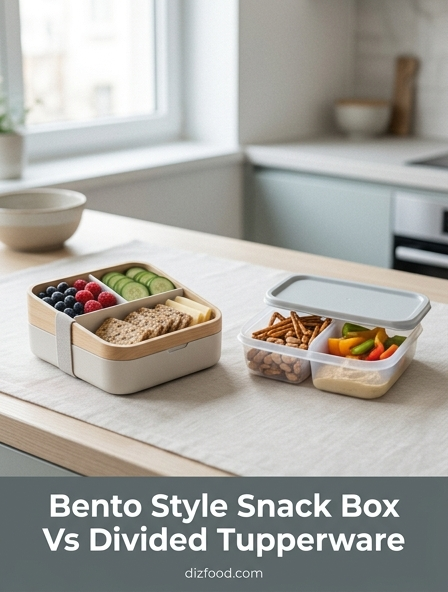
Understanding the Bento Box vs Divided Tupperware Debate
The culinary landscape of portable meal containers is largely dominated by two heavyweights: the traditional bento-style box and the functional divided Tupperware. While both serve the primary purpose of transporting food from home to the office or school, their philosophies differ significantly. Bento boxes, rooted in Japanese culture, emphasize the aesthetic arrangement of food and the inclusion of various small portions. They are often designed as a single, compact unit with internal walls that keep flavors from mingling. This approach encourages a "snack-style" meal where variety is the priority.
In contrast, divided Tupperware is often viewed through the lens of western meal prep and utility. These containers typically feature deeper wells and are designed for larger, singular portions of a main dish and a side. The debate between the two often comes down to how a person prefers to consume their midday meal. Is it a curated collection of small bites, or a hearty portion of leftovers? Understanding these differences is the first step in optimizing your kitchen storage and meal planning strategy.
- Bento boxes prioritize variety and compact presentation.
- Divided Tupperware focuses on volume and vertical storage.
- Bento designs are often integrated, whereas Tupperware is often part of a modular set.
- Cultural origins influence the size and shape of the internal compartments.
Portion Control and Food Organization Benefits
One of the greatest advantages of using partitioned containers is the inherent ability to manage portion sizes without the need for a kitchen scale. Bento-style boxes are particularly effective for those following a balanced diet, as the small compartments naturally limit the amount of any single food group. For example, a standard bento might have a large section for vegetables, a medium section for protein, and a small nook for a treat or sauce. This visual guide helps users maintain nutritional goals effortlessly.
Divided Tupperware also excels in organization by preventing "food bleed." There is nothing quite as unappealing as salad dressing soaking into a side of crackers or fruit juice softening a sandwich. By providing physical barriers, these containers ensure that textures remain intact until lunchtime. This organization also benefits picky eaters, particularly children, who may refuse to eat if different food items touch one another. The psychological satisfaction of a neatly organized meal can also lead to a more mindful eating experience.
- Visual cues for protein, carbohydrate, and fiber ratios.
- Prevention of cross-contamination between flavors.
- Consistent calorie counts based on compartment volume.
- Reduction in the need for extra plastic wrap or snack bags.
Material Quality and Long Term Durability
When comparing these two styles, the material composition plays a vital role in how long the product will last in a busy kitchen environment. Most divided Tupperware is made from high-quality, BPA-free plastics like polypropylene. These are lightweight and resistant to breaking if dropped, making them ideal for everyday use. However, plastic can be prone to staining from tomato-based sauces and may retain odors over time if not cleaned properly.
Bento boxes offer a wider range of material options, including stainless steel, bamboo, and heavy-duty Tritan plastic. Stainless steel bento boxes are nearly indestructible and provide a sleek, professional look, though they are not microwave-safe. Glass divided containers are another premium option, offering the best resistance to stains and odors, though they are significantly heavier and more fragile. Choosing the right material requires balancing the need for portability with the desire for a container that can withstand years of microwave and dishwasher cycles.
| Material | Durability | Microwave Safe | Stain Resistance |
|---|---|---|---|
| Standard Plastic | Medium | Yes | Low |
| Stainless Steel | High | No | High |
| Glass | High (Breakable) | Yes | Excellent |
| Tritan | High | Yes | Medium |
Leak Proof Performance and Seal Reliability
The success of a lunch container often hinges on its ability to keep liquids contained. There is a distinct difference in how bento boxes and divided Tupperware handle seals. Many modern bento boxes feature a lid with an integrated silicone molded seal that lines up perfectly with every internal divider. This design ensures that yogurt in one section won't leak into the crackers in the next, a feature often marketed as "leak-proof between compartments."
Traditional divided Tupperware often relies on a single perimeter seal. While this prevents the contents from leaking into your bag, it does not always prevent the contents from moving between sections inside the container. If you are carrying a meal with a high moisture content, such as a curry or a salad with dressing, a bento box with individual compartment seals is usually the superior choice. However, for dry snacks or sandwiches, the simpler seal of a Tupperware container is more than sufficient and often easier to snap into place for those with limited hand strength.
- Active silicone gaskets provide the highest level of security.
- Snap-lock hinges offer mechanical pressure for better sealing.
- Internal seals prevent flavor mixing between sections.
- Single-lid seals are easier to open but less secure for liquids.
Design Differences for Kids Versus Adults
The aesthetic and ergonomic design of these containers often targets specific age groups. Kids' bento boxes are frequently characterized by bright colors, "easy-open" latches designed for small hands, and extremely durable, drop-resistant outer shells. These containers are often sized to fit into standard school lunch bags and feature smaller compartments tailored to the appetite and nutritional needs of a child. Manufacturers often include whimsical shapes or themed designs to make healthy eating more engaging for toddlers.
Adult-oriented containers, whether bento or Tupperware, lean toward a minimalist and professional aesthetic. They prioritize "purse-friendly" or "briefcase-friendly" slim profiles and larger capacities. For adults, the functionality often includes microwave-safe materials for office reheating and sophisticated colors like charcoal, navy, or sage. While a child might need five small sections for various snacks, an adult might prefer two large sections for a substantial salad and a protein. The latches on adult models are often tighter to ensure security during a commute, requiring more grip strength than a child's version.
- Kids' models focus on drop protection and ease of access.
- Adult models emphasize microwaveability and professional styling.
- Compartment sizes vary based on caloric requirements of the age group.
- Portability features differ (e.g., handles for kids vs. slim profiles for adults).
Ease of Cleaning and Maintenance Tips
Maintenance is a critical factor in the longevity of kitchenware. Divided containers, by their nature, have more corners and crevices than standard bowls, which can make cleaning more labor-intensive. Many bento boxes are designed with removable inner trays. This allows the food-contact surface to be tossed in the dishwasher while the outer shell, which might contain insulating materials or complex hinges, is wiped down by hand. It is essential to check if the silicone seals are removable, as moisture can get trapped behind them, leading to mold growth over time.
Divided Tupperware is generally more straightforward to clean, as most are single-piece molds that are fully dishwasher safe. However, the sharp 90-degree angles in the dividers can sometimes trap stubborn food particles or grease. To maintain these containers, it is recommended to rinse them immediately after use. For plastic versions that have developed a film or odor, a soak in warm water with baking soda or a light vinegar solution can restore the material. Always ensure the containers are completely dry before snapping the lids shut to prevent "musty" smells from developing.
- Disassemble all removable parts before washing.
- Use a soft brush to reach into deep corners of dividers.
- Check silicone gaskets for signs of wear or debris.
- Air dry upside down on a rack to ensure full evaporation.
Comparing Price Points and Overall Value
The cost of lunch containers can range from a few dollars for a basic plastic set to over fifty dollars for a high-end stainless steel bento system. Divided Tupperware is typically the more budget-friendly option. It is often sold in multi-packs, making it easy to prep an entire week's worth of meals at once. Because the per-unit cost is low, losing a container or having it go missing at the office is not a significant financial loss. This makes Tupperware the "high-value" choice for those who prioritize utility and volume.
Bento boxes represent a higher initial investment. The price reflects the specialized engineering required for leak-proof internal seals and the use of premium materials like Tritan or steel. While the upfront cost is higher, proponents argue that the value lies in the durability and the improved eating experience. A high-quality bento box can last for several years, whereas cheaper plastic containers may warp, crack, or stain within a few months of heavy use. When evaluating value, consider how often you plan to use the container and whether the features, such as compartmentalized sealing, will save you money by preventing food waste.
| Feature | Divided Tupperware | Bento Style Box |
|---|---|---|
| Average Price | $2 - $10 per unit | $15 - $50 per unit |
| Purchase Quantity | Usually 5-10 packs | Usually individual |
| Lifespan | Short to Medium | Long |
| Replacement Part Availability | Rare | Common for high-end brands |
Sustainability and Environmental Impact Comparison
In an era of increasing environmental consciousness, the choice of lunch container has implications for your carbon footprint. Both bento boxes and divided Tupperware are inherently more sustainable than single-use plastic bags, aluminum foil, or cling wrap. By switching to a reusable container, the average person can save hundreds of pieces of plastic from entering landfills every year. However, the materials used in these containers differ in their end-of-life recyclability and environmental cost of production.
Stainless steel bento boxes are the gold standard for sustainability. They are extremely long-lasting, recyclable at the end of their life, and do not leach chemicals into the environment. Plastic divided containers, while reusable, eventually degrade. While many are made from recyclable #5 plastic, they often end up in landfills due to regional recycling limitations or food contamination. For the most eco-friendly approach, consumers should look for containers made from recycled plastics, glass, or sustainably sourced silicone. Choosing a durable, high-quality container that you won't need to replace for years is the most effective way to minimize your environmental impact.
- Reduction of single-use waste is the primary benefit of both.
- Stainless steel offers the best long-term environmental value.
- Look for BPA-free and phthalate-free certifications.
- Consider the manufacturing origin and shipping distance.
Versatility for Daily Meal Prep Needs
Versatility is where the divide between these two styles becomes most apparent. Divided Tupperware is often designed for "stackability" in the fridge and freezer. If you are a Sunday meal prepper who makes five identical lunches, a set of uniform divided containers is incredibly efficient for space management. They are built to move from freezer to microwave with ease, making them the workhorse of the kitchen. Their deep sections are also better suited for bulky items like whole chicken breasts or large scoops of pasta.
Bento boxes offer a different kind of versatility: the ability to serve as a complete meal kit. Many come with integrated utensil sets, small sauce containers, and even insulated carrying bags. This makes them a "grab-and-go" solution that doesn't require hunting through a kitchen drawer for a fork or a separate tiny jar for dressing. While they may not stack as neatly in a freezer, they are superior for meals that require varied temperatures, as the removable trays in some models allow you to microwave the protein while keeping the salad cold. This adaptability makes them ideal for complex, multi-component meals.
- Tupperware is superior for bulk prep and freezer storage.
- Bento boxes are better for on-the-go convenience with built-in utensils.
- Removable trays allow for selective reheating of meal components.
- Standardized sizes in Tupperware sets make lid-matching easier.
Choosing the Right Container for Your Lifestyle
Ultimately, the choice between a bento box and divided Tupperware depends on your personal habits and the types of food you enjoy. If your lunch consists of yesterday's dinner-large portions that need reheating-the simplicity and microwave-friendliness of divided Tupperware will likely serve you best. It is a cost-effective, durable, and straightforward solution for the high-volume meal prepper who values efficiency above all else. Its ability to be purchased in bulk ensures you always have a clean container ready for the next day.
On the other hand, if you prefer a variety of fresh foods, snacks, and small bites, the bento box is a worthwhile investment. Its superior sealing technology and compartmentalized design make it the perfect companion for commuters who don't want to worry about leaks. It encourages a more diverse diet and adds a touch of ritual and enjoyment to the lunch hour. Consider your daily routine, your budget, and your aesthetic preferences before making a purchase. Regardless of which you choose, moving away from disposable packaging is a win for both your wallet and the planet.
- Assess your typical meal type (reheated vs. cold/fresh).
- Determine your budget for initial investment versus replacement.
- Consider the importance of leak-proof technology for your commute.
- Evaluate your storage space in the kitchen and office fridge.

Comments