
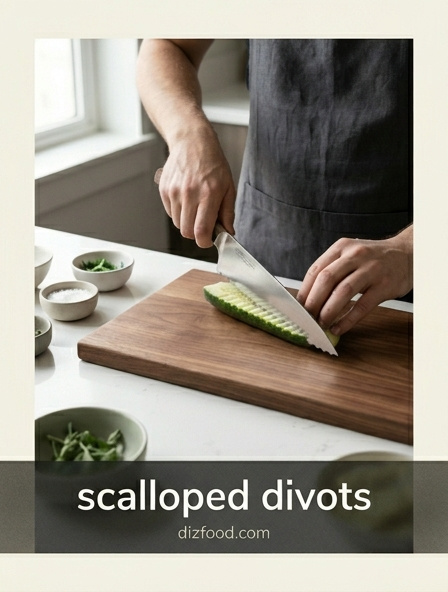
Physics of the Scalloped Blade Edge
The physics of a scalloped blade edge, often referred to as a Granton edge, revolves around the manipulation of contact pressure and surface geometry. When a standard flat-ground knife penetrates a substance, the entire lateral surface of the blade makes contact with the food material. This creates a high degree of friction and molecular adhesion. By incorporating scalloped divots, the blade geometry is fundamentally altered to reduce the effective surface area that touches the ingredient during a stroke.
From a mechanical standpoint, the presence of these divots redistributes the force applied by the chef. While the cutting edge remains sharp and continuous, the recessed hollows ensure that the sides of the blade do not experience uniform resistance. This design is particularly effective in high-moisture environments where surface tension acts as a secondary force. The scalloped architecture allows the blade to pass through dense materials by localizing the cutting force on the primary edge while allowing the rest of the blade body to glide through with significantly reduced mechanical interference.
Mechanisms of Air Pocket Creation
The primary function of the scalloped divot is the intentional creation of air pockets between the knife and the ingredient. As the blade enters a vegetable or protein, the hollowed-out recesses trap small volumes of air. These pockets serve as a physical barrier that prevents the ingredient from forming a vacuum-like seal against the metal surface. Without these pockets, the moisture within the food creates a cohesive bond with the polished steel, leading to the common problem of food sticking to the knife.
The air trapped within the Granton divots acts as a natural lubricant. This process can be understood through the following sequence:
- Initial Contact: The sharp edge shears the food fibers.
- Compression: The food is pushed outward by the thickness of the blade.
- Aeration: The scalloped cavity aligns with the sliced surface, introducing air.
- Release: The break in surface tension allows the slice to fall away effortlessly.
This mechanism is vital for maintaining a clean workspace and ensuring that every slice remains independent of the blade's lateral movement.
Minimizing Surface Area to Reduce Adhesion
Adhesion in the kitchen is a result of both chemical and physical forces. Starchy foods, such as potatoes, and fatty proteins, like raw salmon, have high adhesive properties due to their molecular makeup. By grinding semi-circular divots into the side of the blade, manufacturers significantly decrease the total surface area available for these substances to cling to. The reduction in contact area directly correlates to a reduction in the total adhesive force acting on the knife.
| Blade Type | Surface Contact | Adhesion Level |
|---|---|---|
| Flat Ground | 100% | High |
| Scalloped (Granton) | 65-75% | Low |
| Convex Ground | 90% | Medium |
This table illustrates how the scalloped design provides a quantitative advantage. By removing approximately 25% to 35% of the lateral surface contact through divots, the knife overcomes the "stiction" that typically slows down prep work in professional settings.
Overcoming Suction with Granton Edge Design
Suction is the greatest enemy of precision slicing, especially when dealing with wet or dense vegetables like cucumbers and zucchinis. When a flat blade makes a deep cut, the moisture creates a liquid seal that excludes air, resulting in atmospheric pressure pinning the slice against the blade face. The Granton edge is engineered specifically to break this vacuum. Because the divots are recessed below the plane of the blade, they provide a constant channel for air to reach the interface between the metal and the food.
This design overcomes suction by ensuring that the pressure on both sides of the food slice remains equalized. Rather than struggling to peel a slice off the knife, the chef observes the food falling away under the influence of gravity alone. This is not merely a convenience; it is a critical requirement for high-speed vegetable prep where the buildup of suction can lead to erratic blade behavior and potential injury. The recessed divots ensure that the blade remains "breathable" throughout the entirety of the cutting motion.
The Relationship Between Friction and Slice Integrity
Friction does more than just slow down the knife; it actively degrades the quality of the food being cut. When friction is high, the blade pulls on the fibers of the ingredient rather than cleanly shearing them. This can lead to tearing, bruising, or the extrusion of juices that should remain within the cell walls. Scalloped divots minimize this drag, thereby preserving the structural integrity of the slice. This is particularly noticeable when slicing delicate items like cold smoked meats or soft terrines.
Benefits of reduced friction on slice integrity include:
- Cleaner Margins: The edges of the food appear sharp rather than ragged.
- Reduced Compression: Soft foods are not squashed during the downward stroke.
- Flavor Retention: Minimizing cell damage keeps essential oils and juices inside the food.
- Uniformity: Consistent thickness is easier to maintain when the blade doesn't "grab" the ingredient.
By optimizing the friction coefficient through scalloped textures, the knife becomes an instrument of precision that honors the texture of the raw ingredient.
Enhancing Knife Control Through Drag Reduction
Knife control is a byproduct of the balance between the user's applied force and the resistance offered by the material. When a blade experiences high drag, the user must apply more horizontal and vertical pressure to complete a cut. This increased force requirement reduces the fine motor control available for precision tasks. Scalloped divots reduce the total drag, allowing the knife to glide through the medium with minimal resistance, which in turn enhances the chef's ability to steer the blade.
Reduced drag also has ergonomic benefits. In commercial environments where chefs perform thousands of cuts per shift, the cumulative effort required to overcome blade friction can lead to wrist fatigue and repetitive strain injuries. By utilizing a scalloped edge, the perceived "weight" of the cut is lightened. This allows for a more relaxed grip, which is the foundation of safe and accurate knife skills. The divots transform the cutting experience from a chore of pushing through resistance into a fluid motion of guided separation.
Why Dense Ingredients Require Scalloped Textures
Certain ingredients possess physical properties that make them notoriously difficult to slice with traditional flat blades. Dense, starchy, or fatty materials create a unique set of challenges that are best addressed by the Granton design. For example, the high starch content in potatoes creates a sticky paste upon contact with water and steel, while the dense protein structure of a roast can "clamp" onto a blade as it passes through. Scalloped textures provide the necessary relief for these specific material behaviors.
Ingredients that benefit most from scalloped divots include:
- Root Vegetables: Potatoes, beets, and parsnips.
- Soft Cheeses: Brie, camembert, or young cheddar.
- Raw Proteins: Sashimi-grade fish and chilled beef.
- Cured Meats: Salami and prosciutto.
In these cases, the divots serve as escape valves for the density of the ingredient. By preventing the material from wrapping tightly around the blade, the scallops ensure that even the densest potato or the stickiest cheese can be processed into uniform, thin slices without the knife becoming wedged or stuck.
Improving Speed and Consistency in Food Prep
In a professional kitchen, speed and consistency are the primary metrics of efficiency. A knife that sticks to food requires the chef to stop every few seconds to manually clear the blade. This interruption breaks the rhythm of the work and increases the time required for prep tasks. Scalloped divots automate the release of food, allowing for a continuous, rhythmic cutting motion. This leads to a significant increase in throughput during the "mise en place" phase of kitchen operations.
Consistency is also improved because the chef can focus on their guide hand and the thickness of the cut rather than fighting the resistance of the blade. When the knife moves predictably through the ingredient, the resulting slices are more uniform in thickness. This is crucial for cooking times; uniform slices cook at the same rate, ensuring a higher quality final dish. The technical advantage of the scalloped edge thus translates directly into better culinary outcomes and a more streamlined workflow for the kitchen staff.
The Structural Benefits of Recessed Divots
Beyond their functional role in food release, scalloped divots offer structural and aesthetic advantages to the cutlery itself. These divots are typically ground into the blade after the primary forging and heat treatment processes. While it might seem that removing material would weaken the knife, the depth and placement of the scallops are carefully engineered to maintain the blade's lateral stiffness. The geometry of the divots often adds a degree of structural rigidity, much like the corrugation in steel sheets.
Additionally, the placement of divots can influence the balance of the knife. By removing a small amount of weight from the blade's face, manufacturers can fine-tune the center of gravity, making the knife feel more nimble in the hand. From a maintenance perspective, the scallops do not interfere with the sharpening of the primary edge, as they are set back from the actual cutting bevel. This ensures that the knife remains a durable, long-lasting tool that retains its specialized functionality through years of professional sharpening and heavy use.
Fluid Dynamics in Modern Kitchen Cutlery
The movement of a knife through moist food can be analyzed through the lens of fluid dynamics. When cutting, the knife is not just interacting with solids, but also with the juices, oils, and intracellular fluids released upon impact. These fluids behave as a boundary layer. In a flat blade, this boundary layer creates a continuous film that increases viscous drag. Scalloped divots interrupt this fluid film, creating turbulence at the micro-scale that prevents the formation of a steady, high-friction fluid bond.
The divots act as reservoirs for excess fluid, channeled away from the primary cutting edge. This prevents the "hydroplaning" effect where the blade might slip on the surface of the food rather than biting into it. By managing the flow of fluids along the blade's surface, the scalloped design ensures that the knife maintains a high level of grip and predictability. This intersection of fluid mechanics and traditional tool design highlights the sophisticated engineering behind seemingly simple kitchen tools, proving that every divot serves a rigorous scientific purpose.

Comments