
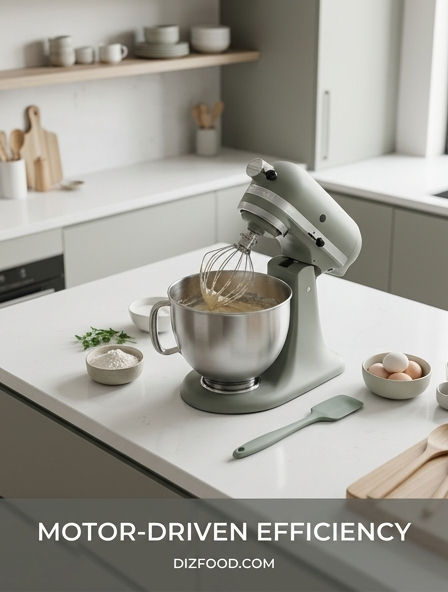
Powering Precision in Commercial Kitchens
In the modern culinary landscape, the integration of high-performance motors has transformed the operational dynamics of professional kitchens. While traditional manual techniques remain valued for artistry, the sheer volume of output required in commercial settings demands mechanical intervention. Motor-driven equipment, ranging from heavy-duty mixers to precision slicers, provides a level of reliability that human labor cannot consistently replicate over long shifts. These machines are engineered to withstand the rigors of continuous operation, ensuring that every movement is executed with surgical accuracy.
By automating repetitive tasks, chefs can redirect their focus toward flavor development and plating, knowing that the foundational preparation is handled by robust drive systems. The transition to motorized efficiency is not merely about speed; it is about establishing a baseline of quality that defines the establishment's reputation. Whether dealing with dense proteins or delicate vegetables, the motor provides the necessary force to maintain structural integrity throughout the processing phase. As technology advances, these systems become quieter and more energy-efficient, further solidifying their role as the backbone of the back-of-house infrastructure, ensuring that high standards are met without compromise or physical exhaustion.
Motorized Velocity and Thickness Uniformity
Thickness uniformity is a critical metric in food preparation, particularly when portion control directly impacts the bottom line. Motorized velocity allows for a constant speed of travel, ensuring that the blade engages the product with the same force from start to finish. In manual slicing, fluctuations in arm strength or speed often result in tapered cuts, where one end of the slice is thicker than the other. Automation corrects this by utilizing geared drive systems that maintain a rhythmic cadence. This level of control is essential for products like carpaccio or ultra-thin prosciutto.
- Precision indexing for sub-millimeter adjustments across all batches.
- Elimination of wedge-shaped slices in dense proteins and cheeses.
- Synchronized carriage movement for perfectly rhythmic processing cycles.
- Uniform heat distribution across the cutting surface during high speeds.
The result of this mechanical regularity is a product that cooks evenly and presents beautifully on the plate. When every slice is identical, the kitchen can accurately calculate nutritional values and food costs, making the motorized slicer an indispensable tool for financial and culinary management in any high-stakes environment.
Eliminating Human Error with Automation
Human error in a high-pressure kitchen environment can lead to significant waste and safety hazards. Manual processing often results in physical fatigue, which inversely affects the accuracy of the work performed over several hours. By implementing automated motor-driven systems, kitchens significantly mitigate these risks. Automation ensures that the machine operates within specific safety parameters, often featuring interlocks and sensors that prevent operation when guards are misplaced. Furthermore, programmed settings allow for repeatability that transcends the skill level of the individual operator, ensuring professional results regardless of the staff on duty.
| Factor | Manual Processing | Automated System |
|---|---|---|
| Consistency | Variable | Constant |
| Fatigue Level | High | Zero |
| Risk of Injury | Moderate | Low/Controlled |
With the burden of physical exertion removed, the likelihood of mishaps decreases. Operators can oversee multiple units simultaneously, increasing the overall throughput without sacrificing the quality of the output. This shift from manual labor to mechanical oversight represents a maturation of the kitchen workflow, where technology serves as a safeguard against the limitations of human endurance.
Enhanced Torque for Harder Meats
In the realm of charcuterie and heavy-duty meat processing, torque is the defining factor that separates professional equipment from residential-grade appliances. Harder meats, such as aged salami, smoked hams, or chilled proteins, offer significant resistance to cutting edges. A standard motor might stutter or overheat when faced with such density, but high-torque drive systems provide the rotational force necessary to maintain a clean cut through the toughest fibers. This power is achieved through sophisticated gearing and high-wattage induction motors that prioritize strength over sheer speed.
- Prevention of motor stall during peak service hours and heavy loads.
- Ability to slice through partially frozen products without internal damage.
- Reduced wear and tear on internal components due to efficient power transfer.
- Maintenance of blade speed regardless of product density or resistance.
By utilizing enhanced torque, a commercial kitchen ensures that its most challenging ingredients are handled with ease. This capability prevents the shredding effect often seen when a motor lacks the power to complete a stroke, resulting in clean, professional-grade portions that preserve the structural integrity of the meat.
Steady RPM and Blade Performance
The relationship between a motor's revolutions per minute (RPM) and the performance of the cutting blade is fundamental to kitchen efficiency. A steady, unwavering RPM ensures that the blade maintains its centrifugal force, which is necessary for a clean snap as it passes through food items. When RPM fluctuates, the blade may drag or tear the product, leading to ragged edges and unappealing textures. Modern motorized slicers are equipped with speed governors and electronic stabilizers that monitor load and adjust power delivery in real-time to keep rotation constant.
- Prolonging the intervals between blade sharpening by reducing friction.
- Minimizing the heat generated during high-speed rotation cycles.
- Ensuring the safety of the operator by preventing blade binding.
- Achieving a polished surface on soft cheeses and delicate meats.
When the RPM remains constant, the blade operates at its peak aerodynamic and mechanical efficiency. This allows for a smooth, effortless glide that produces uniform slices every time. The marriage of high-quality steel and consistent motorized rotation creates a synergy that defines the modern standard for precision in the food service industry.
Higher Yields through Mechanical Stability
Maximizing yield is a primary objective for any profitable food service operation. Every gram of product lost to scrap, "butt ends," or uneven slicing represents a direct hit to the establishment's margins. Mechanical stability, provided by heavy-duty motorized frames and precision-engineered carriages, minimizes this waste by ensuring the product remains perfectly aligned throughout the cutting process. Unlike manual slicing, where the pressure applied by a human hand can vary, motorized systems apply a constant, even force that pushes the product toward the blade without deviation.
| Waste Category | Manual Impact | Mechanical Advantage |
|---|---|---|
| End-piece Waste | High due to instability | Minimal due to auto-feeders |
| Inconsistent Thickness | Requires manual trimming | Ready for service |
| Tear Rate | Common in soft items | Rare with stabilized RPM |
By reducing the variance in slice thickness, kitchens can achieve a higher number of usable portions from a single primal cut. This mechanical reliability turns preparation into a predictable science, allowing for more accurate inventory management and significantly reduced food waste across the board.
Consistent Texture in High-Volume Service
In high-volume environments like catering halls or busy delis, consistency is the hallmark of professionalism. Customers expect the same texture and mouthfeel from every dish, regardless of when it was prepared. Motor-driven equipment ensures that whether a machine is processing the first or the five-hundredth pound of product, the results are indistinguishable. This is particularly important for items like thin-shaved roast beef or vegetable ribbons, where texture is as important as flavor. Automation removes the variable of human fatigue, providing a reliable output that meets the highest aesthetic and culinary standards.
- Constant stroke length and speed for uniform mouthfeel.
- Precision adjustment dials that lock into place during operation.
- Cooling systems that prevent product softening during long runs.
- Reduction in physical compression of delicate food structures.
When a kitchen relies on manual labor for high-volume tasks, the texture inevitably changes as the staff tires. Slices become thicker and edges become rougher. Motorized efficiency ensures that the high-volume service will maintain the integrity of the original vision from start to finish, providing peace of mind for the executive chef.
Reducing Friction with Motorized Strokes
Friction is the enemy of precision in the kitchen. When a blade or carriage encounters resistance, it generates heat, which can discolor delicate proteins and cause fats to render prematurely. Motorized strokes address this issue by providing a smooth, lubricated movement that reduces the physical contact time between the blade and the product. Advanced slicers often feature friction-reducing grooves on the blade face and carriage surfaces, which work in tandem with the motor's consistent pace to ensure a seamless pass without sticking or dragging.
- Automatic carriage return minimizes idle time and heat buildup.
- Geared drive systems eliminate the slippage associated with belts.
- Reduced manual pushing prevents product compression and juice loss.
- Smooth acceleration curves protect the motor and the food product.
By maintaining a rhythmic and efficient stroke, the machine preserves the freshness and moisture content of the food. This is critical for premium deli meats and cheeses that rely on specific moisture levels for flavor. The motor does the heavy lifting, allowing the blade to do its job with minimal interference, resulting in a superior product.
Professional Standards in Deli Slicing
The professional deli environment is governed by strict standards regarding hygiene, safety, and performance. Motorized efficiency plays a central role in meeting these criteria. Modern commercial slicers are designed with the motor housed in a sealed compartment to prevent cross-contamination and ensure that food particles do not interfere with the drive mechanism. These machines often feature NSF certification, which guarantees that they can be easily disassembled and cleaned without specialized tools, maintaining a sterile environment even under heavy use.
- Compliance with local health and safety regulations regarding machinery.
- Integration of permanent blade guards and emergency stop buttons.
- Use of non-porous materials that withstand heavy chemical sanitizers.
- Precise portioning that meets trade weight and measure requirements.
Professional-grade slicing is about more than just cutting; it is about maintaining a sterile and efficient workflow. Motorized units are built to endure the harsh chemicals and frequent wash-downs required in a deli, ensuring that the drive system remains protected while the external components are kept immaculate. This durability is essential for long-term operational success and consumer safety.
Optimizing Output with Drive Efficiency
The final component of motor-driven kitchen success is drive efficiency. This refers to the ability of the machine to convert electrical energy into mechanical work with minimal loss. In a commercial setting, where equipment may run for hours, the efficiency of the drive system impacts both the speed of production and the cost of electricity. Modern brushless DC motors and direct-drive systems offer significant advantages over older, belt-driven models, providing more power in a smaller footprint with less maintenance required over the lifespan of the equipment.
| Metric | Standard Drive | High-Efficiency Drive |
|---|---|---|
| Energy Loss | High (Heat/Noise) | Low (Kinetic) |
| Maintenance | Frequent Belt Adjustments | Minimal (Direct) |
| Torque Delivery | Variable | Immediate/Constant |
By optimizing these factors, a kitchen can maximize its output while keeping overhead costs in check. Drive efficiency ensures that the motor remains cool and responsive even under maximum load, preventing downtime and maintaining a steady flow of product to the front of house. Investing in high-efficiency motorized equipment is a strategic move that pays dividends in productivity and reliability.


Comments