
Elevate your culinary skills by mastering precision herb preparation, a task made effortless with the right specialized tools. Whether you are mincing delicate parsley or dicing rosemary, using a rocking herb knife or traditional half-moon blades ensures clean, efficient cuts without bruising the leaves. These ergonomic tools utilize a rhythmic motion to glide through fresh ingredients, effectively preserving essential oils and vibrant flavors. The unique curved design provides superior control and speed, making these tools essential for home cooks seeking professional results. To find the perfect fit for your kitchen, explore the key differences in our guide on the Mezzaluna vs Rocking Herb Knife.
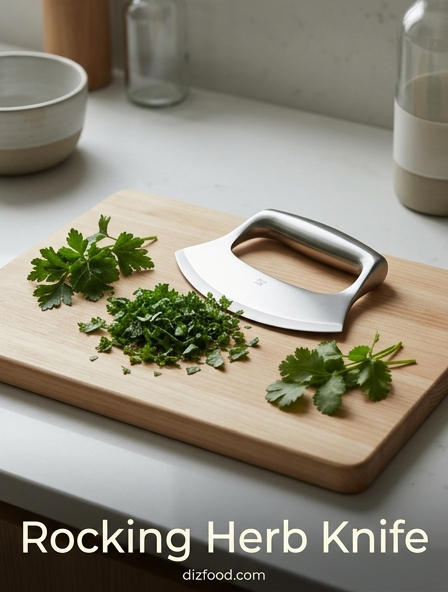
Mastering the Rocking Motion for Herb Slicing
The hallmark of using a rocking herb knife, or mezzaluna, lies in the rhythmic, fluid motion that allows for rapid mincing without lifting the tool from the cutting surface. Unlike a standard chef's knife that requires a forward-and-down stroke, the curved blade of a rocking knife is designed to stay in constant contact with the board. To master this, one should grasp the handles firmly, ensuring the weight of the blade does the majority of the work. The pivot point shifts naturally as you move the blade back and forth across a pile of fresh greens.
- Maintain a consistent rhythm to ensure uniform leaf fragments.
- Apply downward pressure evenly across the entire arc of the blade.
- Rotate the herbs periodically to ensure every leaf is reached by the edge.
- Keep your wrists relaxed to avoid fatigue during long prep sessions.
Consistency is key when aiming for a fine chiffonade or a coarse chop. By focusing on the center of the arc, you can control the speed and precision of the cut, making it an ideal technique for delicate items like parsley, cilantro, and mint. This motion preserves the integrity of the herbs by slicing rather than crushing them.
Anatomy of the Traditional Half Moon Blade
The traditional rocking herb knife is often referred to as a "mezzaluna," which translates from Italian to "half moon." This name perfectly describes the crescent-shaped steel blade that defines the tool. The anatomy is purposefully minimalist, focusing on ergonomic efficiency and leverage. Most professional models feature a high-carbon stainless steel blade that holds a sharp edge while resisting the acidic juices of various plants. The handles are typically positioned at either end of the arc or as a single horizontal bar across the top.
| Component | Description |
|---|---|
| The Arc | The curved cutting edge that facilitates the rocking motion. |
| The Handles | Either dual vertical knobs or a single bridge-style handle. |
| The Tang | The part of the blade that extends into the handles for stability. |
| The Bevel | The angle of the sharpened edge, usually optimized for soft greens. |
The curvature of the blade is engineered to provide a natural fulcrum. This design reduces the physical effort required to slice through dense bundles of herbs, making it a favorite for those with limited wrist mobility or those processing high volumes of produce.
Essential Tools for Precision Herb Mincing
To achieve professional results when mincing herbs, the rocking knife must be supported by a specific set of kitchen essentials. While the knife itself is the star, the environment in which it operates determines the quality of the final product. A high-quality mezzaluna requires a surface that complements its curved geometry. Furthermore, the cleanliness and temperature of the herbs play a significant role in how the blade interacts with the plant fibers. Precision is not just about the tool, but about the synergy between all elements in the prep station.
- Curved Cutting Board: Often sold as a set, these boards have a shallow indentation to match the blade's arc.
- Honing Steel: Necessary for maintaining the alignment of the curved edge between uses.
- Herb Salad Spinner: Ensures herbs are bone-dry, preventing them from clumping during the mincing process.
- Magnetic Storage Strip: Keeps the curved blade safe and prevents the edge from dulling in a drawer.
Having these tools at the ready transforms herb preparation from a tedious chore into a precise culinary art form. Dry herbs and a sharp blade prevent the bruising that leads to discoloration and loss of flavor.
Comparing Single and Double Mezzaluna Blades
When selecting a rocking herb knife, the primary choice is often between a single-blade design and a double-blade configuration. Both have distinct advantages depending on the user's specific needs and the volume of herbs being processed. A single blade offers greater precision and is much easier to clean and sharpen. It is the preferred choice for chefs who want total control over the texture of their herbs and who work with a variety of different textures, from soft basil to woody rosemary.
| Feature | Single Blade | Double Blade |
|---|---|---|
| Speed | Moderate | High (Twice the cutting action) |
| Precision | Excellent for fine mincing | Prone to clogging with wet herbs |
| Maintenance | Simple to sharpen | Difficult to sharpen between blades |
| Versatility | Can be used for nuts and garlic | Best for leafy greens only |
Double blades excel in speed, effectively doubling the output per rock. However, they can trap debris between the metal sheets, requiring frequent clearing. For most home cooks, a single blade provides the best balance of efficiency and ease of care.
Choosing the Best Chopping Surface for Herb Knives
The surface beneath a rocking herb knife is just as important as the blade itself. Because the mezzaluna relies on a continuous rocking motion, a flat cutting board can sometimes result in "missed" spots if the board is warped or too hard. Traditionally, the best surface for a rocking knife is a wooden board with a slight concave indentation. This bowl-like dip perfectly cradles the herbs and matches the radius of the blade, ensuring that the knife makes contact with the board through the entire movement. This prevents herbs from escaping the blade's reach.
In terms of material, end-grain wood is highly recommended. It is gentle on the edge of the blade, allowing the steel to sink slightly into the fibers without dulling. Plastic boards are an alternative, but they lack the "grip" that wood provides, which can cause the herbs to slide around during the mincing process. Avoid stone, glass, or ceramic surfaces at all costs, as these will instantly roll the fine edge of a herb knife, rendered it useless for delicate work. A well-oiled walnut or maple board remains the gold standard for longevity and performance.
Safety Tips for Using Rocking Herb Knives
While the rocking herb knife is generally considered safer than a standard knife because the fingers are often placed on top of the handles rather than near the blade, it still requires careful handling. The large, exposed edge can be deceptively sharp, and the rocking motion can generate significant momentum. Maintaining control over the tool is paramount to preventing slips, especially when working with herbs that may be slightly damp or slippery.
- Always keep fingers on the designated handles; never press down on the spine of the blade.
- Ensure the cutting board is stabilized with a damp paper towel or a non-slip mat underneath.
- Keep the herbs centered in the board to avoid the blade rocking off the edge of the surface.
- Store the knife in a protective sheath or a magnetic rack to avoid accidental cuts when reaching into drawers.
- Clean the blade by wiping from the spine toward the edge, never along the sharpened bevel.
By following these steps, you minimize the risk of injury while maximizing the efficiency of your prep work. Safety in the kitchen starts with understanding how the tool moves and respecting the sharpness of the steel.
Culinary Benefits of Freshly Sliced Herbs
The primary reason for using a rocking herb knife is the preservation of culinary quality. Herbs contain volatile oils that are responsible for their aroma and flavor. When herbs are chopped with a dull knife or crushed with a heavy hand, these oils are released onto the cutting board instead of into the food. The rocking herb knife uses a clean, slicing action that shears through the plant's cell walls with minimal bruising. This results in a vibrant, green finish and a potent flavor profile that can elevate any dish from ordinary to gourmet.
Furthermore, freshly sliced herbs provide a texture that dried alternatives cannot replicate. The "pop" of flavor from a finely minced leaf of basil or a spray of fresh dill is essential for garnishes and infusions. Because the mezzaluna allows for such fine mincing, it ensures that the herbs are distributed evenly throughout a sauce, dressing, or marinade. This uniform distribution prevents any single bite from being overwhelmed by a large leaf while ensuring the aromatic essence is present in every mouthful. Using the right tool ensures you get the most out of your fresh ingredients.
Maintaining Sharpness in Traditional Herb Cutters
A dull herb knife is a hindrance in the kitchen, as it will bruise delicate leaves and turn them black prematurely. Maintaining the edge of a mezzaluna requires a slightly different approach than a straight blade due to its curve. Regular maintenance prevents the need for aggressive grinding later on. For most rocking knives, a ceramic honing rod is the best tool for daily upkeep, as it can follow the arc of the blade smoothly to realign the microscopic teeth of the steel.
- Hone Frequently: Use a light touch with a honing rod before every major prep session.
- Use Proper Angles: Maintain a 15 to 20-degree angle between the blade and the sharpener.
- Avoid the Dishwasher: High heat and harsh detergents can corrode the edge and damage wooden handles.
- Professional Sharpening: Once a year, have the blade professionally ground to restore the original geometry.
Proper storage is also part of maintenance. Moisture is the enemy of carbon steel, so ensure the blade is completely dry before storing it. A thin coat of food-grade mineral oil can help protect the metal from oxidation in humid kitchen environments.
Step by Step Herb Preparation Techniques
To get the most out of your rocking herb knife, you must follow a logical sequence of preparation. Simply throwing a bundle of herbs on a board will lead to an uneven chop. The goal is to create a controlled environment where the blade can move efficiently. Proper preparation reduces the time spent at the board and results in a much more professional appearance for your garnishes. Follow these steps for the best results:
- Wash and Dry: Rinse herbs in cold water and use a spinner or towels to remove all surface moisture.
- Remove Stems: Pick the leaves off woody stems (like rosemary) or trim the thick ends of soft stems (like parsley).
- Bundle the Herbs: Gather the leaves into a tight, dense pile in the center of your cutting board.
- Initial Rock: Place the knife over the pile and begin with slow, wide rocks to break down the bulk.
- Tighten and Repeat: Use the blade to scrape the herbs back into a pile and continue rocking until the desired fineness is achieved.
This systematic approach prevents the herbs from spreading too far across the board and ensures a consistent cut throughout the entire batch.
Enhancing Flavor Through Fine Herb Slicing
The fineness of the cut directly impacts how flavor is perceived in a finished dish. A rocking herb knife allows for a degree of control that is difficult to achieve with other tools. When herbs are minced very finely, the surface area increases dramatically, allowing for a more rapid infusion of flavors into fats and liquids. This is particularly important for cold applications like vinaigrettes or herb-infused butters, where there is no heat to help draw out the essential oils. The fine slicing action of the mezzaluna ensures these oils are available immediately.
Additionally, the aesthetic appeal of finely sliced herbs cannot be understated. A sprinkle of micro-minced chives or mint adds a professional touch that suggests a high level of culinary care. Beyond aesthetics, the fine texture allows the herbs to meld into the background of a sauce, providing flavor without distracting from the main components of the meal. By mastering the rocking knife, you unlock the ability to season with precision, ensuring that the delicate balance of your recipes is maintained. The result is a more cohesive and aromatic dining experience that highlights the freshness of your ingredients.

Comments