
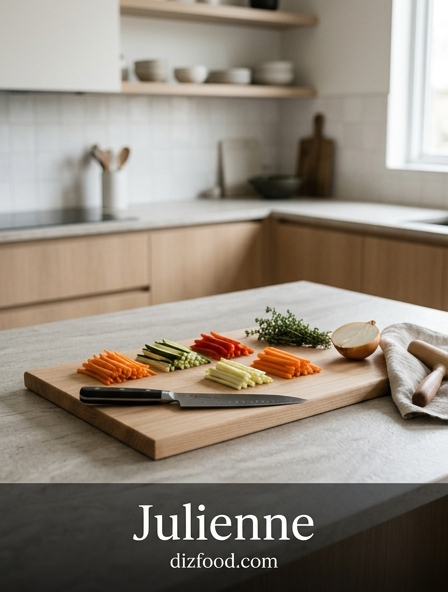
Elevate your culinary repertoire by learning to master the julienne technique, a fundamental knife skill that transforms ordinary vegetables into elegant, uniform matchsticks. This precise cutting method is more than just a visual upgrade; it ensures even cooking and a refined texture in everything from vibrant stir-fries to delicate salads. By honing your blade control, you can create professional-grade garnishes that bring a sophisticated flair to your home-cooked meals. As you sharpen your precision, it is also helpful to explore the key distinctions in size and application between a Julienne Cut vs Batonnet Cut.
Understanding the Fundamentals of Julienne
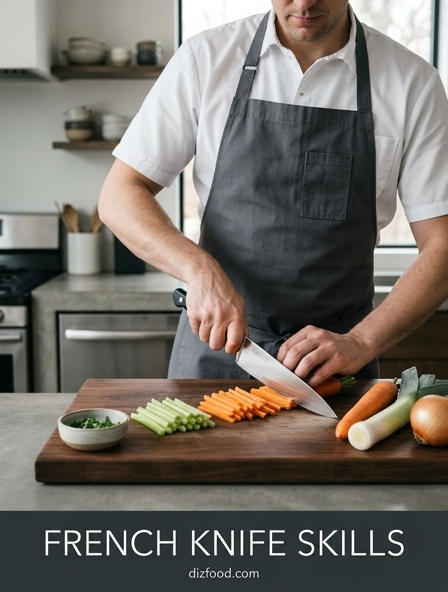
The julienne cut is a cornerstone of classical French culinary technique, often referred to as the "matchstick" cut due to its long, thin, and rectangular shape. Mastery of this skill is essential for any aspiring chef, as it ensures that vegetable pieces cook at an identical rate, preventing a dish from containing both mushy and raw elements. Beyond practical cooking applications, the julienne cut adds a level of sophistication and refined texture to a variety of dishes, ranging from delicate salads to complex stir-fries.
To understand the fundamentals, one must appreciate the geometric precision required. The process involves transforming irregular, organic shapes into standardized linear batons. This uniformity is not merely for aesthetics; it influences the mouthfeel and the way flavors are released during the chewing process. By exposing a consistent amount of surface area, the julienne cut allows for rapid heat penetration and even caramelization. Mastering this technique builds the foundation for more advanced knife skills, such as the brunoise, which is derived directly from the julienne strip.
Essential Knives for Precise Matchstick Cuts
Achieving the perfect julienne requires a tool that offers both balance and extreme sharpness. While many knives can technically cut a vegetable, only a few provide the control necessary for the millimeter-level precision required in professional kitchens. The blade must be capable of clean vertical movements without tearing the cell walls of the produce.
- Chef's Knife (8-inch): The primary choice for most chefs, offering a curved belly for rocking motions or a flat heel for push-cuts.
- Santoku: Features a flatter edge than the French chef's knife, which is often preferred for the straight downward "push-cut" motion typical of julienne.
- Nakiri: A Japanese vegetable knife with a rectangular profile, specifically designed for rapid, straight slicing of produce.
- Paring Knife: Useful for detail work and trimming small vegetables like radishes or garlic before they are julienned.
Regardless of the style, a razor-sharp edge is non-negotiable. A dull blade is prone to slipping off the smooth skin of vegetables like peppers or carrots, which can lead to uneven cuts or accidental injury.
Preparing Vegetables for Uniform Slicing
The secret to a professional julienne does not begin with the slicing itself, but with the preparation of the raw material. Most vegetables are naturally rounded, tapered, or irregular. To achieve uniform sticks, the vegetable must first be stabilized to prevent rolling on the cutting board. This initial stage involves washing, peeling (if required), and trimming the ends to create manageable lengths, typically between two and three inches.
Creating a flat base is the most critical preparatory step. By slicing a thin sliver off one side of a cylindrical vegetable, such as a zucchini or carrot, you create a stable surface that rests flush against the board. Once anchored, the vegetable can be handled with much greater precision. This preparation phase reduces waste by ensuring that the subsequent "squaring" of the vegetable is done with intent. Proper preparation also allows the chef to inspect the density and moisture content of the produce, which may dictate the amount of pressure needed during the actual cutting phase to maintain consistency throughout the batch.
The Squaring Technique for Perfect Planks
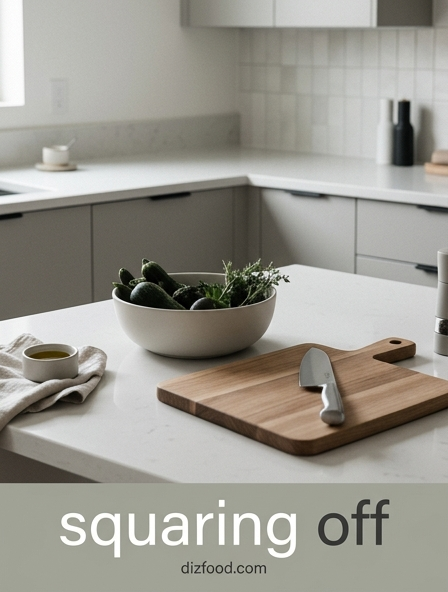
Before you can produce matchsticks, you must first create "planks." Squaring is the process of trimming the rounded sides of a vegetable until it resembles a rectangular prism. While this may seem to create excess food waste, these trimmings are often reserved for stocks, purees, or soups, ensuring that the precision of the final cut does not come at the cost of sustainability in the kitchen.
To square a vegetable, place it on its flat, stabilized base and slice off the remaining curved sides. You should be left with a block that is uniform in width and height. This block is then sliced lengthwise into thin, even panels known as planks. The thickness of these planks will determine the final thickness of your julienne. If your goal is a standard 1/8-inch julienne, each plank must be exactly 1/8-inch thick. Maintaining a consistent angle with the knife during this phase is paramount, as any deviation will result in sticks that are wider at one end than the other, compromising the visual integrity of the dish.
Creating Consistent Matchsticks Step by Step
Once you have produced a stack of uniform planks, you are ready to finalize the julienne cut. This stage requires steady hand-eye coordination and a rhythmic cutting motion to ensure every stick is identical to the last. Follow these steps for the best results:
- Stack the Planks: Neatly stack two or three planks on top of one another. Do not stack them too high, as this increases the risk of the layers sliding.
- Position the Guide Hand: Use the "claw grip" to hold the stack firmly. Your knuckles should act as a buffer for the blade.
- Execute the Cut: Use a fluid downward and forward motion to slice through the stack. Aim for a width that matches the thickness of the planks.
- Clear and Repeat: Move the finished matchsticks aside and reposition your fingers for the next slice.
By keeping the blade in constant contact with your knuckles, you maintain a consistent distance for each cut. This repetitive process results in a pile of elegant, uniform strips ready for the pan or the plate.
Safety Tips for High Speed Julienne Slicing
Speed in the kitchen is a byproduct of accuracy and repetition, but it should never come at the expense of safety. Because julienne involves making many rapid, close-proximity cuts, the risk of injury is higher than with larger dicing tasks. The most important safety rule is the implementation of the "claw grip," where the fingertips are tucked inward and the thumb is hidden behind the fingers, preventing the blade from making contact with skin.
Additionally, ensure your workstation is optimized for safety. A damp paper towel or a silicone mat placed under the cutting board prevents it from sliding during use. Keep the tip of the knife in contact with the board if using a rocking motion, or ensure a clean "push" if using a Santoku. Never attempt to julienne small "nubs" of vegetables; when the piece becomes too small to hold safely with the claw grip, set it aside for another use. Finally, always maintain focus. Distractions are the leading cause of accidents when performing high-precision knife work, especially when attempting to increase your slicing cadence.
Professional Standards for Julienne Dimensions
In professional culinary environments, specific terms are used to define the thickness and length of vegetable cuts. Adhering to these standards is vital for consistency across a kitchen brigade, ensuring that a dish prepared by one chef looks and cooks exactly like one prepared by another. The standard julienne is the benchmark, but variations exist for different culinary applications.
| Cut Name | Dimensions (Imperial) | Dimensions (Metric) |
|---|---|---|
| Fine Julienne | 1/16" x 1/16" x 2" | 1.5mm x 1.5mm x 5cm |
| Standard Julienne | 1/8" x 1/8" x 2" | 3mm x 3mm x 5cm |
| Allumette | 1/4" x 1/4" x 2" | 6mm x 6mm x 5cm |
The "Allumette" is often used specifically for potatoes (matchstick fries). The "Fine Julienne" is typically reserved for delicate garnishes or raw applications where a very soft texture is desired. Mastering these specific dimensions allows a chef to transition seamlessly into creating "Brunoise" (1/8" cubes) or "Fine Brunoise" (1/16" cubes).
Elevating Presentations with Delicate Garnishes
The julienne cut is one of the most effective ways to elevate the visual appeal of a plated dish. These delicate strips provide height, color, and a sense of "organized chaos" that looks professional and appetizing. For example, a nest of julienned leeks, lightly fried, can add a golden, crispy texture and architectural interest to a seared scallop or a piece of fish. Similarly, vibrant julienned bell peppers can provide a burst of color against a neutral-colored pasta or grain bowl.
When using julienne as a garnish, it is important to consider the contrast in texture. Raw, crisp julienned radishes or carrots add a refreshing snap to soft dishes like braised meats. In soups, particularly clear consommés, julienned vegetables are prized for their ability to remain distinct and visible, showcasing the chef's technical skill. To keep garnishes looking their best, store julienned root vegetables in ice water; this prevents them from wilting and often causes them to curl slightly, creating an even more dynamic and artistic presentation on the final plate.
Top Vegetables for Practicing Your Cuts
Not all vegetables are created equal when it comes to learning the julienne technique. Beginners should start with produce that offers some resistance but is not overly fibrous or excessively hard. Firm, dense vegetables allow for better control and provide immediate feedback on the accuracy of your slicing. As your confidence grows, you can move on to more challenging textures, such as the layered skins of onions or the hollow centers of peppers.
- Carrots: The gold standard for practice. They are firm, inexpensive, and their bright color makes it easy to see the precision of your edges.
- Zucchini: Softer than carrots, providing a different tactile experience. The contrast between the green skin and white flesh helps in visualizing dimensions.
- Potatoes: Excellent for practicing the Allumette cut. Their starchy nature helps the planks stick together slightly, making stacking easier.
- Celery: Challenges the chef to handle curved, fibrous stalks and requires careful squaring to remove the inner channel.
- Cucumber: Great for practicing the removal of soft, seedy centers before slicing the firm outer flesh.
Incorporating Julienne into Global Cuisines
While the term "julienne" is French, the concept of thin, uniform vegetable strips is a fundamental element in cuisines worldwide. In East Asian cooking, particularly in Chinese stir-fries and Japanese salads, this cut is essential. The rapid, high-heat cooking methods used in a wok require vegetables to be cut thinly so they can soften and caramelize in a matter of seconds. In Korean cuisine, julienned vegetables are a staple in dishes like Bibimbap, where each component is prepared with meticulous attention to shape and color.
In Southeast Asia, julienne cuts are frequently seen in fresh spring rolls and green papaya salads, where the thin strips maximize the absorption of dressings and sauces. Latin American cuisines utilize the cut for "curtido" or pickled slaw toppings, providing a crunchy contrast to rich, fatty foods like pupusas or tacos. By mastering the julienne, a cook gains the versatility to explore these diverse culinary traditions, as the ability to prep ingredients into uniform matchsticks is a universal requirement for balanced flavors and professional-grade textures across the globe.

Comments