
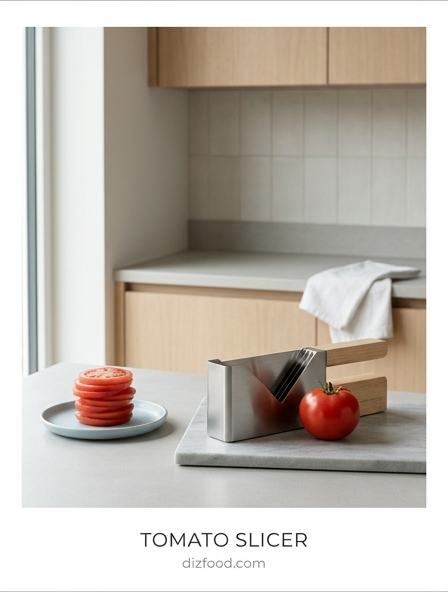
Achieving peak efficiency in a high-volume kitchen requires the right tools to maintain both speed and consistency. A specialized tomato slicer is a total game-changer for culinary professionals who demand uniform, juice-retaining slices without the hassle of manual knife work. Unlike standard blades that can bruise delicate produce, these precision instruments utilize razor-sharp, tensioned blades to glide through skins effortlessly, ensuring every burger, salad, or garnish looks absolutely perfect. By streamlining your prep work, you significantly reduce waste and save valuable time during the busy rush. To find the right fit for your station, compare the benefits of a Tomato Slicer Vs Scalloped Knife.
Maximizing Commercial Kitchen Workflow
In the fast-paced environment of a commercial kitchen, the speed of prep work dictates the overall rhythm of service. A dedicated tomato slicer is a fundamental component for optimizing this workflow, allowing prep cooks to move through bulk produce in a fraction of the time required for manual knife work. By implementing specialized equipment, a kitchen can transition from a reactive state to a proactive prep schedule, ensuring that fresh ingredients are always ready for assembly. This transition minimizes bottlenecks during peak hours, where every second saved in the back-of-house translates to faster ticket times and improved customer satisfaction.
- Establishes a standardized prep station for repetitive tasks.
- Reduces physical fatigue among staff, maintaining energy for service.
- Allows for precise inventory management through predictable yields.
- Facilitates seamless transitions between breakfast, lunch, and dinner shifts.
Ultimately, the integration of a tomato slicer is about more than just cutting vegetables; it is about creating a systematic approach to food preparation. When tools are matched to the task, the entire culinary team can operate with greater focus and less stress, leading to a more harmonious and profitable kitchen environment.
The Science Behind Perfect Tomato Slices
Achieving the perfect tomato slice involves navigating the unique cellular structure of the fruit, which consists of a tough exterior skin and a soft, succulent interior. When a dull or inappropriate blade is used, the pressure required to break the skin often collapses the internal seed cavities, resulting in a bruised and unappealing product. A commercial tomato slicer utilizes precision-engineered serrated blades designed to saw through the skin with minimal downward force. This mechanical advantage preserves the integrity of the tomato's walls, keeping the juice and seeds contained within the slice rather than on the cutting board.
The engineering behind these devices considers the tension of the blades and the angle of entry to ensure that every slice is identical. This level of scientific precision is difficult to replicate with a standard chef's knife, especially when dealing with varying degrees of ripeness. A high-quality slicer accommodates the delicate nature of the tomato, ensuring that even the most tender heirloom varieties remain intact and visually striking. By understanding the physics of the cut, chefs can ensure that the flavor profile and texture of the tomato are showcased to their fullest potential in every dish served.
Why Manual Cutting Slows Your Service
Manual cutting is an inherently variable process that relies heavily on the individual skill level of the cook. This variability often leads to inconsistencies in thickness, which can disrupt the cooking or assembly process of sandwiches, salads, and burgers. Furthermore, manual slicing is a time-intensive labor task that diverts skilled workers away from more complex culinary duties. The repetitive motion of hand-slicing dozens of tomatoes daily also increases the risk of repetitive strain injuries and accidental lacerations, which can further impact staffing and insurance costs.
- Inconsistent slice thickness leads to uneven portioning and presentation.
- Slow output creates a backlog in the prep area during high-demand periods.
- Frequent blade sharpening is required to maintain the necessary edge for soft produce.
- Human error increases the likelihood of product bruising and loss.
When a kitchen relies solely on manual cutting, it essentially accepts a lower ceiling for productivity. The time spent meticulously hand-slicing produce is time that could be better spent on menu development or intricate plating. Transitioning to a mechanical slicer removes these human-based limitations, providing a reliable and rapid output that matches the demands of a high-volume commercial operation.
Precision Blades for Delicate Produce
The defining feature of a commercial tomato slicer is its specialized blade assembly. Unlike multi-purpose blades, these are specifically honed for the high-acid environment and soft texture of tomatoes. Crafted from high-carbon stainless steel, these blades are typically arranged in a cartridge system that keeps them perfectly spaced for uniform results. The serrations are microscopic, allowing them to "bite" into the waxy skin of the tomato without needing to be pushed through, which prevents the fruit from squishing or leaking its vital juices during the process.
Because tomatoes are highly acidic, the materials used in these blades must be resistant to corrosion and staining. Inferior metals would quickly dull or react with the fruit, affecting both the longevity of the tool and the flavor of the food. These precision blades are tensioned to remain rigid, ensuring that the slicer does not deflect or bend even when processing firmer, under-ripe tomatoes. This specialized focus on blade geometry ensures that every slice, from the first of the day to the last, meets the highest standards of culinary quality and aesthetic appeal.
Eliminating Food Waste With Uniform Cuts
Food waste is a significant drain on kitchen profitability, and inconsistent slicing is a primary culprit. When tomatoes are sliced unevenly, the end pieces and "misfit" slices are often discarded because they do not fit the standard presentation. A commercial tomato slicer eliminates this problem by providing end-to-end uniformity. Every piece of the tomato, with the exception of the very ends, becomes a usable slice, significantly increasing the yield per case of produce.
| Cutting Method | Usable Yield | Consistency Level | Waste Percentage |
|---|---|---|---|
| Manual Knife | 75-80% | Variable | 20-25% |
| Standard Slicer | 92-95% | High | 5-8% |
| Precision Slicer | 98% | Exact | 2% |
By standardizing the thickness, kitchens can also implement more accurate portion control. This ensures that every sandwich or salad receives the exact same amount of product, making food cost calculations more reliable. Over time, the reduction in waste and the increase in yield can pay for the cost of the slicer itself, making it a wise financial investment for any food service operation focused on sustainability and bottom-line health.
Speed and Safety in High Volume Prep
In high-volume kitchens, the balance between speed and safety is often precarious. A manual knife in the hands of a rushed employee is a liability. Tomato slicers are designed with built-in safety features that protect the operator while allowing for rapid-fire production. Protective guards and ergonomic handles ensure that hands stay far away from the sharp edges of the blades. The push-through design allows an entire tomato to be sliced in a single motion, which is significantly faster and safer than the multiple strokes required by a traditional knife.
- Integrated hand guards prevent accidental contact with blades.
- Non-skid feet keep the unit stable on wet stainless steel surfaces.
- Simple push-pull mechanics reduce the risk of strain.
- Closed-frame designs contain the produce and prevent slips.
The efficiency gained through these tools allows a kitchen to process a case of tomatoes in minutes rather than hours. This speed is crucial for businesses like pizzerias, sandwich shops, and large-scale catering operations where the volume of produce is immense. Safety is further enhanced by the stability of the device, which provides a controlled environment for cutting that is simply not possible with a free-hand knife and a cutting board.
Maintaining Blade Sharpness for Longevity
To ensure a tomato slicer continues to perform at its peak, a consistent maintenance routine is essential. The blades, while durable, are thin and finely tuned. Over time, the acidic nature of tomatoes and the physical friction of slicing can lead to a loss of sharpness. However, unlike traditional knives, commercial slicers often feature replaceable blade cartridges. This allows the kitchen to swap out an entire set of blades instantly, ensuring that the machine never loses its edge and continues to produce clean cuts without tearing the fruit.
Cleaning is equally important for longevity. Food particles and juice left on the blades can lead to bacterial growth and localized corrosion. Most high-quality slicers are designed for easy disassembly, allowing the blade assembly to be rinsed and sanitized separately. It is recommended to use soft brushes and non-abrasive cleaners to avoid damaging the fine serrations. By prioritizing regular cleaning and timely blade replacement, a commercial kitchen can extend the life of its slicer for many years, maintaining a high standard of prep quality and operational efficiency without the need for frequent full-unit replacements.
Visual Appeal and Culinary Consistency
The visual appeal of a dish is the first thing a customer notices, and uniform tomato slices contribute significantly to a professional presentation. Whether layered in a Caprese salad or stacked in a premium burger, consistency in slice thickness communicates a high level of care and attention to detail. A commercial slicer ensures that every customer receives the same experience, which is vital for brand reputation and guest satisfaction. Inconsistency can make a dish look haphazard and can even affect the mouthfeel and balance of flavors.
- Ensures identical thickness for aesthetic layering and stacking.
- Prevents "mashing," keeping the vibrant colors and textures intact.
- Maintains a clean look by eliminating ragged or jagged edges.
- Standardizes the look of menu items across multiple locations.
Consistency also plays a role in the culinary physics of a dish. For example, in a sandwich, slices that are too thick can make the item difficult to eat, while slices that are too thin can become lost among other ingredients. A precision slicer allows the chef to dial in the exact thickness needed to complement the other components of the recipe, ensuring that every bite is perfectly balanced in terms of texture and taste.
Reducing Labor Costs With Specialized Tools
Labor is one of the highest expenses in any commercial kitchen. Every minute a staff member spends on basic prep work is a minute paid for at a professional wage. By automating the slicing process, kitchens can drastically reduce the labor hours required for produce preparation. A task that might take a prep cook thirty minutes with a knife can be completed in five minutes with a commercial slicer. This efficiency allows management to either reduce overall labor hours or reallocate that staff time to more value-added activities, such as making house-made sauces or improving guest interactions.
Furthermore, specialized tools lower the barrier to entry for new staff. Training a new hire to slice tomatoes perfectly with a knife takes time and practice; teaching them to use a slicer takes mere minutes. This reduces the "training drain" on experienced staff and ensures that even the most junior members of the team can produce professional-grade results from their first day. In an industry with high turnover rates, the ability to maintain quality through standardized equipment rather than individual skill sets is a significant competitive advantage that directly impacts the bottom line.
Choosing the Right Commercial Grade Slicer
Selecting the right tomato slicer requires evaluating the specific needs of your volume and kitchen layout. Slicers are generally categorized by the thickness of the cut they produce, ranging from 3/16 inch for thin deli styles to 1/4 or 3/8 inch for heartier applications. You should also consider the build material; cast aluminum frames offer a balance of lightweight maneuverability and durability, while stainless steel components offer the best resistance to the corrosive acids found in tomatoes. The mounting style-whether it is a table-top model with suction feet or a wall-mounted unit-will depend on your available counter space.
| Feature | Light Duty | Heavy Duty |
|---|---|---|
| Blade Material | Stainless Steel | Hardened Stainless |
| Frame Type | Plastic/Aluminum | Cast Aluminum/Steel |
| Output Volume | 1-2 Cases/Day | 5+ Cases/Day |
| Blade Change | Manual Tool | Quick-Release Cartridge |
Finally, look for units that offer easy-to-replace parts. Since the blades are the most critical component, having a model that supports quick cartridge swaps will minimize downtime. Investing in a reputable brand with a solid warranty and readily available replacement parts ensures that your kitchen remains operational even during the most demanding periods. Choosing the right tool from the start prevents the frustration of underperforming equipment and sets your prep team up for long-term success.



Comments