
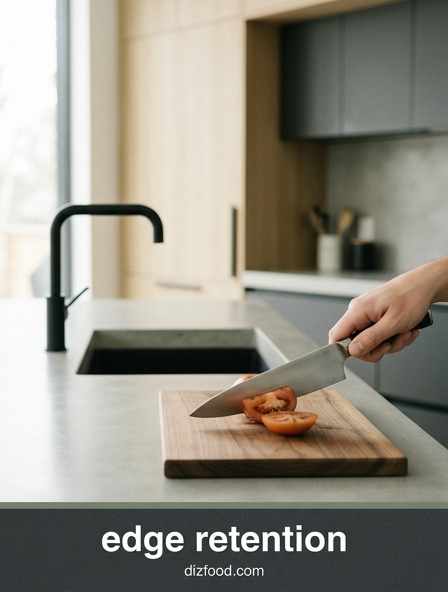
Mastering your kitchen skills begins with understanding edge retention, the essential quality that defines a knife's ability to maintain its sharpness over time. Achieving long-lasting culinary precision and performance relies heavily on how well a blade resists wear during demanding food preparation tasks. A knife that holds its edge longer not only ensures clean, effortless cuts but also enhances overall safety by requiring less force from the user. Investing in high-quality cutlery means fewer interruptions for sharpening and more time perfecting your favorite recipes. To make an informed choice for your collection, consider the specific benefits of a Ceramic Blade Vs Steel Blade to determine which material provides the superior edge you need.
Defining Edge Retention in Professional Cutlery
Edge retention refers to the ability of a knife blade to maintain its sharpness during prolonged use against various food materials. In a professional kitchen, this characteristic is paramount, as a blade that dulls quickly requires frequent interruptions for maintenance, slowing down prep work and increasing the risk of accidents. Edge retention is not a singular measurement but a complex interplay of wear resistance, toughness, and the physical stability of the apex.
Professional chefs evaluate edge retention based on how many cycles of slicing, dicing, or chopping a knife can withstand before the cutting force required increases noticeably. When a blade loses its edge, it is often due to three primary factors:
- Abrasive wear: The gradual loss of steel particles through contact with the cutting board and food.
- Deformation: The microscopic rolling or folding of the thin metal at the apex.
- Micro-chipping: Tiny fractures along the edge caused by brittle steel or impact with hard objects.
Understanding these mechanisms allows culinary professionals to choose tools that balance the need for a laser-thin edge with the durability required for high-volume service environments.
The Role of Steel Composition and Alloys
The chemical makeup of a knife blade is the fundamental determinant of its edge retention potential. Steel is essentially an alloy of iron and carbon, but the introduction of specific elements significantly enhances its ability to stay sharp. Carbon provides the hardness necessary for a keen edge, while other elements create hard particles known as carbides that resist abrasion.
Modern cutlery often utilizes high-alloy stainless steels or traditional high-carbon steels to achieve specific performance goals. The following table highlights common alloying elements found in professional kitchen knives and their impact on edge longevity:
| Element | Primary Function | Impact on Edge |
|---|---|---|
| Carbon | Hardness | Increases initial sharpness and wear resistance. |
| Vanadium | Carbide Formation | Produces very hard, fine carbides for extreme retention. |
| Chromium | Corrosion Resistance | Protects the edge from acid-induced pitting and dulling. |
| Molybdenum | Strength | Improves toughness and prevents micro-chipping. |
By selecting steels with high carbide volumes, manufacturers can produce blades that "bite" into food surfaces long after simpler steels would have failed.
How Rockwell Hardness Affects Blade Longevity
Rockwell Hardness, measured on the C scale (HRC), is a standard metric used to describe the resistance of a material to permanent indentation. In the context of kitchen knives, HRC provides a direct indicator of how well a blade will resist deformation and wear. Generally, a higher HRC rating correlates with superior edge retention, as the harder steel is less likely to roll or compress during contact with a cutting surface.
However, hardness is often a trade-off with toughness. While a very hard blade stays sharp longer, it may become brittle and prone to chipping. Most professional kitchen knives fall into the following ranges:
- 54-56 HRC: Standard commercial knives; easy to sharpen but require frequent honing.
- 58-60 HRC: High-end Western cutlery; a balance of durability and lasting sharpness.
- 61-64 HRC: Premium Japanese or boutique knives; exceptional edge retention but requires careful handling.
For high-volume prep, a knife in the 58-61 HRC range is often preferred, as it maintains its apex through hours of dicing while remaining resilient enough to withstand the occasional impact against a bone or a hard vegetable seed.
Impact of Blade Geometry on Slicing Performance
While steel quality is vital, the physical shape and grind of the blade-known as its geometry-dictate how effectively that steel interacts with food. A blade with poor geometry will feel dull even if the apex is technically sharp, because the thickness of the metal behind the edge creates unnecessary resistance during a cut. Edge retention is bolstered by geometry that supports the apex without being so thin that it collapses under pressure.
The angle of the secondary bevel is a critical component of this geometry. A narrow angle, such as 15 degrees per side, provides a very sharp, surgical feel but has less steel supporting the edge. Conversely, a 20-degree angle provides more "meat" behind the edge, increasing its durability at the expense of absolute cutting ease. Professionals must choose a grind that suits their specific tasks:
- Flat Grind: Durable and easy to maintain for general utility.
- Convex Grind: Excellent for heavy-duty tasks as the "appleseed" shape supports the edge.
- Hollow Grind: Exceptionally sharp and thin, but the edge is more fragile.
Ultimately, the best edge retention is found in blades that taper gradually toward a refined apex, minimizing friction while maintaining structural integrity.
Recognizing Signs of Edge Fatigue and Wear
Detecting when a knife has lost its optimal edge is essential for maintaining safety and efficiency in the kitchen. Edge fatigue manifests in several ways, some visible to the naked eye and others only detectable through tactile feedback during use. The most common sign is "slipping," where the blade fails to bite into the skin of a tomato or a glossy onion and instead slides across the surface, which is a primary cause of kitchen injuries.
Culinary professionals should regularly perform a visual and physical inspection of their tools. Common indicators of wear include:
- Light reflection: A sharp edge is too thin to reflect light; if you see glints along the apex, the edge has rolled or dulled.
- The Paper Test: A dull blade will snag or tear paper rather than slicing through it cleanly.
- Food Bruising: If herbs like basil turn black immediately after cutting, the blade is crushing the cells rather than slicing them.
- Increased Pressure: Noticing that you are using your shoulder or body weight to push through a carrot indicates significant edge fatigue.
Recognizing these signs early allows a chef to perform minor honing before the edge requires a full, time-consuming sharpening session on whetstones.
Selecting Cutting Surfaces to Preserve Sharpness
The surface upon which a knife works is just as important to edge retention as the steel itself. Every time a knife completes a cut, the edge strikes the board. If the board is harder than the steel, the edge will deform or chip almost instantly. Therefore, selecting a "kind" cutting surface is the easiest way to extend the time between sharpening sessions. Materials like glass, marble, and ceramic are strictly avoided in professional settings because they are abrasive and unforgiving.
The following list ranks common board materials based on their impact on edge longevity:
- End-Grain Wood: The gold standard; knife edges sink between the wood fibers rather than cutting across them.
- Edge-Grain Wood (Maple, Walnut): Excellent durability and relatively gentle on steel.
- High-Density Plastic (PE/PP): Standard in commercial kitchens for sanitation; generally gentle on edges but can be scarred over time.
- Rubber (Asahi/Hasegawa): Highly prized for premium knives; provides a soft landing that maximizes edge life.
Using a soft, high-quality wood or rubber board can increase the lifespan of a sharpened edge by up to 50% compared to hard plastic or bamboo surfaces.
Honing Versus Sharpening for Edge Stability
Maintaining a knife involves two distinct processes: honing and sharpening. Understanding the difference is crucial for maximizing edge retention without unnecessarily wearing down the blade. Honing is the process of realigning a rolled edge. During use, the microscopic apex can bend to one side. A honing rod, typically made of steel or ceramic, pushes this edge back into center alignment without removing significant metal.
Sharpening, however, is a subtractive process where abrasive stones are used to grind away old, fatigued metal to create a brand-new apex. If a knife is honed regularly, it can stay functional for weeks or months. Once the edge is truly rounded or chipped, honing will no longer suffice. The relationship between the two can be summarized as follows:
- Honing: Daily or per-task maintenance to straighten the edge.
- Stropping: Using leather to refine the apex to extreme keenness.
- Sharpening: Monthly or quarterly restoration of the geometry using whetstones.
Over-sharpening reduces the lifespan of the knife by thinning the blade prematurely, while consistent honing preserves the "sweet spot" of the edge's performance for as long as possible.
Heat Treatment Processes and Molecular Integrity
Edge retention is not solely a product of the steel's chemistry; it is also a result of how that steel was heat-treated. Even the most expensive alloy will perform poorly if the heat treatment is flawed. This process involves heating the steel to a critical temperature to change its molecular structure, followed by rapid cooling-a step known as quenching. This transforms the steel into a hard, crystalline structure called martensite.
To prevent the blade from being too brittle, it must then undergo tempering, where it is reheated to a lower temperature to regain some toughness. Some high-end manufacturers also utilize cryogenic treatment, cooling the blade to sub-zero temperatures (often using liquid nitrogen) to further refine the grain structure and convert any retained austenite into martensite. This molecular refinement results in:
- Increased wear resistance through better carbide distribution.
- Higher structural stability at the microscopic level.
- Greater resistance to fatigue under repetitive stress.
A superior heat treatment ensures that the edge remains stable and does not "crumble" at the microscopic level when subjected to the rigors of a professional kitchen environment.
Daily Maintenance Habits for Peak Precision
Preserving a razor-sharp edge is a matter of discipline and daily habits. Even a knife with the best edge retention will fail prematurely if subjected to improper care. One of the most damaging habits is scraping dicing food off a cutting board using the edge of the knife. This lateral pressure is devastating to a fine apex and can cause immediate rolling. Instead, chefs should flip the knife over and use the spine for scraping.
Effective daily maintenance routines should include the following steps:
- Hand-washing only: Dishwashers use harsh detergents and high heat that can corrode the edge and cause it to rattle against other items.
- Immediate drying: Preventing moisture buildup stops the formation of micro-corrosion that dulls the edge.
- Proper storage: Using a magnetic rack or blade guard prevents the edge from contacting other metal tools.
- Controlled cutting: Avoiding frozen foods, bones, or hard pits unless using a specialized cleaver.
By treating a knife as a precision instrument rather than a general utility tool, culinary professionals ensure that the edge retention engineered into the steel is fully realized in daily practice.
Long Term Benefits of Superior Edge Endurance
Investing in cutlery with superior edge retention offers significant long-term advantages that extend beyond mere convenience. From a financial perspective, a knife that stays sharp longer requires less frequent sharpening, which means less metal is removed over its lifetime. This dramatically extends the usable life of the tool, often making a premium knife more cost-effective than several cheaper alternatives that wear away quickly. Furthermore, sharp knives are safer; they require less force, reducing the likelihood of a slip that could lead to a serious injury.
The culinary benefits are equally important for the professional and the enthusiast alike. High edge endurance ensures consistent results throughout a shift. Benefits include:
| Benefit | Result |
|---|---|
| Efficiency | Faster prep times and less physical fatigue for the chef. |
| Food Quality | Clean cuts preserve juices and texture, improving plate presentation. |
| Safety | Predicable blade behavior reduces the risk of accidental slips. |
Ultimately, a blade that maintains its integrity allows the cook to focus on the art of cooking rather than the frustration of a failing tool, ensuring peak precision from the first slice to the last.

Comments