
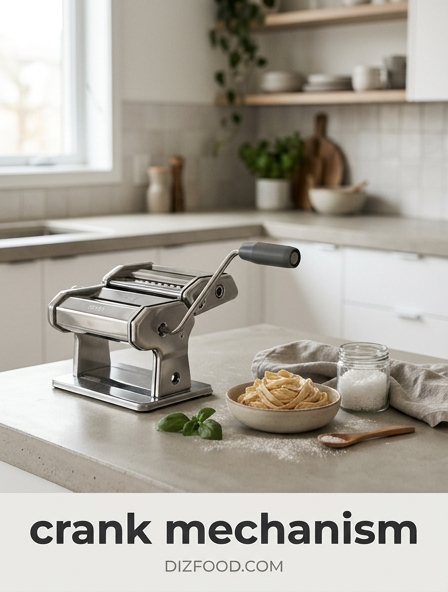
Mechanical Advantage of Crank Handles
The implementation of a crank mechanism in kitchen tools like spiralizers and graters relies heavily on the principles of mechanical advantage. By utilizing a lever arm-the handle-users can apply a relatively small amount of force to generate significant torque. This rotational force is transferred to the central axle, allowing the device to slice through dense vegetables such as sweet potatoes or rutabagas with minimal effort. The length of the crank handle determines the ease of the task; a longer radius decreases the input force required to overcome the resistance of the food item against the blades.
Unlike direct-pressure tools, where the user must push downward with their full weight, the circular motion of a crank distributes energy more efficiently. This system converts the user's kinetic energy into a steady, controlled cutting action. This mechanical benefit is particularly evident when processing large quantities of produce, as it prevents the rapid energy depletion often associated with manual chopping. The synergy between the gear ratios and the handle length ensures that even the toughest fibrous materials are processed with precision and speed, making the crank handle an indispensable component of manual kitchen engineering.
Achieving Uninterrupted Vegetable Lengths
One of the primary benefits of a crank-driven system is the ability to produce exceptionally long, continuous strands of vegetables. When using a standard knife or a handheld peeler, the user is limited by the stroke length of their arm and the need to reset the blade frequently. In contrast, a crank mechanism allows for a 360-degree rotation that keeps the vegetable in constant contact with the blade. As the handle turns, the vegetable is fed forward at a synchronized rate, ensuring that the spiralization process never breaks unless the user stops the motion.
This continuity is essential for creating authentic "zoodles" or curly fries that maintain their structural integrity during cooking. The steady feed rate prevents the thinning or snapping of strands that often occurs with jerky, manual movements. By maintaining a rhythmic pace, the crank ensures that the vegetable is engaged with the cutting teeth at a consistent angle. This results in professional-grade presentation, where garnishes and main components feature elegant, unbroken curls that enhance the visual appeal of the dish while ensuring uniform cooking times across the entire batch of produce.
Ergonomic Benefits for Continuous Slicing
Ergonomics play a vital role in the design of kitchen machinery, particularly for tasks involving repetitive motions. Crank mechanisms are specifically engineered to align with the natural rotational capabilities of the human wrist and shoulder. Instead of the jarring, vertical impact required by a mandoline or the high-grip tension needed for a knife, the circular motion of a crank uses larger muscle groups. This design reduces the localized stress on the small tendons of the hand, providing a more comfortable experience for the operator during extended prep sessions.
- Reduced Grip Tension: The palm-focused grip on a crank handle requires less finger strength than holding a narrow knife handle.
- Fluid Motion: Circular rotation minimizes the sudden stops and starts that lead to joint inflammation.
- Shoulder Engagement: The motion allows for the redistribution of force up the arm, involving the bicep and shoulder rather than just the wrist.
- Adaptive Positioning: Users can often adjust their stance to find the most comfortable angle for turning.
By prioritizing these ergonomic factors, manufacturers ensure that their tools are accessible to a wider range of users, including those with minor mobility issues or arthritis. The result is a more inclusive kitchen environment where high-volume food preparation does not result in physical discomfort.
Consistent Ribbon Thickness and Texture
Consistency is the hallmark of professional culinary preparation, and the crank mechanism is the key to achieving uniform results. Because the forward momentum of the vegetable is linked directly to the rotation of the handle, the thickness of each slice or ribbon remains constant from start to finish. In a manual slicing scenario, the pressure applied by the hand often varies, leading to thick and thin spots that cook at different rates. The mechanical linkage in a crank-operated device removes this variability by locking the feed rate into the gear system.
This precision affects not just the appearance but also the mouthfeel and texture of the food. Whether producing paper-thin cucumber ribbons for a salad or thicker potato slices for a gratin, the crank ensures that every piece is a carbon copy of the last. This uniformity is vital for heat penetration; consistent thickness ensures that every strand of a vegetable pasta dish reaches the desired al dente state simultaneously. The mechanical control offered by the crank eliminates the guesswork, allowing home cooks to replicate the precise textures found in high-end restaurant plating with minimal training.
Efficiency of Rotational Force
The efficiency of rotational force in a kitchen context cannot be overstated. When a user turns a crank, they are utilizing centripetal acceleration to drive the cutting surface. This is far more efficient than linear motion because the momentum of the heavy handle or internal flywheel helps carry the motion through the toughest parts of the vegetable. Once the initial resistance is broken, the inertia generated by the rotating assembly assists in maintaining a smooth, rapid pace. This allows for the processing of several pounds of produce in a fraction of the time it would take using traditional methods.
Furthermore, the conversion of energy is direct. In an electric processor, energy is lost through heat and motor friction, but a well-oiled manual crank delivers the user's power directly to the blade. This immediate feedback loop allows the cook to feel the resistance and adjust their speed accordingly, preventing the "mashing" effect that can occur when high-speed electric blades hit a soft spot in the produce. The efficiency of the crank makes it a superior choice for those looking to balance speed with delicacy, ensuring that the structural integrity of the food is preserved while maximizing output.
Stability and Control During Operation
Stability is a critical safety and performance factor when dealing with sharp kitchen blades. Crank-operated devices are typically designed with a wide base and heavy-duty suction feet to ensure they remain anchored to the countertop. This stability is necessary because the force applied to the handle is lateral, which could otherwise cause the unit to slide. By securing the device, the manufacturer allows the user to focus entirely on the rotation and the feed pressure, rather than struggling to keep the tool in place. This stationary nature provides a level of control that handheld tools simply cannot match.
Control is further enhanced by the tactile feedback provided through the handle. The user can sense exactly how the blade is interacting with the vegetable's core or skin. If a seed or a particularly hard knot is encountered, the user can instantly slow down or reverse the rotation to clear the path. This level of granular control reduces the risk of blade damage and ensures a cleaner cut. In contrast to high-speed motorized units, the manual crank provides a "slow-food" approach to prep that prioritizes the quality of the cut and the safety of the operator through total environmental stability.
Minimizing Physical Strain and Fatigue
Manual food preparation is often the most labor-intensive part of cooking, leading to significant fatigue when preparing meals for large groups. The crank mechanism serves as a force multiplier that significantly lowers the physical threshold required for prep work. By spreading the effort over a longer duration of motion rather than short, intense bursts, the cardiovascular and muscular load is reduced. This allows for longer periods of activity without the onset of muscle cramps or "chef's wrist," a common ailment among those who perform repetitive chopping tasks.
| Feature | Traditional Knife | Crank Mechanism |
|---|---|---|
| Primary Muscle Group | Wrist/Forearm | Full Arm/Shoulder |
| Impact Force | High (per stroke) | Low (fluid) |
| Fatigue Rate | Rapid | Slow |
| Control Type | Manual/Variable | Mechanical/Fixed |
As shown, the transition from localized wrist movement to broader arm movement helps in maintaining stamina. For professional kitchens where prep might last several hours, or for home cooks preparing seasonal harvests for preservation, the crank mechanism is an essential tool for maintaining productivity while safeguarding the user's physical well-being.
Precision Blade Alignment and Flow
The relationship between the crank handle and the blade assembly is a masterpiece of simple engineering. For a spiralizer or grater to work effectively, the blade must be perfectly aligned with the axis of rotation. The crank ensures that the vegetable rotates around a fixed center point, which keeps the cutting edge at an optimal angle throughout the entire process. This alignment is what prevents the "tapering" effect, where the vegetable becomes lopsided or difficult to turn halfway through. The flow of the vegetable through the blade is governed by the pitch of the screw or the angle of the feed plate.
When the user turns the handle, the internal screw mechanism dictates exactly how many millimeters the vegetable advances per rotation. This synchronized flow ensures that the blade is never overwhelmed by too much material, which would cause jamming, nor is it "running dry," which leads to ragged edges. The precision of this flow results in a clean, sheared surface on the vegetable, which helps in retaining juices and nutrients. By maintaining a strict geometric relationship between the turning food and the stationary blade, the crank mechanism guarantees a level of precision that is nearly impossible to achieve through freehand cutting.
Optimizing Kitchen Workflow with Spirals
Incorporating a crank-driven spiralizer into the kitchen workflow can dramatically increase efficiency during the "mise en place" phase. Preparation that once took twenty minutes of careful knife work can be condensed into less than five minutes of rhythmic cranking. This time-saving aspect allows the cook to focus on more complex tasks, such as sauce reduction or protein searing. Because the tool produces a large volume of uniform product quickly, it encourages the use of more vegetables in daily meals, catering to modern dietary trends like low-carb or gluten-free cooking.
The workflow is also optimized by the ease of cleanup and setup. Most crank-operated tools are designed for quick assembly, with interchangeable blade plates that click into place. In a fast-paced environment, the ability to switch from a ribbon blade to a spaghetti blade in seconds is invaluable. The predictability of the output also aids in portion control; a specific number of handle rotations can correlate to a standard serving size, making it easier to manage inventory and consistency in a commercial setting. Ultimately, the crank mechanism acts as a bridge between the slow precision of hand tools and the impersonal speed of electric processors.
Durability of Manual Crank Systems
Durability is a major advantage of manual crank systems over their electronic counterparts. In the harsh environment of a kitchen, where moisture, heat, and acidity are constant, electronic components are prone to failure. Motors can burn out, and circuit boards can short-circuit. In contrast, a manual crank system relies on robust mechanical parts-gears, axles, and bearings-that are built to last for years, if not decades. The simplicity of the design means there are fewer points of failure, and most issues can be resolved with simple cleaning or lubrication.
Furthermore, these tools are often constructed from high-impact plastics or stainless steel, materials that withstand the rigors of heavy use. The lack of a power cord also adds to the tool's longevity, as there are no wires to fray or plugs to break. This portability means the tool can be used anywhere, from an outdoor kitchen to a camping site, without worrying about battery life or electrical outlets. For the sustainability-minded consumer, a manual crank tool represents a lifetime investment that avoids the "planned obsolescence" often found in modern kitchen gadgets, providing reliable service through thousands of rotations.


Comments