
Understanding the Science of IQF Technology
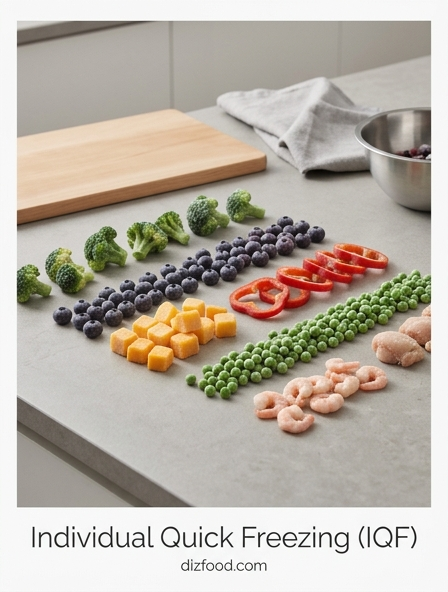
Individual Quick Freezing, commonly referred to as IQF, is a specialized preservation method used in the culinary industry to ensure that small food items do not clump together during the freezing process. Unlike traditional bulk freezing, where products are frozen slowly in large masses, IQF utilizes a fluidized bed freezer or cryogenic systems to freeze each piece of food independently. This is achieved by exposing the items to extremely cold temperatures-often reaching as low as -40 degrees Fahrenheit-while they are kept in constant motion on a conveyor belt or via high-velocity air streams.
This technology is particularly vital for delicate kitchen ingredients such as berries, shrimp, peas, and diced meats. By treating each unit as a separate entity, the process ensures that the internal temperature drops rapidly, passing the thermal arrest point in record time. For the professional chef or home cook, the results are highly functional:
- Easier portion control as items remain loose and flowable.
- Faster thawing times due to increased surface area exposure.
- Significant reduction in food waste by allowing for the use of exact quantities.
- Consistent product quality across large batches of ingredients.
How Rapid Freezing Prevents Large Ice Crystals
The primary enemy of frozen food quality is the formation of large ice crystals. When food is frozen slowly, water molecules within the biological cells have ample time to migrate and bond together, forming jagged, macro-crystalline structures. These large crystals act like tiny knives, piercing the delicate membranes of the food. IQF technology circumvents this issue by moving the product through the "zone of maximum crystallization" at an accelerated pace. This zone, typically between 25 and 31 degrees Fahrenheit, is where the most significant crystal growth occurs.
By bypassing this temperature range in minutes rather than hours, IQF forces the water molecules to solidify into millions of microscopic crystals. Because these crystals are so small, they remain contained within the original cellular boundaries of the fruit, vegetable, or protein. This prevents the physical distortion of the ingredient's internal architecture. Consequently, when the food is eventually brought back to room temperature for cooking, it maintains its original density and firmness rather than becoming mushy or losing its structural integrity, which is a common failure of domestic freezing methods.
Preserving Cellular Structure and Texture
In the professional kitchen, texture is just as important as taste. When a vegetable or piece of seafood undergoes standard slow freezing, the resulting cellular damage leads to a phenomenon known as "softening." This occurs because the ruptured cell walls can no longer hold the internal turgor pressure that gives fresh produce its characteristic snap. IQF technology is specifically designed to preserve this microscopic framework. By ensuring that the ice crystals remain diminutive, the internal skeletal structure of the food remains intact and undamaged.
This preservation of cellular structure is particularly noticeable in high-moisture items like spinach or scallops. When these items are IQF-processed, they retain their natural elasticity and "bite." When a chef sautés an IQF-frozen shrimp, it maintains a springy, firm texture that is nearly indistinguishable from fresh-caught varieties. This structural stability also means that the food is less likely to collapse during high-heat cooking applications. By protecting the cells at a molecular level, IQF provides a reliable foundation for complex recipes that require ingredients to hold their shape and provide a specific mouthfeel for the diner.
Maximizing Nutrient Density through Flash Freezing
There is a common misconception that frozen produce is less nutritious than fresh; however, IQF technology often proves the opposite. Most fresh produce sold in markets undergoes a lengthy transportation period, during which vitamins begin to degrade. IQF ingredients are typically harvested at peak ripeness and processed within hours. The rapid application of extreme cold "locks in" the nutritional profile of the food at its most potent stage. Because the freezing happens so fast, the metabolic processes that consume nutrients within the plant or animal tissue are halted almost instantaneously.
The retention of micronutrients is especially high in IQF products because there is no time for the thermal degradation of heat-sensitive compounds. Furthermore, since the cellular walls remain unruptured, the nutrient-rich fluids-which contain vitamins and minerals-do not leak out during the thawing process. This means the final dish served to the consumer contains a higher concentration of beneficial compounds. From a health perspective, using IQF ingredients ensures that the kitchen is serving food that is biologically dense and nutritionally superior to items that have sat in refrigerated storage for several days.
Why IQF Beats Conventional Freezing Methods
Choosing between IQF and conventional freezing can significantly impact the operational efficiency and output quality of a commercial kitchen. Conventional freezing, often called "block freezing," results in a solid mass of ice and food that requires complete thawing before any part can be used. This leads to increased prep time and higher risks of bacterial growth during the long defrosting cycle. IQF addresses these logistical hurdles by providing a superior physical state for the ingredients.
| Feature | Conventional Freezing | IQF Technology |
|---|---|---|
| Product State | Solid blocks/clumps | Individually separated |
| Freezing Speed | 6 to 24 hours | 10 to 30 minutes |
| Crystal Size | Large and destructive | Microscopic and safe |
| Thawing Loss | High moisture/drip loss | Minimal fluid loss |
| Portion Control | Difficult; must use all | Easy; use only what is needed |
The ability to pour out a specific weight of blueberries or peas directly from a bag without needing to thaw the entire package is a game-changer for high-volume service, reducing both labor costs and raw material waste.
Protecting Essential Vitamins and Minerals
Vitamin C and B-complex vitamins are notoriously fragile, being sensitive to both light and oxygen. In a standard kitchen environment, fresh vegetables lose a significant percentage of these essential nutrients within just forty-eight hours of harvest. IQF technology acts as a protective shield for these volatile substances. By rapidly dropping the temperature, the process creates a stable environment where oxidation is virtually eliminated. This is crucial for maintaining the antioxidant properties of colorful fruits and vegetables, which are often the first things to vanish during long-term cold storage.
Furthermore, because IQF avoids the "drip loss" associated with cellular rupture, minerals like potassium, magnesium, and calcium remain trapped within the food's matrix. In traditional freezing, these minerals are often washed away in the purge-the liquid that drains out of the food upon thawing. By keeping the internal moisture localized within the individual pieces, IQF ensures that the mineral content remains consistent from the farm to the fork. This makes IQF an indispensable tool for kitchens focused on health-conscious menus and high-performance nutrition for their clientele.
Maintaining Natural Flavor and Aroma Profiles
The culinary value of any ingredient is ultimately judged by its flavor and aroma. These sensory characteristics are governed by volatile organic compounds that are highly susceptible to degradation when exposed to air or slow temperature changes. IQF preservation is exceptionally effective at trapping these aromatic molecules. Because the freezing process occurs so quickly, the surface of the food is sealed almost instantly, preventing the "gas exchange" that leads to the loss of natural scents and the development of off-flavors commonly associated with old frozen food.
When food is frozen slowly, the concentration of solutes inside the cells can change, leading to chemical shifts that alter the taste profile, often making it taste "muted" or "stale." IQF maintains the chemical equilibrium of the ingredient. This means that a corn kernel frozen via IQF retains its natural sweetness, and a piece of basil or other herb maintains its pungent, essential oils. For chefs, this means that IQF ingredients provide a reliable flavor baseline that requires less corrective seasoning. The result is a dish that tastes fresh, vibrant, and true to its original source, even months after the ingredient was originally harvested.
The Role of Speed in Enzyme Deactivation
Natural enzymes are present in all organic kitchen ingredients; they are responsible for ripening, but they also lead to over-ripening, browning, and eventual spoilage. Even in a standard freezer, these enzymes can remain active, albeit at a slower rate, causing the food to change color and develop "freezer burn" or rancid notes over time. The extreme speed of IQF technology is designed to halt these enzymatic reactions almost instantly. By plunging the product into deep-freeze temperatures, the kinetic energy required for these chemical reactions is removed.
In many cases, IQF is preceded by a very brief blanching process, but the rapid freezing is what truly secures the enzymes in an inactive state. This is particularly important for proteins and fatty fish, where lipid oxidation can lead to a "fishy" or metallic taste if the freezing is not fast enough to stop enzymatic breakdown. By effectively "stopping time" at the molecular level, IQF prevents the internal chemical aging of the food. This allows the ingredients to stay in a state of suspended animation, ensuring that when they are finally used, they possess the same chemical profile as they did the moment they were processed.
Preventing Drip Loss and Cellular Rupture
One of the most visible indicators of poor freezing quality is "drip loss"-the pool of liquid found at the bottom of a container once food has thawed. This liquid is not just water; it is cellular fluid containing proteins, sugars, and vitamins. Drip loss occurs when large ice crystals rupture the cell membranes during the freezing phase. When the ice melts, the cell can no longer hold its contents, and they leak out, leaving the food dry, stringy, and flavorless. IQF technology is the primary defense against this loss of quality.
Because IQF creates tiny, non-invasive crystals, the integrity of the cell wall is maintained. Upon thawing, the cells reabsorb the moisture they held before freezing, rather than letting it escape. This is critical for high-value proteins like salmon or beef, where weight loss during thawing can directly impact the bottom line and the juiciness of the cooked product. By minimizing drip loss, IQF ensures that the weight of the product purchased is the weight of the product served. More importantly, it ensures that the moisture remains inside the food where it belongs, providing a succulent and moist dining experience for the consumer.
Optimizing Long Term Freshness for Kitchen Prep
In a professional kitchen, efficiency is paramount, and IQF technology offers significant advantages for "mise en place" and inventory management. Because items are individually frozen, they can be easily measured and utilized in precise increments, eliminating the need to defrost large quantities of food that may not be used. This streamlines the preparation workflow and ensures that the freshness of the remaining stock is never compromised by repeated temperature fluctuations or exposure to the elements.
To maximize the benefits of IQF in long-term kitchen storage, chefs should follow specific handling protocols:
- Always keep the bag tightly sealed to prevent surface dehydration or the absorption of odors from other foods.
- Retrieve only the necessary amount and return the bulk container to the freezer immediately to maintain the "cold chain."
- Label containers with the date of entry to ensure a "First-In, First-Out" (FIFO) rotation system.
- Store at a consistent temperature of 0 degrees Fahrenheit or lower to prevent any partial melting that could cause clumping.
By integrating IQF products into the kitchen prep routine, culinary teams can achieve a level of consistency and freshness that is otherwise difficult to maintain with fresh-only supply chains.






Comments