
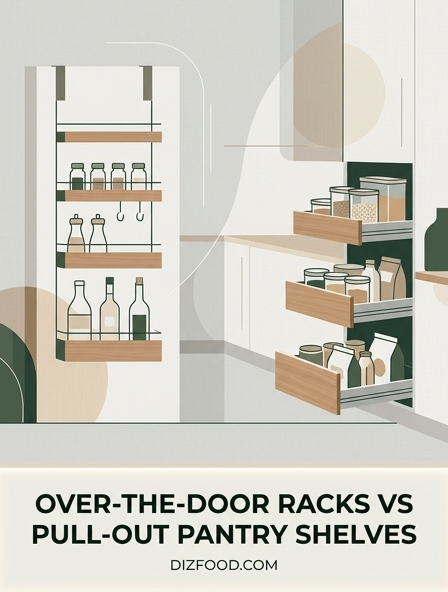
Struggling to decide how to conquer your kitchen clutter? Choosing between over-the-door racks and pull-out pantry shelves is the ultimate showdown in kitchen organization, pitting instant accessibility against deep-storage ergonomics. Over-the-door racks are a renter-friendly dream, utilizing "dead space" on the back of doors for spices and snacks without requiring a single power tool. On the other hand, pull-out pantry shelves are a premium upgrade designed to eliminate the frustration of digging through dark cabinets, bringing heavy pots and bulk items directly to you with a smooth glide. Whether you prioritize a budget-friendly DIY fix or a high-capacity, permanent storage transformation, understanding the nuances of weight limits and installation will help you select the perfect solution to streamline your culinary workspace.
| Feature | Over-The-Door Racks | Pull-Out Pantry Shelves |
|---|---|---|
| Installation | Tool-free; hangs over door frame in seconds. | Requires hardware, rails, and drilling into cabinetry. |
| Weight Capacity | Low (approx. 20-50 lbs total); best for light items. | High (50-100+ lbs per shelf) for heavy appliances. |
| Space Utilization | Uses vertical door space; adds depth to door swing. | Maximizes deep cabinet corners; eliminates "lost" items. |
| Accessibility | Instant visibility; items are always exposed. | Full-extension slide-out for ergonomic reaching. |
| Durability | Varies; usually wire or plastic. Can rattle. | High; typically solid wood or heavy-duty steel. |
| Price Point | Budget-friendly ($20 - $70). | Investment-grade ($50 - $300+ per unit). |
Maximizing Small Kitchen Spaces: Over-the-Door Racks vs. Pull-Out Shelves
Small kitchen design often feels like a puzzle where the goal is to fit a full-sized pantry into a miniature floor plan. When every square inch counts, homeowners must look beyond traditional shelving to find hidden storage opportunities. Over-the-door racks and pull-out pantry shelves represent two of the most effective strategies for reclaiming lost space, though they approach the problem from different angles. Over-the-door racks utilize the often-ignored vertical plane of a pantry or closet door, turning a flat surface into a multi-tiered storage zone. This is particularly valuable in apartments where modifying cabinetry isn't an option, as it adds depth to the room without encroaching on the walking path.
In contrast, pull-out shelves focus on maximizing the internal volume of existing cabinets. Deep cabinets are notorious for becoming "black holes" where canned goods and spices disappear into the shadows at the back. By installing a sliding mechanism, you effectively bring the back of the cabinet to the front, ensuring that no space is left unused. While the door rack adds entirely new surface area, the pull-out shelf optimizes what you already have. Choosing between them depends on whether your bottleneck is a lack of shelving altogether or an inability to reach the items you already own. For those in truly cramped quarters, a combination of both can transform a cluttered kitchen into a streamlined workspace by utilizing both the interior depths and the exterior boundaries of the storage area.
Comparing Storage Capacity for Door Racks and Sliding Pantry Shelves
Understanding the volume capacity of these storage solutions is essential for effective organization. Door racks are primarily designed for lightweight, slim items. They excel at holding spices, condiment bottles, snacks, and cling wrap boxes. Because they rely on the door's width and the clearance between the door and the interior shelves, their depth is usually limited to four or five inches. This prevents them from holding large cereal boxes or heavy small appliances, but it makes them perfect for the high-frequency items that often clutter main shelves.
Sliding pantry shelves, however, are the heavy-duty workhorses of kitchen storage. These units are built to handle the full depth of a standard 24-inch kitchen cabinet. This allows for the storage of bulky items like gallon-sized jugs, stacks of dinner plates, or heavy cast-iron cookware. When comparing the two, consider the following capacity breakdown:
| Feature | Over-The-Door Racks | Pull-Out Shelves |
|---|---|---|
| Ideal Items | Spices, jars, small cans | Flour bags, appliances, bulk goods |
| Weight Support | 10-30 lbs total | 50-100 lbs per shelf |
| Depth Usage | Surface level (2-5 inches) | Full cabinet depth (20-24 inches) |
While a door rack might offer six to eight tiers of storage, the sheer volume of a single pull-out shelf often exceeds the total cubic space of an entire door-mounted unit. The decision usually comes down to whether you need more "slots" for small items or more "volume" for large ones.
Pros and Cons of Door-Mounted Storage Solutions
Over-the-door racks are among the most popular aftermarket kitchen upgrades due to their simplicity and immediate impact. However, they come with a specific set of trade-offs that users should evaluate before purchasing. The primary advantage is visibility; items are displayed at eye level, making it nearly impossible to lose track of your inventory. This "at-a-glance" accessibility is a major time-saver during busy meal preparation. On the downside, these racks can put significant strain on door hinges, potentially leading to misalignment or squeaking over time.
- Pro: Easy Installation - Most models require no tools and can be hung over the door in seconds.
- Pro: Affordable - Generally much cheaper than custom cabinetry or sliding hardware.
- Pro: Rental Friendly - Can be removed without leaving permanent holes or damage.
- Con: Noise and Movement - Racks may rattle or swing when the door is opened or closed quickly.
- Con: Weight Restrictions - Overloading the rack can warp the door frame or damage the top of the door.
- Con: Visual Clutter - If not meticulously organized, a door rack can make a kitchen look busy or messy.
Ultimately, door-mounted storage is a fantastic "quick fix" for organizational woes. It provides an immediate relief for crowded counters but requires a disciplined approach to weight management and aesthetic arrangement to remain functional in the long term.
Benefits of Installing Pull-Out Pantry Shelves for Better Accessibility
The ergonomic benefits of pull-out pantry shelves cannot be overstated. Standard fixed shelving requires the user to bend, reach, and often kneel to see what is hidden in the back corners. For individuals with mobility issues or back pain, this is more than an inconvenience; it is a barrier to using the kitchen effectively. Pull-out shelves solve this by gliding outward on ball-bearing tracks, presenting the entire contents of the shelf in the light of the room. This "bringing the shelf to the user" philosophy significantly reduces physical strain and increases the speed of cooking.
Beyond physical ease, these shelves improve "inventory mindfulness." When you can see every can and box clearly, you are less likely to buy duplicates of items you already have. This leads to less food waste and more efficient grocery shopping. Furthermore, pull-out units allow for better categorization. You can designate specific drawers for baking supplies, canned vegetables, or breakfast items, keeping everything in its right place. While the initial setup requires more effort and financial investment than a simple rack, the long-term payoff in kitchen efficiency and physical comfort is substantial. It transforms a deep, dark cupboard into a highly organized library of ingredients, making every inch of your cabinetry work toward your culinary goals.
Durability and Weight Limits: Door Racks vs. Sliding Units
When discussing durability, the construction materials and the points of attachment are the most critical factors. Over-the-door racks are typically made of lightweight wire or plastic. While sturdy enough for everyday use, they are susceptible to bending if heavy jars are concentrated on a single tier. The real durability concern, however, isn't the rack itself but the door it hangs on. Standard interior doors are often hollow-core, meaning they lack the internal structure to support heavy loads. Excessive weight can cause the top bracket to bite into the wood or the hinges to sag, affecting the door's ability to latch correctly.
Sliding units, conversely, are designed for longevity and heavy-duty performance. Most are constructed from solid wood, heavy-duty steel, or thick chrome plating. Because they are anchored directly to the floor of the cabinet or the side walls, they transfer the weight to the strongest part of the kitchen's structure. High-quality sliders often feature "soft-close" technology, which prevents the shelf from slamming and protects the mechanical components from wear and tear. If you plan to store heavy appliances like stand mixers or stacks of canned goods, sliding units are the only viable choice. They are built to withstand hundreds of cycles of opening and closing under load, whereas a door rack is more of a light-duty accessory intended for minor organizational improvements.
Cost-Effective Pantry Organization: Racks vs. Custom Pull-Outs
Budget is a primary driver in any home improvement project, and kitchen organization is no exception. Over-the-door racks are remarkably cost-effective, with basic wire models often priced between $20 and $50. This low entry price makes them accessible for students, renters, and budget-conscious families. They provide an immediate ROI by clearing counter space and reducing the need for additional furniture. For many, a single $30 door rack provides enough extra storage to delay or even cancel more expensive kitchen renovations.
Pull-out shelves exist on a wider price spectrum. Pre-fabricated, DIY kits can be found for $40 to $100 per shelf, but custom-built solutions or high-end professional installations can cost several hundred dollars per unit. While the upfront cost is higher, pull-out shelves are often viewed as a permanent home improvement that adds resale value to a property. Consider these factors when budgeting:
- Initial Purchase Price: Racks are significantly cheaper upfront.
- Installation Costs: Racks are free to install; pull-outs may require hiring a handyman if you aren't DIY-savvy.
- Long-Term Value: Pull-outs improve the actual infrastructure of the home, potentially increasing its appeal to future buyers.
- Replacement Cycle: Cheap racks may need replacement every few years, while quality sliders can last decades.
For those on a strict budget, the door rack is the winner. For those looking at home equity and long-term utility, the investment in pull-out shelving is usually justified by its durability and functional superiority.
Installation Requirements for Door-Hung Organizers and Pantry Sliders
The barrier to entry for these storage solutions varies wildly in terms of technical skill and tools required. Over-the-door organizers are designed for "plug-and-play" utility. Most feature hooks that simply slip over the top edge of a standard door. Some models include optional screws to secure the bottom of the rack so it doesn't bounce, but even these require nothing more than a basic screwdriver and five minutes of time. This makes them the ideal choice for anyone who is uncomfortable using power tools or is prohibited by a lease from making permanent changes.
Pantry sliders, however, require a more methodical approach to installation. Success begins with precise measurement; even a quarter-inch error can prevent the tracks from aligning properly or the cabinet door from closing. The installation process typically involves:
- Measuring the internal width, depth, and height of the cabinet.
- Checking for obstructions like hinges or plumbing.
- Leveling the tracks to ensure the drawer doesn't slide open or closed on its own.
- Securing the base or side-mount brackets using a power drill and wood screws.
While many modern kits come with templates to simplify the process, it still requires a degree of mechanical aptitude. If your cabinets are older or custom-sized, you might even need to modify the interior or shim the tracks to get a perfect fit. For the average homeowner, a door rack is a five-minute task, while a single pull-out shelf might take an hour or more to install correctly.
Visual Aesthetics: Sleek Pull-Outs vs. Visible Door Storage
Design preference plays a major role in the choice between these two storage systems. Kitchens are often the heart of the home, and maintaining a specific "look" is important to many. Pull-out shelves are the masters of the "hidden" kitchen. From the outside, your cabinets look exactly as they always have-clean, uniform, and uncluttered. It is only when you open a door and pull out a drawer that the organized complexity is revealed. This is perfect for minimalist designs or modern kitchens where the goal is to keep as much as possible out of sight.
Over-the-door racks are much more visible. Even if they are mounted on the inside of a pantry door, they are fully exposed every time the pantry is accessed. If the rack is mounted on the outside of a door to save space, it becomes a permanent part of the room's visual landscape. This can lead to a "busy" look, especially if the items stored are colorful or mismatched. However, for those who enjoy a "chef's kitchen" aesthetic where tools and ingredients are part of the decor, a well-organized door rack can look industrious and professional. The choice depends on whether you prefer the "out of sight, out of mind" approach of sliders or the "easy access, high visibility" nature of the rack. Those concerned with a high-end, polished look almost always opt for integrated pull-outs.
Optimizing Workflow with Efficient Pantry Storage Placements
Kitchen efficiency is defined by the "work triangle"-the path between the sink, stove, and refrigerator. Storage should support this flow, not hinder it. Over-the-door racks are best placed on the door nearest to the primary prep area. If your pantry is across the room, the rack should hold "long-term" items. If the door is right next to the stove, it is the perfect spot for oils, vinegars, and spices. The key to door storage is frequency; the things you reach for ten times a day should be at eye level on that rack, saving you from having to open a drawer or cabinet repeatedly.
Pull-out shelves are better suited for "assembly" tasks. For example, a lower pull-out shelf near the oven can house heavy baking dishes and mixers, allowing you to slide them out, grab what you need, and slide them back with minimal effort. Because they can hold more weight, they are better for the heavy ingredients needed for bulk meal prep. To optimize your workflow, consider using a door rack for your "active" ingredients (the ones you use while the pan is hot) and pull-out shelves for your "static" supplies (the ones you pull out before you start cooking). This hybrid approach ensures that your most heavy and most frequent items are both handled in the most ergonomic way possible, reducing the time spent walking back and forth across the kitchen.
Choosing the Right Pantry Solution for Your Kitchen Needs
Deciding between over-the-door racks and pull-out shelves ultimately requires an honest assessment of your lifestyle, living situation, and cooking habits. There is no one-size-fits-all answer, as the "best" solution is the one that solves your specific frustrations. If you are a renter who loves to cook but lacks spice storage, a door rack is an unbeatable, low-cost solution that you can take with you when you move. It provides instant gratification and vertical expansion without the need for landlord approval or complex tools.
On the other hand, if you are a homeowner looking to invest in the long-term functionality and value of your kitchen, pull-out shelves are a superior choice. They offer better weight capacity, a cleaner aesthetic, and superior ergonomics. Before making a final decision, ask yourself the following questions:
- How much weight do I need to support? (Choose pull-outs for heavy items).
- Am I allowed to drill holes in my cabinets? (Choose racks if the answer is no).
- Is my main problem reaching the back of shelves or a total lack of shelf space? (Reach = pull-outs; Space = racks).
- What is my budget for this project? (Racks for low budget; pull-outs for investment).
By weighing these factors against your daily kitchen experience, you can create an organized environment that makes cooking more enjoyable and less of a chore. Whether it's the quick-fix rack or the custom-feel slider, both tools are excellent ways to reclaim your kitchen from chaos.


Comments