
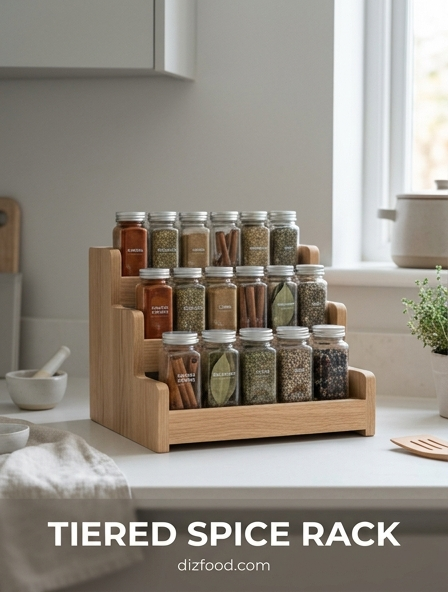
Benefits of Using a Tiered Spice Rack in Your Pantry
Implementing a tiered spice rack into your pantry setup fundamentally transforms how you interact with your culinary ingredients. The primary advantage is the "stadium seating" effect, which elevates the back rows of jars so they remain visible behind the front ones. This visibility eliminates the common problem of losing small containers in the dark recesses of deep shelves, which often leads to the accidental purchase of duplicate ingredients. By utilizing a tiered system, you gain an immediate visual inventory of your stock, streamlining the meal planning and grocery shopping process.
- Enhanced visibility of every label in the collection.
- Reduction in food waste by preventing expired spices from hiding.
- Improved organization that speeds up the cooking process.
- Optimized shelf depth usage without sacrificing accessibility.
Furthermore, these racks contribute to a sense of order and aesthetic appeal. When every jar has a designated "step," the pantry looks professionally organized, which can increase the enjoyment of cooking. This structural approach also protects glass jars from being knocked over while you search for a specific spice, reducing the risk of breakage and spills on your pantry floor.
Measuring Your Pantry Shelf for a Perfect Fit
Before purchasing a tiered spice rack, precise measurements are essential to ensure the unit functions correctly within your specific pantry dimensions. A rack that is too wide will not sit flush, while one that is too deep may prevent the pantry door from closing or obstruct other items. Start by clearing the shelf entirely to get an unobstructed view of the available space. Use a firm metal measuring tape rather than a flexible cloth one for the most accurate results.
- Measure the total width of the shelf from side wall to side wall.
- Determine the usable depth, accounting for door hinges or over-the-door organizers.
- Check the vertical clearance between the current shelf and the one above it.
- Account for the height of your tallest spice jars once they are placed on the highest tier.
It is important to remember that the highest tier will elevate your jars significantly. If you have low-clearance shelves, you must ensure that the combined height of the top tier and the spice jar itself does not hit the shelf above. Leave at least two inches of "finger room" above the jars on the top tier so you can easily grasp and lift them without tilting or hitting the ceiling of the shelf space.
Categorizing and Sorting Your Existing Spice Collection
Effective organization begins with a comprehensive audit of your current spice inventory. Empty your entire collection onto a clear workspace, such as a kitchen island or dining table. This allows you to see the true scale of your collection and identify which spices you use most frequently. During this process, check every expiration date or perform a scent test; spices that have lost their vibrant color or pungent aroma should be discarded, as they will no longer contribute meaningful flavor to your dishes.
- Baking Spices: Cinnamon, nutmeg, ginger, and cloves.
- Savory Herbs: Oregano, basil, thyme, and rosemary.
- Heat and Peppers: Chili powder, cayenne, crushed red pepper, and paprika.
- Seeds and Whole Spices: Cumin seeds, coriander, and peppercorns.
- Blends and Rubs: Taco seasoning, curry powder, and BBQ rubs.
Once you have culled the expired items, group the remaining jars into logical categories. Some cooks prefer grouping by cuisine-such as Italian, Mexican, or Indian-while others prefer a strict alphabetical arrangement. Categorizing before placing items on the tiered rack ensures that similar ingredients stay together, making it much easier to find "poultry seasoning" when it is surrounded by other savory herbs rather than hidden between cinnamon and sprinkles.
Selecting the Best Material for Tiered Spice Storage
The material of your tiered spice rack affects both the durability of the organization system and the overall aesthetic of your pantry. Choosing the right material depends on your budget, cleaning preferences, and the environment of your kitchen. High-moisture environments might require materials that resist warping, while high-traffic pantries benefit from heavy-duty options that can withstand frequent use.
| Material | Advantages | Best For |
|---|---|---|
| Plastic/Acrylic | Easy to wipe clean, lightweight, and often expandable. | Modern pantries and budget-conscious organizers. |
| Bamboo/Wood | Sustainable, aesthetically pleasing, and sturdy. | Natural or farmhouse-style kitchen designs. |
| Stainless Steel | Highly durable, rust-resistant, and supports heavy glass jars. | Industrial kitchens and long-term durability. |
| Non-Slip Rubber | Prevents jars from sliding when the rack is moved. | Safety-focused kitchens and busy households. |
When selecting a material, consider the "grip" factor. Many plastic tiered racks feature a rubberized lining on each step to prevent glass jars from sliding around. If you choose a smooth wooden or metal rack, ensure it has a small lip on the edge of each tier to act as a barrier, preventing jars from being accidentally pushed off the back or sliding forward into the row below.
Decanting Spices into Uniform Airtight Jars
Decanting is the process of moving spices from their original, mismatched grocery store packaging into a set of uniform jars. While this requires an initial investment of time and resources, the functional benefits are significant. Uniform jars allow for a much cleaner fit on a tiered rack, as they eliminate the awkward gaps created by containers of varying shapes and sizes. This uniformity maximizes the number of spices you can fit across each tier and creates a streamlined, professional look.
- Glass jars do not absorb odors or oils from the spices.
- Airtight seals with silicone gaskets preserve potency and freshness.
- Clear glass allows you to see the color and texture of the spice easily.
- Square jars prevent rolling and utilize shelf space more efficiently than round ones.
When decanting, use a small funnel to prevent spills and cross-contamination. It is helpful to work with one spice at a time to avoid mixing up similar-looking powders like cumin and coriander. If you have extra spice left over that does not fit into the new jar, store the remainder in a "backstock" bin located on a higher or lower shelf, labeled clearly for future refills.
Effective Labeling Techniques for High Visibility
A tiered rack is only as effective as its labeling system. Because the tiers provide different angles of visibility, you must choose a labeling style that works for your specific rack height and placement. If the rack is stored at eye level, side-facing labels are most effective. However, if the rack is placed in a lower drawer or on a waist-high shelf, top-of-the-lid labels might be necessary for quick identification without needing to lift every jar.
- Minimalist Vinyl: Clean look, water-resistant, and very easy to read from a distance.
- Chalkboard Labels: Great for spices that change frequently, allowing you to wipe and rewrite.
- Clear Labels with White Text: Best for dark spices like cloves or chili powder.
- Dymo/Embossed Labels: Adds a tactile, vintage feel and is highly durable.
Consistency is key to high visibility. Use the same font size and style for every label to reduce visual clutter. If you are using a tiered rack, try placing the labels on the upper half of the jars. This ensures that even if the tier height is shallow, the name of the spice is not obscured by the jar in front of it. Including the expiration date on a small sticker on the bottom of the jar is also a recommended practice for long-term maintenance.
Arranging Spices by Usage Frequency and Cuisine
The strategic arrangement of jars on your tiered rack can significantly reduce your "active" cooking time. Instead of an alphabetical list, many professional chefs recommend an arrangement based on how you actually cook. This means placing your "power spices"-those used in almost every meal-in the most accessible spots. Typically, the bottom tier (the front row) should be reserved for your daily essentials, while the higher, back tiers should hold specialty items used less frequently.
- Place salt, black pepper, garlic powder, and onion powder on the front tier.
- Group spices by flavor profile: sweet spices together, spicy peppers together.
- Keep cuisine-specific blends in zones (e.g., Oregano and Basil in the Mediterranean zone).
- Move seasonal items, like pumpkin spice or mace, to the top-back tier during the off-season.
By organizing by cuisine, you can simply reach for one section of the rack when preparing a specific dish. For example, if you are making a curry, all your turmeric, cumin, cardamom, and garam masala should be clustered together. This reduces the number of times you have to reach back and forth across the tiers, keeping your workflow efficient and your spice system intact during the rush of meal preparation.
Maximizing Vertical Pantry Space with Multi-Level Tiers
Vertical space is often the most underutilized asset in a kitchen pantry. Standard pantry shelves are frequently spaced 10 to 12 inches apart, yet a standard spice jar is only about 4 inches tall. This leaves a massive amount of "dead air" above the spices. A tiered rack solves this by lifting the spices into that empty vertical space. For households with extensive collections, look for "expandable" tiered racks that can stretch to the full width of the shelf or "extra-tall" tiers that provide more significant height increments.
- Use three-tier racks for standard shelves to maintain visibility.
- Opt for four-tier racks if you have high-clearance shelving.
- Consider "pull-down" tiered racks for very high shelves to bring the spices to eye level.
- Combine tiered racks with "under-shelf" baskets for even more vertical storage.
When you maximize vertical space, you free up the footprint of the shelf for larger items like oils, vinegars, or bulk grains. The goal is to create a dense but organized "library" of flavor. By stacking spices vertically, you turn a cluttered 2D surface into a high-capacity 3D storage zone, effectively tripling the number of items you can store in the same square footage.
Proper Placement for Easy Reach and Better Accessibility
The location of your tiered spice rack within the pantry is just as important as the rack itself. For maximum efficiency, the rack should be placed at "the golden zone"-the area between your chest and waist. Placing spices too high requires a step stool, which discourages use and makes cleanup difficult. Conversely, placing them too low requires constant bending, which can be taxing during long cooking sessions. Positioning the rack near the entrance of the pantry or at the edge of a shelf makes it easier to grab items mid-sauté.
- Keep the rack away from the pantry wall to avoid "clapping" the jars against the side.
- Ensure the area is well-lit so labels are easy to read without straining.
- Avoid placing the rack near the floor where dust and pet hair are more prevalent.
- Keep frequently used tiers at the front-most part of the shelf.
Accessibility also refers to the ease of removal. Ensure there is enough "headroom" above the top tier so you don't have to perform a complex maneuver just to pull out a jar of cinnamon. If your pantry is deep, consider placing the tiered rack on a pull-out shelf. This combination allows you to bring the entire tiered system out into the light of the kitchen, providing perfect access to even the highest, furthest back spice jars.
Maintaining Your Organized Spice System Long Term
Organization is not a one-time event but an ongoing process. To keep your tiered spice rack functional, you must establish a routine for maintenance. Over time, jars may be put back in the wrong spot, or small amounts of spice powder may spill onto the tiers. A quick monthly "reset" can prevent the system from degrading into chaos. During this time, wipe down the tiers with a damp cloth to remove any dust or residue that has accumulated.
- Wipe down the tiers monthly to prevent sticky residue.
- Check for empty or near-empty jars before your weekly grocery trip.
- Ensure all jars are turned label-forward after every cooking session.
- Re-evaluate your "usage frequency" every six months and move jars accordingly.
When you finish a spice, resist the urge to put the empty jar back on the rack. Instead, place it in a designated "refill" area or clean it immediately for its next use. If you purchase a new spice that doesn't have a place, take the time to label a matching jar and integrate it into its proper cuisine category rather than just squeezing it onto the end of a row. This discipline ensures your pantry remains a high-functioning tool for years to come.

Comments